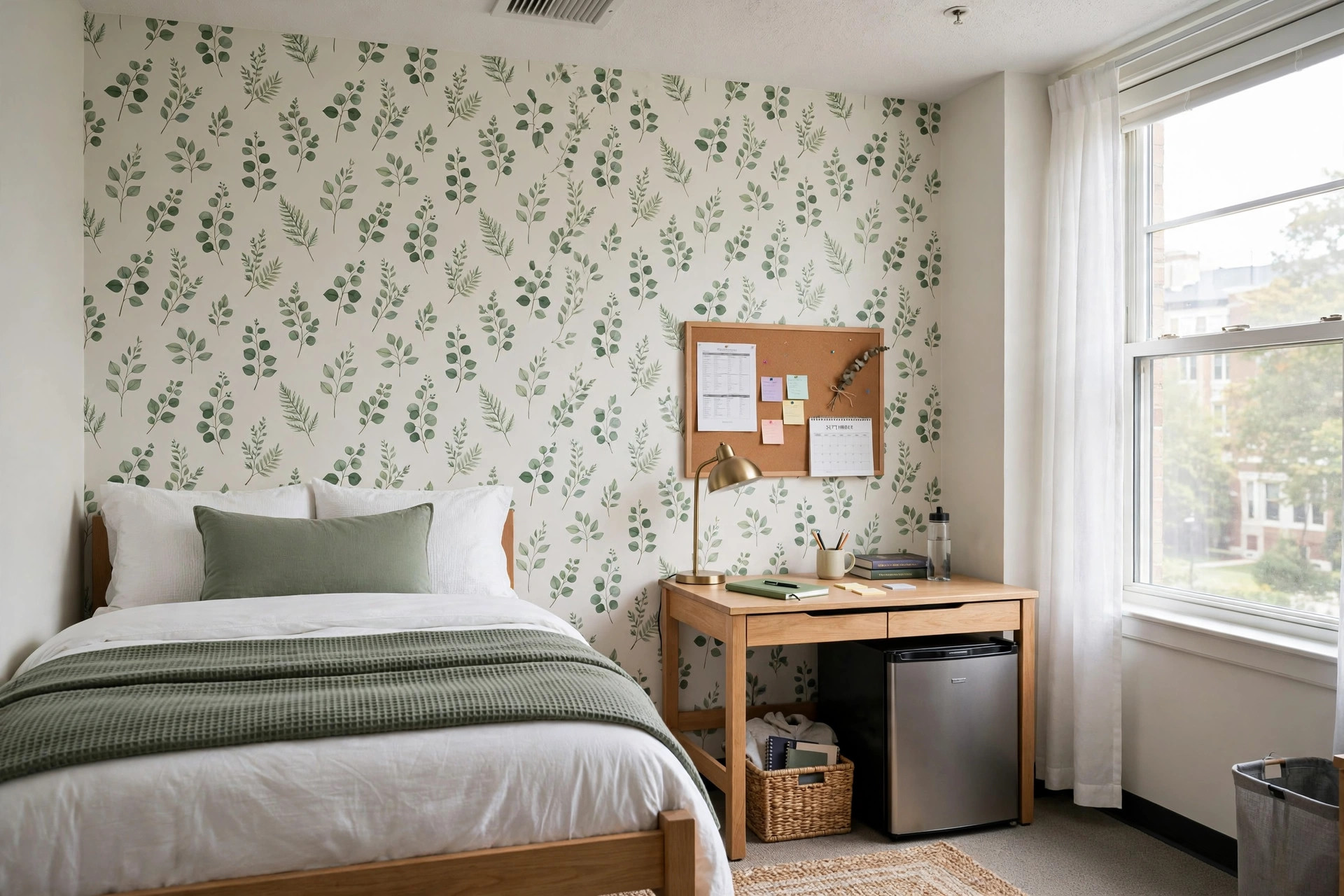

A dorm room should feel like home. Bare painted walls feel cold. Temporary wallpaper for dorm rooms USA shoppers can change the look of a room in an afternoon. It goes on without glue. It comes off without damage. Most schools require walls to stay in good shape. This product respects that rule. The sections below cover types, costs, how to hang it, and how to remove it safely.
Why Temporary Wallpaper Matters in a Dorm Room
Most college dorms in the United States are small. Walls are often white or off white. Paint rules are strict. A survey of housing rules shows that many schools charge for wall damage. Nails, tacks, and paste can all cost money at move out. Peel and stick wallpaper for bedrooms reviews show the same idea works well in small rented spaces. Students like the same control in a dorm.
Temporary wallpaper is also called removable wallpaper. It sticks with a light adhesive. It peels away clean when the time comes. No steamer is needed. No scraping is needed. One accent wall can make a twin XL bed and a small desk look like a planned room. Parents like it too. The cost is low. The risk is low. The result lasts the school year.
Another point is mood. Studies on living space show that color and pattern change how a room feels. A dorm is also a study space. A calm pattern behind the desk can make study time feel more settled. A bold print behind the bed can make the room feel personal. Many students spend nine months in one small room. A little decor goes a long way.
What to Look for Before You Buy: Temporary Wallpaper for Dorm Rooms Usa
Read the label before you pay. Four points matter most.
Check the Adhesive Type
Removable adhesive is the key feature. The label should say removable or repositionable. Standard paste wallpaper is not the right product. It will not come off clean. Some products use a static cling method. These work on smooth glass or tile. Most dorm walls are painted drywall. Choose a product made for painted walls. Home design guides from The Spruce explain how adhesive strength differs across products.
Measure the Wall First
Dorm walls are smaller than home walls. Measure width and height in feet. Multiply to get square feet. Subtract the area of windows and doors. Most rolls cover 18 to 28 square feet. Buy one extra roll. Patterns must match from panel to panel. The extra roll covers mistakes. Keep the receipt until the job is done.
Confirm the Return Policy
Patterns look different on a wall than on a phone screen. Order a sample first if one is offered. Many sellers ship small swatches for a low price. Tape the swatch to the wall. Look at it in morning light and in lamp light. Check school housing rules too. A few schools ban all wall coverings. Most allow removable products. Get the rule in writing if you are unsure.
Look at Wall Texture
Dorm walls are not always smooth. Many are painted cinder block or have light orange peel texture. Temporary wallpaper sticks best on smooth, clean, dry paint. Heavy texture can cause edges to lift. If the wall is rough, choose a thick vinyl product. Test a small piece behind the door first. Leave it for a week. Check that it stays flat and peels off clean.
Types of Temporary Wallpaper
Several kinds exist. Each suits a different taste and budget.
Peel and stick vinyl. This is the most common type. It is a thick vinyl sheet with a backing. You peel the backing and press the sheet to the wall. It is easy to reposition. It handles small bubbles well. It is the best choice for first timers.
Woven fabric wallpaper. This type uses a fabric face with a light adhesive. It looks soft and matte. It hides small wall flaws well. It costs more than vinyl. It is a good pick for students who want a high end look.
Static cling film. This uses no adhesive at all. It clings by static charge. It works best on glass, mirrors, and tile. It is useful for dorm room windows or the inside of a closet door. It will not stay on textured drywall.
Printed murals. Some sellers print one large image across several panels. A forest scene or a city skyline can cover a whole wall. Murals cost more. They take more care to line up. The result can be striking. Many interior design ideas for small rooms use a single bold wall like this.
Pre pasted paper. This is not truly temporary. It needs water to activate. It is harder to remove. Skip this type for a dorm room. It may damage the paint on removal.
When you shop, note the pattern repeat size. Large repeats waste more paper at the seams. Small repeats or solid textures are easier for beginners. Solid linen looks and grasscloth looks are popular in dorms. They add texture without a loud print.
Cost and Price in the USA
Temporary wallpaper costs more per roll than paint. But a dorm needs only a small amount. A single accent wall often needs two to four rolls. Here are typical 2026 prices seen at major retailers such as Lowe’s.
– Budget vinyl rolls: 25 to 40 dollars per roll. Each covers about 20 square feet. – Mid range designer vinyl: 45 to 70 dollars per roll. – Woven fabric rolls: 60 to 110 dollars per roll. – Sample swatches: 3 to 8 dollars each.
A full accent wall for a standard dorm room often costs 60 to 200 dollars. That is less than one textbook. Sales happen in August and January. Back to school season brings the best stock. Buy early if the pattern is popular.
Compare cost per square foot when you compare brands. A cheap roll that covers less area can cost more per square foot. Check the roll size on the label. Also check the warranty on the adhesive. Good brands promise clean removal for a set time, often up to one year. Keep the product box. It lists the removal method.
How to Hang Temporary Wallpaper in a Dorm Room
Plan for two to three hours. Work with a friend if you can. The job goes faster with two pairs of hands. Gather a tape measure, a pencil, scissors, a plastic smoothing tool, and a step stool.
Start with a clean wall. Wipe the wall with a damp cloth. Let it dry fully. Dust and grease weaken the adhesive. Mark a light vertical line with a pencil. Use a small level if you have one. This line is your guide for the first panel. A straight first panel keeps the whole wall straight.
Cut the first panel two inches longer than the wall height. Peel back six inches of the backing at the top. Line the top edge with the ceiling line. Press it into place. Slowly peel the backing down as you smooth the sheet. Work from the center out to the edges. The smoothing tool pushes out air bubbles. Do not stretch the sheet. Stretching causes it to shrink back later and leaves gaps.
Match the pattern at each seam. Overlap edges by a small amount or butt them tight. Follow the brand guide. Trim extra paper at the ceiling and baseboard with a sharp blade. Work slowly around outlets. Cut an X over the outlet cover. Fold the flaps back and trim them.
Small bubbles are normal. Poke them with a pin and press them flat. If a panel goes on crooked, peel it back and try again. Removable adhesive forgives mistakes. That is the main benefit of the product. Guides from This Old House give the same advice for first time paper hangers.
Tips for Small Dorm Walls
Dorm walls often have pipes, thermostats, and cable outlets. Plan panel breaks around them. It is easier to cut around a pipe than to fight one long sheet. Keep patterns away from the main view if matching is hard. A solid texture hides seams better than a large floral.
Light the room well while you work. Overhead dorm lights can be dim. A desk lamp aimed at the wall shows bubbles clearly. Work in the morning if you can. Natural light from the window is best.
Care and Upkeep Through the School Year
Temporary wallpaper needs little care. Dust it with a dry cloth now and then. Vinyl types can take a damp wipe. Do not soak the seams. Water can loosen the edges. Keep the room at a normal temperature. High heat from a space heater can soften the adhesive. Cold drafts near windows can make edges curl.
Check edges once a month. Press down any lifting corner with your thumb. If a corner keeps lifting, warm it lightly with a hair dryer on low heat. Press it flat. The heat resets the adhesive bond. Do not use a hot iron. Heat can melt vinyl.
Avoid hanging heavy items on the papered wall with strong tape. Command strips work on top of smooth vinyl. Test one strip in a hidden spot first. Some adhesives pull at the wallpaper when removed. Light picture frames are fine. Heavy shelves are not.
Safety Notes for Dorm Use
Fire safety comes first in any dorm. Choose wallpaper that meets standard fire ratings for wall coverings. The label may list a Class A or Class 1 rating. Do not cover smoke detectors, sprinklers, or exit signs. Keep paper away from open flames and hot radiators.
Ventilation matters on install day. The adhesive has a mild smell. Open the window while you work. The smell fades in a day. Students with strong scent sensitivity should pick low odor brands.
Check the housing handbook. Some schools limit how much wall area can be covered. A common rule allows one accent wall. Full room coverage may break the rules. When in doubt, ask the resident advisor. Keep the product package. It proves the wallpaper is removable if housing staff ask.
Frequently Asked Questions
Will temporary wallpaper damage dorm paint? It should not, if the paint is in good shape and the product is truly removable. Problems happen on fresh paint, peeling paint, or flat matte paint. Test a piece behind the door for one week. Peel it slowly at a low angle. If paint comes off, do not use it on that wall.
How long does it last? Most brands last one to three years indoors. A school year is well within that range. Sunlight can fade colors over time. A wall far from the window keeps its color best.
Can I reuse it after removal? Usually no. The adhesive weakens once peeled. Some thick vinyl can be moved once or twice during install. After full removal, buy new rolls for the next room.
Does it work on cinder block walls? It works on smooth painted block. Rough unpainted block is too rough. The adhesive cannot grip deep texture. A test patch will tell you in a few days.
What if I need to remove it mid year? Peel slowly from a top corner. Pull down at a sharp angle close to the wall. Warm stubborn spots with a hair dryer on low. Wipe any light residue with a damp cloth and mild soap. Paint and wallpaper guides from home experts describe the same slow peel method.
Where can students buy it in the USA? Major home stores carry it in store and online. Home Depot and Lowe’s stock popular patterns. Specialty shops and paint brands like Behr, Benjamin Moore, and Sherwin-Williams also sell wall covering lines worth a look.
A Final Word
Temporary wallpaper gives dorm rooms a finished look without risk. Pick a removable product. Measure first. Test on the wall. Hang it with care. Remove it slowly at move out. Students who want more accent wall painting ideas for living rooms or chalk paint for furniture where to buy usa tips can find related guides on this site. One good wall can make a small room feel like yours.
References
Behr. (n.d.). Paints, primers, and stains. https://www.behr.com Benjamin Moore. (n.d.). Paints and stains. https://www.benjaminmoore.com Bob Vila. (n.d.). Home improvement advice. https://www.bobvila.com HGTV. (n.d.). Home and garden ideas. https://www.hgtv.com Lowe’s. (n.d.). Home improvement products. https://www.lowes.com Sherwin-Williams. (n.d.). Paints and coatings. https://www.sherwin-williams.com The Home Depot. (n.d.). Home improvement products. https://www.homedepot.com The Spruce. (n.d.). Home and garden advice. https://www.thespruce.com This Old House. (n.d.). Home renovation guidance. https://www.thisoldhouse.com
Was this guide helpful?

About David Wilson
The My Garden US editorial team writes practical, in-depth home and garden guides for American homeowners — tested advice, no fluff.
You May Also Like

Painting Thermofoil Cabinets Pros and Cons: A Plain Guide for Homeowners
August 16, 2026 0 views
Two Tone Kitchen Cabinet Paint Ideas for American Homes
March 7, 2026 0 views
Easy Clean Paint for Hallways with Dogs: A Simple Guide
September 18, 2026 0 views