When it comes to how to grow Asian pears, getting the details right makes all the difference.
Table of Contents
Table of Contents
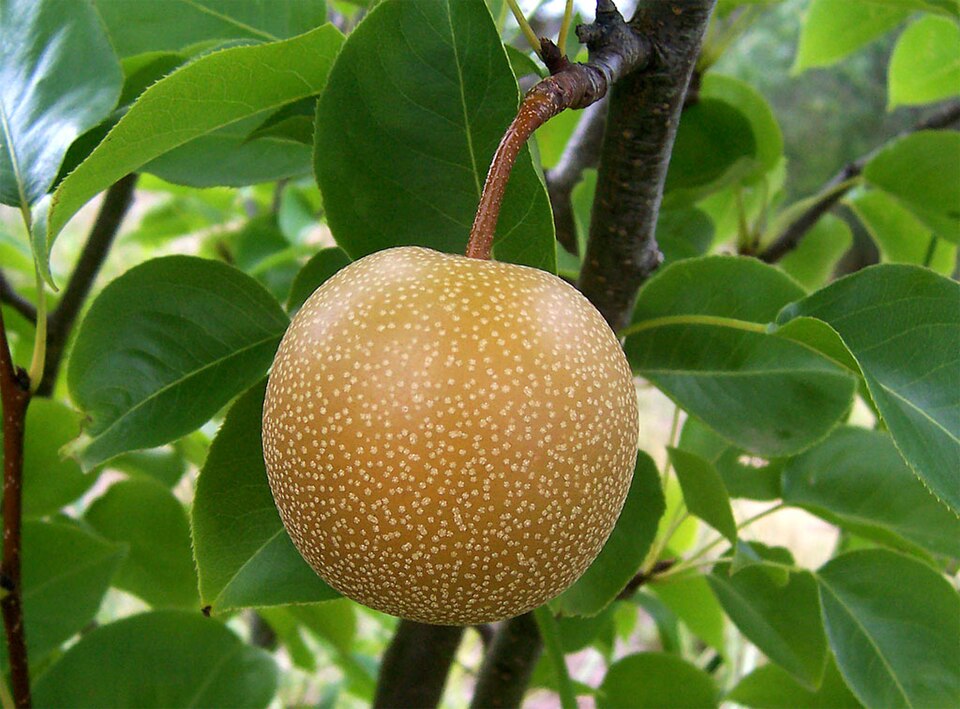
Photo: Wikimedia Commons
Asian pears have been cultivated for centuries, and the crisp, juicy fruit explains their staying power. Unlike European pears, which must be picked green and ripened off the tree, Asian pears ripen on the branch and eat like apples. Home growers love them because the trees bear young, need less spraying than apples, and tolerate a range of soils. A single tree in a small yard can produce bushels of fruit within a few years of planting.
Asian pears taste like the best qualities of an apple and a pear decided to share one fruit: round, crisp, juicy, and sweet, eaten fresh off the tree. They are also one of the most forgiving fruit trees a home gardener can plant. They bear young, need less spraying than apples, and shrug off problems that plague European pears. If you have room for one fruit tree and want reliable harvests, learning how to grow Asian pears is time well spent.
The species is Pyrus pyrifolia, hardy in zones 5 through 9. Most varieties need 300 to 600 chill hours, so check your winter cold against the variety you buy; low-chill types exist for warm areas. The USDA PLANTS Database documents the species, and your local extension office can tell you which varieties perform in your county.
Choosing a Variety
When it comes to how to grow Asian pears, getting the details right makes all the difference.

Many homeowners find that how to grow Asian pears is easier than they expected once they know the basics.
Buy a grafted tree from a nursery, not a seedling. Seedling pears take many years to bear and the fruit is a gamble. Grafted trees fruit in three to five years and come true to the named variety.
Popular varieties include Hosui, with russeted golden-brown skin and rich flavor; Shinseiki, smooth yellow-green and early; and Korean Giant, enormous fruit that stores for months. Most Asian pears are self-fertile but crop noticeably better with a pollination partner, so plant two different varieties if you have space. Two trees also extend the harvest if you pick one early and one late variety.
Choose a tree on a rootstock suited to your soil. Ask the nursery. In wet ground, pick a rootstock tolerant of damp feet; in drought-prone ground, a vigorous one. The Missouri Botanical Garden plant finder carries notes on ornamental and fruiting pears that help with selection.
When and How to Plant
Many homeowners find that how to grow Asian pears is easier than they expected once they know the basics.
The key to how to grow Asian pears is choosing the right approach for your space and budget.
Plant in the dormant season, after the tree has dropped its leaves and before spring growth starts. Bare-root trees go in during this window; container trees can be planted any time the ground is workable, though dormant-season planting still gives the best start.
Dig a hole twice as wide as the root ball but no deeper. Set the graft union a few inches above the soil line. Backfill with the native soil, water deeply, and mulch with several inches of wood chips, keeping the mulch away from the trunk. Space trees 15 to 20 feet apart. That looks like a lot of empty ground for a whip of a tree, but a mature Asian pear fills it.
Stake the tree for the first year if your site is windy. Water deeply at planting and weekly through the first growing season. Look up your USDA zone planting dates to time dormant planting in your region.
Soil and Sun
The key to how to grow Asian pears is choosing the right approach for your space and budget.
With a little planning, how to grow Asian pears can fit even a busy schedule.
Full sun and well-drained loam. Asian pears want at least six hours of direct sun, and more is better. Shade means weak growth and poor fruit. Drainage is critical: pears tolerate many soils but not standing water. In heavy clay, plant on a slight mound.
The trees are not fussy about fertility. Rich soil is fine, poor soil is tolerated, but soggy soil kills. A soil test through your state extension service tells you the pH and nutrient levels; pears like slightly acidic to neutral ground. Clemson Cooperative Extension publishes home-orchard soil guidance that applies well beyond the Southeast.
Companion fruit trees with similar needs include the European pear and the apple, both of which share pollination and pruning habits.
Watering and Feeding
With a little planning, how to grow Asian pears can fit even a busy schedule.
Before you start, it helps to understand how how to grow Asian pears works in real homes.
Water deeply but infrequently once established. A long soak every week or two in dry weather beats daily sprinkles. Deep watering trains roots downward, which makes the tree tougher in drought. Young trees need steadier water for the first two seasons.
Feed modestly. A ring of compost in spring is enough for most home trees. Excess nitrogen pushes leafy growth and invites fire blight, the bacterial disease that blackens shoots. If the tree grows more than about 18 inches of new shoot a year, skip the fertilizer. The University of Minnesota Extension orchard pages make the same point: restrained feeding grows healthier fruit trees.
Mulch to conserve moisture, but never pile mulch against the trunk. The old volcano-mulch habit rots bark and invites rodents.
Care Through the Season
Before you start, it helps to understand how how to grow Asian pears works in real homes.
A good plan for how to grow Asian pears saves time, money, and frustration.
Prune in the dormant season to an open shape. Remove crossing branches, thin crowded spurs, and keep the center open to light and air. Asian pears bear on spurs, so do not shear the branch tips where the fruiting wood lives.
Thin the fruit. This is the step beginners skip, and it matters more than anything else for fruit quality. When fruitlets are marble-sized, thin each cluster to a single fruit, spacing fruits about six inches apart. Thinning gives you large, crisp pears instead of a crowd of small ones, and it prevents branches from breaking. It also evens out bearing so the tree does not exhaust itself one year and rest the next.
Watch for fire blight. It strikes fast: shoots wilt and blacken as if scorched. Cut struck shoots well below the damage, disinfecting tools between cuts, and get the material off the property. Clemson HGIC has clear fire-blight notes with photos for identification.
Asian pears need less fuss than European types overall: fewer sprays, fewer diseases, earlier bearing. The Old Farmer's Almanac fruit-growing guides cover the seasonal rhythm if you want a month-by-month checklist.
Harvest
A good plan for how to grow Asian pears saves time, money, and frustration.
For most people, how to grow Asian pears comes down to a few smart choices.
Expect fruit three to five years after planting. Unlike European pears, Asian pears ripen on the tree. This is the key difference, and it confuses growers who know European pears. Do not pick Asian pears green and wait. Pick them when the skin turns from green to yellow-brown, the fruit smells sweet at the stem end, and a gentle lift separates it from the branch.
Taste-test. Color can precede full sweetness, so sample one before you strip the tree. The ripe pear is crisp, juicy, and sweet, eaten like an apple. Waiting for softness, the way you would with a European pear, just gives you an overripe Asian pear. Store harvested fruit in the refrigerator, where the best varieties keep for weeks or even months.
Asian Pears Through the Seasons
For most people, how to grow Asian pears comes down to a few smart choices.
If you are new to how to grow Asian pears, start with the simplest option and build from there.
The dormant season is for planting and pruning. Set out bare-root trees after leaf drop and before spring growth. Prune established trees in late dormancy, opening the center to light and removing crossing branches. This is also the time to check the graft union and clear mulch away from the trunk.
Spring brings bloom, and bloom needs protection. A late frost can wipe out the crop in a night. Site trees on a slope where cold air drains away, and cover small trees if a hard freeze threatens open blossoms. Thin fruitlets when they reach marble size, leaving one per cluster spaced six inches apart. This single job determines fruit size more than anything else.
Summer is for water and watchfulness. Deep-water young trees weekly in dry weather. Check for fire blight strikes and prune them out promptly, disinfecting tools between cuts. Let the fruit size up undisturbed; constant handling bruises it.
Fall is harvest. Pick when the skin colors fully and the fruit smells sweet at the stem. Taste-test before stripping the tree. After harvest, clean up fallen fruit to deny pests a winter home, and mulch the root zone before cold weather.
Troubleshooting
If you are new to how to grow Asian pears, start with the simplest option and build from there.
When it comes to how to grow Asian pears, getting the details right makes all the difference.
Small fruit means you skipped thinning, the tree is drought-stressed, or both. Thin ruthlessly next spring and water deeply through fruit sizing. No fruit at all on a young tree is normal for the first couple of years; on an older tree it suggests poor pollination, late frost damage to blossoms, or over-vigorous pruning that removed the spurs.
Fire blight is the serious disease. Act fast, cut clean, disinfect. Codling moth and plum curculio bother pears less than apples, but bagging individual fruits with paper bags keeps them nearly perfect if insects are bad in your area. The UF IFAS Gardening Solutions fruit pages cover southern pest pressures, and the USDA National Agricultural Library indexes deeper research.
In warm-winter areas, choose low-chill varieties or the tree leafs out weakly and bears little. Chill hours are not negotiable. Gardenia.net variety notes often list chill requirements, which saves you from buying the wrong tree.
Biennial bearing, a huge crop one year and nothing the next, comes from skipping the thinning. A tree allowed to overbear exhausts itself. Thin ruthlessly every spring and the crops even out within a couple of seasons.
Squirrels and birds take ripe pears. Netting over small trees works, or pick slightly early and finish ripening indoors. Fallen fruit left on the ground invites wasps and disease; keep the area clean.
If leaves yellow between the veins, the soil might be too alkaline for good nutrient uptake. A soil test confirms it, and sulfur worked into the root zone lowers pH gradually. Most Asian pears tolerate a wide pH range, but extremes show in the foliage.
References
When it comes to how to grow Asian pears, getting the details right makes all the difference.
Clemson University Cooperative Extension. (n.d.). Home & Garden Information Center. https://hgic.clemson.edu/
Missouri Botanical Garden. (n.d.). Plant finder. https://www.missouribotanicalgarden.org/
U.S. Department of Agriculture. (n.d.). PLANTS database. https://plants.usda.gov/home
University of Minnesota Extension. (n.d.). Yard and garden. https://extension.umn.edu/
Many homeowners find that how to grow Asian pears is easier than they expected once they know the basics.
Was this guide helpful?

About My Garden US
The My Garden US editorial team writes practical, in-depth home and garden guides for American homeowners — tested advice, no fluff.