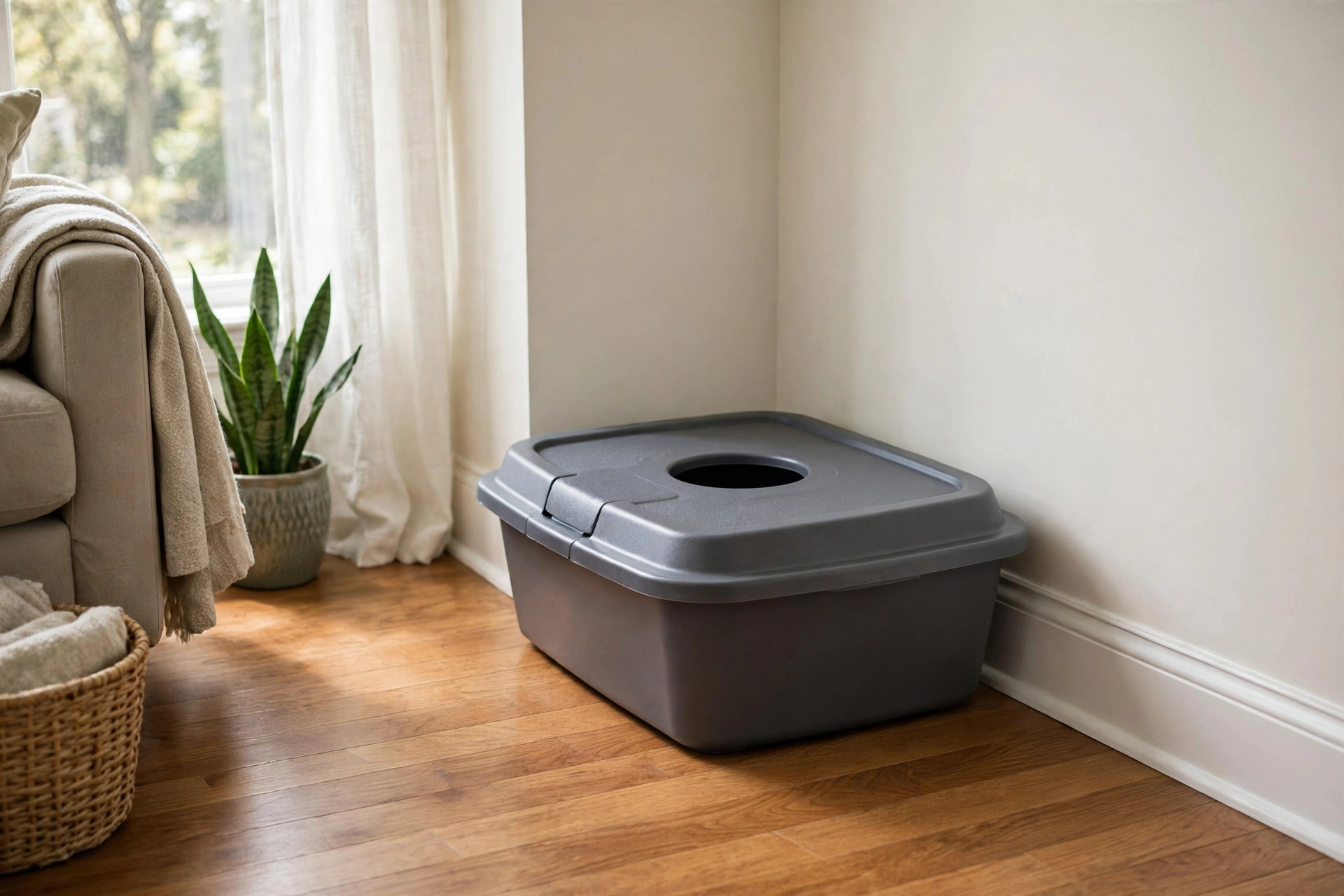

Many homes hold both a cat and a dog. The two can live well side by side. One point of friction, though, is the litter box. Dogs sniff it. They paw at it. Some try to eat from it. A cat litter box with top entry for dogs solves this common problem in a simple way. The box has a lid on top with an entry hole. The cat hops in from above. The dog cannot reach through the lid. This guide explains how these boxes work, what to look for, what they cost, and how to keep one clean.
Why a Top Entry Box Helps in a Home with Dogs
A dog drawn to the litter box is not being bad. It is following its nose. Used litter smells rich to a dog. Some dogs even eat it, a habit vets call coprophagia. This habit is more than a gross surprise for the owner. It can make the dog sick.
Used cat litter can carry parasites such as roundworms and the germ that causes toxoplasmosis. A dog that eats soiled litter can pick up worms or stomach illness. Clumping clay litter brings another risk. If a dog swallows it in amount, the clay can clump inside the gut and cause a blockage. Scoops and deodorizing crystals add still more danger. The American Veterinary Medical Association (AVMA) stresses that parasites in pet waste are a real health concern in homes with more than one animal. Advice from Petfinder on multi-pet homes also notes that dogs and cats need their own spaces for eating, resting, and toileting.
A top entry box adds a lid between the dog and the litter. The lid covers the whole box. Only a round or square hole at the top stays open. A cat climbs onto the lid and steps down through the hole. A dog, with its wider head and longer snout, cannot fit through. Even a clever dog finds the angle wrong. Paws cannot slip under the rim. The result is a cleaner box, a calmer cat, and a healthier dog. The Spruce Pets carries guides on litter box care that describe how covered boxes cut odor and scatter in busy homes.
What to Look for When You Choose One: Cat Litter Box with Top Entry for Dogs
Not all top entry boxes are the same. A little care in the store or while shopping online goes a long way. The points below cover the main ones.
Size and Height
The cat must fit with room to turn around. A small cat does fine in a standard box. A large or long cat needs the extra-large size. Measure your cat from nose to base of tail. Add a few inches. The inside length of the box should beat that number.
Height matters for the dog as much as for the cat. The walls should be tall enough that a dog cannot tip the box or hook a paw over the side. Walls of ten inches or more work well against medium and large dogs. The lid must hold the weight of a full-grown cat without sagging. Press down on the center of the lid before you buy. It should feel firm. Retailers such as Chewy carry many top-entry models in both standard and extra-large sizes, so you can compare dimensions side by side.
The Lid and the Opening
Look closely at the entry hole. A hole of about eight or nine inches across suits most cats. A tiny hole cramps a large cat. A very wide hole lets a small dog nose in. The edge of the hole should be smooth and rounded. Rough edges can scratch paws over time.
The lid must sit down tight. Some lids snap or lock into place. A locking lid is worth the extra dollar or two in a home with a strong or pushy dog. A loose lid that slides off when a dog bumps the box defeats the whole design. Give the lid a shake in the store. It should not rattle or lift with a light nudge.
Litter Tracking and Splash Control
Cats shake loose litter from their paws as they leave the box. Many top entry lids carry raised grooves or a bumpy texture around the hole. The cat steps across these ridges on the way out, and the loose grains fall back into the box. This feature cuts the trail of litter across the floor. High side walls help too. They stop the strong kicker from spraying litter over the side. Home Depot stocks covered litter boxes whose lids show this grooved design, and photos make it easy to see how it works.
Material and Finish
Pick a box made of thick, smooth plastic. Thin plastic cracks. Cracked seams trap odor and bacteria. Smooth walls wipe clean in seconds. Skip boxes with deep corners or fancy shapes you cannot reach with a cloth. The plainer the inside, the easier the weekly wash. Stores such as Walmart sell budget-friendly pet supplies, including simple top-entry boxes in sturdy plastic.
Types of Top Entry Boxes
The market offers a few clear types. Knowing them helps you match a box to your cat and your dog.
Basic top-entry boxes. A deep pan, a snap-on lid, one hole. No extras. These cost the least and work for most homes. They are light to move and easy to wash.
Top-entry boxes with tall sides. These rise higher than the basic kind. Tall sides block more spray and make it harder for a big dog to reach over. They suit large cats that kick hard.
Top-entry boxes with tracked lids. The lid doubles as a tracking mat. Deep grooves or a honeycomb pattern catch litter from paws. These cost a little more but cut floor mess by a lot.
Two-piece and travel-friendly designs. Some boxes come apart into a low pan and a tall lid for cleaning. A few fold flat. If you travel with your cat, a model that breaks down helps. A carrier with wheels that makes travel easier pairs well with these for trips. And Target also carries pet supplies, including collapsible models you can inspect in person.
Decorative top-entry boxes. These hide the box inside a cabinet or bench with a hole in the top. They cost more and fit best where looks matter, like a living room. They still work the same way for the dog problem.
Cost and Price
A cat litter box with top entry for dogs is not an expensive item. Most run between fifteen and seventy dollars.
Budget boxes, usually fifteen to twenty-five dollars, are plain pans with simple lids. They do the job. They may lack the tracking grooves and locking lids of pricier models. For one cat and a calm dog, they are often enough.
Mid-range boxes, twenty-five to forty-five dollars, add the better features. You get taller sides, textured lids that catch litter, and firmer locks. Most buyers land in this range.
Premium and decorative boxes, forty-five to seventy dollars and up, add style or size. Some hold two cats. Cabinet-style models cost the most. They serve the same purpose for the dog problem, so the extra money buys looks and size, not a new function.
Watch for sales around the holidays. Pet stores often cut prices on litter boxes in the spring and fall. Compare shipping costs when you order online. A heavy box can cost more to ship than you save on the price tag.
Care and Upkeep
A covered box hides its contents, so it is easy to forget. Do not let it fool you. A box with a lid needs the same daily care as an open one. In fact, odor builds up faster under a lid.
Scoop every day. Lift the lid, take out the clumps and solid waste, and put the lid back. Add fresh litter to keep the depth at two to three inches. Cats dig. Too little litter lets waste hit the plastic bottom, where it sticks and stinks.
Once a week, do a full wash. Empty all the litter. Scrub the pan and the lid with warm water and mild soap. Pay special attention to the grooves on the lid. Dried waste hides in those ridges. Rinse well and let it dry fully before you refill. Soap smell bothers some cats, so rinse until the water runs clear.
Replace all the litter every two to four weeks, sooner in a one-box home with two cats. Old litter holds odor no scoop can fix. Keep a collapsible tunnel that gives a cat a place to play and hide away from the litter area. Cats like their play space separate from their toilet space, and the separation helps the whole room smell better.
If odor still lingers, check two things. First, is the box big enough? A cramped box gets used harder in one spot. Second, is the lid venting enough? Most lids leave small gaps for air. A sealed-tight lid traps smell. The American Kennel Club (AKC) reminds multi-pet owners that clean pet areas protect every animal in the home, dogs included.
Safety for Cats, Dogs, and Children
The top entry design is safe for most cats, but a few animals need a second look.
Kittens under about six months may struggle with the jump. They are small, and the climb onto the lid can be too much. Wait until the kitten is bigger and stronger. Older cats with stiff joints face the same issue. A cat with arthritis should not have to hop into its own toilet. For these cats, a low-sided open box is kinder.
Watch the dog around any new box. Some dogs chew plastic. If your dog chews the lid or the rim, move the box behind a baby gate or into a room the dog cannot enter alone. Check the entry hole for sharp bits after any chewing. Smooth down rough spots with sandpaper or replace the lid.
Place the box away from the dog’s food and water bowls. Dogs guard their food, and cats dislike eating near their toilet. Keep both sides happy with distance. Put the box in a quiet corner. Cats startle easily, and a startled cat may stop using the box.
Small children need the same care as dogs. A toddler can lift a loose lid. If a child is in the home, use a box with a locking lid and place it out of the child’s reach. The AAHA, the American Animal Hospital Association, notes that pet hygiene areas should be safe for every member of the household.
Frequently Asked Questions
Will my dog still be able to reach inside?
Most dogs cannot. The entry hole sits at the top of a tall box, and a dog’s head is too wide to pass through. Small dogs with long, narrow snouts may poke a nose in, so pick a box with a smaller hole and a firm lid. If your dog is very determined, add a baby gate with a cat-sized opening as a second line of defense. Pet sitters on Rover see these setups in client homes and report that they work well.
Can a kitten use a top-entry box?
A kitten under six months old will find the jump hard. Start the kitten on a low, open box. Move to the top entry box once the kitten can jump onto a chair seat with ease. Place the old box next to the new one for a week so the kitten learns the change.
What kind of litter works best?
Plain clumping clay works well in most top entry boxes. It forms tight clumps that are easy to scoop through the top hole. Non-clumping litter works too but needs full changes more often. Avoid heavy, large-grain litters that hurt tender paws. If your dog ever does get into the litter, switch to a plant-based litter that breaks down safely. Ask your vet for advice on the safest choice for your dog.
How do I switch my cat from an open box to a top-entry box?
Go slow. Set the new box beside the old one. Leave the lid off the new box at first so the cat sees it as an open pan. Once the cat uses it, put the lid on. Most cats adjust within a week or two. Do not throw away the old box until the cat uses the new one on its own. A stressed cat may stop using any box, so patience pays.
How often should I clean a top-entry box?
Scoop once a day at least. With two cats, scoop twice. Wash the whole box every week. The lid and its grooves need scrubbing just like the pan. If you smell the box when you walk into the room, you waited too long. For travel days, a stroller built for two cats is a separate topic, but the same daily routine applies to any litter setup you use on the road.
Does a top-entry box stop odor better than an open box?
Yes, to a point. The lid holds in some smell. But the lid is not a filter. Daily scooping and weekly washing do the real work. Carbon filters in some lids add a small help. Fresh air and clean litter matter more than any gadget.
A Short Final Word
A cat litter box with top entry for dogs answers a real household problem with a simple piece of design. The cat keeps its privacy. The dog keeps its nose out of trouble. The owner keeps a cleaner floor. Pick a box that fits your cat, locks its lid, and washes easily. Scoop it daily. The box does its part, and you do yours, and both animals live better for it.
References
American Animal Hospital Association. (n.d.). Pet health resources. https://www.aaha.org American Kennel Club. (n.d.). Dog care and training resources. https://www.akc.org American Veterinary Medical Association. (n.d.). Pet care resources. https://www.avma.org Chewy. (n.d.). Pet supplies. https://www.chewy.com Petfinder. (n.d.). Pet adoption resources. https://www.petfinder.com Rover. (n.d.). Pet sitting and dog walking services. https://www.rover.com Target. (n.d.). Retail store. https://www.target.com The Home Depot. (n.d.). Home improvement products. https://www.homedepot.com The Spruce Pets. (n.d.). Pet care guides and product reviews. https://www.thesprucepets.com Walmart. (n.d.). Everyday low prices. https://www.walmart.com
Was this guide helpful?

About David Wilson
The My Garden US editorial team writes practical, in-depth home and garden guides for American homeowners — tested advice, no fluff.
You May Also Like

The Best Dog Life Vest for Kayaking and Boating: A Complete Guide
March 27, 2026 0 views
A Large Cat Tree Condo for Multiple Cats: What to Know
March 21, 2026 0 views
Best Pet Camera With Treat Dispenser WiFi: A Buyer’s Guide
March 29, 2026 0 views