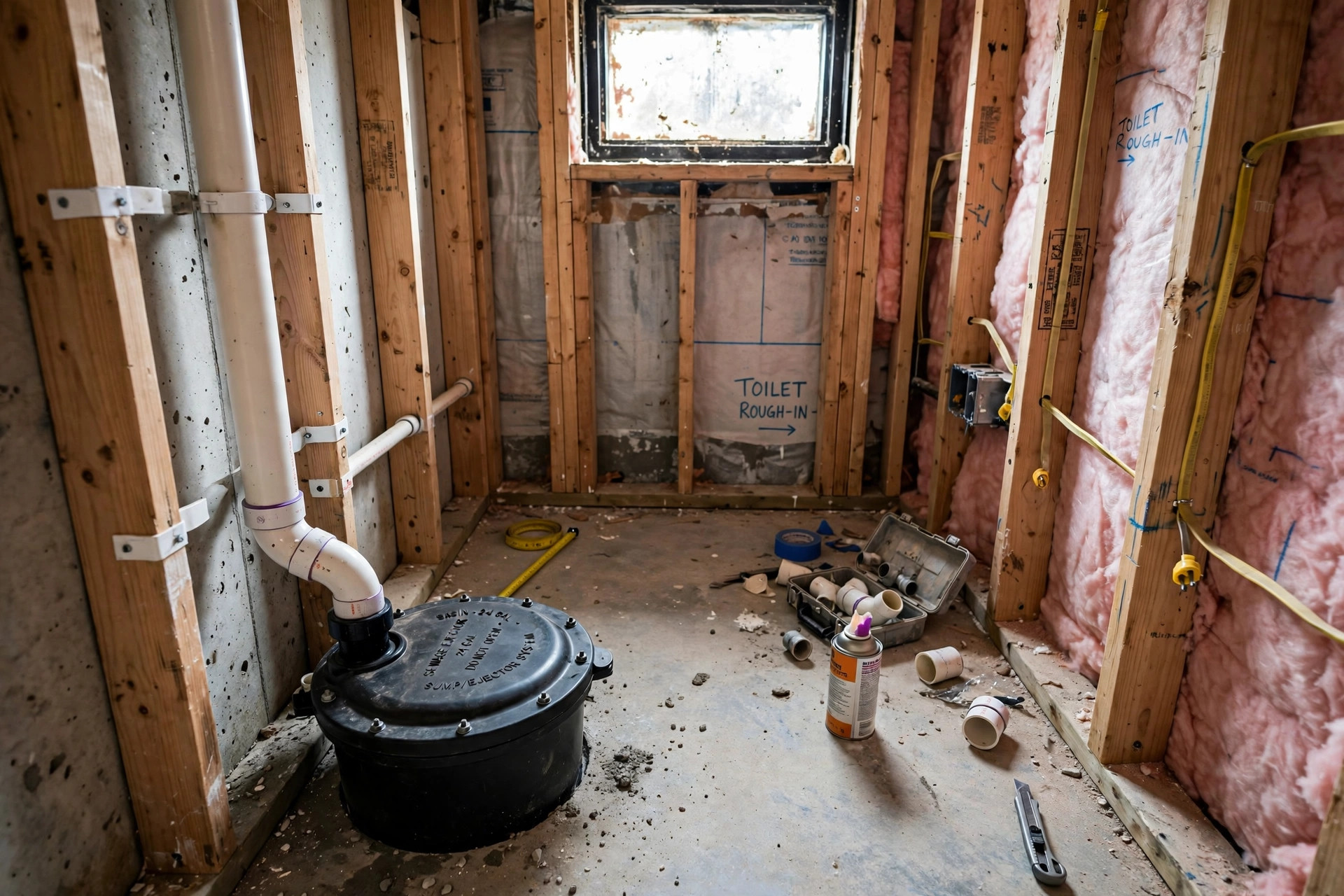

A basement bathroom is one of the most useful rooms a homeowner can add. It serves guests, teenagers, and anyone who does not want to climb the stairs at night. But a basement sits below the sewer line. Waste cannot flow uphill on its own. That is why the choice of the best pump for basement bathroom additions matters so much. The right pump moves waste from a toilet, sink, and shower up to the main drain line. The wrong pump clogs, floods, or burns out in a year. This guide explains the options in plain terms so you can decide with confidence.
Why a Basement Bathroom Needs a Pump
Most homes have a main sewer line or septic line that leaves the house at or near the basement floor. Any fixture set below that line cannot drain by gravity. Water and waste will sit in the pipes. Without help, they will back up into the bathroom.
A pump solves this problem by collecting the waste in a sealed basin and pushing it upward through a discharge pipe to the main line. This setup is common in homes across the United States, and local building codes describe exactly how it must be done. When people search for the best pump for basement bathroom additions, they usually want to know which type of pump to buy and how much work the job takes.
There are two main approaches. The first is a sewage ejector pump system. A basin is set into the basement floor, the pump sits inside it, and all the bathroom fixtures drain into the basin. The second is a macerator system, often sold as an upflush toilet kit. A small grinder unit sits behind the toilet and pumps the waste through a narrow pipe. Each approach has strengths. The right one depends on your floor, your budget, and how much you want to change about the room.
What to Look for When You Choose: Best Pump for Basement Bathroom Additions
Before you compare models, learn the features that separate a good pump from a weak one.
Horsepower and flow rate. Most basement bathroom pumps use one third to one half horsepower. That is enough for one full bathroom in most homes. A one half horsepower unit moves more waste per minute and handles long pipe runs with less strain. Check the flow rate, listed in gallons per minute. A higher rate means faster clearing of the basin.
Solids handling. A toilet sends solids down the drain. The pump must pass them without jamming. Look for pumps that handle two inch solids or that include a grinder blade. Grinder pumps chop waste into fine pieces before pushing it out. They cost more but they clog less.
Basin size. The basin is the plastic tank that holds waste before the pump moves it. Common sizes run from 18 to 24 inches across. A larger basin holds more, so the pump runs less often. Fewer starts mean a longer pump life.
Switch type. Most pumps use a float switch that turns the unit on when the water level rises. A vertical float switch fits tight basins and hangs up less often than a tethered float. Some newer pumps use a pressure or diaphragm switch. These have no moving float at all, and they last longer.
Cord length and voltage. Basement pumps run on standard 120 volt power. Cord length matters because the pump must reach a ground fault protected outlet without an extension cord. Extension cords and sump areas do not mix.
Alarm. A high water alarm tells you when the pump has failed to keep up. Many homeowners add a battery powered alarm that sounds when the level in the basin rises too high. It is a small cost that can prevent a very large mess.
When you read product test reports and the guides at This Old House, you will see these same features come up again and again. They are the marks of the best pump for basement bathroom additions, no matter which brand you pick.
Types of Pumps for Basement Bathrooms
Sewage Ejector Pumps
A sewage ejector pump is the classic choice. The plumber cuts a hole in the concrete floor, sets a sealed basin in the ground, and places a submersible pump inside. The toilet, sink, and shower all drain into the basin. When waste fills it to a set level, the float switch starts the pump. The pump pushes the waste up through a two inch discharge pipe to the main sewer line.
The sealed lid is an important part. It keeps odors out of the room and keeps radon gas from seeping up through the basin. Radon is a natural gas found in many American basements. The EPA offers plain guidance on testing for it, and a sealed basin helps control it.
Ejector pumps work well for full bathrooms with a toilet, sink, and shower or tub. They handle steady use by a family. Installed cost details are covered in our guide to sewage ejector pump installation cost usa.
Grinder Pumps
A grinder pump is a type of ejector pump with cutting blades at its inlet. The blades chop solids and paper into a slurry. The fine waste then moves through smaller pipes with less risk of a clog. Grinder pumps suit long pipe runs and homes where the lift height is great, such as deep basements.
The trade is price and power use. Grinder units cost more than simple solids handling pumps. They also draw more current. But for a busy basement bathroom that will see daily use, the extra strength can be worth the money.
Macerator and Upflush Systems
A macerator system avoids breaking the concrete floor. The toilet connects to a small tank with a built in grinder and pump. The unit sits behind the toilet or inside the wall. The sink and shower can connect to the same unit in many models. The pump pushes waste through a three quarter inch or one inch pipe to the main drain.
These systems are popular for quick additions in finished basements. They cost less to install because there is no digging. The trade is capacity. A macerator handles one toilet and light fixtures. It is less suited to a full family bathroom with a shower used every day. The narrow discharge pipe also needs a careful route with no low spots.
Choosing Between Them
For a full bathroom that will be used daily, a sewage ejector pump in a floor basin is the stronger and longer lasting choice. For a half bath or a guest bath that will see light use, a macerator system saves money and avoids concrete work. If your basement floor cannot be cut, for example in a rental unit or a slab with radiant heat, the macerator may be your only choice.
Cost and Price
Price is often the deciding factor. A sewage ejector pump unit alone costs from about 250 dollars to 900 dollars, depending on horsepower and brand. The basin, lid, check valve, and fittings add another 150 to 400 dollars. Labor is the larger share. A plumber must cut the concrete, set the basin, run the discharge pipe, and tie into the main drain. Total installed cost often falls between 1,500 and 4,500 dollars, depending on the market and the length of the pipe run.
A macerator upflush system costs about 600 to 1,200 dollars for the unit. Installation is simpler, often 500 to 1,500 dollars, because no concrete work is needed. The full job often lands between 1,000 and 2,500 dollars.
These are broad ranges. Your town may be higher or lower. Get at least three written bids. Ask each plumber what is included: the basin, the vent pipe, the check valve, the alarm, and the electrical outlet. A bid that leaves out the vent or the alarm is not a full bid. The big box stores like Home Depot and Lowe’s list pump prices online, which gives you a baseline before you talk to a contractor.
Do not forget permit fees. Most towns require a plumbing permit for a new basement bathroom. Fees are often modest, but skipping the permit can cause trouble at sale time. A permitted job with an inspection protects your investment.
Care and Upkeep
A well chosen pump needs little attention, but a little attention goes far.
Flush only waste and toilet paper. Wipes marked flushable, paper towels, and feminine products are the most common causes of pump jams. Even small amounts add up over months.
Listen to the pump now and then. You should hear it run for a short time after the toilet is flushed. Long runs or frequent cycling suggest a worn switch or a partial clog.
Test the alarm twice a year. Lift the float or pour water into the basin until the alarm sounds. Replace alarm batteries on schedule.
Keep the area around the basin dry and clear. Do not store boxes or chemicals on the lid. The vent pipe should stay open and free of nests or dust.
Every two to three years, have a plumber lift the pump and check the basin for sludge. This is quick work and it extends the life of the unit. Many homeowners pair this check with their sump pump review. If your home also has a sump pump for groundwater, our guide on the best sump pump for basement reviews usa explains how the two systems differ and how to keep both in shape.
Fixture makers such as Moen, Delta Faucet, and Kohler publish care sheets for their toilets and faucets. Low flow fixtures reduce the load on the pump, which is one more reason to pick water saving models for a basement bath.
Safety
A basement bathroom pump deals with sewage and electricity in the same small space. Safety rules are not optional.
The pump must plug into a ground fault protected outlet. This is required by the electrical code in wet areas. The outlet should be on its own circuit when possible so a tripped breaker elsewhere does not shut off the pump.
The basin lid must be sealed and bolted. An open or loose lid lets sewer gas into the room. Sewer gas smells bad and can be harmful in high amounts. The vent pipe carries these gases safely out through the roof.
Never reach into the basin while the pump is plugged in. Unplug the unit or switch off the breaker before any work. If you smell strong gas or see sewage on the floor, call a plumber. Do not try to fix it yourself.
Backflow matters too. A check valve on the discharge pipe stops waste from flowing back into the basin when the pump shuts off. The plumber should install a full port valve that can be serviced. The guides at Family Handyman show how these valves are laid out in a typical basement job.
If your home uses well water or you treat your water at home, remember that a basement bath adds demand to your whole system. Companies like Aquasana explain how added fixtures change water use, and it is worth checking that your water heater and pressure can handle one more bathroom. For a look at efficient heating options, see our notes on heat pump water heater pros and cons usa.
Frequently Asked Questions
What is the best pump for basement bathroom additions with a full toilet, sink, and shower? A one half horsepower sewage ejector pump in a sealed floor basin is the most reliable choice for a full bathroom. It handles solids, runs on a simple float switch, and lasts many years with basic care.
Can I add a basement bathroom without breaking the concrete floor? Yes. A macerator upflush toilet system pumps waste through a small pipe to the main drain with no digging. It suits half baths and light use guest baths.
How long does a sewage ejector pump last? Most quality pumps last seven to ten years in a home bathroom. Larger basins, gentle use, and regular checks extend the life. Keep a spare float switch on hand.
Does a basement bathroom pump need a vent? Yes. The basin must be vented through the roof or tied into an existing vent stack. The vent lets air out so the pump can move waste, and it carries sewer gas safely away from the room.
Will the pump be loud? A submersible pump in a sealed basin makes a low hum for a few seconds at a time. It is much quieter than an above floor macerator unit. If noise matters, the ejector system is the better pick.
Do I need a permit for this work? In most American towns, yes. A plumbing permit and an inspection are required for new fixtures below the sewer line. Check with your local building office before work starts.
A Final Word
The best pump for basement bathroom additions is the one that fits your bathroom, your floor, and your budget. For daily use by a family, a sewage ejector pump in a sealed basin is the proven answer. For a simple guest bath, a macerator system gets the job done with less mess and less cost. Pick quality parts, hire a licensed plumber, vent and seal the system properly, and keep up with small maintenance. Done right, a basement bathroom adds comfort and value to your home for many years.
References
Aquasana. (n.d.). Water filtration systems. https://www.aquasana.com Consumer Reports. (n.d.). Product reviews and ratings. https://www.consumerreports.org Delta Faucet. (n.d.). Kitchen and bathroom faucets. https://www.deltafaucet.com Family Handyman. (n.d.). DIY home repair and maintenance. https://www.familyhandyman.com Kohler. (n.d.). Bathroom and kitchen fixtures. https://www.kohler.com Lowe’s. (n.d.). Home improvement products. https://www.lowes.com Moen. (n.d.). Faucets and plumbing fixtures. https://www.moen.com The Home Depot. (n.d.). Home improvement products. https://www.homedepot.com This Old House. (n.d.). Home renovation guidance. https://www.thisoldhouse.com U.S. Environmental Protection Agency. (n.d.). Protecting human health and the environment. https://www.epa.gov
Was this guide helpful?

About David Wilson
The My Garden US editorial team writes practical, in-depth home and garden guides for American homeowners — tested advice, no fluff.
You May Also Like
Best Basement Dehumidifier With Pump USA: A Plain Guide for Dry, Healthy Basements
September 7, 2026 0 views
Crawl Space Dehumidifier Reviews 2026 USA: A Plain Guide for Homeowners
May 2, 2026 0 views
WaterSense Toilet Rebates Near Me 2026
October 2, 2026 0 views