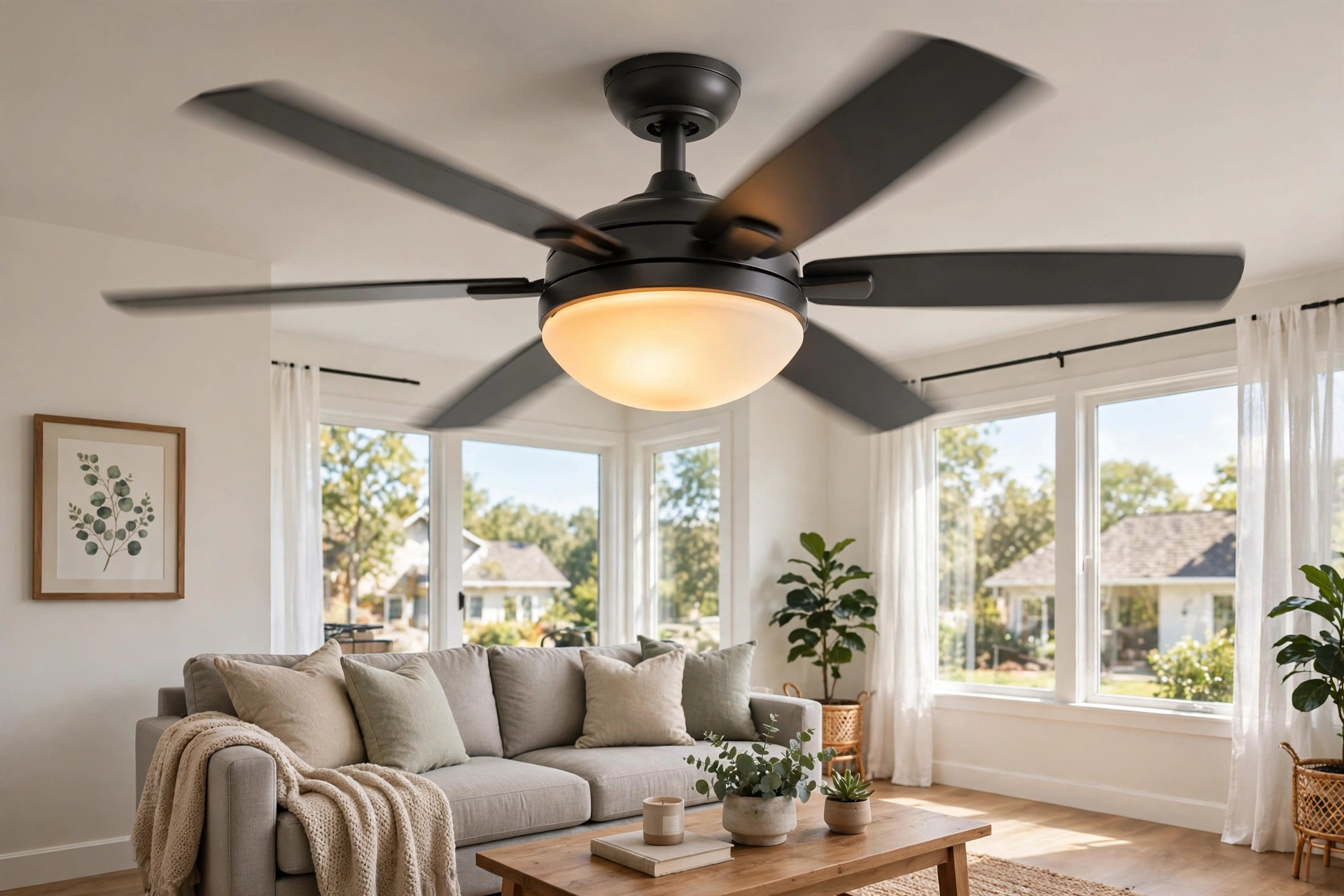

Many shoppers type “ceiling fans lights usa online deals” into a search box and feel lost. The results are endless. Prices swing from under fifty dollars to over five hundred. Some fans are sold with light kits. Some are sold without. Some are made for damp porches. Some are made for quiet bedrooms. This guide walks you through the whole picture. You will learn why a fan with a light is worth the money, what to check before you buy, which types exist, what fair prices look like, how to care for your fan, and how to stay safe. By the end you will know how to spot a true online deal and avoid a costly mistake.
Why a Ceiling Fan With Lights Matters
A ceiling fan with a light does two jobs at once. It moves air. It lights the room. That sounds simple, but the payoff is large. Moving air makes a warm room feel cooler. In summer, a fan lets you set the air conditioner a few degrees higher. That saves money on electric bills. In winter, most fans have a reverse switch. The blades turn the other way and push warm air down from the ceiling. The room feels warmer without touching the thermostat.
A built-in light adds more value. You do not need a separate ceiling fixture. You save the cost of extra wiring. You free up space in small rooms. One unit handles both needs. That is why ceiling fans lights usa online deals attract so many buyers. A single purchase solves two problems.
There is also comfort. Overhead light from a fan fixture spreads wide. It fills the room evenly. It reduces dark corners. Many light kits now use LED bulbs. LEDs use little power and last for years. Some kits let you change the color of the light. You can pick warm white for the evening and bright white for reading.
Style matters too. A fan is one of the first things people see in a room. An old, wobbly fan drags down the whole space. A new fan with a clean light kit can lift a room the way a fresh coat of paint does. Designers at stores like Lamps Plus and Lumens show how many finishes exist now: brushed nickel, matte black, oil-rubbed bronze, white, and warm wood tones.
What to Look for Before You Buy: Ceiling Fans Lights Usa Online Deals
Start with size. Fan blades are measured in inches. A 42-inch fan suits a small bedroom up to about 144 square feet. A 52-inch fan suits a living room or master bedroom up to about 400 square feet. Large rooms need 60 inches or more, or two smaller fans. A fan that is too small will not move enough air. A fan that is too big will overwhelm the room and may hang too low.
Next, check the ceiling height. Fan blades should hang at least seven feet above the floor. If your ceiling is eight feet high, you need a flush-mount or hugger fan. These sit close to the ceiling. If your ceiling is nine feet or higher, you need a downrod. The downrod drops the fan to the right height. Many online listings include the downrod length. Read it before you order.
Look at the motor. DC motors are newer and quieter. They use less power than AC motors. They often come with more speed settings. AC motors cost less up front. Either type can last for years if it is built well. Check the warranty. A good motor warranty runs ten years or longer. Short warranties hint at cheap parts.
The light kit deserves its own check. Ask these questions. Does the fan include the light kit, or is the kit sold apart? What kind of bulbs does it take? Is the light dimmable? Can you replace the bulbs yourself? Integrated LED kits last long, but you cannot swap the bulb when it burns out. Kits that take standard bulbs are easier to fix later. If you want warm dim light in the evening, make sure the kit supports dimming and the bulbs match.
Controls matter more than people think. A pull chain is the cheapest control. A wall switch is simple. A remote control is handy for bedrooms. Smart fans connect to Wi-Fi. You can run them from a phone or a voice helper. Smart fans cost more. Decide if the extra cost is worth it for your home.
Noise is another factor. Bedrooms need quiet fans. Look for listings that mention quiet or silent motors. Reviews often mention noise. Read a few before you buy. A fan that hums or clicks will bother you every night.
Finally, check the rating. Fans marked “damp rated” can handle covered porches and patios. Fans marked “wet rated” can handle open decks and rain. Indoor fans must stay inside. Using an indoor fan outside is a safety risk. Many ceiling fans lights usa online deals involve outdoor models, so check the rating with care.
Types of Ceiling Fans With Lights
Standard fans are the most common. They hang from a downrod and have four or five blades. They fit most rooms. They come in every style from farmhouse to modern.
Hugger fans sit tight against the ceiling. They suit low ceilings. They move a bit less air than standard fans because the blades sit close to the ceiling. They are the safe pick for rooms with eight-foot ceilings.
Outdoor fans are built with sealed motors and weather-proof finishes. They come in damp and wet ratings. A damp-rated fan with a light is a fine pick for a covered patio. A wet-rated fan handles open decks. Outdoor models often cost more because of the extra sealing.
Smart fans connect to apps and voice systems. You can set schedules. You can dim the light from bed. Some track energy use. They are the priciest type. They suit people who already use smart home gear.
Dual-head and window fans exist, but they are rare for homes. Most buyers choose from the four types above.
Cost and Price: What Is a Fair Deal?
Prices vary a lot. Here is a plain range for fans that include lights, based on typical USA online deals:
– Basic indoor fans: 50 to 120 dollars. Simple motors, pull chains, basic light kits. – Mid-range fans: 120 to 250 dollars. Quieter motors, remotes, dimmable LEDs, better finishes. – Premium fans: 250 to 450 dollars. DC motors, smart controls, designer looks, long warranties. – High-end and designer fans: 450 dollars and up. Large sizes, rare finishes, top brands.
A true online deal usually knocks 20 to 40 percent off the list price. Holiday weekends bring the deepest cuts. Watch for sales around major holidays. Many stores clear stock at the end of summer. That is often the best time to buy a ceiling fan with lights.
Be careful with prices that look too low. A 35-dollar fan with lights may have a weak motor, loud bearings, and a light kit that cannot be fixed. Read the shipping terms too. Fans are heavy. Free shipping matters. Check the return policy. A good store gives you at least 30 days. Measure twice before you order, but a fair return policy protects you if the finish looks wrong in your room.
When you hunt for ceiling fans lights usa online deals, compare the full price: fan, light kit, remote, downrod, shipping, and tax. A listing that looks cheap can turn costly once you add the missing parts. Stores such as The Home Depot and Lowe’s often bundle the remote and light kit, which makes the real price easy to see.
Care and Upkeep
A ceiling fan needs little care. Dust the blades every month or two. Dust builds up on the leading edge. It throws the fan off balance. A long-handled duster reaches the blades without a ladder. For sticky grime, wipe the blades with a damp cloth and mild soap. Dry them right away.
Tighten the screws once a year. Vibration loosens screws over time. Loose screws cause wobble and noise. Check the mounting bracket too. If the fan wobbles, turn it off and tighten everything before you run it again. Most wobble kits come with the fan. They are small weights that clip to the blades. They fix minor balance problems in minutes.
Clean the light kit cover when you dust the blades. Glass covers collect dust and dim the light. Remove the cover, wash it with warm soapy water, dry it, and put it back. Replace bulbs as they burn out. If you have an integrated LED kit, note the model number now. You will need it years later if the LED module fails and you want a part.
For outdoor fans, check the finish each spring. Salt air and sun wear down coatings. Wipe the motor housing. Make sure water has not pooled in the light kit. A little care keeps an outdoor fan running for a decade.
Change the direction with the seasons. Run the blades counter-clockwise in summer to push air down. Run them clockwise on low in winter to pull cool air up and push warm air down. This small step saves real money over a year. The U.S. Department of Energy explains fan direction and energy savings in plain terms.
Safety
Safety comes first with any ceiling fixture. Turn off the power at the breaker before you wire a fan. Test the wires with a voltage tester. Do not trust the wall switch alone. Someone may flip it while you work.
Make sure the electrical box is rated for fans. A standard light box cannot hold a fan’s weight and motion. A fan-rated box is marked for the job. If your old box is not rated, hire an electrician to swap it. This step is not optional. Fans have fallen from weak boxes.
Keep the blades at least seven feet above the floor. Keep them at least 18 inches from walls and sloped ceilings. Do not hang a fan where tall people or raised hands can strike the blades.
Check the weight limit of your mounting. Most home fans weigh 15 to 30 pounds. The box and bracket must hold that weight plus the force of motion. When in doubt, call a pro. A one-hour electrician visit costs far less than a fallen fan.
For outdoor fans, only use the right rating. Indoor fans must never go outside. Damp-rated fans belong under cover. Wet-rated fans can take direct rain. The Consumer Product Safety Commission is not in our linked list for this category; check your fan’s rating label instead and follow local electrical codes.
Frequently Asked Questions
Do all ceiling fans come with lights?
No. Many fans are sold without light kits. Some include a cap where a kit can be added later. When you shop for ceiling fans lights usa online deals, filter for “with light” or “light kit included.” Read the box contents line by line so you know exactly what ships.
Can I add a light kit to a fan I already own?
Often yes. Many brands sell add-on light kits that fit their fans. Check the brand and model first. Kits are not always universal. A kit from one brand may not fit another brand’s fan. Buy the kit made for your model to be safe.
Are LED light kits better than bulb kits?
Each has a plus. Integrated LED kits use very little power and last for years. Bulb kits let you change the bulb type and brightness yourself. If you like to tune your light, pick a bulb kit. If you want to install it and forget it, pick LED. Guides at The Spruce compare both styles in detail.
What size fan do I need for my room?
Measure the room in square feet. Under 144 square feet, pick a 42-inch fan. Up to 225 square feet, pick a 44 to 50-inch fan. Up to 400 square feet, pick a 52-inch fan. Larger rooms need 60 inches or more, or two fans. Ceiling height matters too. Low ceilings need hugger fans. High ceilings need downrods.
Do ceiling fans really save on energy bills?
Yes, when used with sense. A fan does not cool the air. It cools people by moving air across skin. Turn the fan off when you leave the room. In summer, a fan lets you raise the air conditioner setting a few degrees. That is where the savings come from. Look for ENERGY STAR certified models. They use about 60 percent less energy than standard fans.
Is it hard to install a ceiling fan with lights?
A handy homeowner can do it in one to two hours. The steps are simple: cut power, remove the old fixture, mount the bracket, wire the fan, attach the blades, add the light kit. The hard part is working overhead and handling the weight. If your wiring is old or the box is not fan-rated, hire an electrician.
A Short Final Word
A ceiling fan with lights is one of the best buys for a home. It cools, it lights, and it looks good doing both. The best ceiling fans lights usa online deals are not always the cheapest listings. They are the listings where a solid motor, a useful light kit, a fair warranty, and free shipping meet a good price. Measure your room. Check your ceiling height. Read the ratings. Then buy ceiling fan lights online with confidence. For more lighting ideas around the house, see our guides to ceiling fans lights for sale usa, led recessed lights for sale usa, and garage shop lights buying guide usa. Design inspiration is easy to find at Philips, This Old House, and Bob Vila.
References
Bob Vila. (n.d.). Home improvement advice. https://www.bobvila.com ENERGY STAR. (n.d.). Energy efficient products. https://www.energystar.gov Lamps Plus. (n.d.). Lighting and home decor. https://www.lampsplus.com Lowe’s. (n.d.). Home improvement products. https://www.lowes.com Lumens. (n.d.). Lighting and ceiling fans. https://www.lumens.com Philips. (n.d.). Lighting products. https://www.philips.com The Home Depot. (n.d.). Home improvement products. https://www.homedepot.com The Spruce. (n.d.). Home and garden advice. https://www.thespruce.com This Old House. (n.d.). Home renovation guidance. https://www.thisoldhouse.com U.S. Consumer Product Safety Commission. (n.d.). Product safety information. https://www.cpsc.gov U.S. Department of Energy. (n.d.). Energy efficiency and renewable energy. https://www.energy.gov
Was this guide helpful?

About Michael Thompson
The My Garden US editorial team writes practical, in-depth home and garden guides for American homeowners — tested advice, no fluff.
You May Also Like

Kitchen Island Pendants Deals Near Me: A Simple Buyer’s Guide
April 6, 2026 0 views
LED Recessed Lights Deals Near Me: A Plain Guide to Buying Local
February 25, 2026 0 views
Sensor Porch Lights: A Guide to USA Online Deals
February 5, 2026 0 views