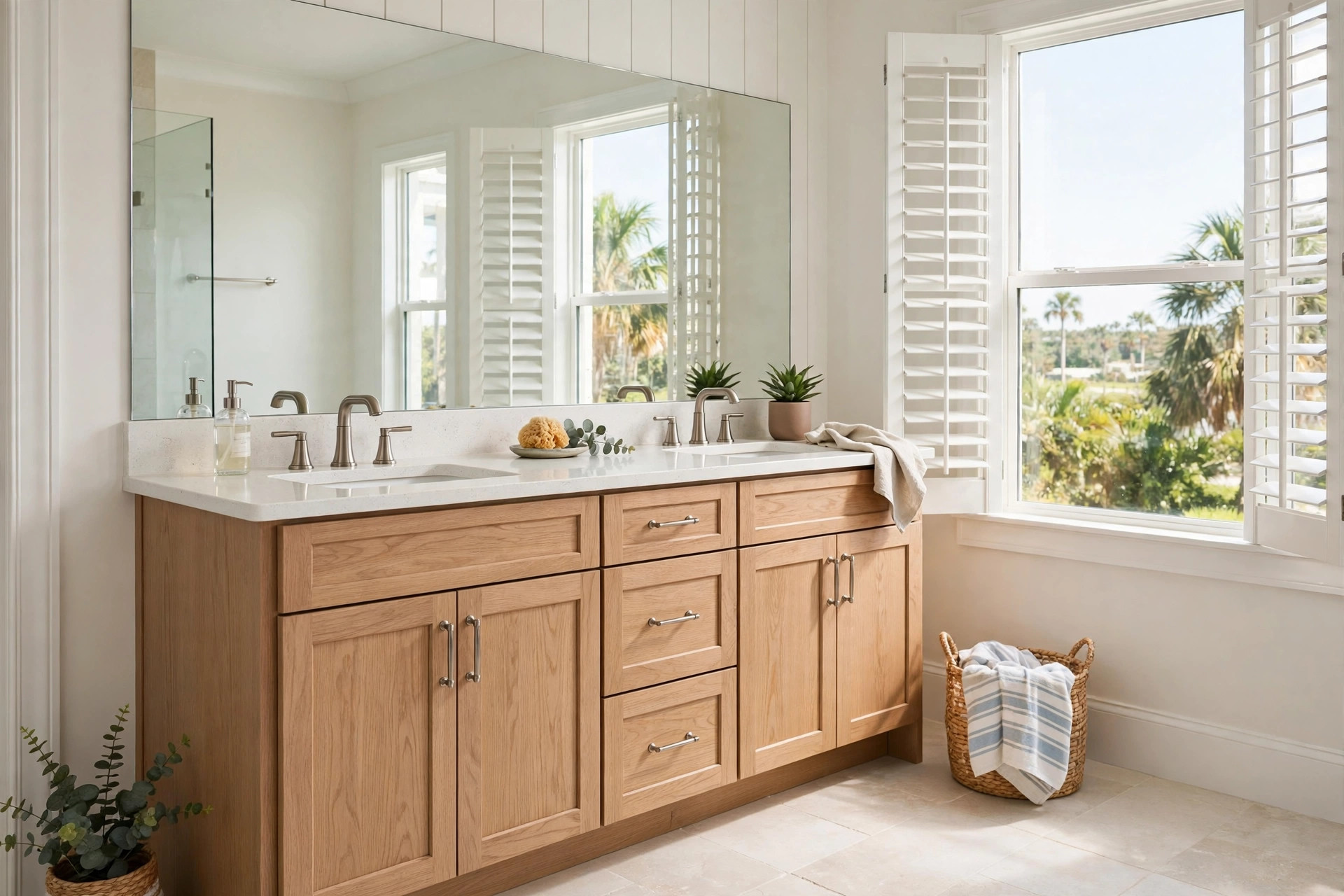
Choosing bathroom sink vanities florida homes usa shoppers can trust takes more thought than it first seems. A vanity is the cabinet under the bathroom sink. It holds the pipes, stores towels and soap, and sets the look of the room. In Florida, heat and damp air add extra pressure. A cabinet that lasts for years in a dry state may warp or swell in a Florida bathroom. This guide explains what to look for, what types exist, what they cost, and how to keep them in good shape. By the end, the reader will know how to pick a vanity that suits a Florida home and a real budget.
Why the Vanity Matters More in Florida
The bathroom is the hardest room in the house for wood furniture. Showers fill the air with steam. Air conditioning cools it down again. This swing between warm and cool, wet and dry, happens every day in a Florida home. Wood swells when it takes in water. It shrinks when it dries. Over time, this movement loosens joints, cracks paint, and peels veneer. A cheap vanity built from thin particle board may show damage within a year or two. The doors may not close. The finish may bubble.
Florida also sits close to salt water. Homes near the coast face salty air that can eat at metal hinges and handles. Even inland cities like Orlando and Tampa see high humidity for much of the year. A vanity for a Florida home must resist moisture, heat, and salt. The right choice lasts ten to fifteen years. The wrong choice becomes a replacement job in three.
The vanity also shapes the whole bathroom. Guests see it first. It sets the style, from old Florida ranch to new coastal cottage. A good vanity raises the value of the home. Real estate agents in Florida often point to the bathroom as a room that helps a house sell. A clean, solid vanity with a good top makes a strong first mark.
What to Look for When You Choose: Bathroom Sink Vanities Florida Homes Usa
Measure First
Measure the space before shopping. Write down the width, depth, and height of the open spot. Note where the water pipes come out of the wall. Note where the drain sits in the floor or wall. A common mistake is to buy a vanity that is one inch too wide. An inch can block a door from opening or crowd a toilet. Leave room to stand at the sink. A width of thirty inches works for most single sinks. Sixty inches or more suits two sinks. For help with wider setups, see this double sink vanities buying guide.
Check the door swing too. A bath door that hits the vanity will chip the finish. In small Florida powder rooms, a wall-hung or floating vanity can save floor space and make the room feel larger.
Pick Moisture-Safe Materials
The cabinet body matters most. Solid wood frames hold up well when they are sealed. Plywood sides resist swelling better than particle board. Avoid medium-density fiberboard, or MDF, in the lower parts of the cabinet. MDF drinks water like a sponge. If the sink overflows once, an MDF base can swell and never go back.
The top matters next. Cultured marble and quartz tops resist stains and water. Natural stone tops, such as granite, need sealing each year. Laminate tops cost less and do fine in a guest bath, but hot curling irons can mark them. A good top is sealed at the wall joint with caulk so water cannot run down behind the cabinet.
Finish counts as well. A factory-baked paint finish or a good polyurethane coat blocks moisture. Open grain or raw wood edges let water in. Look inside the cabinet. The inner shelves should be finished too, not raw.
Hardware That Survives Salt Air
Hinges, pulls, and feet take the most abuse. Solid brass or stainless steel hardware resists rust best. Cheap chrome-plated steel can rust near the coast. Soft-close hinges keep doors from slamming, which protects the cabinet joints. If the vanity has legs, make sure the feet are sealed or made of metal, since floor water gathers at the base.
Types and Options
Freestanding Vanities
The freestanding vanity is the most common type. It sits on the floor on legs or a base. It comes in many widths, from eighteen inches to seventy-two inches. Installation is simple. A plumber can set it in an hour or two. It suits most Florida homes, from condos to single-family houses.
Floating Wall-Hung Vanities
A floating vanity mounts to the wall and leaves the floor open below. This look fits modern Florida homes. It makes a small bath feel bigger and lets a mop reach under the cabinet. The wall must be strong enough to hold the weight. A contractor should check the studs. These cost more to install but give a clean, open feel.
Corner Vanities
A corner vanity fits into a tight spot. It works well in small hall baths and powder rooms common in older Florida bungalows. Storage is less, but the fit can save a layout that would otherwise feel cramped.
Double Sink Vanities
Two sinks suit a shared master bath. They cut morning waiting time for couples. They need sixty inches of width at least, and seventy-two inches is better. Each sink needs its own drain and its own trap. The price runs higher, but for a master bath it is often worth it.
Vanities With Tops and Sinks Included
Many vanities ship as a set: cabinet, top, and sink in one box. Sets cost less than buying parts apart. The sink may be undermount, drop-in, or a vessel that sits on top. Vessel sinks look striking but sit high, which can bother short users. Undermount sinks wipe clean and pair well with stone tops.
Custom and Semi-Custom Vanities
A custom shop can build a vanity to fit an odd space. This helps in older Florida homes with unusual wall lengths. Custom work costs two to three times a stock cabinet. Semi-custom lines let the buyer pick size, wood, and finish from a list. Brands such as Kohler and American Standard offer wide lines of stock and semi-custom bath goods that many Florida remodelers know well.
Cost and Price
Prices run wide. A small stock vanity from a big store can cost two hundred to four hundred dollars. These come from places like Home Depot and Lowes, which stock lines made for warm climates. A mid-range vanity with a quartz top runs six hundred to twelve hundred dollars. A solid wood double vanity with stone top can reach two thousand to four thousand dollars. Custom work starts near three thousand and climbs.
Installation adds to the bill. A plumber in Florida often charges two hundred to five hundred dollars to set a standard vanity and hook up the sink and drain. If the plumbing must move, the cost rises fast. Moving a drain line inside a concrete slab floor, common in Florida homes, can add a thousand dollars or more. Plan the layout around the pipes when possible.
Extra parts add up too. A faucet, a mirror, and a light bar are often bought apart. Brushed nickel faucets pair well with coastal styles and hide water spots. A bathroom vanity light bar above the mirror gives even light for shaving and makeup. For a modern touch, led bathroom mirrors add built-in light and fight the gloom of a windowless bath. Budget three hundred to six hundred dollars for these extras in a mid-range project.
To keep costs down, keep the same footprint. Do not move the drain. Reuse the mirror if it is in good shape. Buy the vanity during a holiday sale, when big stores cut prices on bath goods. And measure twice, as return trips for a wrong size cost time and fuel.
Care and Upkeep in Humid Air
A vanity in Florida needs steady care. Wipe up standing water at once. Water that sits on a wood edge will find a way in. Use a soft cloth, not a scouring pad. Harsh cleaners dull the finish. Mild soap and water do the job for most tops and cabinets.
Caulk is the quiet guard of the bathroom. Check the caulk line where the top meets the wall twice a year. If it cracks or pulls away, scrape it out and lay a fresh bead of silicone caulk. This small job stops water from running behind the cabinet, where mold can grow unseen.
Ventilation matters as much as cleaning. Run the bath fan during every shower and for twenty minutes after. In Florida, where the air outside is already damp, a good fan pulls the steam out before it settles on wood. Clean the fan cover each spring so it moves air freely. Many repair guides, such as those at This Old House, show how to check and clean a bath fan in a few steps.
Watch the inside of the cabinet too. A slow leak under the sink can rot the cabinet floor before anyone sees it. Put a small plastic tray or a cut piece of vinyl flooring under the pipes. Check it each month. If it holds water, call a plumber before the damage spreads.
In coastal homes, wipe metal pulls and hinges with a damp cloth now and then to remove salt film. A light coat of paste wax on wood once a year adds a shield against damp air. Keep the bathroom door open when the room is not in use so air can move.
Safety Notes
Safety starts with a steady install. A tall vanity must be fixed to the wall with screws into studs. A freestanding cabinet can tip if a child climbs on an open drawer. Anti-tip straps cost little and take minutes to fit. Delta Faucet and other makers publish clear install guides, and it is wise to follow the maker sheet step by step.
Water and power mix in the bath, so take care around outlets near the sink. Ground-fault outlets, or GFCI outlets, cut power in a fault and are required by code near sinks. If the bath still has old two-slot outlets, have an electrician upgrade them. Guides at Bob Vila and The Spruce explain GFCI rules in plain terms.
Choose a top with a finished edge. A sharp raw stone edge can cut a hand. Make sure the sink is set at a height that suits the users. Standard height is about thirty to thirty-two inches. Comfort height, near thirty-six inches, suits tall adults and cuts back strain. In a home with older folks, comfort height plus grab space at the side makes daily use safer.
Keep cleaners out of reach of children. Store them in a high cabinet or fit a child lock on the vanity doors. Bleach and drain cleaner under a low sink are a risk in a home with small kids.
Frequently Asked Questions
What size vanity fits a small Florida powder room? A twenty-four or thirty-inch vanity fits most powder rooms. In a very tight space, an eighteen-inch corner unit can work. Measure the door swing and leave clear space in front of the toilet before you buy.
Are floating vanities a good idea in Florida? Yes, when they are fixed to solid studs. They lift the cabinet off a damp floor and make cleaning easy. Have a contractor check the wall strength first, since a loaded vanity is heavy.
Which top material handles Florida humidity best? Quartz and cultured marble handle damp air with little care. They do not need yearly sealing. Granite and marble look rich but need sealing to stop stains. Laminate is fine for a guest bath on a tight budget.
How long should a bathroom vanity last? A well-built plywood vanity with a sealed finish lasts ten to fifteen years in Florida. A cheap particle board unit may fail in three to five years. Good care, a working fan, and fast leak repair add years to any cabinet.
Can I install a vanity myself? A handy homeowner can set a freestanding vanity, connect the supply lines, and fit the drain trap. Moving pipes, cutting a slab, or wiring new lights calls for a licensed pro. When in doubt, hire one. A bad drain seal ruins a new cabinet fast.
Does a new vanity raise home value? Often yes. Bath updates rank high with Florida buyers. A clean, modern vanity with a stone top and new faucet makes the whole bath feel fresh. It will not match a full remodel in value, but it is one of the best small upgrades for the money.
A Short Final Word
Bathroom sink vanities florida homes usa buyers choose must stand up to heat, steam, and salt air. Measure the space with care. Pick plywood over particle board. Seal the top to the wall. Fix the cabinet to the studs. Spend a little more on rust-proof hardware near the coast. Keep the fan running and the caulk fresh. Follow these steps and the vanity will serve the home for many years, looking good from the first day to the last.
References
American Standard. (n.d.). Bathroom and kitchen products. https://www.americanstandard.com Bob Vila. (n.d.). Home improvement advice. https://www.bobvila.com Delta Faucet. (n.d.). Kitchen and bathroom faucets. https://www.deltafaucet.com Kohler. (n.d.). Bathroom and kitchen fixtures. https://www.kohler.com Lowe’s. (n.d.). Home improvement products. https://www.lowes.com Moen. (n.d.). Faucets and plumbing fixtures. https://www.moen.com The Home Depot. (n.d.). Home improvement products. https://www.homedepot.com The Spruce. (n.d.). Home and garden advice. https://www.thespruce.com This Old House. (n.d.). Home renovation guidance. https://www.thisoldhouse.com
Was this guide helpful?

About Emily Rodriguez
The My Garden US editorial team writes practical, in-depth home and garden guides for American homeowners — tested advice, no fluff.