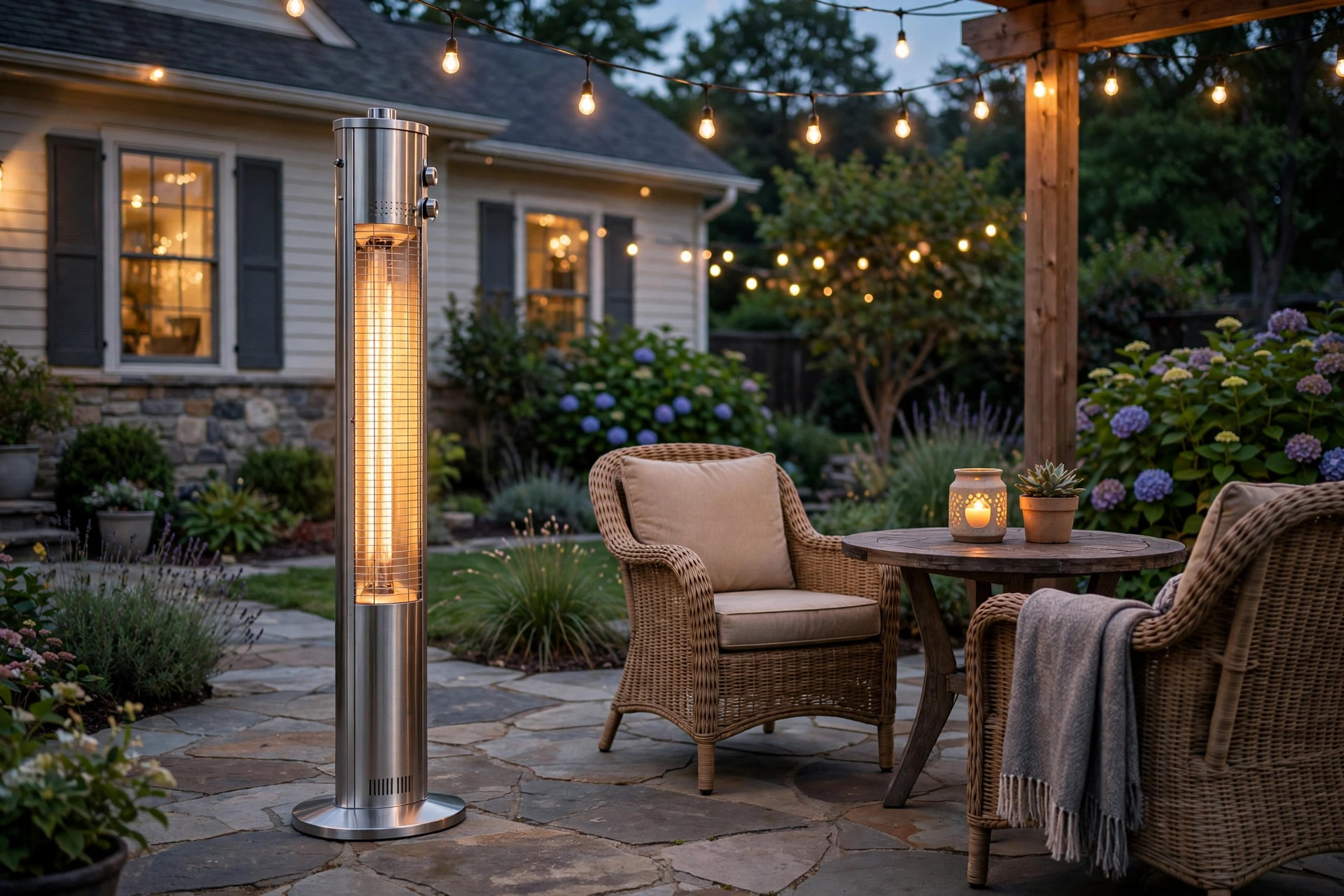

Many families love to sit outside in the evening. But when the air turns cold, the patio empties fast. Premium electric patio heaters with free shipping solve this problem. They add steady warmth to porches, decks, and patios. They plug into a normal outlet, so there is no tank to fill and no gas line to run. Shoppers can compare models online, read real reviews, and have a heavy heater delivered to the door at no extra charge. This guide explains how to choose the right heater, what it costs to run, how to keep it safe, and how to care for it through the years.
Why Premium Electric Patio Heaters Matter
An evening outdoors has a simple pleasure. A quiet talk. A cup of coffee. A meal with friends under the sky. Cold air cuts that pleasure short. An electric patio heater gives back the missing hour or two. It pushes back the chill and lets people stay out late into the fall, and in mild climates, straight through the winter.
Premium models earn their name with better materials and smarter design. They use stainless steel or powder coated aluminum that resists rust. They warm a wide area instead of one small spot. Many include remote controls, timers, and adjustable heat levels. A free shipping offer matters because patio heaters are tall and heavy. Shipping can cost a lot on its own. When a store ships free, the buyer saves real money before the heater even arrives.
Electric heat has one more advantage. It starts with the push of a button. There is no pilot light, no propane smell, and no open flame to watch. For many households, that simplicity is the reason they choose electric over gas.
How to Choose the Right Heater: Premium Electric Patio Heaters with Free Shipping
Match the Size to the Space
First, measure the patio or deck. A small balcony needs only a tabletop heater or a low wall mounted unit. A full patio of 200 square feet or more calls for a tall freestanding heater of 1500 watts or higher. Manufacturers list the heating area in the product details. The U.S. Environmental Protection Agency notes that choosing the right size equipment for a space saves energy and avoids waste, and the same rule holds for a patio heater.
Readers who compare fuel types may also want our top rated propane patio heaters buying guide before they decide.
Pick the Heat Source You Prefer
Electric patio heaters warm in two ways. Infrared heaters send heat straight to people and objects, like sunlight. They work well in open areas because wind does not carry the heat away as fast. Fan forced heaters blow warm air, which feels good in a closed porch or gazebo but loses strength outdoors. For most open patios, infrared is the better choice.
Look for Key Features
A remote control lets you change heat without standing up. A timer shuts the unit off if you forget. Adjustable power settings let you use low heat on mild nights and high heat when frost threatens. Tip over protection is a must on freestanding models. It cuts power if the heater falls. Look for a high IP rating, such as IPX4 or better, which means the heater can stand light rain.
Check the Power Needs
Most premium electric patio heaters run on 1500 watts, the most a standard home outlet can give. Some large units need 240 volts and a special circuit. Check the product page and your home panel before you order. If you need a new circuit, an electrician should do the work. Free shipping saves money on delivery, not on the wiring.
Compare Styles
Freestanding tower heaters stand on the floor and move where you need them. Hanging heaters mount under a roof or gazebo and save floor space. Wall mounted units sit high on a wall and aim heat across a seating area. Tabletop heaters fit small tables on balconies. The right style depends on the shape of the space and where people sit.
Types of Premium Electric Patio Heaters
Freestanding Tower Heaters
The tower is the most common style. It stands about seven feet tall, like a tall lamp. Heat radiates from the top or from panels along the body. Towers work well in the center of a patio or behind outdoor chairs. They are easy to move, and many have wheels. A tall tower can weigh fifty pounds or more, which is one more reason free shipping matters.
Wall Mounted Heaters
These heaters bolt to a wall or post. They aim heat down and out across a seating area. They cost nothing in floor space, which helps on narrow porches. Installation takes more effort than a plug in tower, but once mounted, the heater is always ready.
Hanging Heaters
Hanging units hang from a roof beam, pergola, or gazebo ceiling. They spread heat below them in a circle. They look clean and stay out of the way. They suit covered patios and outdoor dining areas.
Tabletop Heaters
Small tabletop heaters sit on a side table or bar top. They warm two or three people seated close by. They draw less power than full size units. They are a fine pick for a balcony or a small deck.
Homeowners who run an electric model under a gazebo should also know the basics in our top rated propane patio heaters buying guide, since the placement rules are the same for both fuel types.
Cost and Price
Premium electric patio heaters with free shipping usually cost between 150 and 600 dollars. Tabletop models sit at the low end. Tall infrared towers and large wall mounted units sit at the high end. The free shipping part of the deal can be worth 40 to 100 dollars, since these items are tall, heavy, and costly to ship.
The cost to run the heater is easy to figure. A 1500 watt heater uses 1.5 kilowatt hours per hour at full power. If the local electric rate is 15 cents per kilowatt hour, one hour of heat costs about 23 cents. A heater used four hours an evening, five evenings a week, adds about 18 dollars a month to the bill. Using the low setting on mild nights cuts that figure.
Compare that with propane. A propane tank refill can cost 20 dollars or more, and a patio heater can burn through a tank in eight to ten hours. Electric heat usually wins on running cost, and it never needs a trip to the refill station. For long term value, a premium model with a good warranty costs less over five years than a cheap heater that must be replaced twice.
Watch for sales in late summer and early fall. Retailers clear patio stock before winter, and free shipping offers appear most often during those sales. The Home Depot and Lowes both carry wide patio heater lines and often include free delivery on larger models.
Care and Upkeep
An electric patio heater needs little care, but small steps add years to its life.
– Keep it covered when rain is expected. Use the cover made for the model, or a general patio cover that fits. Even weather rated units last longer under a roof or cover. – Wipe the reflectors and housing with a soft damp cloth a few times a season. Dust on the reflector blocks heat and dulls the finish. – Check the power cord each season. Look for cuts, cracks, or worn spots. A damaged cord is a fire risk and must be replaced. – Tighten bolts and screws once a year. Wind and movement loosen hardware over time. – Store the heater indoors during winter in cold regions. Snow and ice test even the best seals. – Clean the infrared bulbs or elements as the manual directs. Some elements can be wiped; others must be replaced by the maker.
A heater stored well will work for ten years or more. The elements themselves are the main wear part. Many makers sell replacement bulbs, so a dim heater can often be brought back to full strength for the cost of a part.
Safety
Electric patio heaters are safer than open flame heaters, but they are still heaters. Treat them with respect.
– Keep the heater three feet from walls, curtains, umbrellas, and dry plants. Heat builds up near close objects. – Never touch the heat element or reflector while the unit is on. The surface gets hot enough to burn skin. – Do not use an indoor rated heater outdoors. Outdoor units have seals against rain and dust. – Plug the heater straight into the outlet. Do not use a long extension cord, which can overheat. If a cord is truly needed, use a short heavy duty outdoor cord rated for the wattage. – Keep children and pets away from the hot surface. A screen guard adds protection on low models. – Turn the heater off and let it cool before you move it or cover it. – Unplug the unit during storms. A power surge can harm the controls.
The U.S. Consumer Product Safety Commission offers general guidance on home heating safety, and its advice applies here too. Reviewers at The Spruce, This Old House, and Family Handyman also test and rate patio heaters each season, which helps buyers compare safety features across brands.
FAQ
Do electric patio heaters work in cold weather? Yes, but cold and wind lower what they can do. Infrared models still warm people directly even when the air is cold. In deep winter, place the heater closer to the seating area and block wind with a fence or screen.
How much does it cost to run an electric patio heater each month? At full power, a 1500 watt heater costs about 20 to 25 cents per hour at average electric rates. Four hours a night, five nights a week, adds roughly 15 to 20 dollars to the monthly bill. The low setting cuts this by a third or more.
Can I leave an electric patio heater outside all year? You can, if it is rated for outdoor use and you use a cover. In regions with snow and ice, bring it indoors for winter. Cold, salt, and ice wear down seals and finishes.
Is free shipping really a good deal on a patio heater? Often yes. Patio heaters are tall and heavy, so shipping fees run high. A free shipping offer can save 40 to 100 dollars. Compare the total price with shipping against other stores to be sure the deal is real.
What size heater do I need for my patio? For a small balcony, a 500 to 900 watt tabletop heater is enough. For a patio up to 150 square feet, one 1500 watt tower works well. For larger patios, use two heaters or one large wall mounted unit. Check the listed heating area on the product page.
Are electric patio heaters cheaper than propane models? The running cost is usually lower for electric, and there are no tank refills to buy. Premium electric units cost more up front than basic propane heaters, but they often cost less over several years. Homeowners with a fireplace may also enjoy our notes on where to buy marble fireplace surrounds in california for indoor warmth.
A Short Final Word
Premium electric patio heaters with free shipping give a simple gift. They give the patio back. Cool evenings no longer end the night early. Choose a heater that fits the space, mount it or place it with care, keep it clean and dry, and follow the basic safety rules. The heater will pay for itself in long evenings outdoors. When the order ships free, the first warm night feels like a bargain too.
For brand and model research, maker sites such as Napoleon and Heatilator publish full product lines and manuals. For chimney and vent questions on gas alternatives, our epa certified chimney inspection services for homeowners page offers useful background.
References
Family Handyman. (n.d.). DIY home repair and maintenance. https://www.familyhandyman.com Heatilator. (n.d.). Fireplaces and fireplace products. https://www.heatilator.com Lowe’s. (n.d.). Home improvement products. https://www.lowes.com Napoleon. (n.d.). Fireplaces, grills, and heating products. https://www.napoleon.com The Home Depot. (n.d.). Home improvement products. https://www.homedepot.com The Spruce. (n.d.). Home and garden advice. https://www.thespruce.com This Old House. (n.d.). Home renovation guidance. https://www.thisoldhouse.com U.S. Consumer Product Safety Commission. (n.d.). Product safety information. https://www.cpsc.gov U.S. Environmental Protection Agency. (n.d.). Protecting human health and the environment. https://www.epa.gov
Was this guide helpful?

About Sarah Mitchell
The My Garden US editorial team writes practical, in-depth home and garden guides for American homeowners — tested advice, no fluff.
You May Also Like

Fireplace Glass Doors Reviews and Buying Guide
May 22, 2026 0 views
Top Rated Fireplace Installation Services Reviews: A Homeowner’s Guide
August 29, 2026 0 views
Best Fireplace Mantel Shelves for Humid Climates
September 18, 2026 0 views