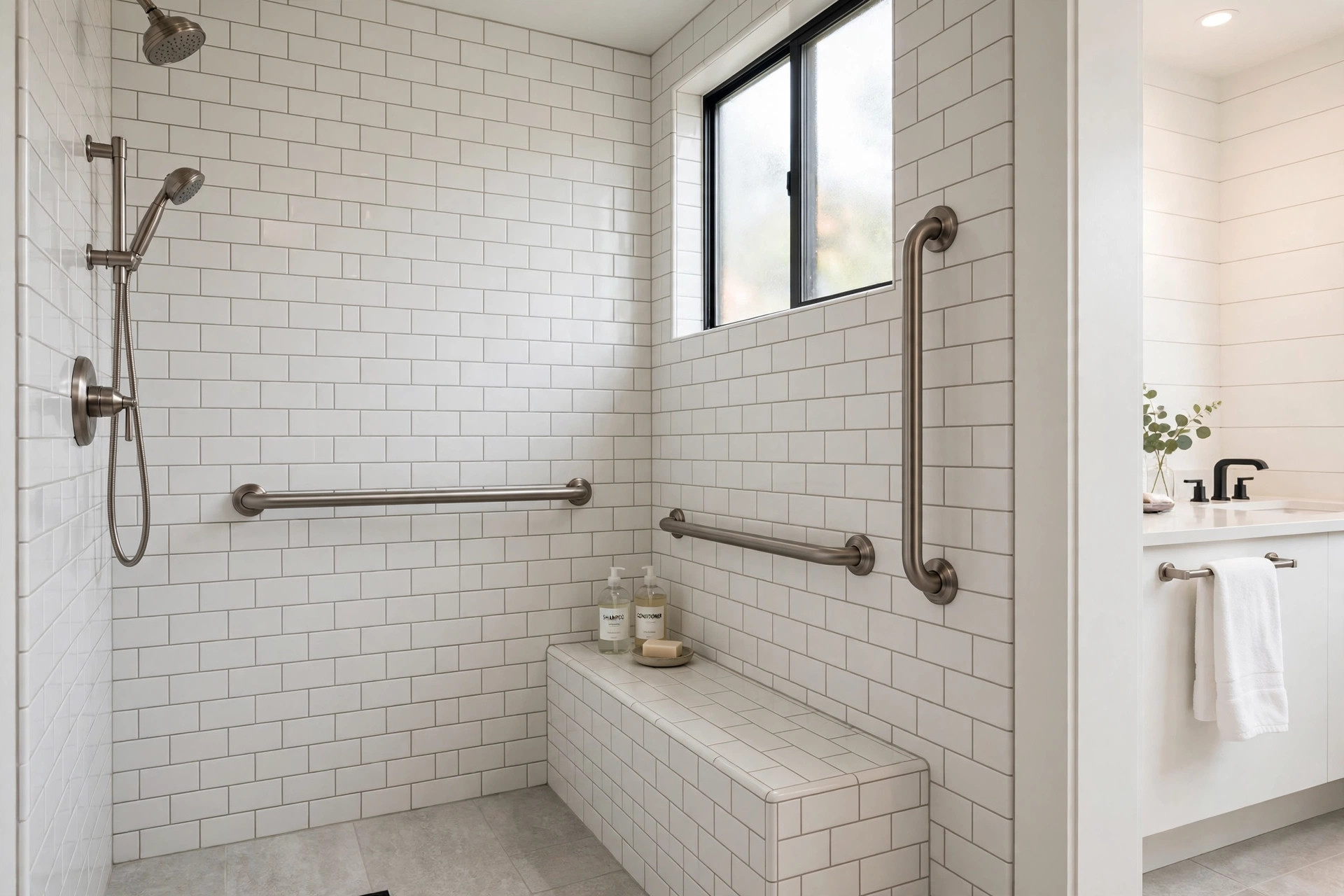

Shower grab bars USA online deals have made bathroom safety more affordable than ever. A wet shower floor is one of the most common causes of falls in American homes. A solid grab bar gives you something firm to hold while you step over the tub edge, wash your feet, or steady yourself on slippery tile.
Why Shower Grab Bars Matter
Every year, hundreds of thousands of Americans are injured in bathroom falls. The shower is the most dangerous room fixture of them all. Soap, water, and smooth tile make a poor combination. A grab bar is a simple steel bar bolted to the wall. It costs little. It lasts for decades. And it can prevent a broken hip or a head injury.
Many people think of grab bars as hospital equipment. That is no longer true. Modern bars come in polished chrome, brushed nickel, and oil-rubbed bronze. They look like normal towel bars. Designers now add them to high-end bathrooms on purpose. Aging in place is the main reason. Most older adults want to stay in their own homes. A well-placed bar lets them do that safely.
The best time to install grab bars is during a remodel. But you do not need to tear out walls. Many bars mount to existing studs with strong screws. Online stores in the USA now carry hundreds of options with fast shipping. The deals are real. You just need to know what to look for.
What to Look For When You Shop: Shower Grab Bars Usa Online Deals
Not all grab bars are built the same. A cheap bar that pulls out of the wall is worse than no bar at all. Here are the key points to check before you add anything to your cart.
Weight Rating
A good grab bar must hold at least 250 pounds. The best models hold 500 pounds. Look for bars tested to ADA standards. ADA stands for the Americans with Disabilities Act. It sets the rules for safe public bathrooms. A bar that meets ADA rules will be strong enough for your home. Check the product page for the weight rating. If the page does not list one, move on to another product.
Bar Diameter
Most safety bars measure 1.25 inches across. This is the ADA standard size. Some measure 1.5 inches. Smaller diameters are easier for small hands to grip. Larger ones suit big hands. Avoid novelty bars with thin tubing. They look pretty but give a poor grip when wet.
Length and Shape
Straight bars come in lengths from 12 to 48 inches. Common shower sizes are 18, 24, and 32 inches. Measure your wall space first. Angled and L-shaped bars fit corners and tub edges. A wave-shaped bar gives more hand positions. For a shower entry, a vertical bar of 18 inches works well. For the back wall, a horizontal bar of 24 to 32 inches is standard.
Finish and Material
Stainless steel is the top choice. It resists rust and cleans with a damp cloth. Chrome-plated brass is also strong. Avoid plain steel. It will rust in a wet shower. Finishes include polished chrome, brushed nickel, satin nickel, and matte black. Pick a finish that matches your faucets and shower trim. Brushed finishes hide water spots better than polished ones. Many installation guides suggest matching the bar finish to the rest of the bath hardware for a clean look.
Types of Shower Grab Bars
Grab bars fall into a few clear types. Each suits a different wall and budget.
Screw-Mounted Bars
These are the gold standard. Screws go through the wall into wood studs. Some kits include special anchors for tile over concrete board. A screw-mounted bar is permanent and very strong. Most models cost between 20 and 60 dollars online. This is the type inspectors and plumbers recommend. If you can find studs behind your shower wall, this is the bar to buy.
Suction-Cup Bars
Suction-cup bars stick to smooth tile with vacuum cups. They are easy to install and easy to remove. They cost 15 to 40 dollars. But they are not true safety bars. They can lose suction without warning. Use them only as a light balance aid, never to catch a fall. Check them before every use. Do not trust them on textured tile.
Floor-to-Ceiling Poles
Tension poles run from the bathroom floor to the ceiling. They need no screws. They suit renters who cannot drill into tile. Prices run from 60 to 150 dollars. The pole must be set dead vertical and locked tight. Check it often. It works best in bathrooms with solid ceilings.
Designer Bars That Double as Accessories
Some brands make bars that look like towel racks or corner shelves. A company like Kohler sells grab bars disguised as shower shelves. Moen and Delta sell bars with matching bath collections. These cost more, often 80 to 200 dollars. They are perfect when style matters as much as safety.
Cost and Price: Finding Real Online Deals
Online prices for shower grab bars vary widely. A basic 24-inch stainless steel bar may sell for 25 dollars at one store and 55 dollars at another. Here is how to judge a real deal.
First, compare like with like. Two bars of the same length and finish should cost about the same. If one is half the price, check the weight rating. Cheap bars often skip the ADA test. A low price means nothing if the bar cannot hold your weight.
Second, watch for bundle deals. Many online retailers sell bar sets for showers and tubs. A two-bar set may cost 45 dollars while two single bars cost 35 dollars each. Bundles save real money.
Third, check shipping costs. Some discount sites charge 15 dollars to ship a 20-dollar bar. A well-known home improvement retailer often ships free to your door or your local store. Another major home store matches many online prices. Always add shipping before you compare.
Fourth, look at finish pricing. Chrome is usually cheapest. Brushed nickel costs a bit more. Matte black and oil-rubbed bronze cost the most. If your budget is tight, chrome gives the same strength for less money.
Typical USA online price ranges look like this:
– Basic stainless steel straight bar, 12 to 24 inches: 18 to 40 dollars – Longer bars, 32 to 48 inches: 35 to 70 dollars – L-shaped or angled bars: 40 to 90 dollars – Designer bars with matching collections: 80 to 200 dollars – Suction-cup models: 15 to 40 dollars – Floor-to-ceiling poles: 60 to 150 dollars
Holiday sales bring the best deals. Memorial Day, Labor Day, and Black Friday sales cut prices by 20 to 40 percent. Sign up for store emails. Many retailers send a 10 percent coupon to new subscribers. That coupon alone can beat most deal sites.
Where to Buy Online in the USA
You have many good options. Large home improvement sites carry top brands and honest reviews. Specialty bathroom stores offer more finishes and expert advice. Manufacturer sites like American Standard list full product lines with spec sheets.
Read the reviews before you buy. Look for reviews from verified buyers. Pay attention to comments about installation and sturdiness. A bar with 500 reviews and a 4.7 rating is a safe bet. A bar with 6 reviews and a perfect score is not.
Also compare the same model across stores. Model numbers make this easy. Search the exact model number. You will often find a 10 to 20 dollar difference between sellers. Shopping roundups from Bob Vila can help you learn what a fair price looks like.
Installation: Getting It Right
A grab bar is only as strong as its mounting. This is the most important part of the whole project.
Find the studs first. Use a good stud finder. Mark each stud with tape. Most shower walls have studs every 16 inches. Plan your bar length so both ends hit a stud. A 24-inch bar fits neatly between two studs in many showers.
Drill through tile with care. Use a carbide or diamond bit. Start slow. Let the bit do the work. Do not force it. Cracked tile is hard to fix.
Use stainless steel screws. The bar maker usually includes them. Drive each screw into solid wood. The bar should not move at all when you pull hard. Test it with your full body weight before anyone uses the shower.
If you cannot find studs, use special anchors. Wing anchors and toggle bolts work in tile over cement board. Follow the anchor instructions exactly. Never mount a bar to drywall alone. Drywall cannot hold a falling person.
Many homeowners hire a handyman for this job. The cost is usually 75 to 150 dollars per bar. That is money well spent. A professional will find the studs and seal the screw holes against water. If your shower has a fiberglass surround, ask the installer about backing plates. Fiberglass flexes. It needs extra support behind the wall.
For full project ideas, This Old House publishes step-by-step bathroom guides. Home design sites like HGTV show how grab bars fit into modern remodels.
Care and Upkeep
Grab bars need little care. Wipe them down once a week with a soft cloth and mild soap. Rinse and dry. That is all most bars need. Do not use steel wool or harsh cleaners. They scratch the finish and invite rust.
Check the mounting twice a year. Grab the bar and pull firmly. It should not move at all. Look for loose flanges or cracked caulk around the screws. Re-caulk any gaps with silicone made for bathrooms. Water behind the wall causes mold and weakens wood.
If you live in an area with hard water, mineral spots may form. White vinegar removes them fast. Wipe the bar with a vinegar-damp cloth, then rinse. Dry with a towel to keep the shine. For matte black finishes, skip the vinegar. Use plain soap and water so the coating stays even.
Tighten screws if they ever feel loose. Do not wait. A loose bar is a false promise of safety. If a screw hole strips out, move the bar to a fresh spot in the stud. Fill the old hole with waterproof caulk.
Safety Notes
Grab bars reduce fall risk, but they are not magic. Place them where hands naturally reach. Common spots are the shower entry, the back wall, and beside a built-in bench. A bar too high or too far away will not help in a real slip.
Do not use towel bars, soap dishes, or glass shower doors as handholds. They are not made to hold body weight. They break, and the fall that follows is worse. Replace any habit of grabbing these with a proper safety bar.
Teach everyone in the house to use the bars. Children and guests may not notice them. Pair the bars with a non-slip mat and a walk-in shower design for the safest setup. Guides on sites like The Spruce often cover the full bathroom safety picture.
If someone in the home has serious balance problems, talk to a doctor or an occupational therapist. They can suggest the best bar layout for that person. They may also suggest a shower chair or a hand-held shower head. A rain shower head guide can help you pick a model that pairs well with seated bathing.
Finally, never buy a suction-cup bar as your only safety device. They have their place as a light aid. They are not a substitute for a screwed-in bar. The small savings are not worth the risk.
Frequently Asked Questions
How much do shower grab bars cost online in the USA?
Most quality bars cost between 20 and 70 dollars online. Designer models cost 80 to 200 dollars. Watch for holiday sales and bundle deals. Always add shipping to the price before you compare two sellers.
Can I install a grab bar myself?
Yes, if you can find the wall studs and drill tile with care. You need a stud finder, a carbide drill bit, and stainless steel screws. If you are unsure, hire a handyman. The job usually costs 75 to 150 dollars per bar.
Do suction-cup grab bars really work?
They work as a light balance aid on smooth, clean tile. They are not rated to stop a fall. They can lose grip without warning. Use them only as a backup, never as your main safety bar.
What size grab bar do I need for a shower?
For the back wall, 24 to 32 inches is standard. For the shower entry, an 18-inch vertical bar works well. Measure your space and make sure both ends land on studs. Longer bars give more hand positions.
Will a grab bar rust in the shower?
Stainless steel and chrome-plated brass resist rust for years. Plain steel will rust. Wipe the bar dry after cleaning and re-caulk around the screws once a year. Cheap no-name bars rust fastest, so stick with known brands.
Are grab bars covered by insurance or Medicare?
Standard Medicare does not pay for grab bars. Some Medicare Advantage plans offer a home safety allowance. Veterans may get help through the VA. Check with your plan before you buy. Keep your receipt either way.
A Final Word
Shower grab bars USA online deals put real safety within reach of every budget. A twenty-five-dollar bar, screwed into solid studs, can prevent an injury that costs thousands. Shop with care. Check the weight rating. Match the finish to your bathroom. Install it right, or pay a pro to do it. Then use it every day. Small hardware, honestly installed, is one of the smartest buys in any American home.
References
American Standard. (n.d.). Bathroom and kitchen products. https://www.americanstandard.com Bob Vila. (n.d.). Home improvement advice. https://www.bobvila.com Delta Faucet. (n.d.). Kitchen and bathroom faucets. https://www.deltafaucet.com HGTV. (n.d.). Home and garden ideas. https://www.hgtv.com Kohler. (n.d.). Bathroom and kitchen fixtures. https://www.kohler.com Lowe’s. (n.d.). Home improvement products. https://www.lowes.com Moen. (n.d.). Faucets and plumbing fixtures. https://www.moen.com The Home Depot. (n.d.). Home improvement products. https://www.homedepot.com The Spruce. (n.d.). Home and garden advice. https://www.thespruce.com This Old House. (n.d.). Home renovation guidance. https://www.thisoldhouse.com
Was this guide helpful?

About Sarah Mitchell
The My Garden US editorial team writes practical, in-depth home and garden guides for American homeowners — tested advice, no fluff.
You May Also Like
Heated Floor Kits USA Online Deals: A Practical Buying Guide
February 9, 2026 0 views
Bathroom Sink Vanities USA Online Deals: How to Buy Well and Spend Less
April 25, 2026 0 views
Quiet Exhaust Fans for Sale USA: A Plain Guide
March 15, 2026 0 views