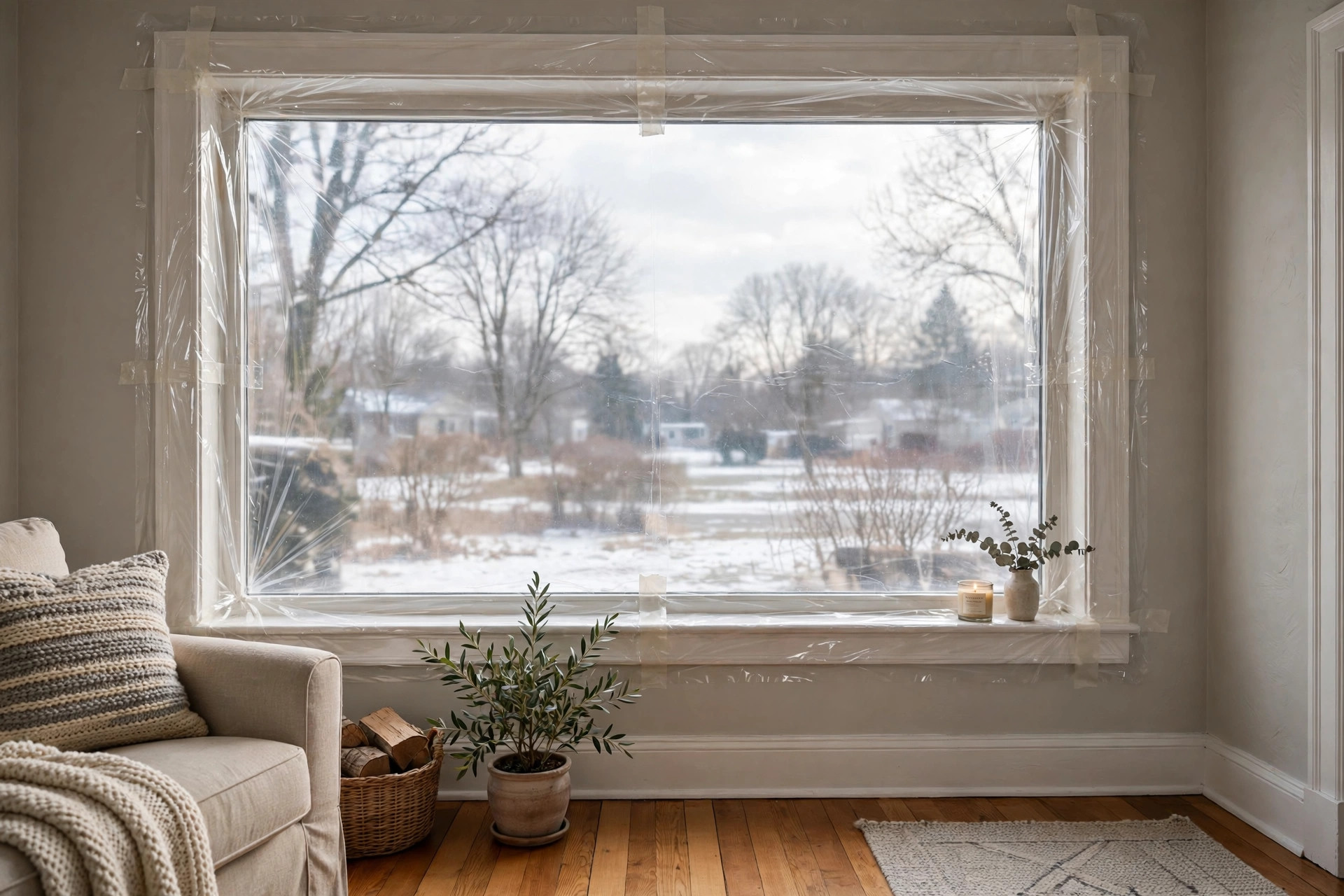

Every winter, the same problem shows up in homes across the country. Windows let warm air leak out and cold air seep in. The furnace works harder, the bill climbs higher, and the rooms near the windows never feel warm. Many readers searching window insulation film kit reviews usa ask the same simple question: does a roll of clear plastic and a hair dryer really make a difference? This guide answers that question in plain terms. It covers what these kits do, what to look for when you buy one, the types on the market, the cost, how to put them up, and the safety rules worth knowing.
Why It Matters
Windows are weak points in any home. A single-pane window loses heat fast. Even double-pane windows can leak air around the frame, the sash, or the locks, a point made clear in federal guidance on home energy loss. Studies of home energy loss have long shown that windows can account for a large share of the heat lost in winter. That loss shows up on the gas or electric bill.
A window insulation film kit adds a second, airtight layer over the glass. The film traps a pocket of dead air between itself and the window. Dead air is a poor conductor of heat, so less warmth escapes through the glass. The film also stops drafts from leaking through small gaps around the frame.
People read window insulation film kit reviews usa because they want to know whether this cheap fix is worth the work. For most homes with older or drafty windows, the answer is yes. The improvement is real, though it is not magic. Film cannot fix a broken window or replace proper weather sealing. But as a low-cost winter measure, it has a long and honest record.
What to Look For When You Buy: Window Insulation Film Kit Reviews Usa
Not all kits are the same. The best choice depends on your windows and your skill with a hair dryer. Here are the points that matter most.
Film Clarity and Thickness
Look for film that stays clear after it is shrunk tight. Cheap film can turn cloudy or wrinkle. Thicker film, often sold as 0.75 mil or heavier, resists tears when you pull it taut. Reviews often praise kits that stay nearly invisible once installed.
The Attachment Method
Most kits use double-sided tape. You press the tape around the window frame, stick the film to it, and shrink the film with a hair dryer. Tape quality matters more than anything else. Good tape holds all winter. Poor tape peels off in a week. If your window frames are damp, dusty, or textured, look for kits with extra-strong tape.
Size and Coverage
Measure every window before you buy. Kits come in sizes for standard windows, patio doors, and large picture windows. One large sheet can cover several small windows. Buyers often run short, so a little extra is wise. Sizing charts on DIY sites such as Family Handyman help you measure before you shop.
Shrink Method
Most indoor kits need a hair dryer to tighten the film. A few kits use static cling or soapy water instead. Hair dryer kits give the tightest, clearest finish. If you do not own a hair dryer, the static types are an option, though they grip less well.
Kit Contents
A full kit should include the film, the double-sided tape, and a clear guide. Some add a small knife or cleaning wipe. Check the box. Missing tape is the most common complaint in honest reviews.
Types of Window Insulation Film Kits
Standard Indoor Shrink Film
This is the common kind. You tape the film to the inside frame and heat it with a dryer. It fits over single, double, and triple pane windows. It works best on windows you will not open until spring.
Heavy-Duty Film
Heavier film stands up to pets, kids, and busy rooms. It costs a little more. It is a good pick for the big living room window that takes daily wear.
Patio Door Kits
These are cut wide for sliding glass doors. They use the same tape-and-shrink method. Door kits see more stress because doors move, so check reviews that mention how the tape holds up to daily use.
Outdoor Film
Outdoor film goes on the outside of the window. It faces wind, rain, and sun, so it must be stronger and UV rated. It is less common in home kits, but it suits windows that cannot be reached from inside.
No-Shrink and Static Kits
These stick on with water or static. They are fast to put up. The seal is weaker, so they suit mild winters or as a backup layer on already sealed windows.
Cost and Price
Window insulation film is one of the cheapest weatherproofing steps you can take. A small kit that covers three standard windows often costs between five and fifteen dollars. Large kits and heavy-duty film run higher, up to about thirty dollars for patio-door coverage.
Look at the cost per window, not the box price. A ten-dollar kit that covers five windows costs two dollars a window. Compare that to a professional window replacement at several hundred dollars a window, and the value is plain.
Many readers of window insulation film kit reviews usa also look at related winter fixes. Sealing the door with new weatherstripping or adding a door sweep at the threshold can cut drafts as well. Each step is cheap, and together they add up to real savings.
How to Install the Film
Installation is simple work, but care pays off. The film only looks good and seals well when the steps are followed in order.
1. Clean the frames. Wipe the frame with a damp cloth and let it dry. Dust and grease keep tape from sticking. 2. Apply the tape. Press the double-sided tape around the full frame. Leave no gaps. Gaps are where drafts sneak through. 3. Unfold the film. Open the sheet and hold it up to the window. Trim it so it overhangs the tape by about an inch on each side. 4. Stick the film on. Start at the top. Press the film onto the tape and work your way down and across. Pull it smooth as you go. 5. Shrink it tight. Run a hair dryer over the film, starting from the center and moving outward. The film will tighten and turn clear. Keep the dryer moving so the film does not burn. 6. Trim the edges. Cut away the extra film at the frame edge.
The whole job takes about fifteen minutes per window once you learn the rhythm. Do it on a dry day, and do not open the window until spring unless you must.
Care and Upkeep
Once the film is up, it needs little care. Keep the room from getting too humid, because heavy moisture can weaken the tape. Wipe the film with a soft dry cloth if it gathers dust. Do not press on it hard or let pets scratch it.
Check the corners once a month. If a corner lifts, press it back down. A small piece of fresh tape can rescue a corner that will not hold. When spring comes, peel the film off slowly. Pull the tape at a low angle to avoid taking paint with it. A little rubbing alcohol removes leftover stickiness.
Good film lasts one full winter. Equipment makers such as Goodman, Lennox, and Rheem echo the same seasonal advice: do winter prep each fall, not every few years. Do not try to reuse it the next year. The tape and the shrink are single-season. Start fresh each fall for the best seal.
Safety
Window film is safe, but a few rules matter.
– Keep the hair dryer moving and away from the film for more than a few seconds in one spot. Film can melt or scorch. – Keep the dryer away from curtains, bedding, and pets. Practical safety tips for this kind of work appear on This Old House. – Do not block emergency exits. Leave at least one window per room uncovered if it is a fire escape route. In bedrooms, never seal every window. – Keep film away from heat sources such as radiators and space heaters. – If anyone in the home has breathing trouble, note that sealing windows cuts fresh air flow. A slight crack in one window can balance the trade.
These are common-sense steps. They take little time and keep a simple project safe.
What Reviews Say Across the USA
American buyers report steady results from coast to coast. In northern states, where winters are long and cold, users say the film takes the edge off drafts and makes rooms near windows feel warmer. In milder southern winters, buyers use it more for stopping air leaks than for deep cold.
The most praised points in reviews are clear film, strong tape, and a tight shrink that stays put for months. The most common complaints are tape that fails on painted or uneven frames and film that tears if pulled too hard during install. Brand names matter less than these basics.
When you read reviews, look for recent ones from your climate zone. A kit that holds up through a Maine winter will serve well almost anywhere. Pair the film with other simple measures, such as comparing furnace options in guides like /lennox-vs-rheem-ac-reviews-for-homeowners/ when old heating systems need review, to get the most from your heating dollar.
Buyers also note that film works best as part of a wider winter plan. Many households put film up in October, then check attic insulation and door seals before the first hard freeze. The film handles the window glass. Weather sealing handles the frames. A clean furnace filter handles the air flow. No single step does it all, but each one is cheap, and the reviews that praise film the most come from people who treated it as one layer in a sound plan.
Frequently Asked Questions
Does window insulation film really save money on heating bills?
It can. The savings depend on how drafty your windows are now. Homes with old single-pane windows see the biggest drop. The film costs a few dollars per window, so even a small cut in the heating bill pays it back fast. Furnace makers such as Carrier and Trane note that lowering the heat load helps any system run better.
Can I use window film on double-pane windows?
Yes. Many buyers add film to double-pane windows that still leak air at the edges. The film adds another sealed air pocket and cuts drafts around the frame.
Will the film damage my window frames or paint?
When removed with care, most kits leave frames clean. Peel slowly and pull the tape back at a low angle. If paint is old or loose, some touch-up may be needed. Testing a small piece first is a good idea.
How long does the film last?
One winter season is the honest answer. The tape and shrink are made for single-season use. Remove it in spring and install fresh film next fall.
Is window insulation film hard to install?
No. Most people get the hang of it after one window. The hair dryer step is the only part that takes practice. Keep the dryer moving, start from the center, and the film tightens on its own.
Can I open a window that has film on it?
You can, but the seal will break. Most people seal only windows they can keep shut until spring. For windows you must open, use weatherstripping or a door sweep style seal that allows movement instead.
A Short Final Word
A window insulation film kit is a small job with a real payoff. For a few dollars and an hour of work, you can cut drafts, warm up cold rooms, and ease the load on your furnace. Efficiency programs like ENERGY STAR list similar low-cost steps for winter savings. Read window insulation film kit reviews usa with the basics in mind: clear film, strong tape, the right size, and honest install steps. Do the work in the fall before the cold sets in, and enjoy a quieter, warmer winter.
Related guides on this site include energy efficient mini split for 1500 sq ft.
References
Carrier. (n.d.). Heating and cooling systems. https://www.carrier.com ENERGY STAR. (n.d.). Energy efficient products. https://www.energystar.gov Family Handyman. (n.d.). DIY home repair and maintenance. https://www.familyhandyman.com Goodman. (n.d.). Heating and cooling equipment. https://www.goodmanmfg.com Lennox. (n.d.). Heating and cooling systems. https://www.lennox.com Rheem. (n.d.). Heating, cooling, and water heating. https://www.rheem.com This Old House. (n.d.). Home renovation guidance. https://www.thisoldhouse.com Trane. (n.d.). Heating and air conditioning. https://www.trane.com U.S. Department of Energy. (n.d.). Energy efficiency and renewable energy. https://www.energy.gov
Was this guide helpful?

About Robert Taylor
The My Garden US editorial team writes practical, in-depth home and garden guides for American homeowners — tested advice, no fluff.
You May Also Like

Oil to Gas Boiler Conversion Cost in the USA: A Full 2026 Guide
January 27, 2026 0 views
How Much Do Wood Pellets Cost USA 2026: Prices by Bag, Ton, and Region
July 30, 2026 0 views
Heat Pump Water Heater vs Gas Cost USA: The Full Comparison
January 30, 2026 0 views