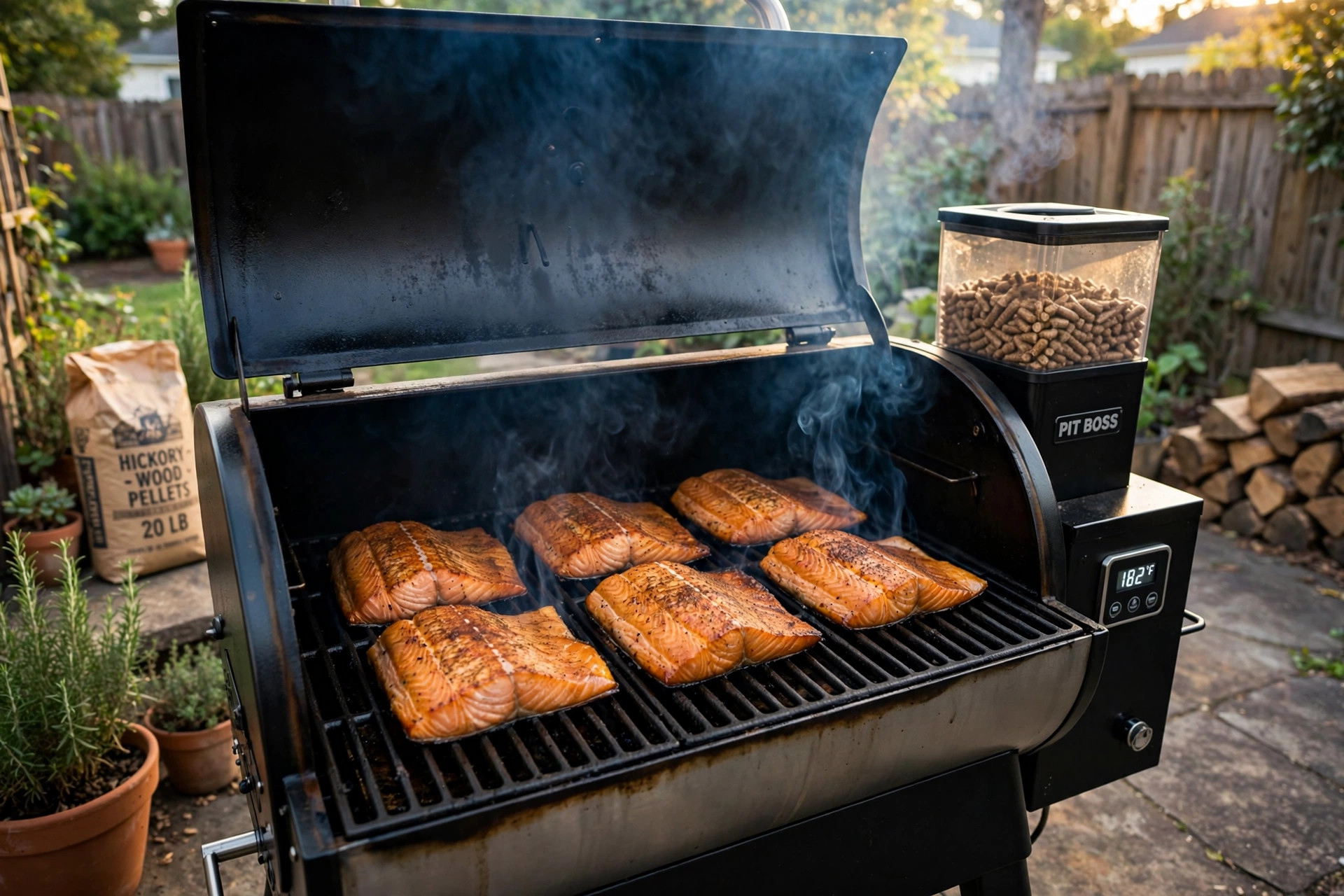

Smoked salmon has a taste that few foods can match. It is soft, rich, and full of gentle wood flavor. Many people think it is hard to make at home. That is not true. A pellet grill makes the job simple. It feeds wood pellets on its own. It holds a steady low heat. It lets clean smoke flow around the fish. When you learn how to smoke salmon on pellet grill the right way, you can make results that rival a fine smokehouse. This guide shows every step in plain words. It covers the fish, the brine, the pellets, the temperatures, and the times. It also covers cost, care, and safety. By the end, you will know exactly what to do on your first cook and on your fiftieth.
Why Smoking Salmon on a Pellet Grill Works So Well
A pellet grill was made for low and slow cooking. It uses small wood pellets as fuel. An auger feeds the pellets into a fire pot. A fan feeds air to the fire. A controller keeps the temperature close to your setting. That is a perfect match for salmon. Salmon needs gentle heat and thin blue smoke. It does not need a hot blast. On a pellet grill, you set the dial and let the machine work. Many pit masters say steady heat is the whole secret of good smoked fish, and resources like AmazingRibs.com have long explained why thin smoke beats thick smoke for delicate foods.
Pellet grills also add real wood flavor. Gas grills cannot do that on their own. Charcoal can smoke fish, but it needs constant watch. With pellets, you get wood smoke with the ease of an oven. That is why cooks who once feared smoking fish now try it with joy. If you are still choosing a cooker, our guide on pellet grill vs gas grill pros and cons can help you weigh the two.
What You Need to Get Started: How to Smoke Salmon on Pellet Grill
The Salmon
Buy the best salmon you can find. Farm-raised Atlantic salmon is mild and fatty. It is easy to smoke and hard to dry out. Wild-caught king or sockeye has deeper color and stronger flavor. It costs more and can dry faster, so watch it close. Either choice can turn out well. Look for fillets with firm flesh and a fresh, clean smell. Skin-on fillets hold together best on the grate. Thicker fillets, at least one inch at the thick end, smoke more evenly than thin tail pieces. The fish counter at Home Depot does not sell salmon, but their grilling section carries every tool named here.
The Pellets
Food-grade hardwood pellets are the fuel. Never use heating pellets. They may hold binders that are not safe for food. For salmon, mild woods work best. Alder is the classic choice in the Pacific Northwest. It gives sweet, light smoke that suits fish. Apple and cherry add a soft fruit note and a warm color. Maple is gentle and mild. Pecan sits in the middle. Hickory and mesquite are strong. A little hickory mixed with alder can be nice, but full hickory can make salmon bitter. Pellet makers such as Traeger sell fruit-wood blends made for fish, and Weber offers mild pellets that pair well with salmon.
Basic Tools
You need little gear. A good instant-read thermometer is the most important tool. Fish cooks fast, and guessing leads to dry fish. A grill brush keeps the grates clean. A sheet pan lined with foil catches drips. Long tongs turn the fillets without breaking them. Some cooks use a cedar plank or a frog mat so the fish never touches bare metal. A spray bottle of water helps calm flare-ups in the fire pot.
How to Prepare the Salmon
Good smoked salmon starts long before the grill is lit. Preparation does three things. It seasons the fish. It firms the flesh. It helps smoke stick to the surface. There are two common paths: dry brine and wet brine. Both work. Pick one and follow it well.
The Dry Brine
A dry brine is a mix of salt and sugar rubbed on the fish. Use one part kosher salt to two parts brown sugar. Add cracked black pepper and a little lemon zest if you like. Lay the fillets skin side down on a pan. Cover all sides with the cure. Some cooks use about a quarter cup of mix per pound of fish. Cover the pan and set it in the fridge for four to eight hours. Thick fillets can go up to twelve hours. The salt will pull water from the fish and then pull flavor back in. After curing, rinse the fillets under cold water. Pat them dry with paper towels.
The Wet Brine
A wet brine is a salty, sweet bath. Mix one quart of cold water with a quarter cup of kosher salt and a half cup of brown sugar. Stir until dissolved. You can add bay leaves, peppercorns, or a splash of soy sauce. Submerge the fillets in the brine. Keep them cold in the fridge for four to six hours. Do not brine much longer. The flesh can turn soft and mushy. Rinse well under cold water when the time is up. Pat the fish dry.
The Pellicle: The Step Most Beginners Skip
After rinsing, place the fillets on a rack over a pan. Set them in the fridge, uncovered, for two to four hours. Air will dry the surface and form a thin, tacky skin called a pellicle. This layer feels sticky to the touch. It catches smoke and holds it on the fish. Cooks who skip this step get less smoke flavor and a duller color. The wait is worth it. Food writers at The Spruce Eats often point to the pellicle as the key to a glossy smoked finish.
How to Smoke Salmon on Pellet Grill: Step by Step
Now comes the main event. The steps below show exactly how to smoke salmon on pellet grill from a cold start to the table.
1. Fill the hopper. Pour in mild food-grade pellets. Alder or a fruit blend is best for salmon. 2. Prime and preheat. Start the grill per its manual. Set it to 225 degrees Fahrenheit. Let it heat for ten to fifteen minutes. The smoke should run thin and blue, not thick and white. 3. Clean the grates. Brush them well while hot. Oil them lightly so the skin does not stick. 4. Season the fish. After the pellicle has formed, add a light dusting of black pepper and a little more brown sugar if you like. Go easy. The brine already seasoned the fish. 5. Place the fillets. Lay them skin side down on the grate. Leave space between them for smoke to move. 6. Smoke. Close the lid. Let the grill work for 60 to 90 minutes at 225 degrees. Do not open the lid often. Every peek lets heat and smoke escape. 7. Check the temperature. Start checking with your thermometer after 45 minutes. Pull the fish when the thickest part reads 140 to 145 degrees Fahrenheit. The flesh should flake but still look moist. 8. Rest and serve. Move the fillets to a clean platter. Rest them for five to ten minutes. Serve warm, or chill and flake over salads.
If you like a glaze, brush on warm honey or maple syrup in the last 15 minutes. It adds shine and a sweet crust. Do not glaze too early. Sugar burns over long heat.
Wood Pellet Choices for Salmon
Wood choice shapes the final flavor more than most cooks expect. Alder is the top pick for a reason. It is mild, sweet, and never harsh. Apple adds a gentle sweetness that guests love. Cherry gives a rosy color and soft flavor. Maple is light and clean. Oak is stronger and suits cooks who like a firmer smoke note. Hickory can overpower fish if used alone, but a blend with alder works. Mesquite is too strong for most salmon. Avoid it. Napoleon and Broil King both publish wood pairing charts, and alder always sits beside fish. Buy pellets from a maker that lists the wood species on the bag. Store the bag indoors. Damp pellets burn poorly and make dirty smoke.
Temperatures and Times
Low heat is the rule. Most cooks smoke salmon at 200 to 225 degrees Fahrenheit. At 225 degrees, a one-inch fillet needs 60 to 90 minutes. At 200 degrees, it may need up to two hours. Thicker king salmon can take longer. The thermometer decides, not the clock. The U.S. Food and Drug Administration advises cooking fish to 145 degrees Fahrenheit for safety, and most pit masters pull salmon right at that mark for the best texture. Carryover heat adds a few degrees after you take the fish off. Cold smoking is a different craft. It uses temperatures under 90 degrees and long cures. This guide covers hot smoking, which cooks the fish fully and is safer for beginners.
Cost and Price
Smoking salmon at home costs far less than buying smoked salmon at a store. A two-pound fillet of farm-raised salmon often costs 12 to 20 dollars at a market. Wild-caught sockeye or king may run 24 to 40 dollars for the same weight. Kosher salt and brown sugar cost little. A 20-pound bag of food-grade pellets runs about 15 to 25 dollars and fuels many cooks. A single smoke uses only two to four dollars of pellets. Brine time costs nothing but patience. In total, you can serve a crowd with two pounds of home-smoked salmon for well under 30 dollars in most cases. Store-bought smoked salmon of the same quality can cost twice that or more. Reviews at Consumer Reports note that pellet grills pay for themselves in part because home smoking costs so little per batch.
Care and Upkeep of the Grill
A clean pellet grill smokes better and lasts longer. After every cook, brush the grates while they are still warm. Empty the grease bucket before it fills. Grease fires start in dirty grills. Every few cooks, vacuum the ash from the fire pot with an ash vacuum. Ash buildup chokes the fire and makes dirty smoke. Check the auger and hopper for dust. Pellet dust can jam the feed. Cover the grill when not in use. Rain and humidity swell pellets into mush. For a full routine, see our pellet grill maintenance tips for beginners. Char-Broil and Big Green Egg both remind owners that regular cleaning is the cheapest way to keep flavor clean.
Safety Tips
Fish needs care to be safe. Keep raw salmon cold until it goes on the grill. Never let it sit at room temperature for more than two hours. Wash hands, boards, and tools after they touch raw fish. Cook to 145 degrees Fahrenheit. Place the grill on a level, non-flammable surface, away from the house, railings, and overhangs. Keep children and pets back from the hot grill. Store pellets in a dry place, away from flame. Let the grill cool fully before covering it. If you cold smoke, follow tested cure recipes with exact salt ratios, since low temperatures do not kill germs on their own.
Frequently Asked Questions
How long does it take to smoke salmon on a pellet grill?
At 225 degrees Fahrenheit, plan on 60 to 90 minutes for a one-inch fillet. Thicker pieces take longer. Start checking the internal temperature after 45 minutes. Pull the fish at 140 to 145 degrees. Time is only a guide. The thermometer tells you when the fish is done.
What is the best temperature to smoke salmon on a pellet grill?
Two hundred to 225 degrees Fahrenheit is the sweet spot. This range cooks the fish gently and gives the smoke time to build flavor. Some cooks start at 180 degrees for extra smoke, then raise the heat to finish. Avoid going above 250 degrees. High heat dries the surface before the inside is done.
What pellets are best for smoking salmon?
Alder is the classic choice for salmon. Apple, cherry, and maple are also fine and mild. Use a fruit-wood blend if you want gentle sweetness. Skip mesquite and be careful with full hickory. Both can make fish bitter. Always use food-grade pellets made for cooking.
Do I need to brine salmon before smoking?
Brining is strongly advised. A brine seasons the fish, firms the flesh, and helps smoke stick. Four to eight hours in a dry cure or four to six hours in a wet brine is enough. Do not skip the drying step after rinsing. The sticky pellicle is what grabs the smoke.
Can I smoke frozen salmon on a pellet grill?
Thaw the salmon first. Cold, half-frozen fish cooks unevenly. The outside may dry while the center stays raw. Thaw fillets overnight in the fridge. Then brine, dry, and smoke as normal. Never thaw fish on the counter at room temperature.
How do I know when smoked salmon is done?
Two signs tell you. First, the thickest part reads 140 to 145 degrees on a thermometer. Second, the flesh flakes with a fork but still looks moist and glossy. White drops of protein on the surface are normal. They show the fish is cooked. If the flesh looks dry and chalky, it went too long.
A Final Word
Smoked salmon on a pellet grill is one of the easiest wins in outdoor cooking. The machine holds the heat. The wood gives the flavor. Your job is to pick good fish, brine it well, and trust the thermometer. Start with alder pellets and a simple dry brine. Learn the feel of your grill. Then try cherry, apple, or a honey glaze. Soon you will have your own house recipe. Once you master this, you can try larger smokes like how to smoke brisket on pellet grill, which uses the same low-and-slow skills on a bigger scale.
References
AmazingRibs.com. (n.d.). Barbecue and grilling science. https://www.amazingribs.com Big Green Egg. (n.d.). Kamado grills and outdoor cooking. https://www.biggreenegg.com Broil King. (n.d.). Gas and charcoal grills. https://www.broilkingbbq.com Char-Broil. (n.d.). Gas and charcoal grills. https://www.charbroil.com Consumer Reports. (n.d.). Product reviews and ratings. https://www.consumerreports.org Napoleon. (n.d.). Fireplaces, grills, and heating products. https://www.napoleon.com The Home Depot. (n.d.). Home improvement products. https://www.homedepot.com The Spruce Eats. (n.d.). Recipes and cooking guides. https://www.thespruceeats.com Traeger. (n.d.). Wood pellet grills. https://www.traeger.com Weber. (n.d.). Grills and outdoor cooking. https://www.weber.com
Was this guide helpful?

About Michael Thompson
The My Garden US editorial team writes practical, in-depth home and garden guides for American homeowners — tested advice, no fluff.
You May Also Like
Best Rotisserie Attachment for Gas Grill: A Plain Guide to Picking the Right One
July 6, 2026 0 views
Charcoal Grill Temperature Control Tips for Even, Steady Heat
May 4, 2026 0 views
The Best Grill for Thin Blue Smoke: A Cook’s Guide to Clean-Burning Fire
August 23, 2026 0 views