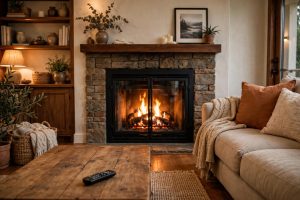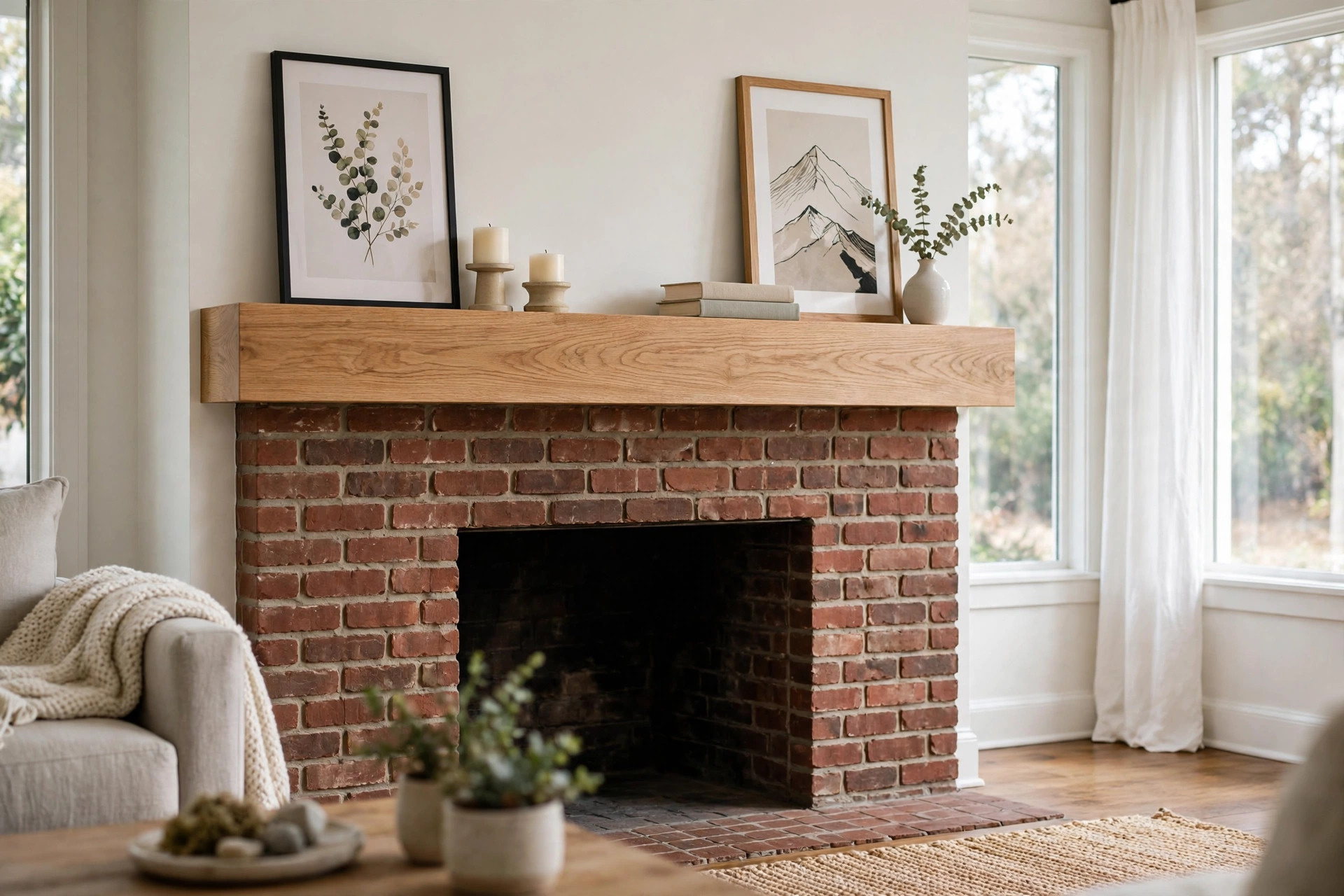

Shopping for the best fireplace mantel shelves for humid climates takes more thought than shopping for a mantel in a dry state. Moist air changes wood. It swells boards. It loosens joints. It invites mold. A shelf that looks fine in Arizona can crack in Florida within two years. The right choice starts with materials that accept damp air and finishes that block it.
Why Moist Air Matters for a Mantel Shelf
Wood is alive in a sense. It drinks water from the air and gives it back. In dry air it shrinks. In damp air it swells. This movement never stops. A mantel shelf mounted over a fireplace feels this change twice. Heat from the fire dries it from below while humid room air wets it from above. The stress builds. Boards cup. Joints open. Glue lines fail.
Mold is the second threat. Humid climates give mold what it needs. Spores land on wood. Moisture feeds them. Dark spots grow in corners and under the shelf where air moves slowly. Some mantels arrive from the factory with a finish that hides this problem. The finish cracks with age. Moisture enters. Mold follows.
A third problem is the finish itself. Many sealers break down in damp air. They turn cloudy. They peel at the edges. Once the seal fails, the wood drinks water with each humid day. The damage runs deep before anyone sees it.
What to Look For When You Choose: Best Fireplace Mantel Shelves for Humid Climates
Start with the wood. Dense hardwoods move less than soft pine. White oak stands high on the list. It has closed pores and natural oils. It resists water well. Mahogany and teak also perform well, though they cost more. Reclaimed beam wood can work if it has been dried in a kiln and sealed on all sides. Raw or air-dried lumber is a poor pick for damp regions. It holds water from the start.
Check how the shelf was dried. Kiln drying drives moisture out of the wood to a stable level. Ask for the moisture reading if you buy from a mill. Readings between six and nine percent suit indoor use. Anything above twelve percent will shrink once it reaches your home.
Look at the cut. Quarter-sawn boards move less across their width than flat-sawn boards. The grain runs straighter. The shelf holds its flat shape through the seasons. Many buyers never ask this question. It matters more in the South and along the coasts than anywhere else.
Sealed on all sides means just that. A shelf sealed only on the top and front still drinks water through the back and the ends. End grain pulls water fast. Demand a finish on every face. This single detail separates the best fireplace mantel shelves for humid climates from the rest.
Check the hardware. Metal brackets rust in damp air. Stainless steel or powder-coated steel brackets last longer. Hidden steel plates inside the shelf must also carry protection. If the maker does not say what metal they used, ask.
Types and Options Worth Knowing
Solid Sealed Hardwood Shelves
These are the top choice for humid climates. A single thick slab of white oak or mahogany, sealed with marine-grade polyurethane, handles damp air with ease. The slab form has fewer glue joints to fail. Prices run high. The long life pays for the cost. Many fireplace mantel shelves reviews and buying guides rank sealed hardwood first for coastal and Southern homes.
Engineered Wood Shelves
Medium-density fiberboard and plywood shelves cost less. They come with smooth painted finishes. In dry rooms they perform fine. In damp rooms the edges pose a risk. Painted edges can absorb water through small chips. Once swelling starts, the damage does not stop. If you choose engineered wood, pick a unit with edge banding on every edge and keep the paint film thick.
Concrete and Stone Shelves
A concrete mantel shelf ignores moisture. It cannot warp. It cannot grow mold in the same way wood does. It is heavy. Wall mounting must be strong. Stone shelves share these traits at a higher price. Both suit humid homes very well. The look is modern and cool. Many buyers pair them with warm firewood storage nearby for contrast.
Metal Accent Shelves
Steel shelves with powder coating resist damp air. They suit modern rooms. They carry less weight than wood or stone. A steel shelf over a fireplace stays cool enough to hold books and small frames. The coating must be free of chips. Bare metal rusts fast near an exterior wall in humid regions.
Floating Versus Corbel Mounts
Floating shelves use hidden brackets inside the wood. The look is clean. Corbels mount under the shelf as small brackets. They spread the load across the wall. In humid homes corbels offer one extra gain. Air flows under the shelf. The back of the shelf dries faster. Less moisture sits against the wall. If you like the floating look, keep a small gap between the shelf and the wall for air flow.
For budget shoppers, affordable floating fireplace mantels for USA homes show how to get the clean floating look at a lower price point.
Cost and Price
Prices vary with material, size, and finish. Expect these ranges in the current market.
– Engineered wood mantel shelf, painted: thirty to one hundred twenty dollars. Short life in damp rooms. – Pine mantel shelf, sealed: eighty to two hundred dollars. Needs resealing every two years in humid zones. – White oak slab, sealed on all sides: two hundred to six hundred dollars. The sweet spot for most humid-climate homes. – Mahogany or teak slab: four hundred to one thousand dollars. Top water resistance. – Concrete mantel shelf: two hundred fifty to seven hundred dollars. Heavy but nearly immune to moisture. – Stone mantel shelf: five hundred to one thousand five hundred dollars. Premium look, long life.
Custom work adds cost. A local mill can cut a slab to your exact width. Kiln-dried reclaimed wood sits in the middle range. Reclaimed wood mantels price comparison USA can help you judge whether custom beams fit your budget.
Labor is a separate line. Mounting a heavy slab on masonry takes anchors and skill. Plan on one hundred to three hundred dollars for professional mounting. Light shelves on drywall cost less to hang.
Care and Upkeep in Damp Regions
Wipe the shelf with a dry cloth each week. Dust holds moisture against the finish. Do not use wet mops or spray cleaners on wood mantels. A damp cloth wrung nearly dry is enough for spots.
Reseal wood every two to three years. Humid air wears finishes faster than dry air. Sand the top lightly with fine paper. Apply two thin coats of marine spar polyurethane or a hard-wax oil. Let each coat cure fully. The label gives the time. Thin coats beat one thick coat every time.
Watch the wall behind the shelf. Condensation on exterior walls can wet the back of the mantel. A small dehumidifier near the fireplace helps in the worst months. Keep indoor humidity between thirty and fifty percent. The EPA indoor air guidance notes that holding humidity below fifty percent slows mold growth in homes.
Check the ends each spring. End grain shows damage first. Small cracks mean the seal is failing. Touch up the finish before the next humid season arrives.
Inspect metal brackets once a year. Touch up any chips in the coating with rust-resistant paint. Rust spreads under the coating once it starts.
Safety
A mantel shelf over a fireplace faces heat. Building codes in most areas require a set clearance between the firebox opening and wood trim. The common rule is twelve inches of clearance for every inch the shelf projects from the wall, with minimums that vary by code. Check your local code before mounting.
Mount the shelf into studs or masonry. A loaded mantel holds heavy items. Drywall anchors alone will not hold a slab shelf with books on it. For gas fireplaces, maker manuals often set their own clearance rules. Follow the stricter of the two.
If you burn wood, keep the area under the shelf clean. Sparks and hot ash damage wood finishes. A screen across the firebox opening adds protection. The EPA burn wise program explains safe wood burning practices that also protect nearby woodwork.
Never mount a shelf over a fireplace that is vented into the room without a chimney. Fumes and soot stain wood fast. Have the flue checked each year by a sweep.
Buying Tips for Humid Zones
Buy from sellers who serve humid regions. A maker in Florida or Louisiana knows how finishes fail in damp air. A maker in the desert may not. Ask how they seal the ends. Ask what happens if the shelf warps in the first year. A real warranty tells you the maker trusts the product.
Order samples of the finish when you can. Leave the sample in your bathroom for a week. Steam tests finish fast. If the sample clouds or peels, skip that product. This simple test costs little and saves much.
Read the fine print on wood source. Fast-growth plantation wood moves more than old-growth timber. It also costs less. For a humid climate, spend the extra on slow-grown stock.
Plan delivery in dry weather when possible. A shelf that sits in rain on a porch for a week arrives swollen. Bring it indoors at once. Let it rest in the room for a week before mounting. This rest period lets the wood match your home before the brackets go in.
Frequently Asked Questions
Can I use a pine mantel shelf in a humid climate?
You can, but plan to work for it. Pine moves with moisture more than oak. Seal it on all six sides before mounting. Reseal every two years. Keep room humidity low. Many owners in humid states do this and have no trouble. Those who skip the upkeep see cupping within three summers.
What is the most mold-resistant mantel material?
Concrete and stone resist mold best. They give mold no food. Sealed dense hardwood comes next. Soft pine with thin finish ranks last. Mold grows on dust and wood fiber, so keep any shelf clean and dry.
How thick should a mantel shelf be over a fireplace?
Three to four inches suits most fireplaces. This thickness carries heavy loads without sagging. Thinner shelves need corbels spaced close together. Thick slabs also dry slower inside, which helps in humid air because the inner wood acts as a buffer.
Should I stain or paint a mantel in a humid home?
A clear sealer over natural wood shows damage early. You see cracks before they grow. Paint hides damage until it is large. That said, thick exterior-grade paint with primer seals wood well. If you paint, seal the ends first with extra coats. Check the paint each year for chips.
Does a gas fireplace create more moisture than a wood fire?
Yes. Burning gas releases water vapor. An unvented gas fireplace adds real moisture to the room. This makes the best fireplace mantel shelves for humid climates even more important when you heat with gas. Run a vent fan or dehumidifier during long burns.
Can I seal a shelf myself instead of buying a sealed one?
Yes, and many owners do. Sand the raw wood smooth. Apply a wood conditioner. Add two to three coats of marine spar polyurethane to every face, including ends and the back. Let it cure a full week. The work is simple. The gain is a shelf matched to your exact climate.
A Short Final Word
The best fireplace mantel shelves for humid climates share one trait. They were made by people who thought about water. Sealed ends. Stable wood. Sound hardware. With those in place, the shelf outlasts the style trends around it. Choose with care once, and the mantel will hold your photos and candles for decades, through every damp summer.
For more background, see This Old House, Family Handyman, and The Spruce. For more background, see Lowe’s, The Home Depot, and Napoleon. See Heatilator for more detail.
References
Family Handyman. (n.d.). DIY home repair and maintenance. https://www.familyhandyman.com Heatilator. (n.d.). Fireplaces and fireplace products. https://www.heatilator.com Lowe’s. (n.d.). Home improvement products. https://www.lowes.com Napoleon. (n.d.). Fireplaces, grills, and heating products. https://www.napoleon.com The Home Depot. (n.d.). Home improvement products. https://www.homedepot.com The Spruce. (n.d.). Home and garden advice. https://www.thespruce.com This Old House. (n.d.). Home renovation guidance. https://www.thisoldhouse.com U.S. Environmental Protection Agency. (n.d.). Protecting human health and the environment. https://www.epa.gov
Was this guide helpful?

About Jennifer Lee
The My Garden US editorial team writes practical, in-depth home and garden guides for American homeowners — tested advice, no fluff.
You May Also Like
Luxury Fireplace Screens With Doors Buying Guide
September 21, 2026 0 views
Affordable Electric Fireplace Mantels with Free Shipping
March 13, 2026 0 views
Top Rated Indoor Firewood Holders for Sale
April 12, 2026 0 views