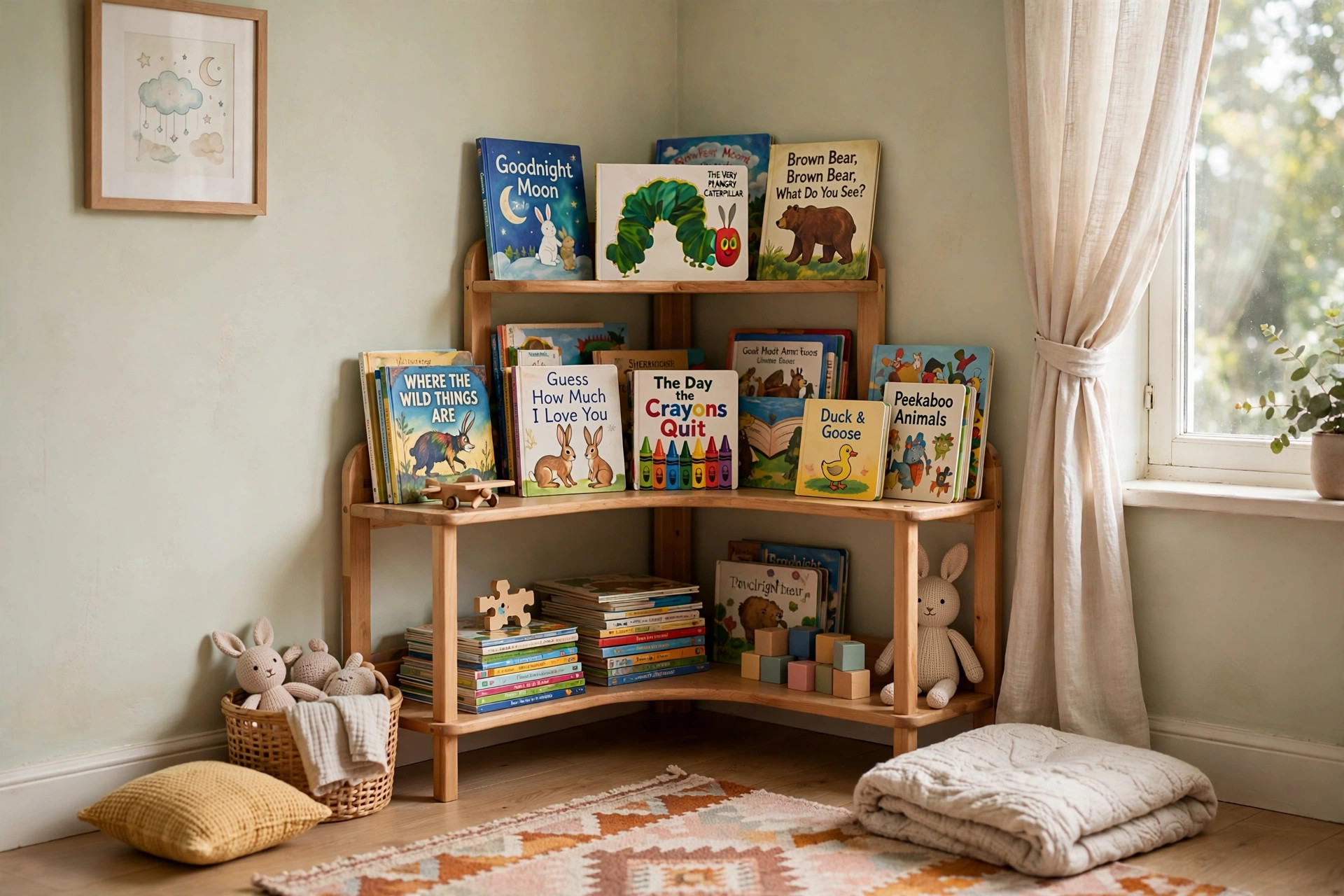

A kids bookshelf corner unit for small bedroom use is one of the smartest buys a parent can make for a tight space. Every parent knows the problem. Books pile up on the floor. Picture books slide under the bed. The toy box overflows, and there is no wall left to spare. A corner unit answers this problem because it turns the most forgotten part of the room into working storage. Corners are dead space in most bedrooms. A bookcase built for that spot changes everything.
Small bedrooms force hard choices. A bed, a dresser, and a desk may already fill the floor. Yet books matter. A child who can see her books will reach for them. A child who must dig through a bin will not. A kids bookshelf corner unit for small bedroom layouts solves both needs at once. It holds a growing library, and it asks for almost no floor space in return.
Why a Corner Bookshelf Matters
Rooms are measured in square feet, and small bedrooms do not forgive waste. A standard bookcase sits flat against a wall and takes a wide stretch of it. In a room that is eight feet by ten feet, that wall may already belong to the bed or the closet door. A corner unit fits where two walls meet. It uses the angle that nothing else can use.
This is more than a trick of space. Corners are natural spots for calm. When a parent sets a bean bag chair for a reading corner beside a corner bookshelf, the room gains a reading nook. The child has a place to sit, and the books are within arm’s reach. Many teachers say that a quiet reading corner in a child’s own room helps reading become a daily habit.
A corner bookshelf also teaches order. Each book has a home. A young child can learn to put books back on the shelf when the shelf is low and near. Tidy habits start with simple systems. A small bookshelf is a simple system.
What to Look for Before You Buy: Kids Bookshelf Corner Unit for Small Bedroom
Size and Fit
Measure first. Buy second. Measure the corner from each wall, then measure the height you want. Leave at least two inches of clearance on each side so the unit slides in without scraping paint. Watch out for baseboards. Thick baseboards push a unit forward and create a gap behind it. Some parents choose a unit that sits above the baseboard line, with the back edge cut to fit over it.
Check the depth of the shelves. Picture books are wide and flat. Board books are thick. Most children’s books need shelves at least eight inches deep. Ten inches is better. A unit with shelves only six inches deep will frustrate you within a week.
Safety and Stability
A bookshelf in a child’s room must be stable. Children climb. Toddlers pull themselves up on anything. A top-heavy unit can tip. Look for a wide base and a low center of gravity. Better still, anchor every unit to the wall. Wall anchors are cheap and simple to fit. The U.S. Consumer Product Safety Commission has warned for years that falling furniture kills children. Its furniture tip-over guidance is worth reading before you shop.
Rounded corners matter too. Sharp edges at a child’s head height are a bad idea. Many kids’ units come with rounded or padded edges. If yours does not, stick-on corner guards cost little and work well.
Material and Build
Solid wood is the sturdiest choice and lasts for years. It costs more. Engineered wood, such as MDF with a laminate skin, costs less and looks fine. Avoid thin particleboard that swells when it gets wet. Children spill drinks. A shelf that bubbles after one spill is money wasted.
Check how the shelves join the sides. Screws and metal brackets hold better than glue and dowels alone. Adjustable shelves are a gift. As books grow from thin board books to tall chapter books, you can move the shelves and keep every inch useful.
Front-Facing or Spine-Out
Two styles dominate. Spine-out shelves are classic. Books stand upright and the room holds more titles. Front-facing shelves show the covers. A child who cannot read yet picks books by their pictures, so front-facing displays work best for toddlers and preschoolers. Some corner units mix both styles. A few front-facing ledges near the top and deep spine-out shelves below give you the best of both worlds.
Types of Corner Bookshelf Units
Triangular Corner Units
The simplest shape is the triangle. It fits tight into the corner and wastes no space. Triangular units often have three or four shelves. They are short and stable, which suits toddlers. The trade-off is capacity. A triangle holds fewer books than a wider unit.
L-Shaped Units
An L-shaped unit runs along both walls. It holds more books and gives a handsome built-in look. Some L-shaped units wrap around the corner like furniture in a library. They need accurate measurements because each arm must fit its wall. They cost more than simple triangles, but they store the most books per square foot of floor.
Rotating and Carousel Units
A rotating bookcase spins on its base. A child turns it to find a book, which children find delightful. The round shape fits a corner well. The moving parts add a risk. Small fingers can get pinched, so buy only models with enclosed bases and smooth motion.
Tall Tower Units
Some corner units reach up five or six feet. They give huge storage for a tiny footprint. They also tip more easily. If you buy tall, you must anchor it to the wall. Tall towers suit school-age children better than toddlers. The top shelves can hold keepsakes and less-used books, while the lower shelves hold daily favorites.
Under-Window and Bench Units
A low corner bench with shelves under the seat is a fine pick for a very small room. It doubles as a window seat. Children sit on it, store books below, and the room gains a seat without losing floor. These units must be very sturdy because children will sit and stand on them.
For wider storage needs, some families pair a corner unit with wall shelves for books and toys above it. The shelves take the overflow, and the corner unit stays within a child’s reach.
Cost and Price
A kids bookshelf corner unit for small bedroom budgets comes in every price range. Simple triangular units made of engineered wood often sell for thirty to sixty dollars. Mid-range units with solid wood frames or L-shaped designs run from eighty to one hundred and fifty dollars. Large or custom corner bookcases can pass two hundred dollars.
Price follows material and size. Solid pine or birch costs more than laminate over MDF. A unit with adjustable shelves costs more than one with fixed shelves. Hand-finished or painted units cost more than raw wood.
Do not buy the cheapest unit you can find if it wobbles in the store. A bookshelf is a safety item as much as a storage item. Read reviews before you buy. Big retailers such as IKEA, Wayfair, Target, and Walmart carry many corner options, and their customer reviews often mention stability and build quality. Specialty children’s stores like Pottery Barn Kids sell sturdier pieces at higher prices.
Watch for sales. Children’s furniture often goes on sale in late summer, before the school year starts, and again in January. Buying during a sale can cut the price by a quarter or more.
Setting It Up Right
Place the unit in the corner with the least traffic. The corner far from the door is best. A child should not bump into it on the way to the bathroom at night.
Sort books by size or by the child’s age. Put the books the child reads now at eye level. Put books she has outgrown on the top shelf. Put new or seasonal books on the front-facing ledges where they catch the eye.
Leave some empty space. A shelf packed so tight that no book can be pulled out is a shelf the child will not use. One empty slot on each shelf makes tidying easy.
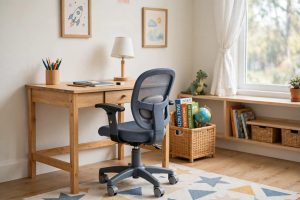
Pair the unit with soft light. A small lamp or a reading corner chair set nearby turns the corner into a habit. Many parents also keep a desk chair that adjusts as the child grows in the room so homework and reading have their own zones.
Decorating ideas from The Spruce often show corner bookshelves dressed with a small plant on top, out of a child’s reach, and a few framed pictures on the upper shelves. Keep the top shelf for display only. Heavy objects up high raise the center of gravity and make tipping more likely.
Care and Upkeep
Dust the shelves once a week. Books gather dust fast, and dust can bother a child’s breathing. A damp cloth works for most finishes. Do not soak engineered wood. Water seeps into the edges and makes the board swell.
Check the anchors every few months. Children bump furniture. Screws loosen. Give the unit a firm shake. If it moves, tighten the anchors and the shelf screws.
Rotate the books. Children reread favorites and ignore the rest. Every month or two, swap some books from the top shelf down to eye level. A book that was ignored for six months may become the new favorite when it appears at the right height.
Watch for damage. Chips in laminate, loose screws, and cracked boards are warning signs. Fix them at once or replace the unit. A damaged bookshelf is an unsafe bookshelf.
For general children’s health guidance around the home, HealthyChildren.org from the American Academy of Pediatrics offers useful advice, and What to Expect covers childproofing basics room by room.
Safety Checklist
– Anchor the unit to the wall with proper hardware. – Choose rounded edges or add corner guards. – Keep heavy books on the lowest shelves. – Keep the top shelf for light display items only. – Check that paint and finishes are non-toxic and lead-free. – Make sure shelves cannot be pulled out by a small child. – Keep cords from nearby lamps out of reach. – Re-check stability after every room rearrangement.
Frequently Asked Questions
What size corner bookshelf fits a small bedroom?
Measure your corner first. Most small bedrooms suit a unit between twenty and thirty inches wide on each wall, and between thirty and forty-eight inches tall. Taller units store more but need wall anchors. A low triangular unit fits even the tightest corners.
Are corner bookshelves safe for toddlers?
Yes, if you buy a sturdy low unit and anchor it to the wall. Keep the unit short so the child can reach every shelf. Put board books, which are soft and light, on the lower shelves. Check for pinch points and sharp edges before you let a toddler use it alone.
How many books can a corner unit hold?
A small triangular unit with three shelves holds about thirty to fifty children’s books. An L-shaped unit can hold one hundred or more. The number depends on shelf depth and book thickness. Picture books take more room than thin early readers.
Should I choose front-facing or spine-out shelves?
For children under four, front-facing shelves work best because toddlers choose books by their covers. For children who can read, spine-out shelves store more books in less space. A mixed unit gives both styles and grows with the child.
What is the best material for a kids bookshelf?
Solid wood is the most durable and the safest long-term choice. Good-quality engineered wood with a thick laminate is a fine budget choice. Avoid very thin particleboard. Always check that the finish is non-toxic and safe for children.
How do I stop the bookshelf from tipping over?
Use the wall anchors that come with the unit, or buy a furniture strap kit. Attach to a wall stud when you can. Put the heaviest books on the bottom shelf. Never let children climb the shelves. The U.S. Consumer Product Safety Commission offers detailed tip-over prevention advice.
A Short Final Word
A kids bookshelf corner unit for small bedroom life is a small buy with a large effect. It rescues the corner, organizes the books, and invites the child to read. Measure with care, anchor with care, and keep the shelves within reach. The habit of reading that follows is worth far more than the shelf itself.
References
American Academy of Pediatrics. (n.d.). HealthyChildren.org. https://www.healthychildren.org IKEA. (n.d.). Home furnishings. https://www.ikea.com Pottery Barn Kids. (n.d.). Kids furniture and decor. https://www.potterybarnkids.com Target. (n.d.). Retail store. https://www.target.com The Spruce. (n.d.). Home and garden advice. https://www.thespruce.com U.S. Consumer Product Safety Commission. (n.d.). Product safety information. https://www.cpsc.gov Walmart. (n.d.). Everyday low prices. https://www.walmart.com Wayfair. (n.d.). Furniture and home goods. https://www.wayfair.com What to Expect. (n.d.). Pregnancy and parenting guidance. https://www.whattoexpect.com
Was this guide helpful?

About David Wilson
The My Garden US editorial team writes practical, in-depth home and garden guides for American homeowners — tested advice, no fluff.
You May Also Like
Toddler Bed Rail for Convertible Crib Safety: A Parent’s Complete Guide
August 21, 2026 0 views
Crib Wedge for Reflux Sleeping Position Safe: What Parents Should Know
August 25, 2026 0 views
Nursery Wall Decals Clouds for Ceiling Decor: A Calm Sky Above the Crib
April 22, 2026 0 views