Rain can spoil a quiet evening on the patio. Bright sun can make it worse. A good set of shades can solve both problems at once. This affordable waterproof outdoor shades buying guide will help you choose the right shade for your porch, deck, pergola, or gazebo without paying too much.
You do not need a large budget to enjoy your yard. You only need to know what to look for. Below you will learn about fabrics, sizes, the main types of shades, fair prices, simple care, and basic safety. By the end you will be able to shop with confidence and pick a shade that lasts for years.
Why Waterproof Outdoor Shades Matter
Ordinary indoor shades will fail outside. They absorb water, grow mold, and fade fast. A shade made for outdoor use is built from weather tough fabric. It sheds rain instead of soaking it up. It keeps its color under strong sun. It stands up to wind and dust.
Shade changes how you use your home. A patio that is too hot at noon becomes a cool spot for lunch. A deck that gets wet in a storm stays dry enough for chairs and cushions. A porch that faces the street gains privacy. Many home owners report that they spend more time outside after they add patio window coverings that can handle the weather.
Outdoor shades also protect your furniture. Sun bleaches fabric and dries out wood. Rain rusts metal and rots cheap frames. A shade blocks a large share of both. That can add years to the life of a patio set. Over time the shade may pay for itself in saved furniture.
What to Look for Before You Buy: Affordable Waterproof Outdoor Shades Buying Guide
Shopping for shades is simple once you know the key points. Work through them in order.
Fabric and Coating
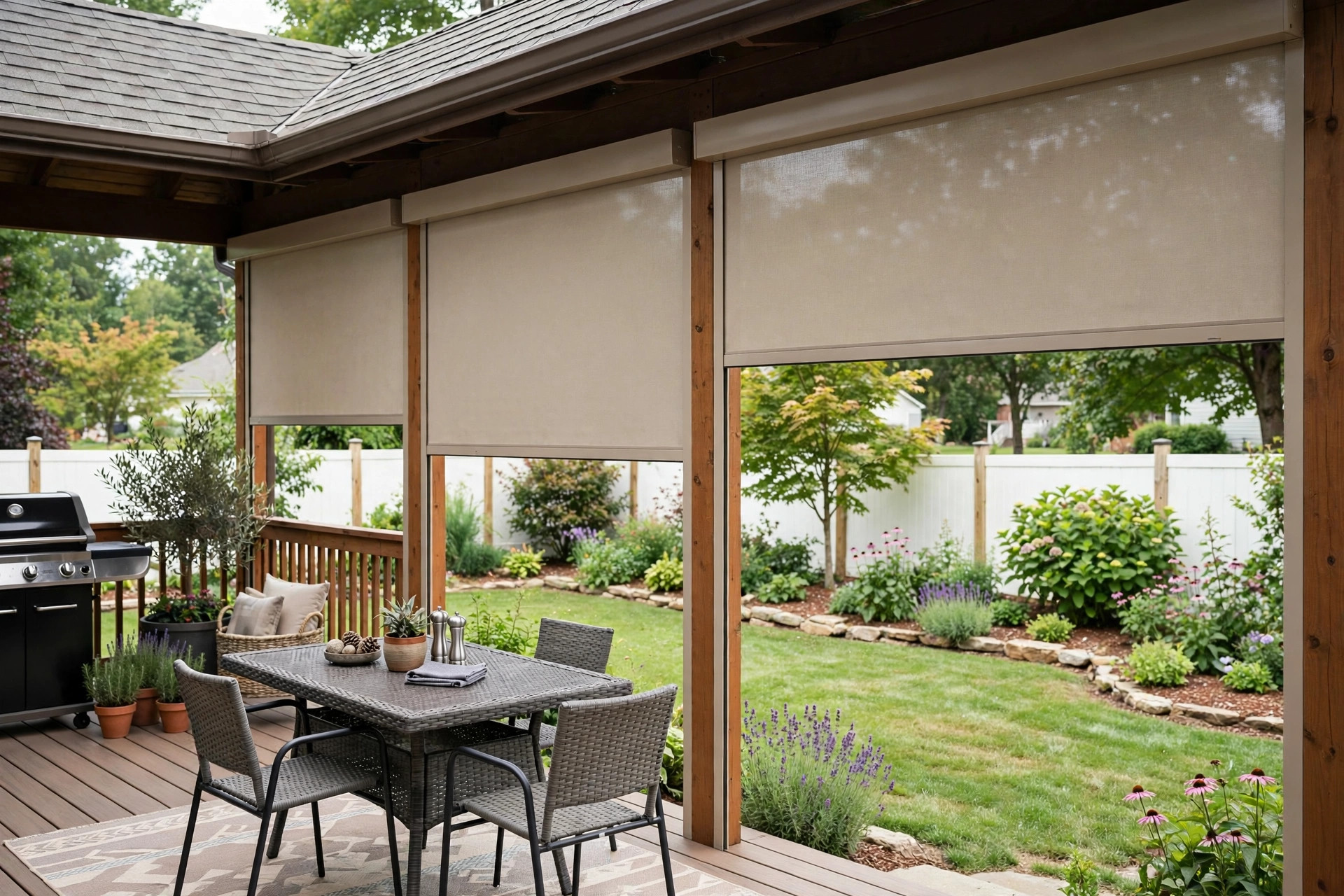
The fabric is the heart of the shade. Most affordable waterproof shades use one of three materials. Polyester mesh blocks some sun while letting air pass through. It does not fully stop rain, but heavy mesh with a tight weave sheds a light shower. PVC coated polyester is the common choice for true water resistance. It is strong, easy to clean, and often the lowest cost. Acrylic canvas is softer to the touch and looks more like indoor fabric, but it usually costs more.
Check the coating. A good shade has a water repellent layer on one or both sides. Some makers use a PU or acrylic coat. Look at the product page for words like waterproof, water resistant, or weatherproof. Note that water resistant and waterproof are not the same. Water resistant means the fabric sheds light rain. Waterproof means it keeps rain out even in a steady downpour. If you want full rain cover, choose true waterproof fabric.
Size and Fit
Measure before you buy. Take the width and the drop of the space you want to cover. Measure in two or three spots. Walls and posts are rarely perfect. Write down the smallest width. A shade that is too wide will jam in its guides. A shade that is too narrow will leave gaps where rain and sun slip through.
Decide how much cover you need. A shade that runs from the top of the opening to the floor gives the most protection. A shade that stops halfway still blocks low evening sun. Many buyers start with one wide shade and add a second later if they like it.
Hardware and Mounting
Outdoor shades take more force than indoor ones. Wind pushes on the fabric. The brackets must hold. Look for stainless steel or powder coated aluminum hardware. These metals resist rust. Cheap painted steel will rust within a year in a wet climate.
Plan the mount. A ceiling mount under a roof edge is common. A wall mount on posts or beams also works. Check that the kit includes screws or anchors for your surface. Wood, concrete, and brick each need different fasteners. If the kit only includes wood screws, buy masonry anchors for a concrete wall.
How It Moves
Most affordable shades use a crank or a pull strap. A crank gives smooth control and lets you stop the shade at any height. A strap or pull cord is simpler and cheaper. A few shades use a motor, but powered models cost much more and are rare in the budget range.
Cordless designs are safer if children visit. The federal home safety guidance warns that long cords can be a hazard for small children. Cordless and crank models avoid that risk.
Main Types of Outdoor Shades
Four types cover most yards. Each has its strengths.
Outdoor Roller Shades
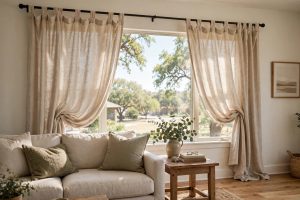
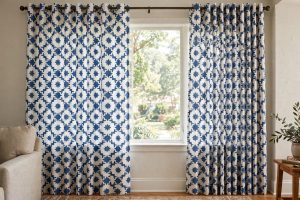
Roller shades are the most common. The fabric rolls around a tube at the top. You lower it to the height you want. They are simple, neat, and easy to clean. Most budget waterproof shades are roller shades. They suit porches, decks, and pergolas. They pair well with outdoor patio curtains when you want both shade and a soft fabric look.
Outdoor Roman Shades
Roman shades fold into soft pleats as they rise. They look more finished than roller shades. The fabric must be cut and sewn to fold well, so they often cost a bit more. They suit covered patios where style matters. Make sure the fabric is rated for outdoor use. Indoor Roman fabric will mold outdoors.
Bamboo and Woven Wood Shades
Bamboo shades give a warm, natural look. They block some sun and break up a view. Most are not fully waterproof, though some have a water resistant coat. They suit covered areas with light rain. They need more care than PVC shades. Check guides on patio shade materials before choosing bamboo for a wet spot.
Drop Shades and Wind Panels
Drop shades are heavy clear or tinted vinyl panels that seal off a porch. They are common in areas with cold winters. They keep wind and rain out and can turn a screen porch into a three season room. They are heavier than roller shades and need strong hardware. They also cost more per square foot.
Cost and Price
Affordable does not mean cheap and weak. It means a fair price for a shade that lasts. For a standard 72 inch wide roller shade, expect to pay between 40 and 120 dollars. Larger widths and premium fabric run 120 to 250 dollars. Custom sizes cost more. A full set for a large deck can run 300 to 800 dollars.
Prices change with material. PVC coated polyester is the lowest cost. Acrylic canvas costs about twice as much. Bamboo falls in the middle but needs more care. Hardware adds cost. Stainless steel brackets cost more than painted steel, but they last longer in wet air.
Watch for sales. Late summer and fall often bring lower prices as stores clear stock. Big home stores list many options side by side, which makes price comparison easy. Retail sites such as the home improvement store and lowes home improvement carry a wide range of brands and sizes. Design sites like the ikea window treatments page and wayfair outdoor shades section also list budget models. Test reports at consumer reports can help you compare quality across brands.
Do not forget small costs. Mounting screws, extra brackets, and a crank handle may be sold apart. Shipping can add to the price of wide shades. Add these up before you decide which model is truly the lowest cost.
Care and Upkeep
Waterproof shades are easy to keep. A little care keeps them clean for many seasons.
Wash the fabric two or three times a year. Use a soft brush or sponge, mild soap, and cool water. Rinse well. Let the shade dry fully before you roll it up. Rolling a wet shade can trap dampness and cause spots.
Check the hardware each spring. Tighten loose screws. Look for rust on brackets. A light spray of silicone oil on moving parts keeps the crank smooth. Replace frayed straps or cords right away.
Take the shade down in a bad storm if you can. Most affordable shades can handle normal wind, but a hard storm can tear fabric or bend tubes. If the shade is fixed and cannot come down, raise it fully so wind passes under it. This simple step saves many shades each year.
Store loose shades in winter if your area gets heavy snow or ice. A dry garage or shed is fine. Roll the shade loosely around its tube. Do not fold the fabric, because sharp folds can crack the waterproof coat.
If you buy shades sold for texas patios and yards, note that strong sun and heat wear fabric faster. In hot states, a lighter color reflects more heat and fades less. In wet states, raise the shade after rain so the fabric dries from both sides.
Safety
Safety is simple but worth a short list.
Keep cords short or go cordless. Small children and pets can get tangled in long loops. Crank models are a good choice for family homes.
Make sure the shade cannot fall. Use the right anchors for your wall or ceiling. A shade that drops in wind can hurt someone. Test the mount by pulling firmly on the tube before you hang the fabric.
Do not block exits. A shade over a doorway should roll up fast. In an emergency you need a clear path out. Keep the path under any drop shade free of furniture.
Watch the heat. Dark shades absorb sun and get hot to the touch. Light colors stay cooler. If children play near the shade, a light color is the safer pick.
Frequently Asked Questions
Are outdoor shades really waterproof? It depends on the fabric. True waterproof shades use PVC coated polyester or a coated canvas. They keep rain out in a steady storm. Mesh and bamboo shades only slow rain down. Read the product page and look for the word waterproof rather than water resistant.
Can I leave my shade out all winter? In mild areas, yes. In areas with snow and ice, it is better to take the shade down. Ice can tear fabric and bend tubes. Cold also makes some coatings stiff. Store the rolled shade in a dry place until spring.
How do I clean a waterproof outdoor shade? Use mild soap, cool water, and a soft brush. Rinse well and let it dry in the air before rolling. Avoid harsh cleaners and pressure washers. Both can strip the waterproof coat.
Will an outdoor shade block all sun? Most block most sun, not all. A dense PVC shade blocks around 90 to 95 percent of direct light. Mesh shades block less but let air flow through. If you need full dark, pair the shade with curtains. Design ideas at hgtv outdoor living show many good pairings.
Can I install the shade myself? Yes, in most cases. A basic roller shade needs a drill, a level, and about an hour. Follow the maker guide step by step. If you are mounting into concrete or brick, buy the right anchors. For very wide shades, ask a second person to help hold the tube.
Do waterproof shades stop wind? They slow wind down but do not stop it. A lowered shade cuts the breeze on a porch. In high wind, raise the shade so it is not damaged. No affordable shade is made to hold back a storm.
A Short Final Word
A waterproof outdoor shade is a small buy that changes a whole yard. It adds shade on hot days, cover in rain, and privacy when you want it. The best shade for you is the one that fits your space, matches your weather, and stays within your budget. Measure first. Choose true waterproof fabric if rain matters. Pick strong hardware. Then enjoy your patio in comfort for years to come. For more help with window coverings, browse maker guides at blinds.com outdoor shades and project tips at family handyman.
References
Blinds.com. (n.d.). Window blinds, shades, and shutters. https://www.blinds.com Consumer Reports. (n.d.). Product reviews and ratings. https://www.consumerreports.org Family Handyman. (n.d.). DIY home repair and maintenance. https://www.familyhandyman.com HGTV. (n.d.). Home and garden ideas. https://www.hgtv.com IKEA. (n.d.). Home furnishings. https://www.ikea.com Lowe’s. (n.d.). Home improvement products. https://www.lowes.com The Home Depot. (n.d.). Home improvement products. https://www.homedepot.com The Spruce. (n.d.). Home and garden advice. https://www.thespruce.com U.S. Consumer Product Safety Commission. (n.d.). Product safety information. https://www.cpsc.gov Wayfair. (n.d.). Furniture and home goods. https://www.wayfair.com
Was this guide helpful?

About Sarah Mitchell
The My Garden US editorial team writes practical, in-depth home and garden guides for American homeowners — tested advice, no fluff.