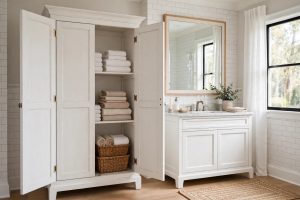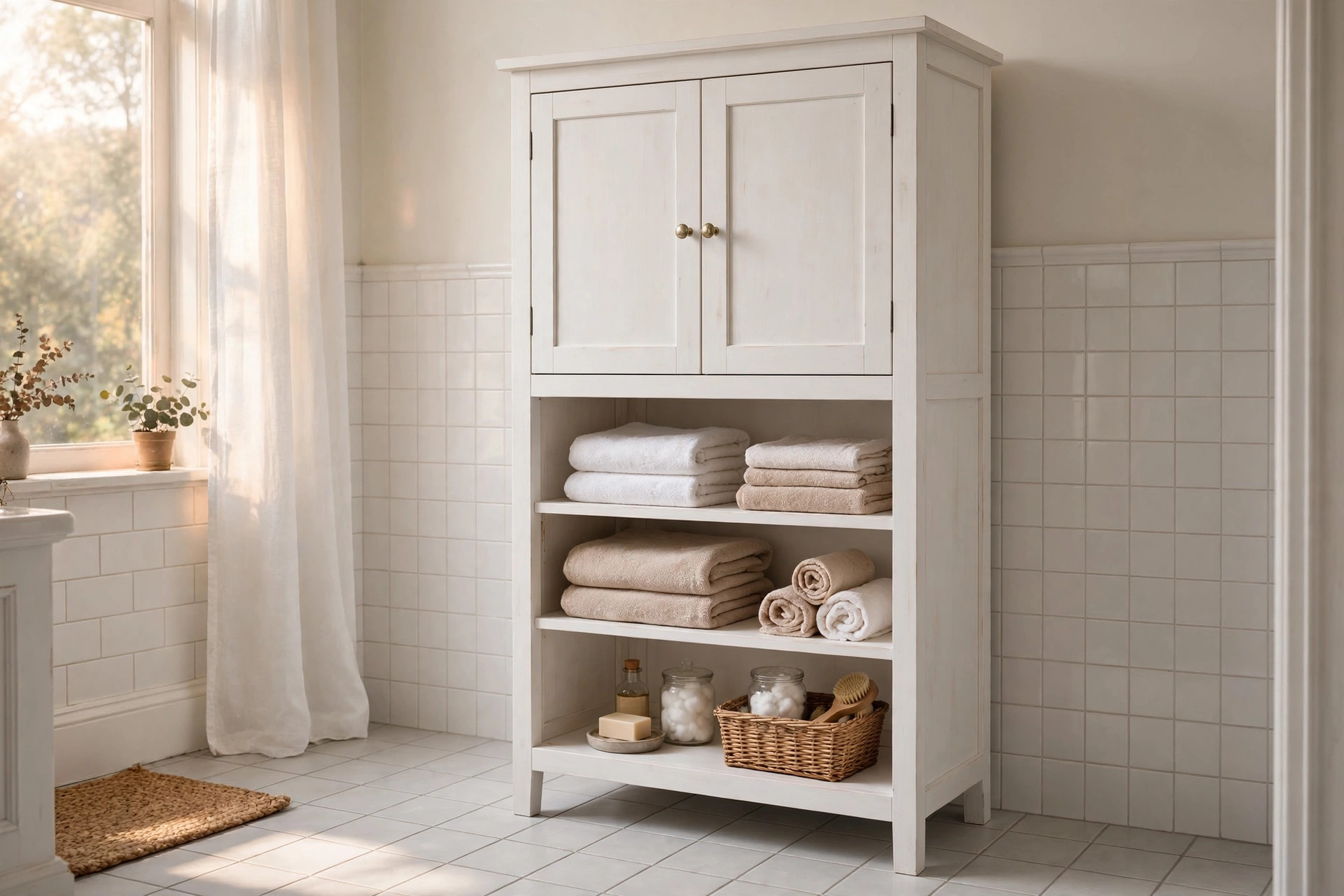

Every home needs a place for clean towels. This bathroom linen cabinets American homes guide explains what these cabinets are, what to look for, and how to keep them in good shape. A linen cabinet is a tall, narrow piece of furniture that stands in or near the bathroom. It holds folded towels, washcloths, spare toilet paper, and other bath supplies. In many American homes, it is the answer to a small vanity and a crowded bathroom.
The idea is old. Years ago, homes had a linen closet down the hall. Bed sheets and towels lived there. As houses changed, bathrooms grew larger, and storage moved closer to where people use it. A linen cabinet brings that storage right into the bathroom or just outside the door. It is simple, but it makes daily life easier.
Why Linen Storage Matters
Bathrooms are small rooms with heavy use. Towels get damp. Supplies run out. Without a set place, things pile up on the counter or fall off shelves. A linen cabinet gives each item a home. Clean towels stay clean. Extra soap stays dry. The room looks calm instead of cluttered.
There is a health point too. Wet towels left on the floor grow mildew. A cabinet with doors keeps spare towels away from steam and splash. You pull out a fresh towel when you need it and fold it back after it dries. This small habit keeps the bathroom cleaner.
Families gain from it as well. Children can reach the lower shelf for their own towel. Guests can find spare soap without asking. A well-placed cabinet saves steps and time each morning. When you plan a bathroom update, storage should be part of the plan, just like the sink and the mirror. Many readers also look at bathroom vanity light bars buying guide usa when they plan a full refresh.
What to Look for When You Shop: Bathroom Linen Cabinets American Homes Guide
Start with size. Measure the spot where the cabinet will stand. Linen cabinets are usually 60 to 72 inches tall and 20 to 36 inches wide. Depth runs 12 to 16 inches. A narrow hall bathroom may only fit a 20-inch-wide unit. Leave one inch of air on each side so doors open with ease. Measure door swing too. A cabinet door that hits the toilet is a daily annoyance.
Next, check the build. Solid wood stands up well to moisture. Plywood with a good finish also works. Particle board swells when it gets wet, so check how the edges are sealed. Look at the back panel. It should be fixed firm, not stapled loose.
Doors and Shelves
Doors protect contents from steam. Glass doors let you see what is inside, but they need cleaning. Solid doors hide clutter. Some cabinets have a mix: solid doors on top, open shelves below.
Shelves should be easy to move. Adjustable shelves let you fit tall bottles and folded blankets. Check the shelf pins. Metal pins hold more weight than plastic ones. If you store heavy bottles, make sure the shelf can bear the load.
Finish and Moisture
Bathrooms are damp rooms. Look for a finish made for damp air: painted wood, sealed wood, or a good laminate. Avoid raw, unsealed wood inside. Ask how the maker rates the finish for humidity. Many fixture makers publish care notes on their home pages, and a quick look at Kohler or Moen shows how bathroom pieces are built to resist moisture.
Hardware
Hinges and handles take daily wear. Soft-close hinges stop doors from banging. Solid metal handles outlast hollow ones. Check that the handle matches the other hardware in the room. A bathroom linen cabinet page at a large store lets you compare handle styles side by side.
Types and Options
Freestanding cabinets are the most common. They stand on the floor and need only wall anchors for safety. You can move them when you remodel.
Wall-mounted units hang above the toilet or beside the sink. They save floor space in tiny baths. They hold less, and they must be fixed to wall studs to hold weight.
Tall linen towers are slim and deep. They fit in narrow gaps beside a vanity. Some have pull-out drawers inside, which make deep shelves easier to reach.
Built-in cabinets look like part of the wall. A carpenter builds them into a recess. They cost more, but they use every inch. In an older home, a built-in can turn a wasted nook into real storage.
Over-the-toilet units are another common pick. They sit above the tank and use air space that often goes to waste. They hold less than a tall tower, and you must mind the weight. Keep heavy items low in the room, not high over the toilet.
Materials vary. White painted wood fits most styles. Stained oak or maple gives a warm look. Laminate costs less and cleans with ease. Glass-front doors suit larger baths. Each choice has a trade-off between price, looks, and how long it lasts in damp air. The home pages of American Standard and Delta Faucet give a feel for how bathroom finishes are named and matched across pieces.
Cost and Price
Prices cover a wide range. A simple laminate cabinet can cost 80 to 150 dollars. A painted wood cabinet from a mid-range brand runs 200 to 450 dollars. Solid hardwood units cost 500 to 900 dollars or more. Built-in work by a carpenter often starts near 1,000 dollars and climbs with detail.
Shipping adds cost for heavy pieces. Assembly takes 30 to 60 minutes for flat-pack units. Some stores offer delivery and set-up for a fee. Watch sales in spring and fall, when bath remodel work peaks and stores cut prices.
Set your budget before you shop. Decide what matters most: size, material, or looks. A modest cabinet with good seals will outlast a fancy one made of poor board. Price lists at Lowe’s and The Home Depot help you compare units at each level before you buy.
Do not forget the small costs. Wall anchors, shims, a tube of caulk, and touch-up paint add ten to thirty dollars. If you hire a handyman for set-up, plan for one hour of labor. These small items keep the job clean and the cabinet safe.
How to Install and Arrange
Most freestanding cabinets need two steps: set level, then anchor to the wall. Use a small level on the top. Shim one side if the floor slopes. Then fix the cabinet to a stud with the anti-tip strap or screws that come in the box. This is the most important step. Tall cabinets can tip and hurt a child.
Place the cabinet where it stays mostly dry. Keep it away from the shower spray line. Six to twelve inches from the toilet is a common spot. Leave the door swing clear of the room door.
Arrange shelves by use. Daily towels go at arm height. Spare sheets go up high. Heavy bottles sit low so the unit stays steady. Fold towels the same way each time so the shelf looks neat and you can see what is short.
Care and Upkeep
Wipe the cabinet once a week with a dry or lightly damp cloth. Dry the finish right after. Do not use harsh sprays on painted wood. A mild soap and water mix is enough for most finishes.
Ventilate the bathroom. Run the quiet exhaust fans buying guide usa approach: keep a good fan running during showers and for twenty minutes after. Less steam means less swelling on shelves and doors. Check the fan filter twice a year.
Tighten hinges and handles once a year. Wood moves with the seasons, and screws loosen. A quick turn with a screwdriver keeps doors true. Touch up chips in paint with a small brush before damp air reaches bare wood.
Refold towels every few months. Towels packed too tight trap damp air. Leave a small gap between stacks. If a shelf smells musty, empty it, wipe it with a mild cleaner, and let it air out for a day.
Safety Points
Anchor every tall cabinet to the wall. This rule comes first. Children climb. A tipping cabinet can cause grave harm. Use the strap in the box or a wall bracket rated for the load.
Do not store medicines where children can reach. Keep cleaners in a locked place, not in an open bath cabinet. Hot irons and hair tools belong on a heat-safe hook, not on a wood shelf.
Check weight limits. A shelf bowed in the middle is a warning sign. Move heavy items down or add a support bracket. When in doubt, follow the maker’s load rating.
Moisture can make floors slick near the cabinet. A small bath mat helps. Keep cords away from water. If you add lights inside the cabinet, use battery or low-voltage units made for damp rooms, and follow the maker guide. Guidance on safe home fixtures appears in places like This Old House and Bob Vila, which cover bath storage and safety in plain terms.
Frequently Asked Questions
What size linen cabinet fits a small bathroom?
A 20-inch-wide unit, 60 inches tall, fits most small baths. Measure your floor space first. Allow one inch on each side and check the door swing. In a very tight room, a wall-mounted unit saves floor space.
Can a linen cabinet sit inside the bathroom with all the steam?
Yes, if the finish is sealed and the bath has good air flow. Run the exhaust fan during and after showers. Wipe damp spots off the cabinet. Avoid raw wood and poor board in steamy baths.
Should shelves be fixed or adjustable?
Adjustable shelves are better for most homes. They let you fit tall bottles, folded sheets, and small baskets. Metal pins hold more weight than plastic pins. Fix one shelf at the base for strength and adjust the rest.
How many towels should a linen cabinet hold?
A family of four needs about two bath towels per person in rotation, plus washcloths and hand towels. A 24-inch-wide cabinet with four shelves holds this with ease. Keep one spare set. More than that wastes space and traps damp air.
Is it better to buy a matching set or mix pieces?
Matching sets look tidy and save shopping time. Mixing lets you fit odd spaces. Either way, match the finish color and handle style so the room looks planned. Many homeowners pair the cabinet with a mirrored medicine cabinets buying guide usa choice for a full storage plan.
How long does a bathroom linen cabinet last?
A well-made wood cabinet lasts 10 to 15 years in a vented bath. Laminate units last 7 to 10 years. Damp, unvented baths shorten every life. Touch-up paint and tight hinges add years. Home and bath ideas from HGTV and The Spruce show how finishes and care stretch the life of bath furniture.
A Short Final Word
A bathroom linen cabinet is a quiet worker in the home. It costs little next to a full remodel, but it brings order to the busiest small room. Measure with care, pick a finish built for damp air, anchor it to the wall, and keep it dry. Do these four things and the cabinet will serve your family for years. This bathroom linen cabinets American homes guide ends where good shopping starts: with a clear plan and a tape measure in hand.
References
American Standard. (n.d.). Bathroom and kitchen products. https://www.americanstandard.com Bob Vila. (n.d.). Home improvement advice. https://www.bobvila.com Delta Faucet. (n.d.). Kitchen and bathroom faucets. https://www.deltafaucet.com HGTV. (n.d.). Home and garden ideas. https://www.hgtv.com Kohler. (n.d.). Bathroom and kitchen fixtures. https://www.kohler.com Lowe’s. (n.d.). Home improvement products. https://www.lowes.com Moen. (n.d.). Faucets and plumbing fixtures. https://www.moen.com The Home Depot. (n.d.). Home improvement products. https://www.homedepot.com The Spruce. (n.d.). Home and garden advice. https://www.thespruce.com This Old House. (n.d.). Home renovation guidance. https://www.thisoldhouse.com
Was this guide helpful?

About David Wilson
The My Garden US editorial team writes practical, in-depth home and garden guides for American homeowners — tested advice, no fluff.
You May Also Like
Bathroom Wall Tiles California Homes USA: A Plain Buying and Care Guide
February 17, 2026 0 views
Bathroom Vanity Light Bars for Sale USA: A Buyer’s Guide
February 2, 2026 0 views
Where to Buy Bathroom Vanity Light Bars in the USA
July 21, 2026 0 views