
What Are Shower Niche Inserts
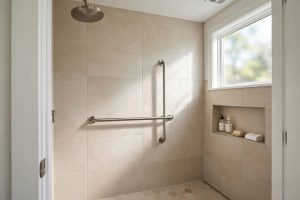
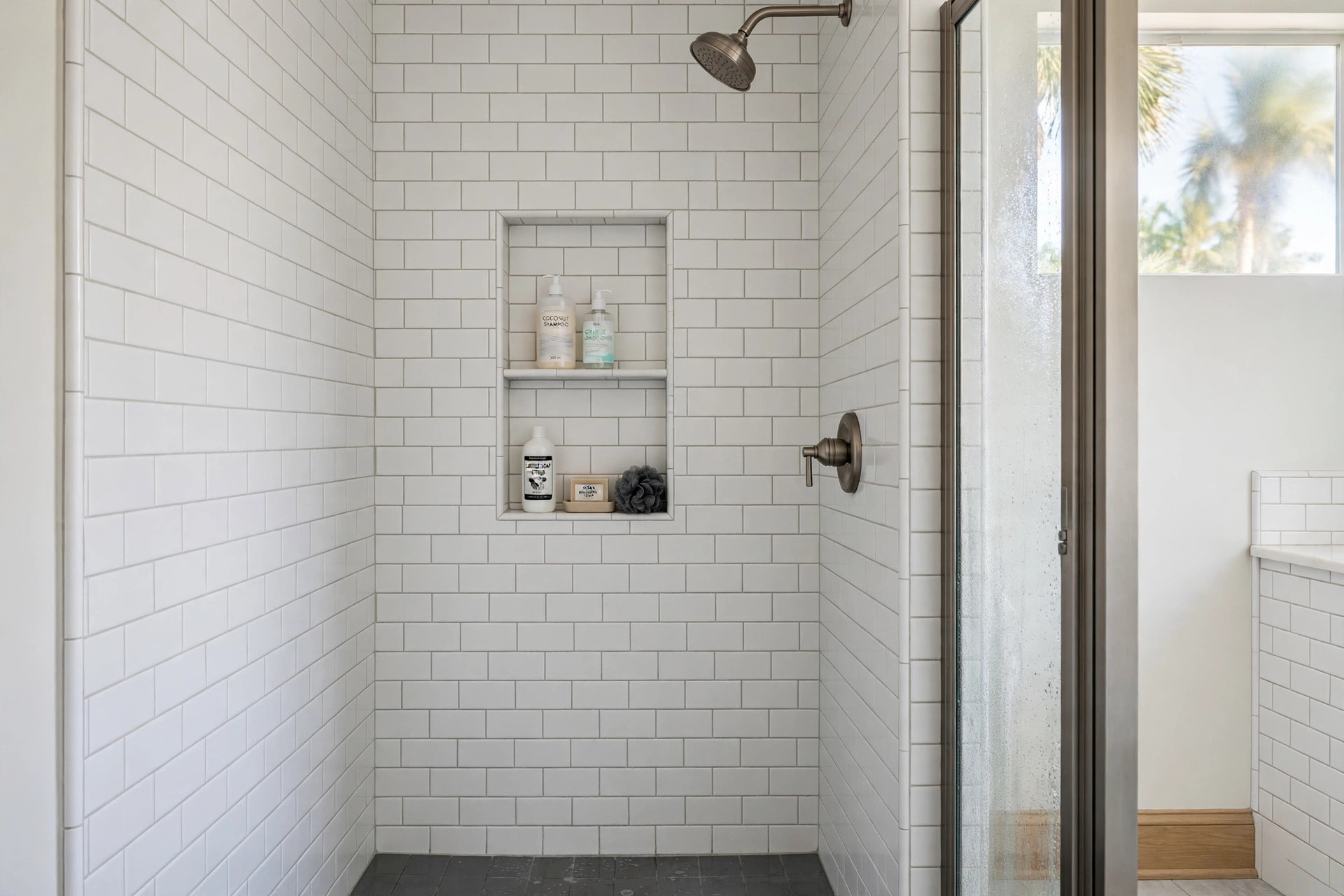
A shower niche insert is a ready-made box that sits inside the shower wall. It forms a small shelf, set back into the wall, where bottles, soap, and razors can rest. The term shower niche inserts florida homes usa refers to these products as sold for use in houses across Florida, where warm air and high humidity shape every bathroom decision.
In older homes, people kept shampoo on the floor of the tub or on a wire rack that hung from the shower head. These answers worked, but they looked messy and the racks rusted fast in the damp air. A niche solves the problem in a cleaner way. It becomes part of the wall itself, tiled over so it matches the rest of the shower. Many new builds in Florida now include at least one niche as a standard feature. Remodel projects add them too, because buyers expect them.
The niche insert itself is the box or frame that the tiler sets into a cut opening. Some are made of foam board with a waterproof skin. Some are stainless steel shelves with a flange. Some are molded plastic units with a tile-ready face. All of them serve the same end: a dry, strong pocket in the wall that can carry tile and hold weight without leaking.
Why It Matters in Florida: Shower Niche Inserts Florida Homes Usa
Florida brings year-round heat and moisture. In most of the state, outdoor humidity stays high for months at a time. Bathrooms hold steam long after the water stops. A poorly built niche becomes a soft spot where water hides behind tile. Over time, that hidden water feeds mold and weakens the wall.
A well chosen niche insert fights this problem before it starts. Quality units come with a built-in waterproof face. The installer bonds the seams to the wall’s backer board. No raw edges remain for water to enter. In a climate like Florida’s, this matters more than it does in dry states. The constant damp makes every small gap a risk.
There is also the question of daily life. Florida showers get used hard. Many homes have pools, beaches nearby, or kids coming in from the yard. Bottles pile up fast. A single corner rack cannot hold them all. A wide niche with two shelves keeps things in order and keeps the shower floor clear. Fewer things on the floor means fewer chances to slip.
Home value plays a part too. In the Florida market, remodeled bathrooms draw strong attention from buyers. A tiled niche reads as an upgrade, even in a modest bathroom. Real estate agents in the state often point to it as a small feature with real charm.
How to Choose the Right Niche Insert
Measure the Wall First
Start with the wall. Most interior shower walls have studs spaced sixteen inches apart. A niche insert must fit between two studs, or the framer must add new supports. Standard sizes run about twelve inches wide by twelve inches tall, or twelve by twenty-eight for a taller two-shelf unit. Measure the stud bay with a stud finder before you buy anything.
Wall depth matters too. A two-by-four wall gives about three and a half inches of depth. That is enough for most inserts. A two-by-six wall gives more room. Check the product’s depth rating against your wall. A niche that sticks out past the tile face will not work.
Pick a Waterproof Style
Foam niche kits are the most common in the USA now. They weigh almost nothing. The face is waterproof, and the seams seal with thinset or banding. Tile sets directly on them. Major brands sell them in standard sizes for American stud bays, and the idea has become common in new tile showers across the USA.
Stainless steel inserts take a different path. They arrive as finished shelves with a flat flange. The tiler sets them into the opening and tiles up to the flange. Steel resists rust and stands up well to Www.moen.com. Some homeowners like the look of brushed steel against tile.
Tile-ready plastic niches sit in the middle. They cost less than steel and need more sealing care than foam. The installer must treat every seam with waterproof membrane. In Florida, this step cannot be skipped.
Think About Size and Layout
One niche can serve a whole shower if it is large enough. A twelve-by-twenty-eight inch unit gives two shelf levels. That handles shampoo, conditioner, body wash, soap, and a razor with room to spare. In a small shower, a single twelve-by-twelve square may be all the wall allows.
Tall showers suit vertical niches placed at chest height. Wide showers suit horizontal niches that run like a long ledge. Some Florida remodelers place a low niche near the bench for a footrest shelf. This serves people who shave their legs in the shower. Plan the layout on paper before the tile goes up.
Types or Options on the Market
Foam tile-ready kits lead the field. They ship as a five-sided box with a waterproof membrane face. The installer sets the box in the opening, tapes the seams, and tiles over it. The face accepts thinset like any Www.homedepot.com. Most kits also include corner shelves that can add extra storage.
Stainless steel niches arrive finished. No tile goes inside them. The installer cuts the opening, sets the unit, and tiles the wall around it. Steel shows fingerprints, so some owners choose a powder-coated white or black finish. These units suit modern baths with clean lines.
Custom tile niches skip the insert entirely. The builder frames a box from backer board and covers every inch with waterproof membrane. This path costs more in labor but allows any size or shape. Old Florida block homes with thick walls sometimes get deep custom niches that read like small windows.
A newer option is the LED-lit niche. A thin strip of waterproof lighting runs along the top edge. It needs a low-voltage line run during the rough-in. In a windowless Florida bath, the extra light helps at night. Check that the light unit is rated for wet locations.
Cost and Price
A foam niche kit for one shelf costs about forty to one hundred twenty dollars in the USA. Stainless steel units run from about eighty to three hundred dollars, with designer brands higher. A wide double niche can reach four hundred dollars for the insert alone.
Labor is the larger part of the bill. In Florida, a remodeler may charge two hundred to six hundred dollars to frame, waterproof, and tile a niche into an existing wall. New builds cost less because the wall is already open. Custom sizes and lighting add to the total.
The full job often lands between three hundred and one thousand dollars per niche, insert included. That is small next to the cost of a full bath remodel, which runs into the thousands. For the storage and the look, most owners find the price fair.
Buy the insert before the tile work starts. The tiler needs the exact opening size. A mismatch means rework, and rework in a tiled wall costs time and money.
Installation Notes for Humid Climates
Waterproofing is the heart of the job. Every seam between the niche and the wall must be sealed. Foam kits come with banding strips for this purpose. The installer sets the banding in thinset over each joint. Liquid membrane can serve as a second coat. In Florida, many pros apply both.
Slope the shelf slightly. The bottom of the niche should tilt toward the shower by about one eighth of an inch. This small slope keeps water from pooling on the shelf. Standing water breeds mildew, and mildew is the enemy in a Florida bath. Ask the tiler to confirm the slope before the tile sets.
Grout choice matters. Epoxy grout resists stains and water far better than cement grout. It costs more and takes more skill to apply, but in a niche it pays off. The shelf takes daily soap and water. Epoxy holds its color and seals out moisture. Many Florida tile shops recommend it for niches and benches.
Vent the bathroom well. A good This Old House clears steam after every shower. In Florida’s damp climate, a fan that runs on a timer helps the niche dry out between uses. Dry tile stays cleaner and lasts longer.
Care and Upkeep
Clean the niche weekly with the rest of the shower. A soft brush and a mild cleaner remove soap film. Avoid harsh acids on natural stone tile inside the niche. They can etch the surface and dull the finish.
Check the caulk line where the niche meets the wall twice a year. If the caulk cracks or pulls away, water can slip behind the tile. Cut out the old bead and lay a fresh line of one hundred percent silicone. This small job takes twenty minutes and guards against real damage.
Watch for dark spots in the grout. Dark patches that do not wash away may signal mildew below the surface. A dilute bleach spray kills surface growth. If the spots return fast, have a tile pro look at the waterproofing. In Florida, early action saves the wall.
Keep the shelf load light. A niche holds bottles, not bricks. Heavy gallon jugs belong on the floor or on a bench. The insert and tile can carry normal loads, but there is no need to test the limit.
Safety
Glass shelving inside a niche should be tempered. If it ever breaks, tempered glass falls in small dull chunks, not sharp shards. Check the product sheet before you buy a glass unit.
Edges matter. A steel niche with a raw flange edge can feel sharp. Choose units with folded or rolled edges, and make sure the tiler sets the flange fully behind the tile face. No metal edge should catch a hand or foot in the shower.
Place the niche where it will not snag. A shelf that juts at elbow height in a narrow shower can bruise. Center the niche on the wall, away from the entry and away from the shower head’s direct blast. A person should reach it with a small step, not a stretch.
For older owners, a low niche near a bench or grab bar adds ease. Pair it with a Www.americanstandard.com and a Www.deltafaucet.com for a safer bath. Florida has many retirement communities, and these small touches serve them well.
Frequently Asked Questions
Can a niche insert go in an exterior wall?
Yes, but it needs care. Exterior walls in Florida often carry insulation and vapor barriers. The framer must work around these without cutting the barrier open. Foam niches suit exterior walls because they add no cold surface. Keep the unit shallow so it does not press against the outer sheathing.
Will a niche leak in a Florida bathroom?
A correct install does not leak. The leaks happen when seams go unsealed or the shelf slopes the wrong way. Hire a tiler who shows photos of past niche work. Ask how they waterproof the seams. A confident answer is a good sign.
What size niche fits between standard studs?
A twelve-inch-wide unit fits a sixteen-inch stud bay with room for framing. Wider niches need the framer to cut a stud and add a header, like a small window opening. This is common work and adds modest cost.
Can I add a niche to a fiberglass shower?
No. Fiberglass and acrylic surrounds are thin shells. They cannot take a cut opening and a tile box. If you want a niche, plan a full tile shower instead. For a fiberglass unit, use a corner caddy or a tension shelf.
How high should the niche sit?
Chest height suits most adults, about forty-eight to sixty inches off the shower floor. In a shower with a bench, add a second low niche near the seat. Measure the tallest user and place the top shelf within easy reach.
Does a niche need its own drain?
No. The shelf slopes into the shower, and water runs off to the floor drain. No separate drain line is needed. This keeps the plumbing simple and the cost down.
A Short Final Word
Shower niche inserts give Florida bathrooms a clean, dry place for every bottle. They suit the state’s damp air when the install is done right: sealed seams, a slight slope, and good grout. Sizes fit most stud walls, prices stay modest, and the finished look lifts the whole bath. Plan the size early, buy a waterproof unit, and hire a tiler who treats the niche like the small waterproof box it is. The result is a shower that stays tidy for years.
Homeowners comparing the rest of the bath often look at Www.kohler.com next, since the door and the niche share the same wall. Others pair the niche with new Moen or fresh The Home Depot for a full refresh. For step-by-step remodel guidance, the project write-ups at This Old House, Www.bobvila.com, and Www.thespruce.com show real niche installs from start to finish. Fixture ideas live at Kohler, Moen, Delta Faucet, American Standard, and Www.hgtv.com rounds out the design side. For a full guide that ties the whole shower together, see /frameless-shower-doors-buying-guide-usa/, /rain-shower-heads-buying-guide-usa/, and /bathroom-wall-tiles-buying-guide-usa/.
References
American Standard. (n.d.). Bathroom and kitchen products. https://www.americanstandard.com Bob Vila. (n.d.). Home improvement advice. https://www.bobvila.com Delta Faucet. (n.d.). Kitchen and bathroom faucets. https://www.deltafaucet.com HGTV. (n.d.). Home and garden ideas. https://www.hgtv.com Kohler. (n.d.). Bathroom and kitchen fixtures. https://www.kohler.com Moen. (n.d.). Faucets and plumbing fixtures. https://www.moen.com The Home Depot. (n.d.). Home improvement products. https://www.homedepot.com The Spruce. (n.d.). Home and garden advice. https://www.thespruce.com This Old House. (n.d.). Home renovation guidance. https://www.thisoldhouse.com Www. (n.d.). Home and garden information. https://www
Was this guide helpful?

About Sarah Mitchell
The My Garden US editorial team writes practical, in-depth home and garden guides for American homeowners — tested advice, no fluff.
You May Also Like
Frameless Shower Doors Texas Homes USA: A Complete Buying Guide
July 13, 2026 0 views
Brushed Nickel Faucets Deals Near Me: How to Find Real Savings
February 26, 2026 0 views
Shower Niche Inserts for Sale in the USA: A Plain Buying Guide
March 25, 2026 0 views