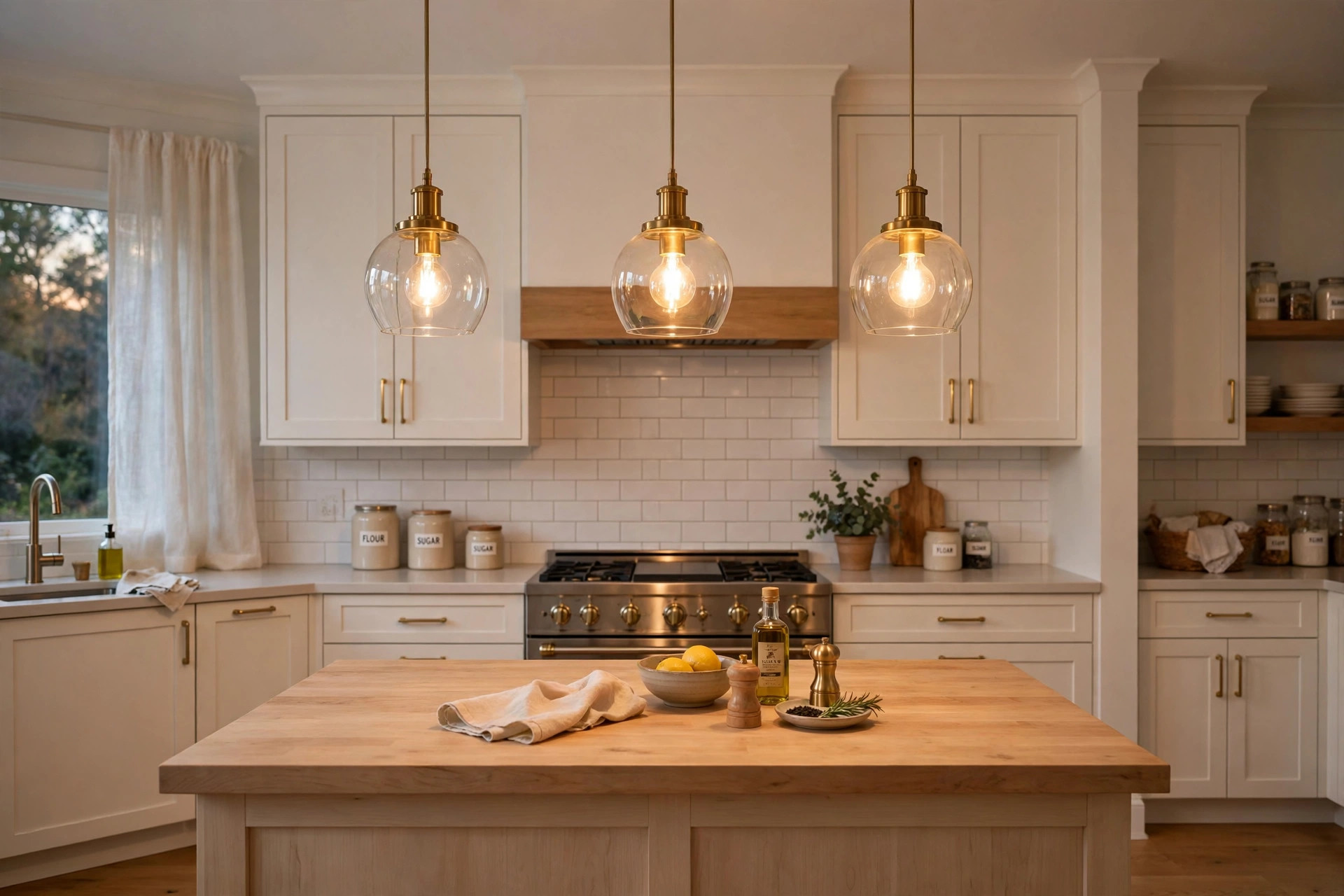

A kitchen island is the heart of many American homes. People chop food there. Children do homework there. Guests sit there with coffee. Good light over that island makes the space work. Bad light makes it hard to see and hard to enjoy. This kitchen island pendants reviews buying guide usa gives you clear facts. It helps you pick the right pendant lights. It covers size, style, cost, and safety. It also answers common questions.
Pendant lights hang from the ceiling on a cord, chain, or rod. They sit over the island. They give direct light where you need it. Shoppers in the United States have many choices. Prices range from low to high. This guide walks you through each step.
Why Kitchen Island Pendants Matter
A kitchen needs strong task light. An island needs it most. You cut, mix, and read recipes on the island. Overhead light from the ceiling alone can leave shadows. Your body blocks the light when you stand at the counter. Pendants hang low over the island. They put light right on the work surface.
Pendants also set the mood. They are the most seen lights in the kitchen. Guests notice them first. The right pendants make the room feel warm and finished. Many buyers check kitchen island pendants reviews before they buy. Reviews show how lights look in real homes. They show if the light is too dim or too harsh.
Good pendants raise the value of a kitchen. Home buyers notice updated light. A row of clean, modern pendants makes a kitchen look cared for.
How to Choose Kitchen Island Pendants: Kitchen Island Pendants Reviews Buying Guide Usa
Choice starts with facts. Measure your island. Note your ceiling height. Decide your style. The steps below help you choose with care.
Size and Scale
Size matters most. A pendant that is too small looks lost. A pendant that is too big blocks views. A common rule works well. For one or two pendants, each shade should be about one third of the island width. For three pendants, space them evenly. Leave about 24 to 30 inches between the centers of each light.
Hang height matters too. The bottom of the shade should sit 30 to 36 inches above the counter top. This puts light where you work. It keeps the light out of your eyes. If you have a high ceiling, you can hang them a bit higher. If the island is used for dining, keep the low end of the range. Diners should see each other across the island without the shades in the way.
Shade width is also key. Small islands do well with one wide shade or two small ones. Large islands often need three pendants. Measure the island length. Divide by the number of lights. That gives you the spacing. Keep at least 6 inches of clear counter at each end of the island. The Lamps Plus site shows many size charts. They help you plan the layout before you buy.
Style and Finish
Style should match your kitchen. Modern kitchens suit simple glass or metal shades. Farmhouse kitchens suit lantern shapes or seeded glass. Classic kitchens suit brass or bronze finishes. The finish should echo other parts of the room. Match the faucet or the cabinet handles. A little match goes a long way.
Shade material changes the light. Clear glass gives bright, open light. Frosted glass softens the light. Opaque metal shades push light straight down. That is good for task work. Drum shades give a soft glow in all directions. Think about what you do at the island. If you chop and cook, you need direct down light. If you eat and talk, you may want softer light. Design ideas at The Spruce show how shades change a room.
Finish care matters. Polished brass shows fingerprints. Matte black hides them. Pick a finish you will be happy to clean. Dark shades can make the ceiling feel lower. Light shades can make the room feel bigger.
Light Quality and Bulbs
Light quality changes how food and faces look. Look at two numbers. Lumens tell you how bright the light is. For an island, each pendant should give 400 to 800 lumens. That adds up to strong light over the work area. Color temperature tells you the color of the light. It is measured in Kelvin. Warm white is 2700K to 3000K. It feels cozy. Neutral white is 3500K. It feels clean. Daylight is 5000K. It feels harsh in a home kitchen. Most buyers like 2700K or 3000K over an island.
Bulb type matters. LED bulbs are the best choice today. They use little power. They last for years. They come in many shapes. Check the Philips lighting pages for bulb options. Make sure the pendant takes the bulb size you want. Some pendants have built in LED modules. Those last a long time. But when they fail, you may need a new fixture. Replaceable bulbs are easier to service.
A dimmer switch is worth the cost. It lets you lower the light for dinner. Then you raise it for cooking. Check the fixture label. Check the bulb label. Buy a dimmer that matches both. Guidance from Energy.gov explains dimming and LED bulbs in plain terms.
Types of Kitchen Island Pendants
Stores sell many types. Each type has a clear use. Knowing the types helps you read kitchen island pendants reviews with a trained eye.
Single dome pendants. These have one round shade. They are simple and cheap. They work in rows of two or three. They give good down light.
Mini pendants. These are small, often under 10 inches wide. You use them in groups. Three or four minis over a long island look neat. They are common in modern kitchens.
Lantern pendants. These look like old lanterns. They suit farmhouse and rustic kitchens. They often use clear glass and dark metal. They give a warm, open feel.
Linear pendants. These are one long fixture with two or three lights inside. They suit long, narrow islands. One fixture is easier to install than three. They give even light along the island.
Drum pendants. These have a wide fabric or metal drum shade. They give soft, spread out light. They suit islands used for dining. The fabric needs care. It can collect dust and grease.
Industrial pendants. These use metal shades, often in black or copper. They suit lofts and modern homes. They give strong down light. They can feel cold if the room has no warm touches.
Glass globe pendants. These have round glass shades. They look clean and light. They suit small kitchens. They show dust, so they need wiping.
When you shop, look at the Home Depot lighting section. You can filter by type, finish, and price. The Lowe’s site offers similar tools. Both let you read buyer reviews. Reviews tell you if the light looks like the photo. They tell you if the install was hard.
Cost and Price
Kitchen island pendants cost from about 40 dollars to over 500 dollars each. Most buyers pay between 80 and 200 dollars per light. Price depends on brand, material, and size. Hand blown glass costs more. Simple metal shades cost less.
Think of the full cost. You need the fixtures. You may need an electrician. You may need a dimmer switch. A simple swap of old pendants for new ones can be a do it yourself job. New wiring costs more. An electrician may charge 100 to 300 dollars per fixture to install. Get a quote before you buy.
Bulbs add cost too. LED bulbs cost more up front. They save money over time. A 10 watt LED can replace a 60 watt old bulb. It gives the same light. It uses one sixth of the power. Over five years, the savings are real. The Lumens site lists prices across many brands. That helps you compare.
Do not buy on price alone. Very cheap pendants can have thin cords. They can have weak sockets. They can dim poorly. Kitchen island pendants reviews often flag these faults. A mid price light from a known brand is often the best value. It lasts longer. It looks better. It is safer.
Care and Upkeep
Pendants over an island collect grease and dust. Cooking sends steam and oil into the air. It lands on the shades. Clean them often. Wipe glass shades with a soft cloth and mild soap. Dry them fully. Clean metal shades with a dry cloth. Avoid harsh cleaners. They can strip the finish.
Turn off the power before you clean. Let bulbs cool first. Check the cord or rod each year. Look for cracks or loose parts. Tighten the screws that hold the canopy to the ceiling. A loose canopy is a fall risk.
Replace bulbs before they die. Dim LEDs can strain your eyes. Keep a spare bulb on hand. Dust the inside of the shade twice a year. Dust blocks light. A clean shade can feel 20 percent brighter.
Fabric drum shades need a lint roller. Do not use water on fabric shades. It can leave marks. If the shade is very dirty, check the maker guide. Some shades come off for washing. Many do not.
Safety
Light over a cooking area must be safe. Follow these rules.
First, use the right bulb wattage. Every fixture has a max watt label. Never go over it. Too much heat can melt the socket. It can start a fire. LED bulbs run cool. They make this easy. But still check the label.
Second, wire it right. If you are not sure about wiring, call an electrician. Turn off the breaker before you touch any wire. Test with a voltage tester. Loose wire nuts cause arcing. Arcing causes fires. A pro install is worth the fee.
Third, mind the height. Hang lights high enough to avoid head bumps. Keep the 30 to 36 inch rule. In homes with low ceilings, pick flush or semi flush styles. A pendant that hangs too low is a hazard.
Fourth, keep lights away from water. The island may have a sink. Do not splash the fixtures. If your island is near the sink, pick damp rated lights. Damp rated lights handle steam and mist.
Fifth, check cords and chains. They should be tight and straight. A leaning pendant means a loose mount. Fix it at once. Heavy glass shades need strong boxes in the ceiling. Old boxes may not hold the weight. An electrician can add a brace.
For general home safety facts, the Wirecutter reviews test many home products for safe use. Their tests can guide your choice.
FAQ
How many pendants do I need over my kitchen island? It depends on the island length. An island under 5 feet long often needs two pendants. An island 6 to 8 feet long often needs three. A very long island may need four, or one linear fixture. Space them evenly. Keep the light balanced from end to end.
How high should kitchen island pendants hang? Hang the bottom of the shade 30 to 36 inches above the counter. This is the standard rule in the United States. It gives good task light. It keeps the shades out of the line of sight. For ceilings over 9 feet, add 3 inches of hang height for each extra foot of ceiling.
What size pendant is best for a kitchen island? Each shade should be about one third the width of the island for a two light setup. For three lights, each shade can be smaller. Most island pendants are 10 to 16 inches wide. Measure before you buy. Tape paper circles to the ceiling to test the look.
Are LED kitchen island pendants worth it? Yes. LED pendants use less power. They last 15 to 25 times longer than old bulbs. They run cool. They work with dimmers. The light quality is now very good. The upfront cost is higher. The long term cost is lower. Most new pendants sold today are LED ready.
Can I install kitchen island pendants myself? You can if you are swapping old pendants for new ones on the same wiring. Turn off the breaker. Follow the maker guide. Connect like wires. If you need new wiring, a new switch, or a new ceiling box, call an electrician. Bad wiring is a fire risk. When in doubt, hire a pro.
Do pendant lights over an island need to match the dining room chandelier? They do not need to match exactly. But they should share a style family. If your dining room has a modern light, pick modern pendants. Match the metal finish across rooms. A shared finish ties the home together. For ideas on dining room lights, see our dining room chandeliers buying guide.
A Final Word
Picking kitchen island pendants takes a little planning. Measure your island. Pick the right size. Choose a style that fits your home. Check kitchen island pendants reviews from real buyers. Buy from trusted stores. Install with care, or hire an electrician. If your kitchen also needs other updates, our LED recessed lights installation guide can help. For a broader look at island styles and prices, see our kitchen island pendants buying guide. Good light makes a kitchen work. Take your time. The right pendants will serve you for years.
References
Lamps Plus. (n.d.). Lighting and home decor. https://www.lampsplus.com Lowe’s. (n.d.). Home improvement products. https://www.lowes.com Lumens. (n.d.). Lighting and ceiling fans. https://www.lumens.com Philips. (n.d.). Lighting products. https://www.philips.com The Home Depot. (n.d.). Home improvement products. https://www.homedepot.com The Spruce. (n.d.). Home and garden advice. https://www.thespruce.com U.S. Department of Energy. (n.d.). Energy efficiency and renewable energy. https://www.energy.gov Wirecutter. (n.d.). Product reviews from The New York Times. https://www.nytimes.com/wirecutter
Was this guide helpful?

About Michael Thompson
The My Garden US editorial team writes practical, in-depth home and garden guides for American homeowners — tested advice, no fluff.
You May Also Like

Indoor Wall Sconces for Texas Homes: A Plain Buyer Guide
August 31, 2026 0 views
Deck Cap Lights for Texas Homes: A Practical Guide
January 12, 2026 0 views
LED Recessed Lights USA Online Deals: How to Shop Smart
April 25, 2026 0 views