
Clean pool water starts with knowing what is in it. You cannot see chlorine, pH, or alkalinity with your eyes. That is why finding the best pool chemical test kit strips matters so much. A small strip dipped in the water for a few seconds can tell you whether the water is safe to swim in. It can also warn you before the water turns green or cloudy. This guide explains how test strips work, what to look for when you buy them, and how to use them the right way. No special training is needed. Any pool owner can learn this in one afternoon.
Why Test Strips Matter
Pool water is a careful balance. Chlorine kills germs and algae. The pH level keeps the water gentle on skin and eyes. Total alkalinity keeps the pH steady. When any of these move out of range, problems follow. Eyes burn. The pool liner can fade. Algae can bloom in a single warm week. Regular testing catches these shifts early, while they are still cheap to fix.
The best pool chemical test kit strips turn a chemistry chore into a one-minute task. You dip a strip, wait a short time, and compare the colored pads to a chart on the bottle. That is the whole process. Liquid reagent kits exist too, and they are very accurate, but they take longer and cost more per test. Strips are the practical choice for weekly testing. Many pool owners test with strips each week and save the liquid kit for rare double-checks.
Testing also protects your wallet. When you test first and add chemicals only when needed, you stop wasting shock, chlorine, and pH products. A bottle of fifty strips often costs less than a single bag of pool shock. Guides on proper pool water chemistry explain how testing prevents the most common water problems before they start.
How Test Strips Work: Best Pool Chemical Test Kit Strips
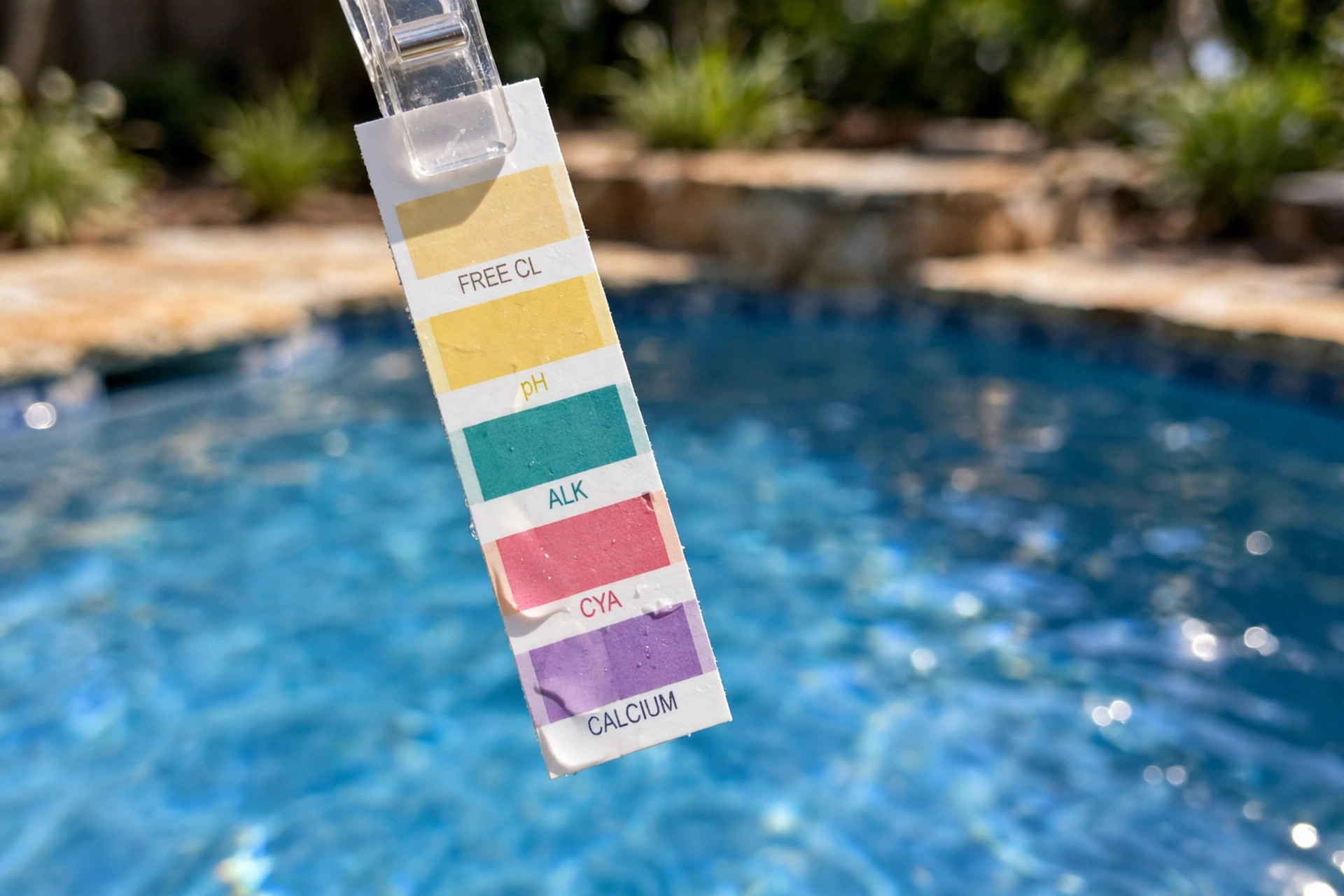
Each strip has small colored pads. Every pad is treated with a chemical that reacts to one thing in the water. One pad may read free chlorine. Another reads pH. Others read total alkalinity, cyanuric acid, or calcium hardness. You dip the strip in elbow-deep water for the time the label says, usually one or two seconds. Then you hold the strip level and wait. Most brands ask you to read the colors at fifteen to thirty seconds. After that window the colors can keep changing, so you must read them on time.
You match each pad to a color chart printed on the bottle. The chart shows ranges: free chlorine from 0 to 10 parts per million, pH from 6.2 to 8.4, and so on. The color match is not exact science. It is close enough for regular home care. If you want the most precise reading, test at the same time of day and in the same spot each week. Morning tests, before the sun heats the water, give the steadiest results.
What to Look for When You Buy
Number of readings on one strip
Basic strips read three things: free chlorine or bromine, pH, and total alkalinity. Larger strips read six or seven: they add cyanuric acid, calcium hardness, and total chlorine. The best pool chemical test kit strips for most home pools are the six-way strips. They cover everything a home owner needs without waste. Seven-way strips add copper or iron readings, which help if your fill water has metals.
Accuracy and pad quality
Not all strips read the same. Good strips use pads that change color cleanly, with clear steps between ranges. Weak strips bleed: one pad’s color washes into the next, or the chart colors are hard to match. Read the label for claims about accuracy and check that the bottle shows a full color chart, not a vague one. If you already use one product line, learning about how to lower pool ph levels safely will pair well with regular strip testing.
Speed of results
Most strips give results in fifteen to sixty seconds. Faster is nicer, but speed means little if the colors are hard to read. Aim for a brand with a generous read window, around thirty seconds, so you are not rushed.
Freshness and storage
Strips go bad with heat and moisture. A good bottle has a tight screw cap and sometimes a moisture guard inside. Check the expiry date before you buy. A two-year date from purchase is normal. Buy from stores that move stock quickly, like large home improvement retailers, so your bottle is fresh.
Price per strip
Strip bottles usually hold twenty-five, fifty, or one hundred strips. Larger bottles cost less per strip. If you test once a week through a five-month season, you need about twenty-five strips. A fifty-count bottle gives you room for extra tests after storms and heavy swim days.
Types of Test Strips
Three-way strips
These test free chlorine, pH, and total alkalinity. They suit small above-ground pools with simple chemistry. They cost the least per bottle.
Six-way strips
These add cyanuric acid and total chlorine or calcium hardness. This is the sweet spot for most in-ground pools and larger above-ground pools. When shoppers compare options in reviews of accurate pool test strips, the six-way strips win most praise for covering the bases.
Seven-way and specialty strips
These add readings for copper, iron, or salt levels. They suit saltwater pools and wells with high metal content. If your pool uses a salt system, one extra pad for salt can replace a separate meter.
Hot tub strips
Hot tub water runs hotter and holds fewer gallons, so chemistry swings faster. Strips made for spas read bromine and pH with finer low ranges. Regular pool strips still work in a pinch, but spa strips give better detail. Anyone with both a pool and a spa should read about how to maintain hot tub water chemistry alongside this guide.
How to Use Test Strips Correctly
Good strips give bad readings when used badly. Follow these steps every time.
1. Wash and dry your hands first. Lotion or dirt on your fingers can stain the pads. 2. Take one strip from the bottle and close the cap at once. Air and humidity spoil the rest. 3. Dip the strip in elbow-deep water, away from return jets and skimmers. Hold it still for the time on the label. 4. Lift it out without shaking off the water. Hold it level so colors do not run together. 5. Start your timer. Read the pads in order at the time the label says. 6. Compare each pad to the chart in natural daylight. Indoor lights can shift colors. 7. Write down the readings or take a photo. Memory fades faster than you think.
Common errors are easy to avoid. Never read a strip after the stated window. Never dip in water near a chlorine tablet floater or a fresh shock dose. Wait at least a full day after shocking before testing, or the reading will spike. And never test right after rain without retesting the next day too, since rain dilutes and cools the water.
Cost and Price
Test strips are one of the cheapest parts of pool care. A fifty-count bottle of three-way strips often sells for about ten to fifteen dollars. Fifty-count six-way strips run about fifteen to twenty-five dollars. Specialty seven-way strips cost a bit more. Liquid reagent kits start around twenty to forty dollars and last longer, but each test takes more time.
Think in terms of cost per season. Weekly testing from May through September needs about twenty-two strips. Even the premium strips cost under twenty dollars for the whole season. Compare that with one emergency algae treatment, which can run fifty to one hundred dollars in chemicals plus days of lost swimming. Testing pays for itself many times over. Pool supply sites like Leslie’s and Pool Warehouse show how strip prices compare with liquid kits.
Care and Upkeep of Your Strips
Treat the bottle like medicine. Store it in a cool, dry place, never on the hot pool deck. Heat breaks down the pad chemicals and makes readings drift. Keep the cap tight between uses. Never pour strips into another container or share the bottle cap with wet hands.
Check the expiry date at the start of each season. Outdated strips often read low on chlorine and high on pH, which is a dangerous mix of errors. If readings start looking strange two weeks in a row while the water looks fine, suspect the strips before you suspect the water. Buy a fresh bottle and test side by side. When in doubt, throw out the old bottle. Twenty dollars is cheap insurance.
Write the date you opened the bottle on the lid with a marker. Most makers rate opened strips for about one season. This simple habit stops the most common source of bad readings: old strips.
Safety
Test strips are safe tools, but the chemicals they react with are not toys. Keep the bottle away from small children and pets. The pads are not for eating or for play. Wash your hands after handling strips, and never touch your eyes with wet fingers.
The readings protect safety too. The Centers for public safety publish clear rules for pool barriers and water safety; the Consumer Product Safety Commission offers free guidance for pool owners. On the chemistry side, safe targets are: free chlorine 1 to 4 parts per million, pH 7.2 to 7.8, total alkalinity 80 to 120 parts per million. Levels far outside these ranges can irritate skin and eyes or let germs survive. Test weekly, act on the results, and the pool stays safe for the whole family.
Keep chemicals and test strips in the same storage spot but in separate sealed containers. Spilled chlorine granules can ruin a whole bottle of strips through the plastic. Ventilate the storage area and keep everything off the ground in case of flooding.
FAQ
How often should I test my pool water with strips?
Test once a week during swim season. Test again after heavy rain, after a pool party, or after adding any chemical. Hot tubs need testing two to three times per week because the small water volume changes fast.
Are test strips as accurate as liquid test kits?
Liquid kits edge out strips for precision, but quality strips are accurate enough for home care. Most home pools never need lab-level precision. Use strips for weekly checks and a liquid kit once a month if you want extra confidence.
Why do my strips show different colors each time?
Old or damp strips are the top cause. Shaking water off the strip or reading too late also shifts colors. Test at the same time and spot, follow the timing on the label, and replace the bottle if it is past its date.
Can I use pool test strips in my hot tub?
Yes, the chemistry is the same, but spa strips are tuned for smaller ranges and bromine. They give clearer readings in hot water. Dedicated spa strips from makers like Hot Spring or Bullfrog Spas are worth the small extra cost.
Do test strips expire?
Yes. Most last about two years unopened and about one season once opened. Expired strips give false readings, so write the open date on the lid and replace yearly.
What is the difference between free chlorine and total chlorine on a strip?
Free chlorine is the active sanitizer still available to kill germs. Total chlorine includes free chlorine plus used-up chlorine. If total is much higher than free, the pool needs shocking. Many owners learn this trick first when studying general pool upkeep on sites like The Spruce.
A Short Final Word
The best pool chemical test kit strips are the ones you will actually use every week. Pick six-way strips from a fresh bottle, store them right, and follow the timing on the label. Write down your readings. Act on them with small, steady doses. Do this and your pool will stay clear, your equipment will last longer, and your summer will be about swimming, not scrubbing. Clear water is not luck. It is a habit, and it starts with a strip.
References
Bullfrog Spas. (n.d.). Hot tubs and spas. https://www.bullfrogspas.com Hot Spring Spas. (n.d.). Hot tubs and spas. https://www.hotspring.com Leslie’s Pool Supplies. (n.d.). Pool supplies and equipment. https://www.lesliespool.com Pool Warehouse. (n.d.). Pool equipment and supplies. https://www.poolwarehouse.com Swim University. (n.d.). Pool and hot tub care guides. https://www.swimuniversity.com The Home Depot. (n.d.). Home improvement products. https://www.homedepot.com The Spruce. (n.d.). Home and garden advice. https://www.thespruce.com U.S. Consumer Product Safety Commission. (n.d.). Product safety information. https://www.cpsc.gov
Was this guide helpful?

About Robert Taylor
The My Garden US editorial team writes practical, in-depth home and garden guides for American homeowners — tested advice, no fluff.
You May Also Like
Best Pool Heater for Small Pools
October 5, 2026 0 views
Best Pool Toys for Teenagers Reviews: A Practical Guide for Families
April 27, 2026 0 views
How to Open Pool for Summer Season: A Complete Step-by-Step Guide
April 1, 2026 0 views