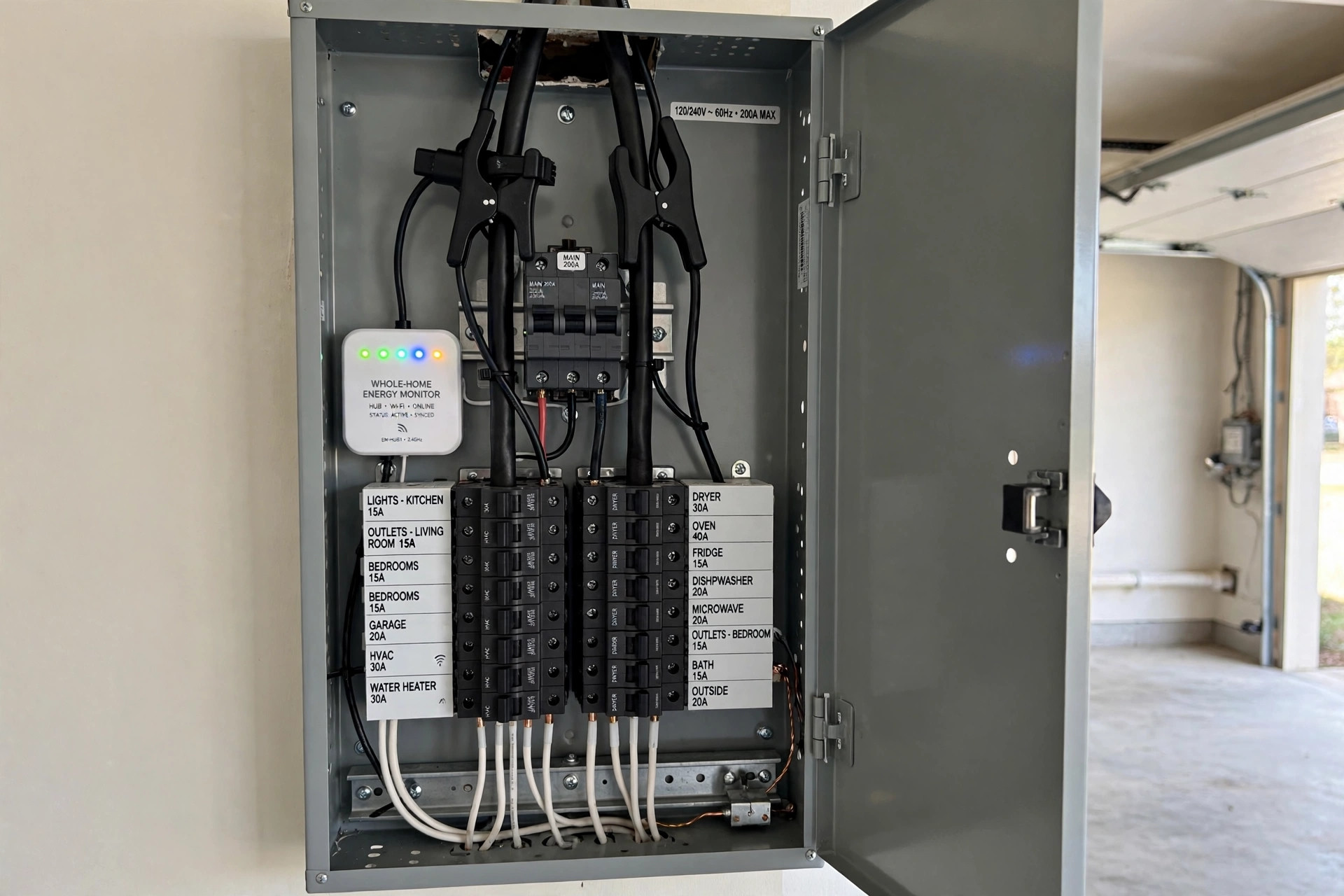

The best home energy monitor reviews 2026 USA show one clear trend. More American families want to see exactly where their power goes. They open a phone app and watch each circuit in real time. They learn that the old freezer in the garage costs forty dollars a month. They see the water heater run at the wrong hours. This knowledge changes habits fast.
An energy monitor is a small device. It sits inside the main electrical panel. It reads the flow of power into the home. It sends the data to an app. Some models also read each branch circuit. That detail matters. Whole-house numbers tell you little. Circuit-level data tells you which device is the problem.
Buyers in 2026 have more choices than ever. Prices range from simple clamp sensors under two hundred dollars to full smart panels above one thousand. Some need an electrician. A few can be set up by a handy homeowner. This guide walks through the main types, the top features, the real costs, and the questions every buyer should ask before purchase.
Why an Energy Monitor Matters
Most power bills show one number. One number does not teach you anything. A monitor breaks that number apart. It shows the cost of cooling, heating, cooking, and water. A reader of utility data can then act on facts instead of guesses.
The savings add up. Many owners cut ten to twenty percent from their bill. They find devices that run all day for no reason. They shift laundry to cheaper hours. They set the water heater to a smarter schedule. The monitor does not save power by itself. It shows where the waste is, and the owner makes the change.
The data also ends arguments. When two people share a home, they often disagree about the power bill. One blames the air conditioner. The other blames the gaming setup. The monitor settles the matter with hard numbers. It turns a guess into a fact that both can read. Many families report that this clarity makes the whole house more willing to change habits. Children learn fast when they see the cost of leaving lights on.
It also finds danger. A circuit that pulls strange spikes at night may have a bad motor. A breaker that runs hot may need attention. Some monitors send alerts for unusual loads. That early warning can stop a small fault from becoming a fire risk. Reviewers at This Old House note that electrical faults are among the most common causes of home fires.
How to Choose: What to Look For: Best Home Energy Monitor Reviews 2026 Usa
Sensor type and accuracy
Most monitors use clamp-on current sensors. Two clamps wrap the main lines in the panel. Better units add clamps for individual circuits. A Rheem guide on home electrical loads notes that large appliances can draw most of a panel’s capacity, so accurate reading of the mains matters most. Look for stated accuracy of plus or minus two percent or better.
Circuit-level detail
Basic units read only the total feed. Step-up units read eight, twelve, or sixteen circuits. The extra detail is worth the cost for larger homes. You can name each circuit in the app. Then you see the air conditioner, the dryer, and the pool pump as separate lines on the graph.
Real-time data and app quality
The app is half the product. Open it and you should see live watts, day totals, and cost estimates. Look for apps that store history for at least a year. Graphs should be simple to read. Reviews from Consumer Reports show that app quality is the most common complaint among owners. A poor app ruins a good sensor.
Integration with smart home tools
Some monitors link to smart thermostats and load controllers. They can shut off a water heater when prices spike. They can charge an electric car only at night. If you plan a smart panel later, buy a monitor from a brand that works with the systems you may add. Guides at The Spruce show how energy data feeds into wider home automation plans.
Types of Home Energy Monitors
Main-panel clamp monitors
These are the most common. Two or more clamps attach to the main feeders inside the breaker panel. A hub sends data over Wi-Fi. They cost about one hundred fifty to three hundred fifty dollars. They work with most American 120/240-volt panels. A licensed electrician should fit them. The work takes under an hour.
Circuit-level monitors
These add small sensors to each branch circuit. Some come with a sub-panel that wires in beside the main panel. Prices run from three hundred to eight hundred dollars. They suit homes with many big loads. They also suit owners who want the deepest detail.
Smart meter add-ons
Some utilities allow an optical reader on the meter face. These read pulses from the meter and report totals. They are cheaper and simpler. They cannot show circuit detail. They are a fair pick for renters or for homes where the panel cannot be touched.
Plug-level monitors
Small plugs with built-in meters fit between the outlet and one device. They cost twenty to sixty dollars each. They are not whole-home units. They work well for testing one suspect device, like a wine fridge or a space heater, before you buy a full system.
Owners planning heating upgrades often pair a monitor with an efficient system. For example, readers comparing cold climate heat pump reviews use monitors to confirm the heat pump really runs cheaper than the old furnace.
Cost and Price Guide
The table below shows the typical range for 2026.
| Type | Hardware cost | Install cost | Total | |—|—|—|—| | Main-panel clamp unit | 150–350 | 150–300 | 300–650 | | Circuit-level system | 300–800 | 250–500 | 550–1,300 | | Smart meter add-on | 70–130 | 0 | 70–130 | | Plug-level meters | 20–60 each | 0 | 20–60 |
Install cost covers a licensed electrician for one to two hours. Prices vary by state and by panel type. Some makers sell pro install through their sites, like Lowe’s installation services pages for related electrical gear.
The payback is simple to count. A home that spends two hundred dollars a month on power and cuts fifteen percent saves three hundred sixty dollars a year. At that rate, a five-hundred-dollar system pays for itself in about seventeen months. Homes with pools, hot tubs, or electric heat often see faster payback.
Watch for hidden fees. Some brands charge a monthly fee for full app features. Others keep the app free but sell add-on sensors at high prices. Read the terms before you buy. A buyer of mini split maintenance gear learns the same lesson: the long-run cost is the hardware plus the upkeep.
Installation Basics
Do you need an electrician
For any unit that goes inside the panel, the answer is yes. The panel holds live bus bars even when breakers are off. A slip of the hand can cause a severe shock. Local codes in most states require a licensed worker for panel work. Energy.gov safety guidance warns against unlicensed work inside service panels. A meter add-on or plug meter needs no electrician.
What the install involves
The electrician opens the panel cover. They clip sensors onto the two main feeders. They connect the hub to a spare breaker for its own power. They close the panel and set up the Wi-Fi link. The whole job takes thirty to ninety minutes. The panel door must still close flat with the sensors inside.
Before the appointment
Count your circuits and note the panel brand. Check that your Wi-Fi reaches the panel, which is often in a garage or basement. A weak signal is the most common cause of failed setups. Buy a mesh node or extender if the signal is poor. Also clear space in front of the panel so the worker can reach it.
Care and Upkeep
An energy monitor needs little care. Keep the firmware current. The app will ask to update from time to time. Accept the updates. They fix bugs and add features.
Check the clamps once a year. Open the panel only with the main breaker off, and never touch the bare bus. Look for clamps that have slipped. A loose clamp reads low and gives wrong data. If you see odd readings, call the electrician who did the install.
Clean the hub with a dry cloth. Do not spray cleaners near the panel. If the hub uses a backup battery, replace it on the maker’s schedule. Reviewers on Energy Star pages remind owners that all connected devices should stay updated for safe use.
Owners with large cooling systems get extra value from the upkeep habit. A monitor paired with an energy efficient mini split for 1500 sq ft shows the exact cost of each zone, which helps tune the thermostat settings.
Safety Notes
Electricity is not a hobby. Only a licensed electrician opens the panel for a wired install. Turn off the main breaker before you even look inside. If you smell heat or see burn marks, stop and call a pro at once.
Monitors that sense abnormal loads can help. Set alerts for spikes above normal. Some units send a phone warning when a circuit draws power at odd hours. That warning may point to a failing appliance. The EPA notes that faulty appliances waste energy and pose safety risks.
Keep the app password strong. The hub joins your home network. Use a unique password for the account and for Wi-Fi. Update the router firmware too. A weak link in the chain can expose your usage data.
Frequently Asked Questions
How accurate are home energy monitors?
Good clamp monitors read within one to two percent of the utility meter. That is close enough for all home decisions. Cheap plug meters vary more. Place the clamps fully closed around the wire for best results.
Will a monitor work with solar panels?
Many do. Look for a model with a solar input channel. It reads production from the inverter and usage from the mains. The app then shows net import and export. Some brands built for this task sell through HVAC makers like Trane dealers and electrical supply stores.
Can it track individual appliances?
Yes, if the model supports circuit sensors or plug monitors. Each big appliance sits on its own circuit in most American homes. Put a sensor on that circuit and you see the appliance alone. Some apps also guess devices from load patterns, but circuit sensors are more reliable.
Does it need Wi-Fi all the time?
Yes, for live data and alerts. Most hubs store a short buffer if Wi-Fi drops. They upload the gap when the link returns. A panel in a far garage may need a Wi-Fi extender for a steady link.
Will it work with a sub-panel?
Yes. Main clamps go on the main panel feed. If you want the sub-panel circuits read, add circuit sensors there too. Some makers like Goodman distributors sell kits sized for main plus sub-panel setups.
Is a monthly fee required?
It depends on the brand. Many keep the core app free. A few charge for long history or advanced reports. Ask about fees before you buy. Over five years, a small fee can double the true cost.
A Short Final Word
The best home energy monitor reviews 2026 USA point to a simple truth. You cannot fix what you cannot see. A monitor shows every watt in plain view. It finds waste, flags faults, and proves that new habits pay. Choose a unit that fits your panel, your budget, and your app taste. Hire a pro for the install. Then watch the numbers and let them guide you. The savings follow soon after.
References
Consumer Reports. (n.d.). Product reviews and ratings. https://www.consumerreports.org ENERGY STAR. (n.d.). Energy efficient products. https://www.energystar.gov Goodman. (n.d.). Heating and cooling equipment. https://www.goodmanmfg.com Lowe’s. (n.d.). Home improvement products. https://www.lowes.com Rheem. (n.d.). Heating, cooling, and water heating. https://www.rheem.com The Spruce. (n.d.). Home and garden advice. https://www.thespruce.com This Old House. (n.d.). Home renovation guidance. https://www.thisoldhouse.com Trane. (n.d.). Heating and air conditioning. https://www.trane.com U.S. Department of Energy. (n.d.). Energy efficiency and renewable energy. https://www.energy.gov U.S. Environmental Protection Agency. (n.d.). Protecting human health and the environment. https://www.epa.gov
Was this guide helpful?

About Emily Rodriguez
The My Garden US editorial team writes practical, in-depth home and garden guides for American homeowners — tested advice, no fluff.
You May Also Like

Best Quiet Bathroom Exhaust Fan Reviews USA: A Plain Guide to Silent, Dry Bathrooms
July 2, 2026 0 views
Best Ductless Range Hood Reviews 2026 USA: What to Buy and Why
January 10, 2026 0 views
Trane vs Carrier AC Comparison Reviews USA
August 26, 2026 0 views