
The outside of a house takes a hard beating. Sun, rain, wind, snow, and heat all strike the walls day after day. That is why weather resistant exterior house painting services for homeowners are worth careful study. A good paint job does more than change color. It forms a shield that keeps water out of the wood and siding. It slows the harm the sun does to bare surfaces. This guide walks through what these services include, how to pick a painter, what the work costs, and how to care for the finish once the crew has left.
Why Weather Resistant Paint Matters
Paint is the first line of defense for the walls of a house. When paint is old and thin, water finds its way into small cracks. In cold areas, that water freezes and grows, which opens the cracks wider. In warm areas, trapped damp can feed mold and rot. The sun causes its own harm. Its rays break down the paint film and fade the color. Over time, the surface chalks and peels, and the wood beneath is left bare.
Weather resistant coatings are made to stand up to this abuse. They use resins that stay flexible as the weather changes, so the film does not crack when the house shifts with heat and cold. They carry additives that block the worst of the sun’s rays. Many are built to shed water so rain runs off instead of soaking in. A good painter applies these products in the right number of coats and at the right thickness, and that care is what makes the protection last.
A sound paint job can last eight to twelve years, and in kind weather it may last longer. Skimping on paint or prep often means repainting in three or four years.
What to Look for When You Hire a Painter: Weather Resistant Exterior House Painting Services for Homeowners
Not all painting firms are the same. Some are large companies with office staff and full crews. Some are small teams of two or three skilled men. Both kinds can do fine work. What counts is how they treat the job from the first visit to the last walk-through.
License and Insurance
Ask to see the firm’s license if your state requires one, plus proof of liability insurance and workers compensation coverage. These protect you if a worker is hurt on your property or if the crew breaks something. A serious firm will hand you copies without complaint.
A Written Estimate
A good estimate is put in writing and spells out the whole job. It should name the areas to be painted, the paint brand and line, the number of coats, the prep work, and the price. It should state the start date and the expected length of the job. Home advice guides like those at This Old House suggest the same written checklist. Firms that sell weather resistant exterior house painting services for homeowners often favor premium exterior lines from makers like Sherwin-Williams, and the estimate should name the exact product. If the bid is vague, ask for more detail before you sign.
How They Handle Prep Work
Prep is where most paint jobs succeed or fail. Ask what the crew will do before a brush ever touches the wall. Good firms pressure wash the siding, scrape loose paint, sand rough spots, caulk gaps around windows and trim, and prime bare wood.
Types of Weather Resistant Paints
There are three main kinds of exterior paint a homeowner will meet. Each has its place, and a good painter will explain why one suits your house best.
Acrylic Latex Paint
Acrylic latex is the most common choice today. It cleans up with water, dries fast, and holds its color well. High quality acrylics flex with the wood as it warms and cools, so they resist cracking. They let water vapor pass out from inside the wall, which helps stop blistering. For most wood, stucco, and fiber cement siding, a premium acrylic latex is the standard pick. Guides on exterior painting at The Spruce often point to this type as the best balance of cost and life.
Elastomeric Coatings
Elastomeric coatings are thick and stretchy. They bridge small cracks in stucco and masonry and keep water out of hairline splits. They cost more than standard latex and need more skill to apply, but on the right wall they add years of service.
Alkyd and Oil-Based Paints
Oil-based and alkyd paints are hard and tough, and they were once the rule for trim. Their use on full houses has faded because they dry slowly and many states limit their use. A painter may still suggest an alkyd for a metal door, but for large wall areas, modern latex wins.
When you read about exterior paint options from Behr, you will find lines made for harsh sun and heavy rain. What matters more than the brand, though, is the grade. A maker’s top line outlasts its budget line by years. Ask the painter which line he plans to use and why.
How the Work Is Done, Step by Step
A well run paint job follows a steady order. Knowing the steps helps you judge the work as it goes.
First comes washing. The crew cleans the walls with a pressure washer or with soap and water. Dirt, mildew, and chalked old paint must come off, or the new paint will not stick.
Next comes scraping and sanding. Loose and peeling paint is scraped to a firm edge. Rough spots are sanded smooth.
Then comes repair and caulk. Small holes are filled. Gaps around windows, doors, and trim are sealed with a good exterior caulk. Rotted wood should be cut out and replaced, not painted over.
After that comes priming. Bare wood and bare metal get a coat of primer. Primer grips the surface and gives the top coat something firm to hold. On walls with many bare patches, a full prime coat is the safe choice.
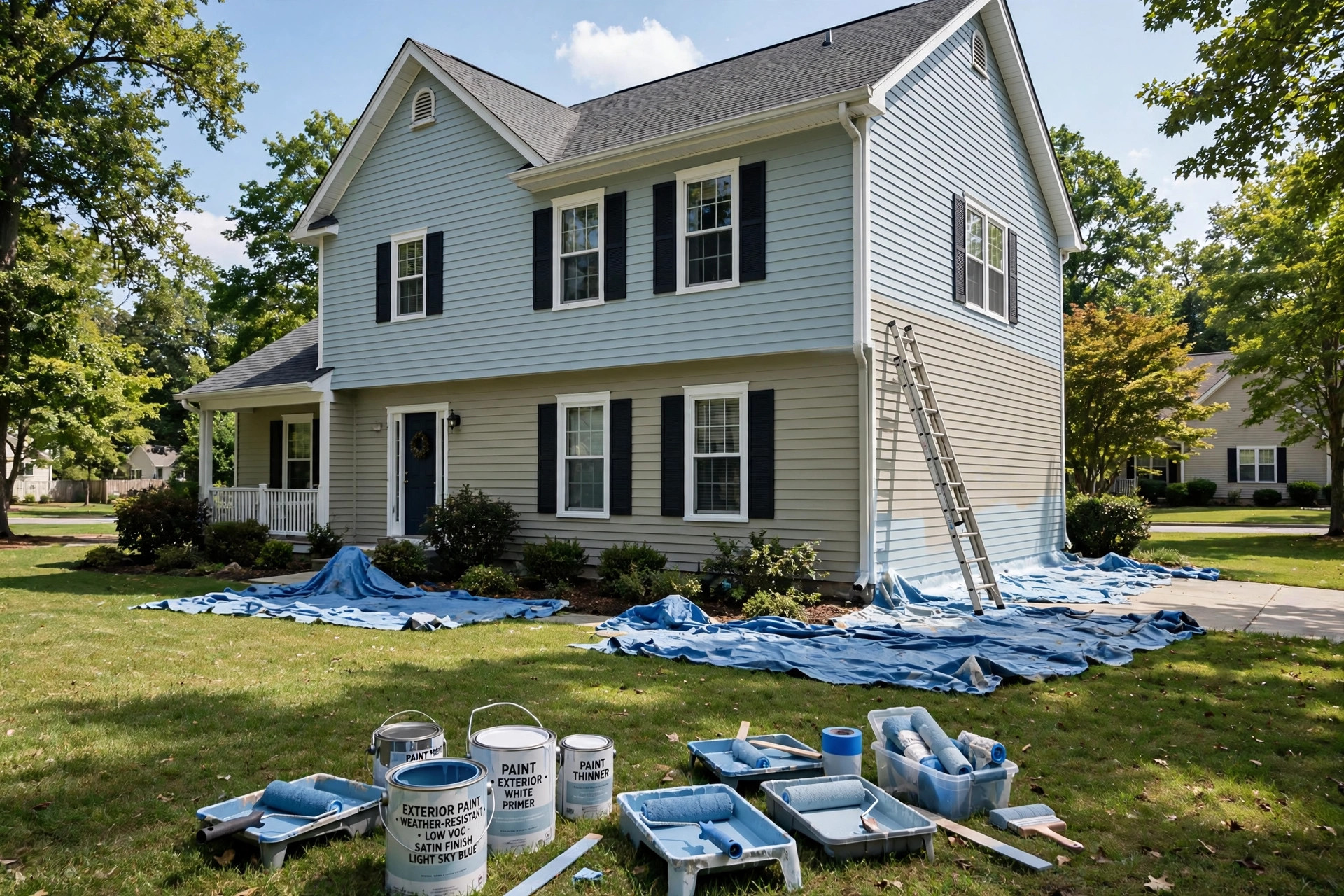
Finally comes the finish paint, usually two coats. Two coats give a thicker film and truer color than one. The crew should cut in edges with a brush and roll or spray the broad areas.
Cost and Price
Cost is the question every homeowner asks, and the answer depends on the size of the house, the state of the walls, the paint used, and the local market. A small one-story home with sound siding costs far less than a large two-story home with peeling paint and rotted trim.
Most firms price by the square foot of painted surface or by the whole job. As a rough guide, a full exterior job on a typical American home can run from a few thousand dollars to well over ten thousand. Prep-heavy jobs cost more because labor is the largest part of the bill. In most cases, the paint itself is a modest share of the total, so it makes sense to buy the better paint. You can check current paint prices at Home Depot and Lowe’s before the bids come in, so you know what the paint line should cost.
Get at least three written bids. Compare not only the price but also the paint named, the number of coats, and the prep steps. The lowest bid is often the one that skips the work that matters.
If you are planning a wider upgrade, reliable home exterior design services in Colorado can help match a new paint scheme to a full design plan. Light colors show dirt but reflect heat. Dark colors hide dirt but soak up heat and may fade faster in strong sun. Ask for large brush-outs on the wall and view them in morning and evening light.
Care and Upkeep
A new paint job needs little care, but a small amount of attention keeps it sound for years. Wash the walls once a year with a garden hose or a gentle pressure wash. This clears dust, pollen, and the first signs of mildew. Do not blast the walls at close range, or you can force water under the siding.
Walk the house each spring and look closely. Check the south and west walls first, since they take the most sun. Look for cracks in the caulk, small blisters, and any spot where paint is lifting. Touch up small flaws early with leftover paint from the job. A dab of paint on a bare chip keeps water out and stops the spot from growing.
Keep plants and mulch away from the walls. Bushes that rub the siding wear the paint film and hold damp against it. Keep soil at least a few inches below the bottom of the siding. Clean the gutters so rain does not pour down the walls. Gutters that spill are one of the fastest ways to ruin a fresh paint job. Tips from Bob Vila on exterior upkeep stress the same simple habits: wash, inspect, and touch up. Step by step guides from Family Handyman walk through these small tasks for homeowners who like to do their own care.
Siding, Trim, and Paint Working Together
Paint does not work alone. The siding beneath it matters just as much. Fiber cement boards, like those made by James Hardie, hold paint well and need repainting less often than wood. Reading on siding materials from CertainTeed can help you match the right paint to the siding you have. Vinyl siding is rarely painted, though it can be with special paint. Cedar and other wood sidings drink paint and need careful priming. If you are weighing a siding change, reading about top rated cedar shake siding for southern states can help you judge how different sidings take paint in hot, humid air.
Trim, shutters, and doors take the most wear because they catch the sun and the rain first. Doors that face the street often need a fresh coat before the walls do. Premium exterior shutters for windows for sale come in materials that hold paint for a long time, and painted shutters in a bold color can lift the whole front of a house. When the painter bids the job, ask for a separate price for trim and doors so you can plan touch-ups later.
Safety on the Job
Exterior painting looks simple, but it has real risks. Ladders are the main one. Falls from ladders hurt thousands of people each year. A professional crew uses ladders the right way: set at a safe angle, tied off when tall, and never reached from past the side rails. Ask the firm how it trains its crew on ladder use. This is one more reason to hire insured pros instead of a handyman with a brush.
Lead paint is the other risk. Homes built before 1978 may carry lead paint under the top coats. Federal rules require special handling when old paint is disturbed on these homes. A firm that works on older houses should be certified in lead-safe practices and should test suspect paint before scraping.
The crew should also protect your property. Bushes should be covered with drop cloths, not plastic that cooks them in the sun. Walkways and patios should be swept clean each day. Paint cans and wash water must not run into storm drains.
Frequently Asked Questions
How long does an exterior paint job last? A good job with premium weather resistant paint lasts eight to twelve years on most homes. Wood siding in harsh sun may need work sooner. Stucco and fiber cement often last longer. Prep quality matters more than any other factor.
What time of year is best for exterior painting? Late spring and early fall are best in most of the country. The air is warm enough for paint to cure but not so hot that it dries too fast. Most paints need air above 50 degrees and dry weather for at least a day after the coat goes on. Your painter will watch the forecast and plan around it.
Should I choose spray, brush, or roller? All three can give good results in skilled hands. Spraying covers large areas fast. Brushing works paint into the surface and is best for trim. Many crews spray the walls and back-brush so the paint is worked well into the surface.
How do I pick a color that will not fade? Earth tones and mid-tone colors hold up best in strong sun. Deep reds, bright blues, and dark greens fade fastest. If you love a strong color, ask for the maker’s most fade resistant line and be ready to repaint a bit sooner. Always test large swatches on the wall and view them in different light.
Can I paint over old paint without priming? If the old paint is firm and sound, a good cleaning may be enough before two finish coats. Any bare wood, bare metal, or stained spots need primer. When in doubt, prime.
Does weather resistant paint cost much more? The paint itself costs more per gallon than basic paint, but paint is only a fraction of the job’s total cost. Most homeowners find the premium worth it for the extra years before the next repaint.
A Short Final Word
A house is likely the largest thing you will ever own, and its paint is its armor. Weather resistant exterior house painting services for homeowners give that armor real strength against sun, rain, and wind. Choose a painter who preps well, names good paint, and puts it all in writing. Keep up with small care each year. Do those things, and your home will stand proud and dry for many years to come.
References
Behr. (n.d.). Paints, primers, and stains. https://www.behr.com Bob Vila. (n.d.). Home improvement advice. https://www.bobvila.com CertainTeed. (n.d.). Building materials and exterior products. https://www.certainteed.com Family Handyman. (n.d.). DIY home repair and maintenance. https://www.familyhandyman.com James Hardie. (n.d.). Fiber cement siding and exterior products. https://www.jameshardie.com Lowe’s. (n.d.). Home improvement products. https://www.lowes.com Sherwin-Williams. (n.d.). Paints and coatings. https://www.sherwin-williams.com The Home Depot. (n.d.). Home improvement products. https://www.homedepot.com The Spruce. (n.d.). Home and garden advice. https://www.thespruce.com This Old House. (n.d.). Home renovation guidance. https://www.thisoldhouse.com
Was this guide helpful?

About Michael Thompson
The My Garden US editorial team writes practical, in-depth home and garden guides for American homeowners — tested advice, no fluff.
You May Also Like

Energy Efficient Sliding Patio Doors Buying Guide
April 30, 2026 0 views
Best Exterior Stair Railings for Midwest Homes: A Plain Guide
April 23, 2026 0 views
Buy Pergola Installation Kits Online in California
July 22, 2026 0 views