
Homeowners who look for weather resistant exterior lighting fixtures for sale usually want one thing above all. They want lights that keep working when the weather turns bad. Rain, snow, salt air, and summer heat all test an outdoor light. A fixture that cannot stand up to these forces will rust, leak, or stop working within a year. A well built one can last a decade or more with little care.
Outdoor lighting also makes walkways safe after dark and helps guests find the door. When you shop for fixtures that must face the weather, treat build quality as more important than style. A good looking light that fails in the first storm is a waste of money.
Why Weather Resistance Matters
An outdoor light lives a hard life. It sits on a wall or a post through every season. Rain beats on it. Sun bakes it. Ice forms on it. Small insects crawl into it. Each of these forces finds the weak point of a cheap fixture.
Water is the chief enemy. Once water gets inside a fixture, it can short out the wiring and corrode the socket. In cold climates, trapped water freezes and cracks the housing. Rust follows water, and a rusted housing stains the wall or siding under it. In coastal states, salt spray speeds up corrosion on any metal that is not rated for it.
Heat and cold cause their own harm. Plastic that is not rated for outdoor use turns brittle in the cold and warps in the heat. Cheap seals shrink in the cold and let water in. Paint finishes that are not baked on or powder coated peel under strong sun.
A truly weather resistant fixture answers each of these threats. It seals out water, resists rust, holds its finish in the sun, and stays safe through wide temperature swings. That is why the search for weather resistant exterior lighting fixtures for sale should start with ratings and materials, not with looks.
What to Look for When You Choose: Weather Resistant Exterior Lighting Fixtures for Sale
Read the Ingress Protection Rating
Outdoor fixtures often carry an IP rating, such as IP44 or IP65. The first digit rates dust, the second rates water, and a higher number means stronger protection.
For a covered porch, IP44 is often enough. For a fixture that stands open to rain, aim for IP65 or higher. Do not trust vague words like “weatherproof” on a box. If the maker does not print a rating, treat that as a warning sign.
Check the Wet Location Listing
Testing bodies such as UL list fixtures for “wet locations” or “damp locations.” A wet listing means the fixture passed tests for direct rain and snow. A damp listing means it handles moisture in the air, but not direct rain. Many shoppers buy a damp rated fixture and hang it in the open rain. It fails, and the warranty will not cover it. Match the listing to the spot where you plan to hang the light.
Study the Housing Material
Brass and copper housings cost more, but they develop a patina rather than rust. Cast aluminum is a strong mid range choice. It is light, strong, and takes a powder coat finish well. Look for marine grade or die cast aluminum. Thin stamped steel is the weakest common housing. It can work under a deep porch roof, but it will rust fast in open weather.
Good composite housings carry UV stabilizers so they do not turn yellow or brittle in the sun. They cost less than metal and will not rust, but cheap composites fail first in heat. Read reviews from buyers in hot climates if you lean toward plastic.
Inspect the Gaskets and Seals
The gasket is the small rubber ring that keeps water out, and it does most of the work. Silicone gaskets hold up better over time than plain rubber. A door or lens that closes against a thick, even gasket seals better than one with no gasket at all. If you can open the display model in the store, do it. A flimsy seal in the store will be a leak at home.
Think About the Bulb and the Driver
Many modern fixtures use built in LED modules. They are efficient and last for years, but you cannot swap the module the way you swap a bulb. When the light dies, you replace the whole fixture. A fixture with a standard socket costs a bit more to run, but you can change the bulb in minutes.
If you choose integrated LED, check the warranty. The driver is the small circuit that feeds power to the LED, and it often fails first. A five year warranty tells you the maker trusts its driver. A one year warranty tells you less.
Judge the Finish
Powder coat finishes are baked on and hold up far better than plain paint. Look for finishes tested for salt spray if you live near the coast. Black and dark bronze suit most climates. White shows dirt sooner but reflects heat. Make sure the finish covers every edge and joint, not just the flat faces.
Types of Weather Resistant Fixtures
Wall Lanterns and Sconces
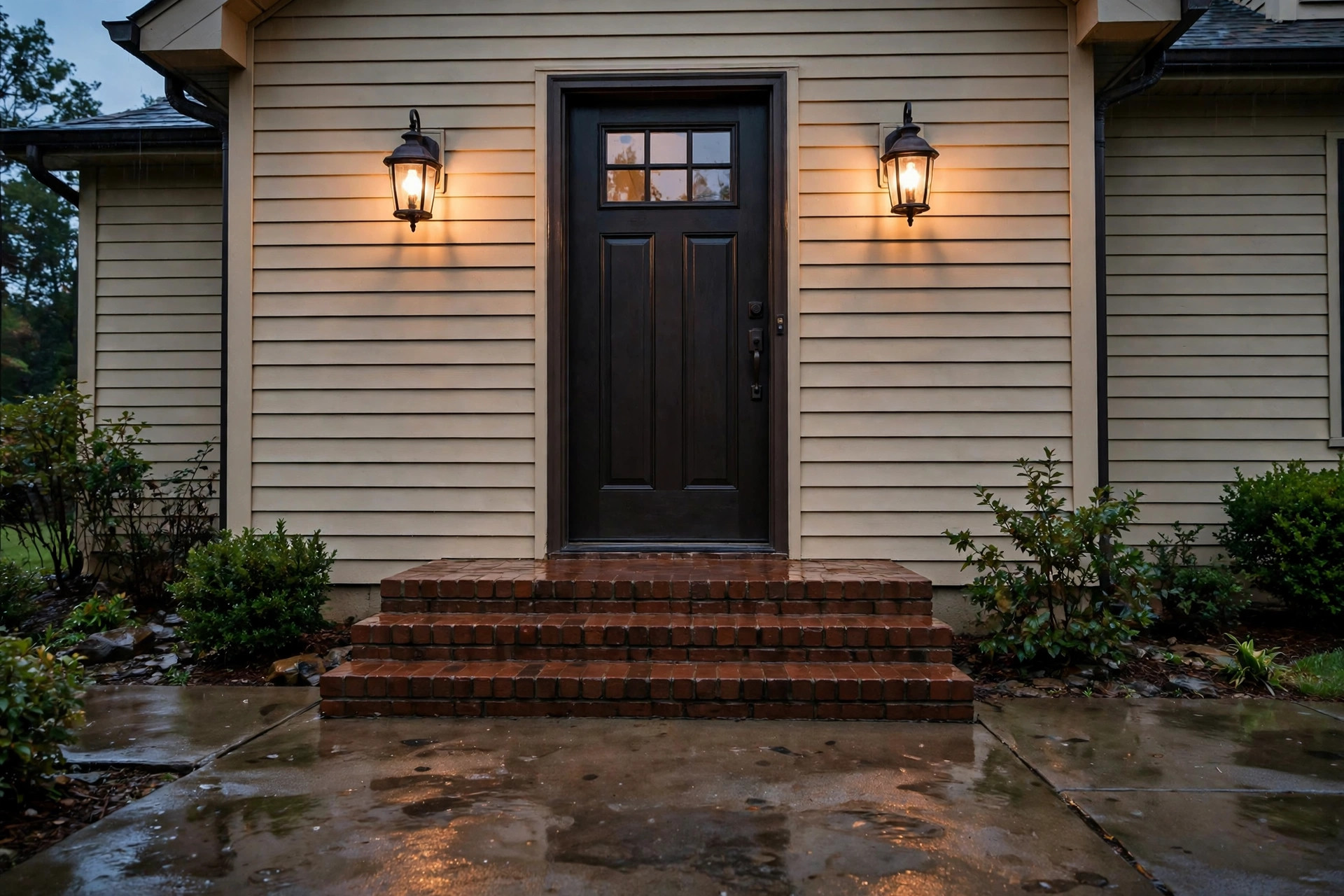
Wall lanterns are the classic choice beside doors and garage openings. A pair of matched lanterns beside a front door frames the entry and gives guests clear light. For shoppers who want very little upkeep, low maintenance outdoor wall lanterns with sealed LED modules are worth a look. They need no bulb changes and wipe clean with a damp cloth.
Flood Lights
Flood lights throw a wide, bright beam over a driveway, yard, or work area. They are the workhorses of security lighting. Many pair a bright LED head with a motion sensor. Buyers on a budget often start here, since affordable motion sensor flood lights give the most light per dollar of any fixture type. Pick a model with an adjustable sensor so the light does not trip on every passing car.
Post and Pier Lights
Post lights mount on a freestanding post, and pier lights sit on a low wall or column. They suit the end of a driveway or a garden gate. Because they stand fully exposed, the weather rating matters most here. Choose IP65 or better, in a rust resistant housing such as cast aluminum or copper.
Path and Step Lights
Path lights are short fixtures that line a walkway with low light. Step lights recess into stair risers or walls. Both use little power and often come as low voltage kits a homeowner can install. Their weak point is the ground stake and the buried wire. Buy metal stakes, not thin plastic, and keep wire connections in sealed boxes above the soil line.
Soffit and Recessed Lights
Soffit lights mount under the roof overhang. They stay drier than most fixtures, so a damp location listing is often enough. They give a clean, modern look because the source hides in the ceiling. If the soffit is insulated, make sure the housing is rated for contact with insulation. Heat build up in a sealed soffit can shorten the life of a cheap light.
String and Decorative Lights
Outdoor string lights add charm to patios and decks. Truly weather resistant sets use thick rubber cords and sealed sockets. Cheap sets with thin wire fail at the first hard rain. For year round use, buy commercial grade string lights with replaceable bulbs. They cost more up front and save money over time.
For larger jobs, such as lighting a multi unit building, it can pay to step up to professional grade exterior lighting fixtures for California apartments or similar commercial lines. They carry stronger ratings and longer warranties, with parts a handyman can service.
Cost and Price
Prices for weather resistant exterior lighting fixtures for sale span a wide range. Small path lights can sell for under twenty dollars each. Basic wall lanterns start near thirty dollars. Mid range lanterns from known brands run from sixty to one hundred fifty dollars. Large or solid brass fixtures can pass three hundred dollars. Commercial grade flood lights with motion sensors sell from forty to two hundred dollars.
Material sets the price most. Solid brass and copper cost more than cast aluminum, which costs more than steel or composite. The IP rating adds cost, because tighter seals take more work to make. Integrated LED fixtures often cost more at the counter but less over the years, since they use far less power. Brand name adds a premium, but it also buys a real warranty and a phone number you can call.
Watch the total cost, not just the fixture price. An electrician may charge one to two hundred dollars per fixture to install a hardwired light, more if new wiring must be run. Low voltage path light kits skip that cost, since a homeowner can lay the wire in an afternoon. A fixture that takes cheap standard bulbs may be the wiser buy for a rental property, where the tenant may not treat the light with care.
Sales follow the seasons. Late summer and fall bring clearance prices on patio and landscape lights. Spring brings new models at full price. If you can plan ahead, buying out of season can cut the bill by a third. Buying guides from large home improvement retailers and national hardware chains track these cycles and list current models side by side.
Care and Upkeep
Weather resistant does not mean care free. A small amount of upkeep each year adds years to the life of a fixture.
Start with a spring check. Look at each light for cracked lenses, loose screws, and nests in the housing. Birds and wasps love the shelter of a porch light. Clear out nests before they block the vents, and tighten any screw that worked loose over the winter.
Clean the lens and fixture body once or twice a year with a soft cloth and mild soap. Do not use a pressure washer. The force of the spray can drive water past the seals and into the wiring. While you clean, look at the gasket. If it is cracked or flat, replace it. Many makers sell spare gaskets for a few dollars.
Check the finish for chips. A small chip is where rust starts. Touch up the spot with a matching outdoor paint or a clear rust blocker. This five minute job can add years to a steel fixture.
For LED fixtures, wipe dust off the heat sink fins if the model has them. Dust makes the LED run hot, and heat is the slow killer of LED drivers. Keep the vents clear and the fixture will last longer.
Trim plants back from the fixtures. A bush that rubs against a lantern in the wind will scratch the finish. Leaves that pile on a ground level light trap moisture against it. A clear zone of a foot or two keeps air moving. Advice on trimming and yard care appears in many home repair guides written for new homeowners.
Safety
Outdoor lighting work deals with line voltage in wet places. Respect it.
Always turn off the breaker before you open a fixture or change wiring. Test that the power is off with a non contact voltage tester. Do not trust the wall switch alone. A miswired switch can leave the fixture live even when the switch is off.
Keep all connections dry. Wire nuts and splices belong inside the fixture box or a rated outdoor box, never hanging in the open air. Use outdoor rated wire for any run that leaves the house. Bury low voltage cable at the depth the maker calls for, and keep it away from edging tools.
Mount fixtures firmly. A heavy lantern on a loose box is a hazard in a wind storm. If the old box feels loose, replace it with a heavy duty box made for fixtures. The box must be rated for outdoor use, with a gasket between the box and the wall.
Follow local code. Some towns require a permit for new outdoor circuits. When in doubt, hire a licensed electrician. The cost of a service call is small next to the cost of a fire or a shock.
Place lights with thought. Aim flood lights down and at your own property, not into a neighbor’s window or into the street. Glare that blinds a driver is a real danger. Shielded fixtures that point light down cut glare and keep the peace with neighbors.
Frequently Asked Questions
How long should a weather resistant fixture last?
A well made fixture in a mild climate can last fifteen to twenty years. In harsh coastal or desert climates, ten years is a good run. The LED module or driver often sets the real life. A fixture with a five year warranty will usually outlast one with a one year warranty. A yearly cleaning and gasket check can add years.
Can I use an indoor fixture outside under a covered porch?
No. Indoor fixtures are not built for moisture, even in the air. A covered porch still sees humidity, temperature swings, and wind driven rain. At minimum, use a damp location fixture on a covered porch. For any spot rain can reach, use a wet location listing.
What does IP65 mean on an outdoor light?
IP65 means the fixture is dust tight and can stand up to water jets from any direction. In plain terms, it can take a hard rain without leaking. IP44 handles splashing water but not a direct jet. For most homes, IP65 is the sweet spot for fully exposed spots. Testing details and plain language explainers appear in many lighting how to libraries.
Do LED outdoor fixtures save enough to justify the price?
In most cases, yes. An LED wall lantern uses about eight to twelve watts to make the light of an old sixty watt bulb. Over a year of nightly use, the power saving can be twenty to forty dollars per fixture. The payback often lands in two to three years, and after that the saving is pure gain.
Should I pick a motion sensor or a dusk to dawn light?
It depends on the spot. Motion sensors suit driveways and side yards, where you want bright light only when someone is there. Dusk to dawn lights suit entries and house numbers, where steady light helps guests find you. Many fixtures now offer both modes in one unit.
Can I install outdoor lights myself?
A homeowner can safely swap a fixture on an existing box, as long as the power is off and the wiring is sound. Running new circuits, adding boxes, or burying cable is best left to a licensed electrician. If the old wiring looks brittle, scorched, or chewed, stop and call a pro. Step by step project guides from old house renovation experts and home improvement editors show what the work involves, so you can judge your own skill.
A Final Word
Shopping for weather resistant exterior lighting fixtures for sale is a study in trade offs. Price, material, rating, and style all pull in different directions. The buyers who end up happy are the ones who start with the rating and the material, then pick the style they like from the fixtures that pass the test. A lantern that is rated for wet locations, sealed with a real gasket, and finished to stand up to sun will serve for years with little fuss.
Take your time at the store or on the product page. Read the rating, not the adjectives. Check the warranty length. Look at the gasket. Then buy the best build you can afford for the spot you have. Your home will look better, your walks will be safer, and you will not be back on the ladder replacing a failed light next spring. For background on how exterior materials age in weather, siding and trim makers and building product manufacturers publish useful notes on what the elements do to a home’s outer shell.
References
Bob Vila. (n.d.). Home improvement advice. https://www.bobvila.com CertainTeed. (n.d.). Building materials and exterior products. https://www.certainteed.com Family Handyman. (n.d.). DIY home repair and maintenance. https://www.familyhandyman.com James Hardie. (n.d.). Fiber cement siding and exterior products. https://www.jameshardie.com Lowe’s. (n.d.). Home improvement products. https://www.lowes.com The Home Depot. (n.d.). Home improvement products. https://www.homedepot.com The Spruce. (n.d.). Home and garden advice. https://www.thespruce.com This Old House. (n.d.). Home renovation guidance. https://www.thisoldhouse.com
Was this guide helpful?

About Jennifer Lee
The My Garden US editorial team writes practical, in-depth home and garden guides for American homeowners — tested advice, no fluff.
You May Also Like

Where to Buy House Number Plaques in Florida: A Complete Guide
June 1, 2026 0 views
Top Rated Wood Siding Replacement Reviews: A Plain Guide for Homeowners
March 24, 2026 0 views
Reliable Basement Waterproofing Services in Arizona: A Homeowner Guide
June 26, 2026 0 views