
Every October 31, the same scene plays out on streets across America. Children in costumes walk from house to house after dark, hoping for candy and a good scare. The houses they remember are the ones that look the part. The best halloween pathway lights for trick or treaters turn a plain front walk into a glowing trail that says, this way to the treats. They also keep small feet safe on steps, curbs, and uneven ground. This guide explains what to look for, what types to buy, what they cost, and how to set them up well.
Why Pathway Lights Matter on Halloween Night
A dark walkway is a real hazard. Costumed children cannot see well. Masks narrow their view. Capes and long skirts hide their feet. A walkway that looks flat by day can hide a raised edge or a cracked slab at night. A fall on a dark path can spoil the evening for a family and leave a homeowner feeling guilty.
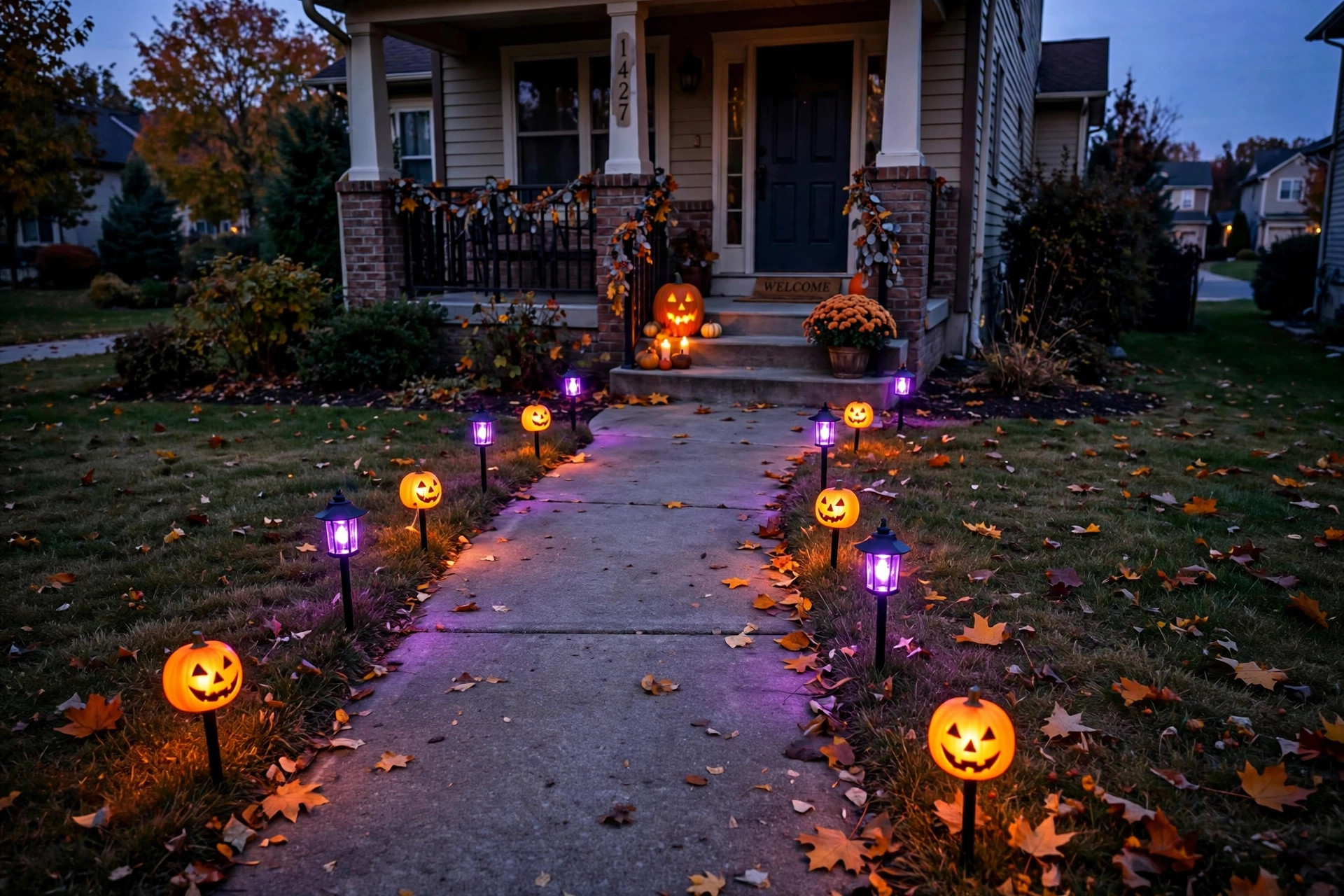
Pathway lights solve the problem with two results at once. They mark the route to the front door, so no child wanders across the lawn into a garden bed or a thorny bush. They also light the ground, so steps and edges stand out. On Halloween night, the lights can also set the mood. A row of small glowing pumpkins or skulls tells children that this house is ready for visitors. A plain dark house may be skipped, even if candy waits inside.
What to Look for in Halloween Pathway Lights: Best Halloween Pathway Lights for Trick or Treaters
Brightness and Color
Pathway lights should be bright enough to show the ground, but not so bright that they blind young eyes. A soft warm glow works best. Many Halloween lights come in orange, purple, or green. Orange feels warm and festive. Purple feels spooky. Green works well with monster and witch themes. Avoid lights that flash in sharp bursts. Fast strobing can bother some children and can be risky for children with epilepsy. The Consumer Product Safety Commission notes that flashing holiday decorations should be used with care around young children.
Power Source
Most Halloween pathway lights run on solar power or batteries. Solar lights charge by day and switch on at dusk. They cost nothing to run and need no cords. Their weak point is short autumn days. If your street has heavy shade, solar lights may fade by midnight. Battery lights glow as long as their batteries last. They cost more to run but give steady light all evening. A few sets plug into an outdoor outlet. These give the strongest light and never fade, but they need a cord running across the yard. Any outdoor timer on a plug-in set can switch the lights on and off on a schedule.
Build Quality
Outdoor lights must stand up to wind, rain, and being bumped by excited children. Look for stakes that push deep into the ground. Look for shades made of thick plastic, not thin paper. Paper shades tear in the first rain. If you live where October storms are common, check the box for water resistance. Lights labeled for outdoor use are the only safe choice for the yard.
Ease of Setup
Halloween decor should be quick to put up and quick to take down. Most pathway lights push into the soil with a stake. The best sets need no tools. A set of eight to ten lights takes ten minutes to place along a walk. Outdoor lighting ideas from home editors often favor simple stake lights for this reason.
Types of Halloween Pathway Lights
Solar Stake Lights
Solar stake lights are the most popular choice. A small solar panel sits on top of each light. By day it charges a small battery. At dusk a sensor turns the light on. Many Halloween sets come shaped like pumpkins, ghosts, or skulls. Others are simple lanterns with orange or purple bulbs. Solar lights sell at craft and home stores every fall, and seasonal decor aisles are full of them from September onward.
The main limit is charging time. A cloudy week can leave the batteries weak. To help, place each panel where it gets direct sun during the day, away from trees and house shadows.
Battery-Operated String and Stake Lights
Battery lights run on small AA or AAA batteries. They give steady light for six to ten hours on fresh batteries. That is more than enough for an evening of trick or treating. They work even in deep shade, and they stay bright all night. The trade is cost. A set of ten lights may eat through two sets of batteries in one Halloween week. Rechargeable batteries cut the cost and cut waste.
Plug-In Pathway Lights
Plug-in sets draw power from an outdoor outlet. They give the brightest, most reliable light of all. They are a good choice for a long walk or a wide driveway. The catch is the cord. Run it along the edge of the walk and hold it down with stakes or tape. Never run a cord across the path where children walk. Halloween decoration guides remind readers each year that cords across walkways are one of the most common trip hazards of the holiday.
Projector and Spotlight Lights
Some homeowners add a projector that throws ghosts or bats onto the house wall, plus small spotlights along the walk. These look dramatic but cost more. They also need power. A few pathway lights plus one projector can give a full yard display without much work.
How to Set Up Your Pathway Lights
Start by walking the route in the dark before Halloween. Stand at the street and look at your house. Ask a simple question: where would a six-year-old walk, and what can she see? Note the dark spots. Then place your lights.
Space the lights evenly along both sides of the walk, or alternate sides in a zigzag. Each light should sit a few inches back from the edge of the concrete so it is not kicked. Push the stake firmly into the soil. A loose light will lean or fall over by the second hour of the evening.
Pay extra care to three danger spots. First, the curb where the walk meets the street. Mark it with a light on each side. Second, any step up to the porch. Put a light right beside the step. Third, the porch itself. A small lantern or an extra light by the door shows children where the candy bowl waits.
Test the whole setup one night before Halloween. Walk the path as a child would. Look for dark gaps and fix them. This small test takes ten minutes and saves trouble on the big night.
Cost and Price Ranges
Halloween pathway lights are cheap compared with most holiday decor. Small solar stake sets, six to twelve lights, sell for about eight to twenty dollars. Mid-range sets with better shades and larger panels run twenty to thirty-five dollars. Battery sets cost about the same, plus the cost of batteries. Plug-in sets run twenty-five to fifty dollars, and outdoor lighting departments stock them alongside ordinary path lights all year.
A full setup for one walkway usually needs ten to sixteen lights. Most families spend between twenty and forty dollars in total. That is a small price for a safer yard and a memorable display. Buying early in September gives the best choice. By the last week of October, the popular designs are gone.
Care and Upkeep
Halloween lights only work for one month, but they can last for years if stored well. After the holiday, wipe each light clean with a damp cloth. Mud and leaves block solar panels. Remove batteries from battery lights before storage. Batteries left in a box can leak and ruin the contacts. Store the lights in a dry box in the garage or attic. Keep paper shades flat so they do not crease.
Solar panels lose charge over the years. After three or four seasons, a solar set may glow dim even after a full day of sun. That is normal. Clean the panel with a soft cloth and glass cleaner. If the light stays dim, replace the set. It has paid for itself by then.
Safety Tips for Halloween Night
Safety is the real reason to light the walk. Keep these rules in mind.
First, use LED bulbs only. LED bulbs stay cool. Old incandescent bulbs get hot enough to burn a child who touches one. Nearly all new Halloween lights use LEDs, but check the box if you are using old sets from years past.
Second, keep all cords out of the walking path. Tape cords flat to the ground along the edge of the walk. Check them again in the morning if the display goes up early.
Third, avoid sharp metal stakes near the path edge. A child who trips should land on a soft lawn, not a sharp point. Plastic stakes are safer.
Fourth, skip strobing effects. Steady lights are safer and easier on the eyes. If a set has a flash mode, leave it on the steady setting.
Fifth, check the weather. High wind can topple light sets and send shades rolling. On a windy night, lay the lights low or take them in and rely on the porch light.
The Consumer Product Safety Commission offers general guidance on holiday decoration safety each fall. It is worth a quick read before you decorate.
Fun Design Ideas
Pathway lights do not have to look plain. Here are a few ideas that cost little.
Line the walk with small glowing pumpkins, alternating orange and purple. Place a larger lantern or a glowing ghost at each end of the walk, like gate posts. Tuck a few lights among the bushes to give the yard depth. Hang a small string of orange lights along the porch rail to tie the walk to the door. Home stylists at Country Living often suggest mixing heights, with some lights low and some on short posts, for a layered look.
If you want a theme, pick one and stick to it. A witch theme suits purple and green lights. A pumpkin patch theme suits orange. A haunted graveyard theme suits dim white or green lights with a few skull shapes. One clear theme looks better than five styles mixed together.
Where to Shop
Most big home stores carry Halloween pathway lights from mid-September. Home Depot and Lowe’s both stock large seasonal aisles with stake lights, string lights, and projectors. Wayfair carries a wide range online, with customer reviews that help you judge brightness before you buy. Target sells budget sets that work well for a single season. For energy use, the U.S. Department of Energy explains why LED outdoor lighting costs so little to run.
Read reviews before you buy. Shoppers often note whether a solar set charges well in shade and whether the stakes survive wind. A set with hundreds of strong reviews is a safer buy than a bargain with none.
Frequently Asked Questions
How many pathway lights do I need for a front walk?
Count the length of the walk in feet and divide by four. A twenty-foot walk needs about five lights per side, or ten total. Longer walks and driveways need more. When in doubt, buy a larger set. You can always use extras in the garden beds.
Are solar Halloween lights bright enough?
Good ones are. Cheap ones may glow weakly. Read reviews for words like bright and vivid. Place the solar panels in full sun during the day. If your yard is shady, choose battery lights instead.
Can I leave Halloween lights out all month?
Yes. Most outdoor sets are made to sit out for the whole season. Check the forecast for storms. Bring delicate sets inside during heavy rain or strong wind, and put them back out when it clears.
Are Halloween pathway lights safe for pets?
Mostly yes. LED lights stay cool, so a curious dog will not get burned. Keep battery compartments closed and out of reach. Dogs do chew on strange glowing objects, so place the lights where pets cannot reach them if your dog is a chewer.
Do I need an outdoor outlet for pathway lights?
No. Solar and battery lights need no outlet at all. Only plug-in sets need one. If you use a plug-in set, a christmas lights timer for outdoor outlets is handy for switching the display on at dusk and off at bedtime, and the same timer works for Halloween.
When should I put the lights out?
Mid-October is a good time. The display lasts through Halloween night, and the solar panels get enough daylight to charge. Putting them out in early September means weeks of battery wear before the big night.
A Final Word
The best halloween pathway lights for trick or treaters do two jobs at once. They keep children safe on a dark October night, and they turn your front walk into part of the fun. Pick a power source that fits your yard, place the lights with care, and test the route in the dark. For other seasonal ideas, see our guide to yard reindeer decorations and the best tree topper for tall trees. A little light goes a long way on Halloween.
References
Country Living. (n.d.). Country home and lifestyle. https://www.countryliving.com HGTV. (n.d.). Home and garden ideas. https://www.hgtv.com Lowe’s. (n.d.). Home improvement products. https://www.lowes.com Michaels. (n.d.). Arts and crafts supplies. https://www.michaels.com Target. (n.d.). Retail store. https://www.target.com The Home Depot. (n.d.). Home improvement products. https://www.homedepot.com The Spruce. (n.d.). Home and garden advice. https://www.thespruce.com U.S. Consumer Product Safety Commission. (n.d.). Product safety information. https://www.cpsc.gov U.S. Department of Energy. (n.d.). Energy efficiency and renewable energy. https://www.energy.gov Wayfair. (n.d.). Furniture and home goods. https://www.wayfair.com
Was this guide helpful?

About Robert Taylor
The My Garden US editorial team writes practical, in-depth home and garden guides for American homeowners — tested advice, no fluff.
You May Also Like

Fourth of July Wreath for Front Door Patriotic Charm
April 25, 2026 0 views
Fall Acorn Decor for Table and Mantel in American Homes
April 17, 2026 0 views
How to Choose the Best Christmas Wreath Storage Bag for 36 Inch Wreaths
January 19, 2026 0 views