
Every cook knows the small pain of a crowded counter. The cutting board slides. The rinsed greens sit in a puddle. The pan has nowhere to rest while it cools. Best workstation kitchen sink reviews 2026 all point to one simple fix: a sink that works like a second countertop. A workstation sink has a flat rim inside the bowl, called a ledge, where fitted boards, racks, and colanders slide back and forth. You chop, rinse, and drain in one place. This guide walks through what buyers liked in 2026, how these sinks are built, what to check before you buy, and how to keep one looking fine for years.
Why a Workstation Sink Deserves Your Attention
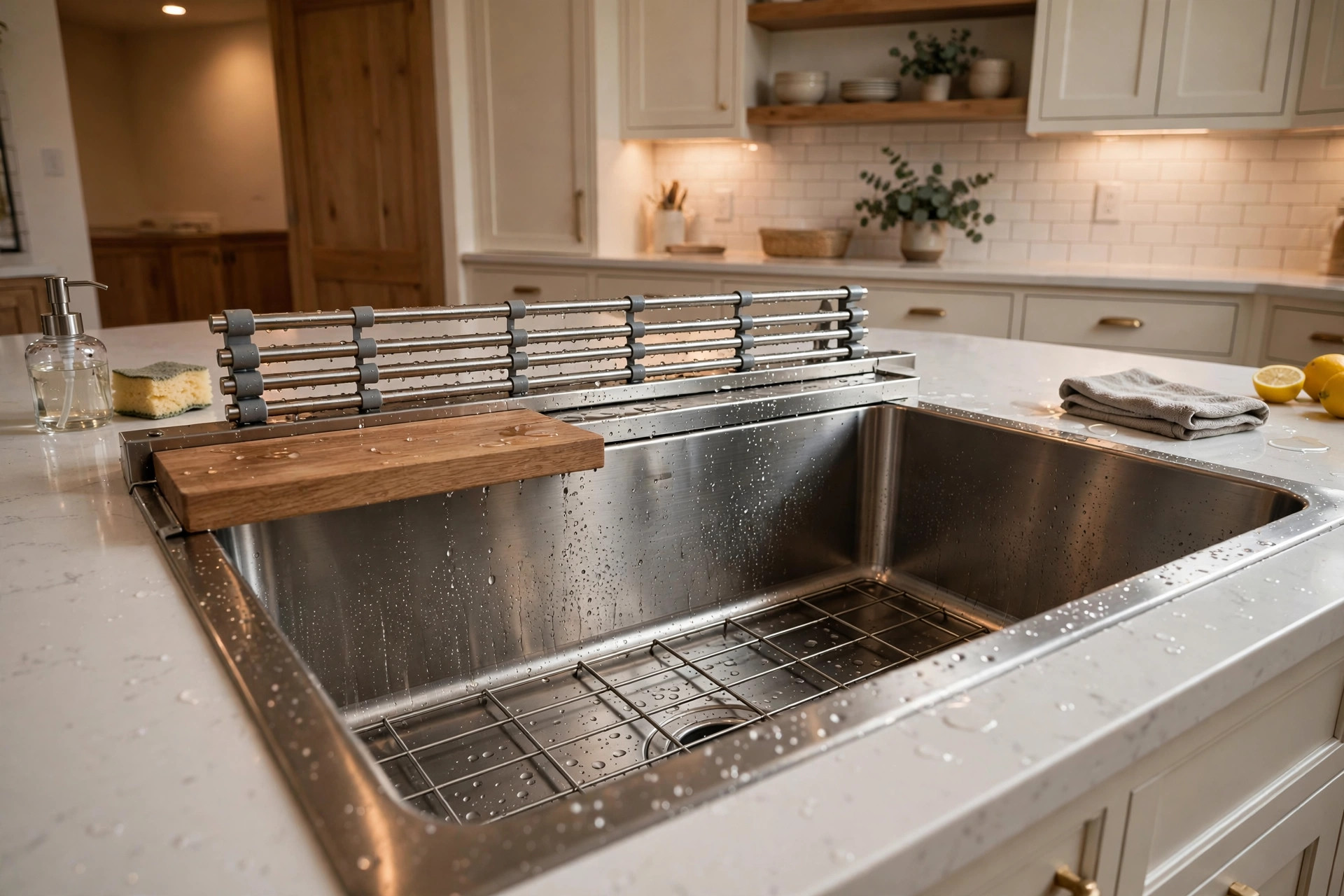
A standard kitchen sink holds water and dishes. A workstation sink does the job of three tools at once. The sliding cutting board stays put while you chop vegetables. A stainless rack above the basin lets you stack hot pots straight from the stove. A colander drops into the track and drains pasta without a second trip to the range. For a small kitchen, that means the sink stops being a hole in the counter and starts being part of the work surface.
Reviews from 2026 show why these sinks earned loyal buyers. Homeowners praised the way a workstation keeps mess in one spot. Cooks who prep for a family of five wrote about fewer trips across the kitchen. People with bad backs liked that less bending and carrying was needed. Even renters who put off a full remodel found that a single swap of the sink made the whole kitchen feel bigger. The trend is simple: Americans want kitchens that do more in less space, and the workstation sink answers that wish.
It is worth noting what this sink is not. It is not magic. It will not make up for a sink that is too small or too shallow. The best workstation kitchen sink reviews 2026 stress the same point over and over: buy enough bowl depth and enough track width to hold the tools you actually use. A sink with a shallow bowl and a flimsy board will disappoint no matter how pretty the steel looks.
How to Choose the Right Workstation Sink: Best Workstation Kitchen Sink Reviews 2026
Shopping for a workstation sink is easier when you know which features matter and which are just noise. The list below follows the order buyers usually think in: size first, then steel, then the tools that come with it.
Size and Fit
Measure your cabinet before you fall in love with a sink. Workstation sinks are most common in 30, 33, and 36 inch widths. The number on the box is the outside width of the sink. Your cabinet must be at least as wide, minus a little room for mounting clips. A 33 inch sink usually fits a standard 36 inch cabinet. A 30 inch sink can fit a 30 inch cabinet, but check the cutout sheet the maker provides.
Depth matters as much as width. Look for bowls that are 9 to 10 inches deep. Shallow bowls of 7 inches splash more and hide the ledge too low for comfortable board work. A 10 inch deep single bowl holds a full stockpot and still leaves the track at a height that is kind to your arms.
Also think about the shape of the corners. Modern workstation sinks often have tight square corners, which look sharp and fit a cutting board well. They are a little harder to wipe clean than softly rounded corners. If you hate scrubbing corners, look for a sink with a small radius, meaning the corners are only slightly rounded, a good middle ground.
Gauge and Material
Most workstation sinks in 2026 are made of stainless steel. The thickness of the steel is measured in gauge, and here the numbers work backward: a lower gauge number means thicker steel. A 16 gauge sink is thicker and sturdier than an 18 gauge sink. Reviews consistently rate 16 gauge sinks higher for quietness and resistance to dents. When a heavy pot is set down, a 16 gauge bowl rings less and flexes less. Thin 20 gauge steel feels tinny and is best avoided for a sink you will use hard.
Finish matters too. Brushed stainless hides water spots and light scratches better than a mirror finish. Many 2026 models carry a commercial brushed finish for this reason. Before buying, you may want to read a stainless steel sink gauge comparison guide so the numbers on the box make sense to you.
Sound pads are a quiet hero. Good sinks have rubber pads glued under the bowl and a spray coating that dampens noise. Run the faucet over the bowl in the store if you can. A well padded sink gives a dull thud. A poorly padded one pings like a drum. Buyers in the best workstation kitchen sink reviews 2026 ranked quiet sinks high, and pads were the main reason.
Workstation Accessories
The ledge is the heart of a workstation. It should run the full length of the front and back walls so accessories slide from end to end. Check that the ledge is wide enough to hold the tools firmly. A narrow lip lets boards tip.
Look at what comes in the box. Most top models include a fitted cutting board, a roll-up drying rack, a stainless colander, and a bottom grid that protects the basin from scratches. The bottom grid is more than a pretty extra. It lifts dishes off the wet steel so they dry faster and the steel stays free of marks. If a model skips the grid, budget for one.
Buyers also care about materials of the accessories. Boards of solid hardwood or composite cut cleaner than cheap bamboo that warps. Roll-up racks of over-molded silicone coated rods survive years; plain rubber bands wear out sooner. Ask yourself which tools you will really slide on that ledge every day, and give them weight in your choice.
Types of Workstation Sinks
Three shapes cover nearly every kitchen. Each has fans and limits.
The top-mount, or drop-in, workstation sits with its rim resting on the countertop. It is the easiest to install and works with any counter material, even laminate. The raised rim can trap crumbs along the edge, which annoys some cooks. But for a simple swap without new counters, it is the low cost path.
The undermount workstation is fixed beneath the counter so the rim is hidden. You wipe crumbs straight into the bowl, which is why most reviews of high end kitchens favor it. It needs a solid surface counter, like stone or quartz, because the weight hangs from below. The cutout must be exact, so this job usually calls for a professional installer. To learn how the two mounts compare in daily use, see an undermount vs topmount sink pros cons usa comparison.
The apron-front, or farmhouse, workstation shows its tall front panel under the counter edge. It looks classic and lets you stand closer to the basin, which tall cooks like. It needs a special cabinet cutout and a farmhouse style kitchen to look right. If that look tempts you, a set of best farmhouse kitchen sink reviews usa will help you weigh the apron style against the plain workstation.
Some makers now sell hybrid sets: a single-bowl basin with a low center divider that can be removed. Reviews in 2026 were mixed on these. A removable divider gives you two zones when you want them and one big basin when you do not. But the divider can trap food at its base. Most buyers who cook big meals still picked the open single bowl.
Cost and Price Ranges
Prices in 2026 fall into three clear bands. Budget workstations, usually 18 gauge steel with basic accessories, sell for about 250 to 400 dollars. They work fine for light daily use. Mid range models, often 16 gauge with full accessory sets and sound padding, run from 400 to 800 dollars. This is where most of the best workstation kitchen sink reviews 2026 place their top picks. Premium models, with 16 gauge or thicker steel, fine finishes, and extra tools like fitted drying trays, range from 800 to 1,500 dollars and up.
Watch for hidden costs. An undermount install adds labor. A garbage disposal flange, a new faucet, and drain parts can add another 150 to 400 dollars. If your countertop is laminate, an undermount sink is not an option, so plan your budget around a drop-in. Big box stores often sell sink and faucet bundles; browsing the fixture aisles at Home Depot can give you a quick sense of street prices before you shop online. A second look at the Lowe’s kitchen department can confirm whether a deal is real or just a list price trick.
A fair rule of thumb from reviewers: spend the most you can on the bowl itself, and the least on fancy extras. A thick, quiet, deep bowl with a plain grid beats a thin bowl with five gadgets. The bowl is what lasts thirty years. The gadgets can be replaced.
Care and Upkeep
Stainless steel is tough but not carefree. Hard water leaves white spots, and salty or acidic foods can leave dull marks if left sitting. Rinse the bowl after cooking and wipe it dry when you can. A daily wipe with a soft cloth and a drop of dish soap keeps the finish bright.
For weekly cleaning, sprinkle baking soda in the bowl and rub with a damp sponge in the direction of the brushed lines. Rinse well. For water spots, a cloth dampened with white vinegar works. Never use steel wool or harsh scouring powder; they scratch the finish and make future stains worse. Keep the bottom grid in place during heavy use. It is the sink’s first line of defense.
The accessories need care too. Oil a wooden cutting board with food safe mineral oil once a month so it does not crack. Wash roll-up racks by hand; the dishwasher can loosen their coating. Check the ledge track now and then for crumbs and wipe it clean so boards keep sliding smooth. With these small habits, a good workstation sink looks new for a decade or more. The maintenance guides at Family Handyman carry clear step-by-step tips for sink care routines that fit a busy week.
Safety Notes
A workstation sink is safe by design, but a few cautions apply. Heavy pots dropped into any sink can crack porcelain or dent steel, so lower them gently. The cutting board that slides on the ledge should be locked or seated flat before you chop; a board that rocks is a cut waiting to happen. Keep knives pointed away from your body when rinsing, and never leave a sharp blade soaking under suds where a hand might find it.
Under the counter, check for leaks a week after install and again each season. A slow drip at a drain joint can rot a cabinet floor in months. Touch the pipes and look with a flashlight. If you spot water, tighten the slip nuts by hand and call a plumber if the drip stays. Home safety resources from This Old House explain simple under-sink checks any homeowner can do. For households worried about what comes out of the tap itself, the drinking water pages at the EPA describe the standards public water systems must meet.
Frequently Asked Questions
Are workstation sinks worth the higher price? For cooks who prep daily, yes. The ledge system adds a work surface you did not have, and reviews show buyers use the sliding tools far more than they expected. If you rarely cook, a plain deep single bowl costs less and serves just as well.
What gauge is best for a workstation kitchen sink? Sixteen gauge is the sweet spot for most buyers. It resists dents, sounds quiet, and holds its shape under heavy pots. Eighteen gauge is acceptable on a budget. Anything thinner tends to feel flimsy and loud.
Can I install a workstation sink myself? A drop-in model is a fair weekend project for a handy homeowner. An undermount model is best left to a professional, since the cutout must be exact and the sink hangs from the counter. An apron-front needs cabinet work too. When in doubt, get a quote; a failed install costs more than the labor you saved.
Do workstation sinks fit standard cabinets? Most 30 and 33 inch models fit standard base cabinets, but always check the maker’s cutout template. The bowl depth also matters: a 10 inch deep bowl needs room below for the drain and disposal. Measure twice before you order.
How do I keep the sliding accessories from scratching the ledge? Keep the track clean of grit, set tools down gently rather than sliding them hard, and use silicone or plastic feet where the maker provides them. A quick wipe of the ledge each day prevents the tiny scratches that dull the steel over time.
A Final Word
The best workstation kitchen sink reviews 2026 tell a steady story. Buyers who chose a deep 16 gauge bowl, a full length ledge, and a solid set of sliding tools stayed happy. Buyers who chased the lowest price or the most gadgets were the ones who wrote the disappointed reviews. Measure your cabinet, pick thick quiet steel, and treat the accessories as work tools, not toys. Do that, and the sink will pay you back every night you cook. For brand-level comparisons of fixtures and faucets that pair with these sinks, the product pages at Kohler, Moen, and Delta Faucet show how top makers finish their steel and back their warranties. If better tasting tap water is also on your list, the filter guides at Aquasana explain under-sink options that pair neatly with a new workstation setup.
References
Aquasana. (n.d.). Water filtration systems. https://www.aquasana.com Delta Faucet. (n.d.). Kitchen and bathroom faucets. https://www.deltafaucet.com Family Handyman. (n.d.). DIY home repair and maintenance. https://www.familyhandyman.com Kohler. (n.d.). Bathroom and kitchen fixtures. https://www.kohler.com Lowe’s. (n.d.). Home improvement products. https://www.lowes.com Moen. (n.d.). Faucets and plumbing fixtures. https://www.moen.com The Home Depot. (n.d.). Home improvement products. https://www.homedepot.com This Old House. (n.d.). Home renovation guidance. https://www.thisoldhouse.com U.S. Environmental Protection Agency. (n.d.). Protecting human health and the environment. https://www.epa.gov
Was this guide helpful?

About Michael Thompson
The My Garden US editorial team writes practical, in-depth home and garden guides for American homeowners — tested advice, no fluff.
You May Also Like

Best Under Sink Filter for Apartments USA: A Complete Buyer Guide
June 13, 2026 0 views
Brushed Gold Bathroom Faucet Reviews USA: A Practical Buying Guide
April 2, 2026 0 views
Best Basement Dehumidifier With Pump USA: A Plain Guide for Dry, Healthy Basements
September 7, 2026 0 views