
Introduction
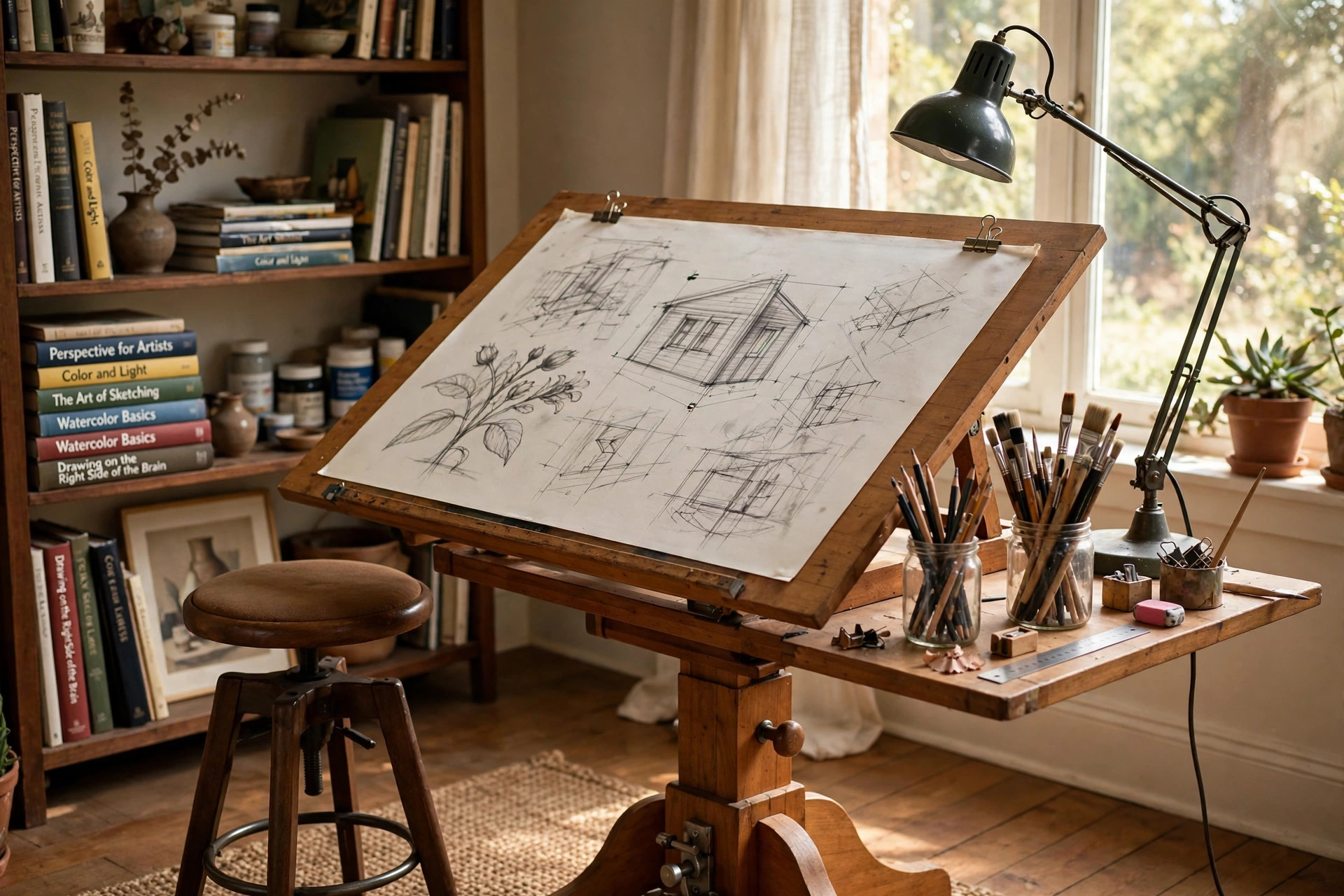
An adjustable drafting table for home art studio work is one of the best tools an artist can bring home. It tilts the drawing surface to a comfortable angle. It raises and lowers so the artist can sit or stand. It holds large sheets of paper, boards, and books without sliding. For anyone who draws, paints, drafts, or crafts at home, this single piece of furniture shapes the whole work day.
A home art studio does not need to be a grand room. Many artists work in a spare bedroom or a corner of the living room. What matters is a work surface that fits the body and the craft. A flat dining table forces the artist to hunch over for hours, leading to a sore neck, tired eyes, and aching wrists. An adjustable drafting table for home art studio use solves these problems with simple mechanics: a tilt that lifts the work toward the eyes and a height range that fits both chair and stool.
This guide explains why the table matters, what to look for when shopping, the main types on the market, what to expect in price, how to care for the table, and how to use it safely. It closes with answers to common questions.
Why an Adjustable Table Matters for the Home Studio: Adjustable Drafting Table for Home Art Studio
Work at home is here to stay. Artists, architects, illustrators, and hobbyists now spend long hours at home desks. Research into workplace comfort has long shown that posture affects both health and output. When the drawing surface is too low, the artist bends the neck forward. When it is too high, the shoulders rise and tense. Over months, these small strains become real injuries.
A tilt board changes the geometry of drawing. With the surface angled at 30 to 45 degrees, the artist can sit upright and still see the whole sheet. The eyes do not strain downward. The neck stays in a neutral line. Many professional illustrators say the tilt board is what lets them work a full day without fatigue. For students and hobbyists, it also makes drawing feel more natural, closer to the way an easel feels, but with a flat stable surface under the hand.
Height adjustment adds a second benefit. People are not all the same height, and neither are their chairs. A table that rises and lowers lets the artist set the surface at elbow height, which is the classic rule of good workstation design. Some artists like to stand for part of the day to ease a stiff back. A wide height range supports both positions. The New York Times Wirecutter has reviewed sit-stand desks for years, and the same comfort principles apply to art tables: the right height protects the back and shoulders.
A dedicated art table also signals that this corner of the home is a place of work. A table that is always set up, with tools within reach, lowers the barrier to starting each day.
What to Look For When You Choose
Buying an adjustable drafting table for home art studio use calls for careful thought. The following points cover the main factors.
Size of the Drawing Surface
Drafting tables are sold in many top sizes, from about 30 by 42 inches up to 37 by 60 inches or more. The right size depends on the media: a watercolor artist needs less room than an architect drawing on full-size vellum. As a rule, choose the largest top the room can hold. Measure first, leave at least 24 inches of clearance on the working side for the stool, and allow room behind for the top to tilt without striking the wall.
Range of Tilt
Most drafting tables tilt from flat to near vertical. Most work happens between 30 and 45 degrees: pencil and ink sit there, painting often calls for a shallower angle so wet paint does not run, and calligraphy suits a steeper board. The tilt lock must hold firmly under the weight of an arm leaning on the board; a board that drifts during work is worse than useless.
Height Adjustment
Height adjustment comes in several forms. Pedestal tables use a crank or gas piston. Electric tables use a motor, like a modern sit-stand desk. For a home art studio, a range from about 28 to 42 inches covers seated and standing work for most adults. Gas and crank systems need no power outlet. Electric systems move smoothly but cost more and need a plug nearby. The makers at UPLIFT Desk and Steelcase show how smooth modern lift systems have become.
Build Material and Stability
The top of a drafting table is often made of vinyl-laminated board, hardboard, or wood veneer. Laminated tops resist glue and paint and wipe clean. The frame is usually steel, sometimes with casters for rolling the table aside.
Stability matters more than looks. A table that rocks will frustrate the artist every day. Steel legs with a wide stance give the best footing, and cross braces under the top add strength. Check the weight rating too. A large board plus a heavy portfolio and reference books can easily reach 50 pounds.
Accessories
Small extras make a large difference. A pencil ledge at the bottom of the board keeps pens from rolling off. A paper clamp holds sheets in place. A side tray keeps tools close. List the included accessories and the price of the ones sold apart, since a cheap table with three costly add-ons is no bargain.
Good lighting deserves special care. Drafting work demands strong, even light without glare. Pair the table with an adjustable desk lamp with dimmer for eye strain to cut glare on paper.
Footrest and Seating
A drafting table is only half of the workstation. Drafting stools are taller than office chairs, with a foot ring for the feet. Plan the seat at the same time as the table, and set both so the forearms rest level with the board.
Types of Adjustable Drafting Tables
Several designs serve the home art studio. Each has its own strengths.
Pedestal Base Tables
The pedestal table is the classic form. A single central column supports the top, and a foot pedal or crank adjusts height and tilt. The column base takes up little floor space and leaves room for the feet and storage bins underneath. These tables are heavy and stable, but hard to move once set up.
Parallel Rule and Four-Post Tables
The four-post drafting table uses two pairs of legs with a parallel-motion mechanism. The top stays level as it rises, and the tilt adjusts on its own hinge. This is the design professionals used for decades in architecture offices: large, solid, and precise. With room for it, a four-post table is a lifetime tool.
Folding and Portable Tables
Folding drafting tables suit artists who must share a room. The top folds down or the legs collapse for storage against a wall. Lighter frames flex more under pressure, so these tables suit sketching and student work rather than heavy daily professional use.
Electric Lift Tables
Electric lift tables use a quiet motor to drive the height change at the push of a button. They move smoothly and often include memory presets for sit and stand heights. They cost more and need an outlet. For an artist with back trouble who changes position often, the ease can justify the price. Compare reviews on PCMag and collections at IKEA and Wayfair to see the range of options.
Glass-Top Studio Tables
Glass-top tables are built for illustrators who trace over light boxes. The clear surface sits over a light panel, and the tilt holds paper at a drawing angle. The glass must be thick and tempered for safety. These are a specialty choice for artists whose work truly needs backlighting.
Cost and Price: What to Expect
Prices for an adjustable drafting table for home art studio use spread across a wide range. A small folding table can cost under one hundred dollars. A mid-range pedestal table with a large top usually falls between two hundred and five hundred dollars. A professional four-post table or an electric lift table can run from five hundred to well over one thousand dollars.
Price reflects size, mechanism, and brand. The motor in an electric table is the dearest single part. Stores such as Staples and Walmart carry budget lines, while Herman Miller represents the high end of ergonomic furniture design.
Read the warranty terms: a five-year warranty on the frame and mechanism is a good sign. Also count the cost of accessories, since a stool, a lamp, and a paper clamp can add one to two hundred dollars. For a tight budget, the used market is worth a look, as firms and schools often sell solid used tables; inspect the tilt lock and height mechanism before buying.
Care and Upkeep
A drafting table lasts for decades with simple care. Wipe the top with a damp cloth after each session to keep paint, glue, and graphite from building up. For laminated tops, a mild soap solution is enough; never use abrasive pads.
Check the moving parts twice a year. Tighten bolts on the frame and the tilt hinge, and put a drop of light machine oil on pivot points. Keep a gas piston clean and dry. For electric tables, keep the power cord clear of the moving frame so it cannot pinch.
Sunlight is a quiet enemy. A table in direct sun can see its laminate fade and its adhesives weaken over the years. Turn the table so the top faces away from direct light, or use a shade during the bright hours. This also protects paper and artwork from fading.
Safety in the Home Studio
Drafting tables are generally safe, but a few cautions apply, especially in homes with children.
First, mind the pinch points. The tilt hinge and the height mechanism can catch fingers during adjustment. Teach children not to play with the levers, and lower the board slowly with one hand clear of the hinge.
Second, secure the table against tipping. Do not let children climb on the table or hang from its edge. If the table has casters, lock them during work, and place the feet on pads so the table cannot slide on a hard floor.
Third, mind the weight. Glass tops and large boards are heavy, so get help when moving the table and lift with the legs, not the back.
Fourth, think about cords. Electric tables have a power cord that can trip a passerby or snag a chair wheel. Run the cord along the wall and secure it with clips, keeping it away from the moving parts.
The guidance pages at The Spruce offer useful advice on home studio safety, and retailers such as Amazon list caster locks and cord clips that fit any home workspace.
Setting Up the Home Studio Around the Table
The table works best as part of a planned room. Place it near a window for daylight, but not in direct sun that glares on the board. A north-facing window gives the steadiest light through the day, which painters have prized for centuries.
Keep storage within arm’s reach: a flat file or shallow drawers for paper, and jars on a side table for brushes and pens. For artists short on space, a compact desk with keyboard tray for small room can hold the computer while the drafting table stays free for hand work. A home office standing desk with drawers attached pairs well for those who also do digital work.
Keep the floor clear. Art rooms gather clutter fast, and a clear floor prevents trips around a table with a wide base.
Frequently Asked Questions
What size drafting table is best for a home art studio?
For most home studios, a top of about 30 by 42 inches is a good middle ground, holding an 18-by-24-inch pad with room for tools at the side. Artists who work on large sheets should look for 36 by 48 inches or more, provided the room has space. Measure the room and allow two feet of clearance on the working side first.
Can I use a drafting table as a regular desk?
Yes, with limits. Set flat and low, a drafting table can serve for writing or a laptop. But the tilt board is not ideal for a keyboard, and the surface may be too high for typing comfort. Many artists keep the drafting table for art and add a small separate desk for computer work.
Are electric drafting tables worth the extra cost?
They are worth it for artists who change height often, such as those who alternate sitting and standing to manage back pain. For artists who set one height and rarely change it, a manual crank or pedestal table gives the same result for less money.
How do I keep paper from sliding off a tilted board?
Use the built-in paper clamp if the table has one, and the pencil ledge along the bottom edge. Drafting tape on the top corners holds the sheet flat without tearing it, and a sheet of non-slip shelf liner under the paper adds extra grip.
What is the best angle for drawing on a drafting table?
Most drawing feels natural between 30 and 45 degrees of tilt. Shallower angles suit wet media, which can run downhill on a steep board. Try several angles for a week each and settle on what feels best for the body.
Do drafting tables work for left-handed artists?
Yes. Tilt and height work the same for both hands. Look for tables with reversible or movable accessories, and a clamp-style lamp that can mount on either side.
Final Word
An adjustable drafting table for home art studio work is a simple tool with a deep effect. It lifts the work to the eyes, fits the body at any height, and gives every project a proper home. Choose the size that fits the room, a tilt lock that holds firm, and a frame that stands steady. Add good light, a matching stool, and storage within reach. With plain care, the table will serve for decades, through thousands of drawings, paintings, and quiet hours of craft.
References
Amazon. (n.d.). Online shopping. https://www.amazon.com Herman Miller. (n.d.). Office furniture and ergonomic seating. https://www.hermanmiller.com IKEA. (n.d.). Home furnishings. https://www.ikea.com PCMag. (n.d.). Technology product reviews. https://www.pcmag.com Staples. (n.d.). Office supplies and furniture. https://www.staples.com Steelcase. (n.d.). Office furniture and workplace research. https://www.steelcase.com The Spruce. (n.d.). Home and garden advice. https://www.thespruce.com UPLIFT Desk. (n.d.). Standing desks and ergonomic office furniture. https://www.uplift-desk.com Walmart. (n.d.). Everyday low prices. https://www.walmart.com Wayfair. (n.d.). Furniture and home goods. https://www.wayfair.com Wirecutter. (n.d.). Product reviews from The New York Times. https://www.nytimes.com/wirecutter
Was this guide helpful?

About Sarah Mitchell
The My Garden US editorial team writes practical, in-depth home and garden guides for American homeowners — tested advice, no fluff.
You May Also Like

Ergonomic Laptop Riser for Standing Desk Height: What to Know Before You Buy
July 23, 2026 0 views
Home Office Wall Shelf for Printer Storage: A Practical Guide
July 19, 2026 0 views
Home Office Partition Divider for Shared Room: A Plain Guide
June 15, 2026 0 views