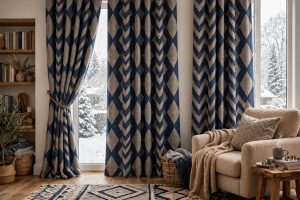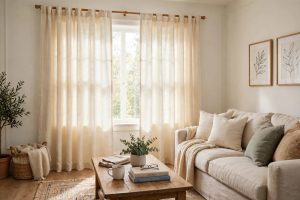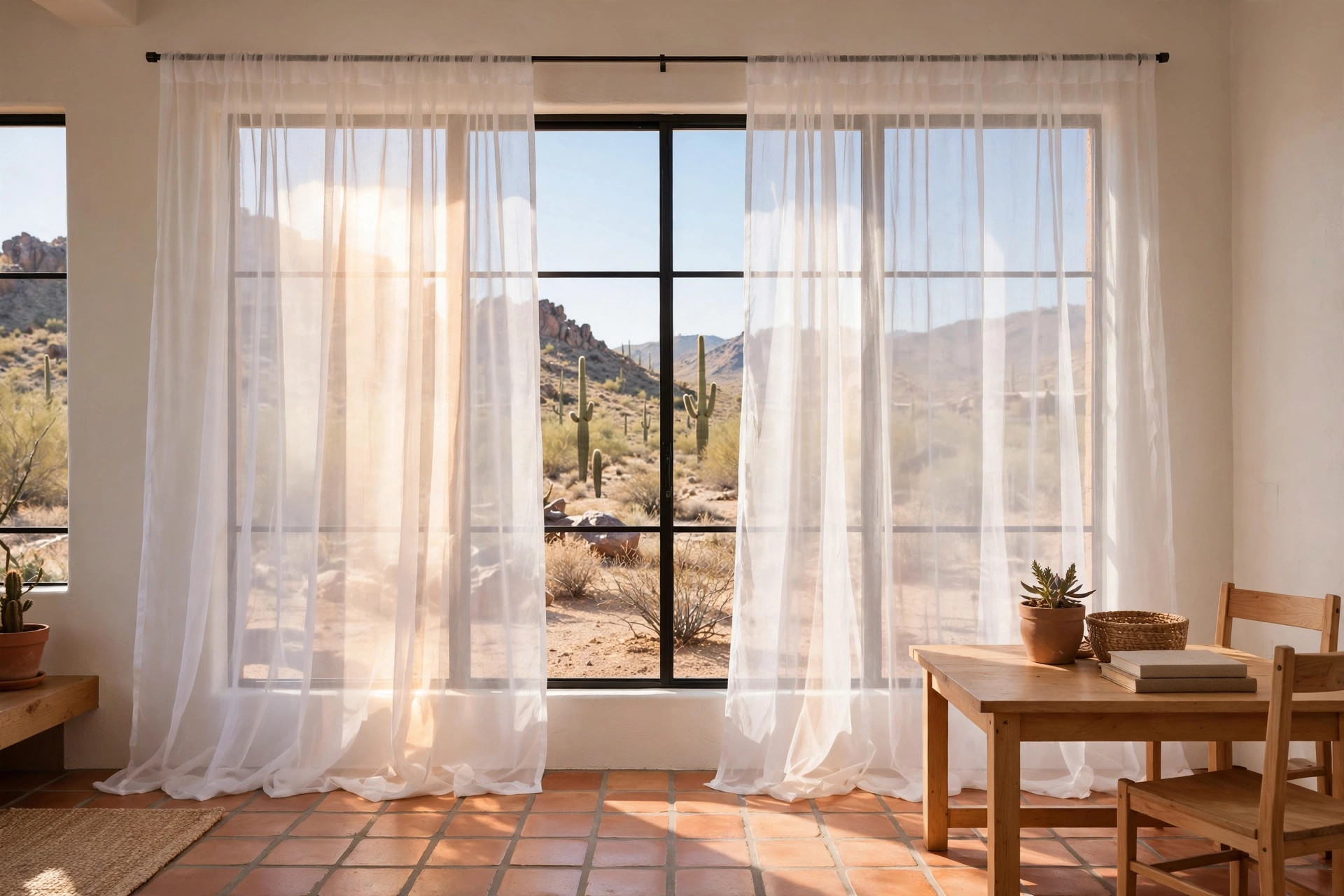
Homeowners across Arizona often ask where to buy sheer voile panels in arizona. Voile is a thin, plain weave fabric. It lets daylight pass through while it softens the view from outside. In a state with strong sun for much of the year, these panels make rooms feel calm and open. They do not block the light the way heavy drapes do. This guide explains where to find them, what to look for, what they cost, and how to care for them. You can shop in stores or online. Both paths work well.
Why Sheer Voile Panels Suit Arizona Homes
Arizona homes get a great deal of bright sun. Morning light in Phoenix can be strong by nine o clock. Even Tucson winters bring clear, white afternoons. Bare glass can make a room hard to sit in. Glare on a television screen is a common complaint. Sheer voile panels cut that glare. They let in a soft glow instead.
The desert climate shapes the choice. Heavy lined curtains can trap heat at the window in summer. A single light layer breathes better. It keeps air moving near the glass. Many homeowners pair voile panels with a heavier drape or a shade. The shade gives privacy at night. The voile carries the daytime load. This layering is a classic approach, and it suits the long Arizona daylight season well.
Dust is another desert fact. Fine dust finds its way into every home in Maricopa and Pinal counties. Voile is easy to take down and wash. It does not hold dust the way a thick velvet panel does. That makes it a practical pick for homes near open desert.
Style matters too. Adobe and ranch style homes are common in Arizona. Their interiors often use light walls and warm wood. White or ivory voile fits that look. It feels fresh in a room with tile floors. A modern condo in Scottsdale can use the same panels with a clean metal rod. The fabric works in old and new homes alike.
Where to Buy Sheer Voile Panels in Arizona
You have two main paths: local stores and online sellers. Each has clear advantages. The task calls the random variety of sources below into play, and both paths use them.
Local home stores carry voile panels in many widths and lengths. The Home Depot has large stores in Phoenix, Tucson, Mesa, and Flagstaff. Its curtain aisle stocks sheer panels in standard sizes. Lowe’s offers a similar range in the same cities. Both stores keep clearance sections where you can find short lengths at lower prices. If you need panels the same day, a local store is the fastest route.
Big furniture and decor chains also serve Arizona shoppers. IKEA runs a large store in Tempe. Its sheer curtain line is broad and priced for tight budgets. Wayfair ships to every Arizona zip code. Its catalog of voile panels is very large, with many customer photos that show how the fabric hangs in real rooms.
Specialty window shops add a third option. Blinds.com sells sheer and voile panels with exact size filters. You can sort by length, width, and color. Local drapery workrooms in Phoenix and Tucson make custom panels too. They cost more, but they fit odd windows exactly. A tall arch window or a wide sliding glass door often needs a custom length. For advice on measuring and hanging, guides on The Spruce and HGTV walk through each step in plain terms.
For homes with small children or pets, check the safety page at CPSC before you buy cords or corded shades. Voile panels on a plain rod use no cords at all. That is one more quiet advantage of a simple panel on a rod.
If you want more ideas before you buy, browse our guide to top rated sheer linen curtains for USA homes and our look at top rated sheer linen curtains for Texas homes. For a different kitchen option, see our piece on buy cafe curtains for kitchens online in Arizona.
What to Look For When You Shop for Voile Panels
Fabric content is the first thing to check. True voile is usually polyester, a cotton blend, or pure cotton. Polyester voile keeps its shape and resists wrinkles. It costs less. Cotton voile has a softer hand and a matte look. It wrinkles more but many buyers prefer its feel. A blend tries to give both. Read the label before you decide.
Weight and openness of the weave come next. Hold the panel up to light if you shop in a store. Some voiles are nearly clear. Others have a soft haze. For a street facing window, choose a tighter weave or plan a second layer. For an upstairs window with no neighbor in sight, a very sheer panel is fine.
Size matters more than buyers expect. Measure the rod, not the glass. For a full, gathered look, the total panel width should be one and a half to two times the rod width. Length is a style choice. Sill length ends at the sill. Floor length should just kiss the floor. In dusty Arizona homes, a length that clears the floor by half an inch keeps hems cleaner.
Header style changes how the panel hangs. Rod pocket panels slide right onto the rod. They gather in soft folds. Tab top panels have fabric loops. They give a relaxed country look. Grommet tops have metal rings. They form even pleats and slide with ease. Back tab panels hide the rod for a clean drapery line. Pick the style that suits the rod you own.
Color choice is simple for voile. White is the classic pick. It brightens a room. Ivory warms it slightly. Light gray or champagne can match modern decor. White and ivory remain the best sellers for good reason.
Types and Options for Voile Panels
Standard sheer panels are the common choice. They come in widths of about 54 inches and lengths from 63 to 108 inches. Most windows need two panels per window. They work on a basic rod and cost the least.
Embroidered voile adds a stitched pattern. Dots, leaves, or vines run across the fabric. The pattern shows best in daylight. It adds interest without weight. These panels cost more than plain voile. They suit living rooms and dining rooms where the window is a focal point.
Lace edged voile has a decorative border at the hem or the sides. It reads as traditional. It suits ranch and country style homes. The edge needs gentle washing to keep its shape.
Striped or textured voile uses a slub yarn or a woven stripe. The texture adds depth while the panel stays sheer. This type hides minor wrinkles well. It is a good pick for high use rooms.
Crushed voile has a crinkled finish. It looks casual and hides folds. It rarely needs ironing. Many buyers choose it for rentals or for rooms where they will not iron curtains.
For privacy at night, pair any of these with a liner or a second rod. A light blocking shade behind the voile gives full privacy after dark. A heavier drape on a double rod does the same job. The layered look is common in Arizona homes with tall windows.
Cost and Price in Arizona
Sheer voile panels are among the cheapest window coverings you can buy. Prices shift with size, fabric, and brand. The ranges below reflect typical Arizona retail in 2026.
Budget polyester voile panels cost about 8 to 15 dollars per panel. Stores like IKEA and the clearance racks at big box stores sell at this level. A standard window needs two panels, so a window costs about 16 to 30 dollars before the rod.
Mid range panels cost about 18 to 40 dollars per panel. Cotton voile, embroidered voile, and named brands sit here. Many online sellers land in this range. Quality is steady. Colors stay true after washing.
Premium and custom panels cost 45 dollars per panel and up. Pure cotton voile, linen blends, and custom made lengths sit at the top. A local workroom may charge 80 to 150 dollars per panel for exact fit. That price buys a perfect fit for wide or tall windows.
Rods and hardware add to the total. A basic metal rod costs 12 to 25 dollars. Brackets, finials, and holdbacks can add 10 to 30 dollars more. For a wide sliding door, a track system may run 40 to 80 dollars. Measure first so you buy hardware once.
Online prices often run lower than store prices. Shipping to Arizona is fast from western warehouses. Watch for shipping fees on large orders. In store shopping lets you touch the fabric first. That is worth something for a fabric as fine as voile.
Care and Upkeep of Voile Panels
Voile is a delicate fabric, but its care is simple. Most polyester voile panels are machine washable. Wash them alone or in a mesh bag. Use cold or warm water on a gentle cycle. Mild soap is best. Skip bleach. It can yellow white panels over time.
Dry the panels on low heat or hang them damp. Hanging them damp on the rod lets gravity smooth the wrinkles. That trick saves ironing. Cotton voile may shrink a little on the first wash. Buy a touch longer than you need if you choose cotton.
Arizona dust means more frequent washing. Many homeowners wash voile panels every two to three months in summer. A quick shake outside removes loose dust between washes. Use a lint roller on the hem where dust collects.
Check the seams once a year. Thin fabric can pull at stress points. A small tear at the rod pocket can be sewn by hand in minutes. Replace a panel when the fabric thins at the fold lines.
Safety Notes for Window Coverings
Voile panels on a rod are among the safest window coverings in a home. They use no cords. They use no heavy weights. That matters in homes with young children and pets. Corded blinds carry a known strangulation risk for small children. The CPSC keeps guidance on cord safety for homes with kids.
Hang rods firmly. A rod that falls can injure a child who pulls on the fabric. Use wall anchors in drywall. In Arizona homes with block walls, use masonry anchors and a drill with a masonry bit. Make sure each bracket holds firm before you hang the panels.
Keep panels clear of heat sources. Thin fabric near a floor heater or a candle can be a fire risk. Keep at least a foot of clear space. In kitchens, choose a length that clears the stove area by a wide margin.
For tall windows, use a stable step stool or a short ladder when you hang panels. Falls from chairs cause many home injuries. A light stepladder with a top rail is the safe tool for the job.
Common Questions About Voile Panels in Arizona
Do sheer voile panels give privacy in the daytime? They give daytime privacy in most cases. From outside, a sunlit window with voile shows little detail. From inside, you can still see out. At night, the effect reverses. With indoor lights on, outsiders can see in. Use a shade or a drape for night privacy.
Will voile panels block Arizona heat? They block very little heat. They are too thin to insulate. They do cut glare and soft sun. For real heat control, add a reflective shade or a lined drape behind the voile. Keep the layered approach in mind for south and west facing windows.
What length works best for sliding glass doors? Floor length panels work best for sliding doors. Buy panels long enough to just touch the floor. A track or a long rod above the door frame holds them. Two to four panels cover a standard door. Make sure the panels stack clear of the door path.
Can I hang voile panels on an existing rod? Yes, in most cases. Check the header style of the panel against your rod. A rod pocket panel needs a rod thin enough to pass through the pocket. Grommet panels need a rod at least half an inch in diameter to slide well. If the rod is too thick for the pocket, buy a slimmer rod.
How many panels do I need for one window? Two panels suit most windows. For a full look, the combined width of the panels should be one and a half to two times the rod width. Wide windows or a desire for deep folds may call for three or four panels. Buy all panels for one window at the same time so the dye lots match.
Do voile panels fade in strong sun? Polyester voile resists fading well. White and light colors hold up for years. Darker colors fade faster in direct sun. Rotate panels between windows now and then to even out sun exposure. A south facing window ages fabric fastest.
A Short Final Word
Sheer voile panels are a simple, low cost way to tame Arizona sun. They soften glare, keep rooms bright, and wash with ease. You can buy them the same day at stores in Phoenix, Tucson, or Mesa, or order from a wide online range. Measure first. Choose the weave and header that suit your windows. Hang them well and keep them clean. The result is a room that feels calm in the harshest light of the desert year.
References
Blinds.com. (n.d.). Window blinds, shades, and shutters. https://www.blinds.com HGTV. (n.d.). Home and garden ideas. https://www.hgtv.com IKEA. (n.d.). Home furnishings. https://www.ikea.com Lowe’s. (n.d.). Home improvement products. https://www.lowes.com The Home Depot. (n.d.). Home improvement products. https://www.homedepot.com The Spruce. (n.d.). Home and garden advice. https://www.thespruce.com U.S. Consumer Product Safety Commission. (n.d.). Product safety information. https://www.cpsc.gov Wayfair. (n.d.). Furniture and home goods. https://www.wayfair.com
Was this guide helpful?

About Lisa Anderson
The My Garden US editorial team writes practical, in-depth home and garden guides for American homeowners — tested advice, no fluff.