
A Florida attic can reach 150 degrees on a summer afternoon. The air conditioner works hard for hours, and the monthly bill shows the strain. The best insulation for florida attics 2026 is the kind that blocks this heat before it enters the rooms below. Homeowners now have more choices than ever, from loose-fill cellulose to spray foam and radiant barriers. Each choice has strengths and weak points, and the right pick depends on the age of the house, the budget, and the goals of the owner. This guide walks through the options in plain terms so a Florida homeowner can decide with confidence.
Why Attic Insulation Matters in Florida
Most heat in a Florida home enters through the roof. Sunlight strikes the shingles, warms the roof deck, and the heat radiates down into the attic. From there it moves into the ceilings of the rooms below. A well insulated attic slows this flow. The air conditioner runs less often, rooms stay closer to the set temperature, and the electric bill drops.
The savings are real. Studies by the U.S. Department of Energy show that sealing air leaks and adding insulation to the attic can cut heating and cooling costs by about 15 percent in many homes. In Florida, where cooling is the main cost, the attic is the single most important surface to treat. Older homes built before the 1990s often have three inches of insulation or less, and many have none at all in spots. These homes gain the most from an upgrade.
Insulation also improves comfort. Rooms under a hot attic often feel two or three degrees warmer than rooms on lower floors. A thicker insulation layer evens out these differences. It also reduces the load on the air conditioner, which can extend the life of the unit. Equipment makers like Carrier and Lennox design their systems to work in balanced homes, and a poorly insulated attic forces the system to run longer than it was meant to.
How to Choose the Right Insulation: Best Insulation for Florida Attics 2026
The choice starts with three questions. How much heat should the insulation block? How does the product handle moisture? And how much does the project cost? The answers below explain each one.
R-Value and the Florida Climate Zone
R-value measures how well a material resists the flow of heat. A higher number means better resistance. The Department of Energy recommends that most Florida attics reach R-30 to R-60, depending on the county and the type of insulation. To learn how much material that means in practice, see this guide to how much attic insulation do i need usa.
Climate matters. South Florida sits in a hot and humid zone where cooling dominates every month. North Florida has mild winters, so some heating load exists, but cooling is still the main concern. A higher R-value pays back fastest in the southern part of the state. The ENERGY STAR program offers regional guidance that helps owners pick a target R-value for their zip code.
Moisture and Humidity Concerns
Florida air carries a great deal of moisture. Insulation that soaks up water can sag, lose R-value, and feed mold. This is why material choice matters as much as thickness. Cellulose treated with borate resists mold better than untreated products. Spray foam seals the attic so tightly that moist air cannot reach cool surfaces. Ventilation works hand in hand with insulation here. Without fresh air movement, trapped moisture causes trouble. For more on this balance, read about the best attic ventilation for hot climates usa.
The Main Types of Attic Insulation
Four products dominate Florida attics in 2026. Each suits a different budget and a different attic shape.
Blown-In Fiberglass or Cellulose
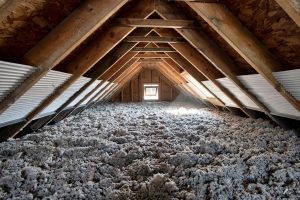
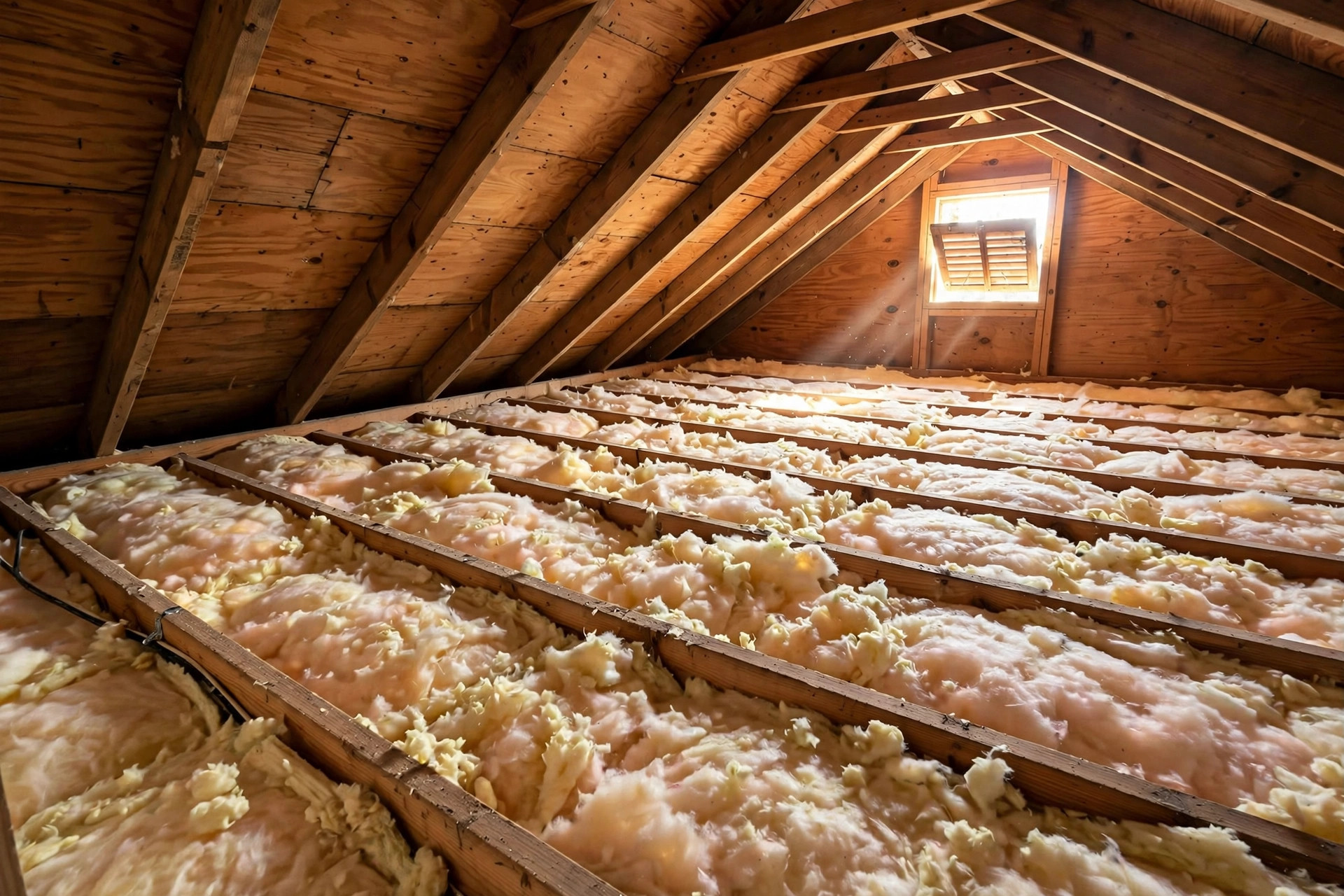
Blown-in insulation, also called loose fill, is the most common choice in Florida attics. A machine blows small pieces of fiberglass or treated recycled paper into the attic, building a thick, even blanket. It fills odd corners and fits around wires and pipes with ease. It is the easiest way to add R-value to an existing attic without tearing anything open.
Cellulose costs a little less than fiberglass and often reaches a slightly higher density. Fiberglass resists moisture better and does not settle as much over time. Both need about 14 to 18 inches of depth to reach R-38 in a Florida attic. Manufacturers such as CertainTeed publish coverage charts that show exactly how many bags a given attic size needs.
Fiberglass Batts
Batts are pre-cut rolls or blankets of fiberglass that fit between the wood joists of the attic floor. They cost little and go in fast, which makes them a favorite for new construction. In an existing attic they work best when the space is open and the joists are easy to reach.
The weakness of batts is fit. Gaps, folds, and compressed spots reduce performance a great deal. A batt squeezed around a wire can lose half its R-value in that spot. For this reason, batts suit clean, simple attic floors, while blown-in material suits attics with many obstacles.
Spray Foam Insulation
Spray foam comes in two forms. Open-cell foam is soft and light, and it fills every crack. Closed-cell foam is dense and rigid, and it resists water vapor almost fully. Both types are sprayed as a liquid that expands in seconds. The result is an airtight seal along with insulation.
Spray foam costs far more than blown-in material, often three to four times as much. But it solves two problems at once: insulation and air sealing. In Florida, many installers spray foam on the underside of the roof deck, which turns the attic into a sealed, conditioned space. This keeps ductwork cool and can cut cooling costs a great deal. Owners who want the strongest performance often find that the best insulation for florida attics 2026 is closed-cell spray foam, even at the higher price.
Radiant Barriers
A radiant barrier is a reflective sheet, usually aluminum foil bonded to a paper or plastic backing, stapled under the roof rafters. It reflects heat back toward the roof instead of letting it sink into the attic. It does not replace insulation, but it works well with it.
Radiant barriers cut the radiant heat that builds up in a hot attic, and Florida attics are among the hottest in the nation. They cost little to install in new construction or during a roof replacement. In an existing attic, they can be stapled to the rafters by hand. A full look at the trade-offs appears in this article on radiant barrier for attic pros cons usa.
Cost and Price in 2026
Prices vary by product, attic size, and region of Florida. The ranges below reflect typical 2026 figures for professional installation in a 1,000 square foot attic.
Blown-in fiberglass or cellulose runs about 1.50 to 3.00 dollars per square foot. For a 1,000 square foot attic, the total falls near 1,500 to 3,000 dollars. Fiberglass batts cost about 1.00 to 2.50 dollars per square foot, or 1,000 to 2,500 dollars for the same attic. Open-cell spray foam runs about 3.50 to 5.50 dollars per square foot, while closed-cell spray foam runs about 5.00 to 7.50 dollars per square foot. A radiant barrier alone costs about 0.75 to 1.50 dollars per square foot for materials.
Labor is a large part of these prices. Removal of old, dirty insulation adds 1.00 to 2.00 dollars per square foot. Many owners find that adding to existing insulation costs far less than a full removal and replacement, and the energy savings are nearly as large.
Payback time depends on the electric rate and the starting point. A home with almost no insulation that gets blown to R-38 can see the project pay for itself in three to five years through lower cooling bills. Rebates and tax credits may shorten this time. Check the ENERGY STAR site and local utility programs for current offers before signing a contract.
Care and Upkeep
Insulation needs little care, but a few habits keep it working well. Inspect the attic once a year, ideally in spring before the heat arrives. Look for thin spots, areas where the material has shifted, and signs of pests or water stains. A simple rake or gloved hand can level blown-in material that has settled unevenly.
Keep the attic hatch or pull-down stairs sealed. This opening is a common weak point where hot air slips into the house. An insulated cover over the hatch costs little and closes the gap. Step-by-step advice for these projects appears on the Family Handyman site, which covers attic air sealing in detail.
Do not store heavy boxes on top of loose-fill insulation. The weight compresses the material and destroys its R-value in those spots. Build a simple plywood platform over the joists if storage space is needed. Keep soffit vents and ridge vents clear of insulation so air can flow from the eaves to the peak. Blocked vents trap heat and moisture.
Watch for moisture signs: dark stains on the wood, a musty smell, or insulation that feels damp. These point to a roof leak or a ventilation problem. Fix the source of water before adding more insulation, since wet material performs poorly and can grow mold.
Safety
Attic work carries real hazards. The space is hot, dark, and full of obstacles. Heat stroke is a genuine risk in a Florida attic during summer. Plan work for early morning, bring water, and take breaks in a cool room. Never enter an attic alone if a long job is planned.
Step only on the joists or on boards laid across them. The ceiling drywall below cannot hold a person’s weight, and a fall through the ceiling is a common attic accident. Wear a dust mask or respirator, safety glasses, gloves, and long sleeves. Fiberglass fibers irritate the skin and lungs, and old attics may hold dust, rodent droppings, or mold.
Turn off power to any circuits running through the work area, and keep insulation away from recessed light fixtures unless the fixtures are rated for direct contact. Hot fixtures buried in insulation are a fire hazard. Old wiring with cracked covers should be checked by an electrician before insulation goes in. Guidance on safe home projects from This Old House stresses this point for every attic job.
Spray foam brings its own safety rules. The chemicals require professional handling, full protective gear, and proper ventilation during application. Homeowners should leave the house during a spray foam job and return only after the installer gives the clear. This is strictly a professional product, not a weekend project.
Frequently Asked Questions
How much insulation does a Florida attic need in 2026?
Most Florida homes should aim for R-30 to R-38 at minimum, and R-49 to R-60 gives the best long-term savings in the hottest counties. For blown-in fiberglass, that means roughly 10 to 22 inches of depth. Measure the current depth in a few spots to see where the attic stands before buying material.
Is spray foam worth the extra cost in Florida?
It can be. Spray foam seals air leaks that other products cannot touch, and it keeps attic ductwork in cool, dry air. Homes with ducts in the attic see the largest gains. The payback period is longer than blown-in insulation, often seven to twelve years, but the comfort improvement is felt at once.
Can I install attic insulation myself?
Blown-in cellulose and fiberglass batts are within reach of a careful do-it-yourselfer. Many home stores rent the blowing machine free with a minimum bag purchase. Spray foam should be left to licensed professionals because of the chemical hazards. Radiant barrier sheets can be stapled up by hand, though the work is tiring in a hot attic.
Does a radiant barrier replace insulation?
No. A radiant barrier reflects heat but has almost no R-value of its own. It works as a partner to insulation, not a substitute. The best results come from a radiant barrier plus a full layer of blown-in or batt insulation on the attic floor.
Will new insulation lower my electric bill?
In most cases, yes. Homes with thin or missing attic insulation often see cooling costs drop 10 to 20 percent after an upgrade to recommended levels. The exact savings depend on the starting condition, the local electric rate, and how much the air conditioner runs.
How long does attic insulation last?
Fiberglass and cellulose can perform well for 20 to 30 years if they stay dry and undisturbed. Spray foam lasts as long as the roof in most cases. Water damage, pest activity, and heavy settling shorten these lives, which is why the yearly attic check matters.
A Final Word
The best insulation for florida attics 2026 is not a single product but the right product for the house at hand. Blown-in cellulose or fiberglass gives most owners the best balance of cost and performance. Spray foam serves those who want top performance and air sealing in one step. A radiant barrier adds a useful extra layer of defense against the fierce Florida sun. Whatever the choice, the goal is the same: a cooler attic, a quieter air conditioner, and a smaller bill. Equipment makers such as Trane, Rheem, and Goodman all note that their systems perform best in well insulated homes, and Florida owners who upgrade the attic give every part of the cooling system a better chance to do its job.
References
Carrier. (n.d.). Heating and cooling systems. https://www.carrier.com CertainTeed. (n.d.). Building materials and exterior products. https://www.certainteed.com ENERGY STAR. (n.d.). Energy efficient products. https://www.energystar.gov Family Handyman. (n.d.). DIY home repair and maintenance. https://www.familyhandyman.com Goodman. (n.d.). Heating and cooling equipment. https://www.goodmanmfg.com Lennox. (n.d.). Heating and cooling systems. https://www.lennox.com Rheem. (n.d.). Heating, cooling, and water heating. https://www.rheem.com This Old House. (n.d.). Home renovation guidance. https://www.thisoldhouse.com Trane. (n.d.). Heating and air conditioning. https://www.trane.com U.S. Department of Energy. (n.d.). Energy efficiency and renewable energy. https://www.energy.gov
Was this guide helpful?

About Lisa Anderson
The My Garden US editorial team writes practical, in-depth home and garden guides for American homeowners — tested advice, no fluff.
You May Also Like
Multi Zone Mini Split Cost Installed in the USA: A 2026 Guide
June 30, 2026 0 views
EPA Certified Wood Stove Reviews 2026 USA: What Buyers Should Know
March 18, 2026 0 views
Modine Hot Dawg Heater Reviews for Garage Buyers: A Plain Guide
October 1, 2026 0 views