
Why City Water Has Chloramine
Most cities in the United States add a disinfectant to tap water. For many years, chlorine was the common choice. In recent decades, more water utilities switched to chloramine. Chloramine is a mix of chlorine and ammonia. It stays active longer in pipes. It does the job of killing germs. But it also brings taste and smell problems that many home owners dislike.
This is why the search term chloramine filter for city water reviews usa has grown so common. People want to know which filters actually remove chloramine. They want honest reviews. They want to spend money only once. The answer is not as simple as buying any filter off the shelf. Regular carbon filters that handle chlorine often fail against chloramine. A filter made for the job works much better.
Before you buy, learn what chloramine does in water, how filters fight it, and what reviews can and cannot tell you. This guide walks through the whole process in plain terms.
Why Chloramine Matters to Home Owners: Chloramine Filter for City Water Reviews Usa
Taste and Smell
Chloramine gives tap water a pool-like smell. It can leave a bitter or medicinal taste. Coffee and tea made with this water taste flat. Cooking pasta or rice in it can add an off flavor. Many people first notice the problem in the morning shower. Steam carries the smell straight up.
Skin and Hair
Some people feel dry or itchy after showering in chloraminated water. Hair can feel rough. The science on this point is still developing. But thousands of home owners report the same pattern. A shower head filter for chlorine reviews usa search often starts for the same reason.
Pets and Plants
Chloramine is rough on fish. Even small amounts can harm aquarium life. Many city water reports warn fish keepers directly. Chloramine can also stress sensitive houseplants over time. Gardeners who water indoor plants from the tap sometimes see leaf burn they cannot explain.
Rubber and Plumbing Parts
Over years, chloramine can break down rubber seals, gaskets, and toilet flappers faster than chlorine does. Plumbers see this in homes served by utilities that use chloramine. It is not an emergency. But it is one more reason people look for a filter.
The Environmental Protection Agency sets drinking water standards for disinfectants including chloramine. Levels in city water stay within legal limits. Still, legal and tasty are two different things. A filter bridges that gap.
What to Look for in a Chloramine Filter
Catalytic Carbon Is the Key
Standard activated carbon grabs chlorine well. Chloramine is harder to catch. It needs longer contact time and a stronger carbon. Catalytic carbon is made for this task. It breaks the chloramine bond and then traps the parts. When you read reviews, check the filter media first. If the maker does not name catalytic carbon or a similar high-grade carbon, be skeptical.
Contact Time
Contact time means how long water touches the filter media. A small filter on a fast tap gives little contact time. A larger tank gives more. This is why whole house units often beat small under-sink units for chloramine. Slower flow through more media means better removal.
Flow Rate and Home Size
Match the filter to your home. A two-bath house needs a different size than a five-bath house. Makers list a service flow rate in gallons per minute. Your peak use should sit below that number. If you are unsure, ask a plumber. Guides on This Old House walk through sizing in plain language.
Certification
Look for third-party certification marks. NSF International tests filters against their claims. A filter certified for chloramine reduction has passed real lab tests. Reviews are helpful. A lab stamp is stronger. Specialty water filter companies such as Aquasana publish their test data openly. That habit is a good sign.
What Reviews Can Tell You
Reviews tell you about real life. They tell you if the unit was easy to install. They tell you if the taste changed. They tell you if the maker answered the phone. Reviews cannot tell you lab numbers. A reviewer cannot measure parts per million at the tap. So read reviews for service, build quality, and ease of use. Trust lab data for removal claims.
Look for reviews from people in your region. Water chemistry differs from city to city. A filter that shines in a town with low chloramine may struggle where levels run high. Reviewers who name their city give you the most useful signal. Sort by recent reviews too. Makers change cartridge designs over time. A glowing review from five years ago may describe a unit that no longer exists.
Types and Options
Whole House Filters
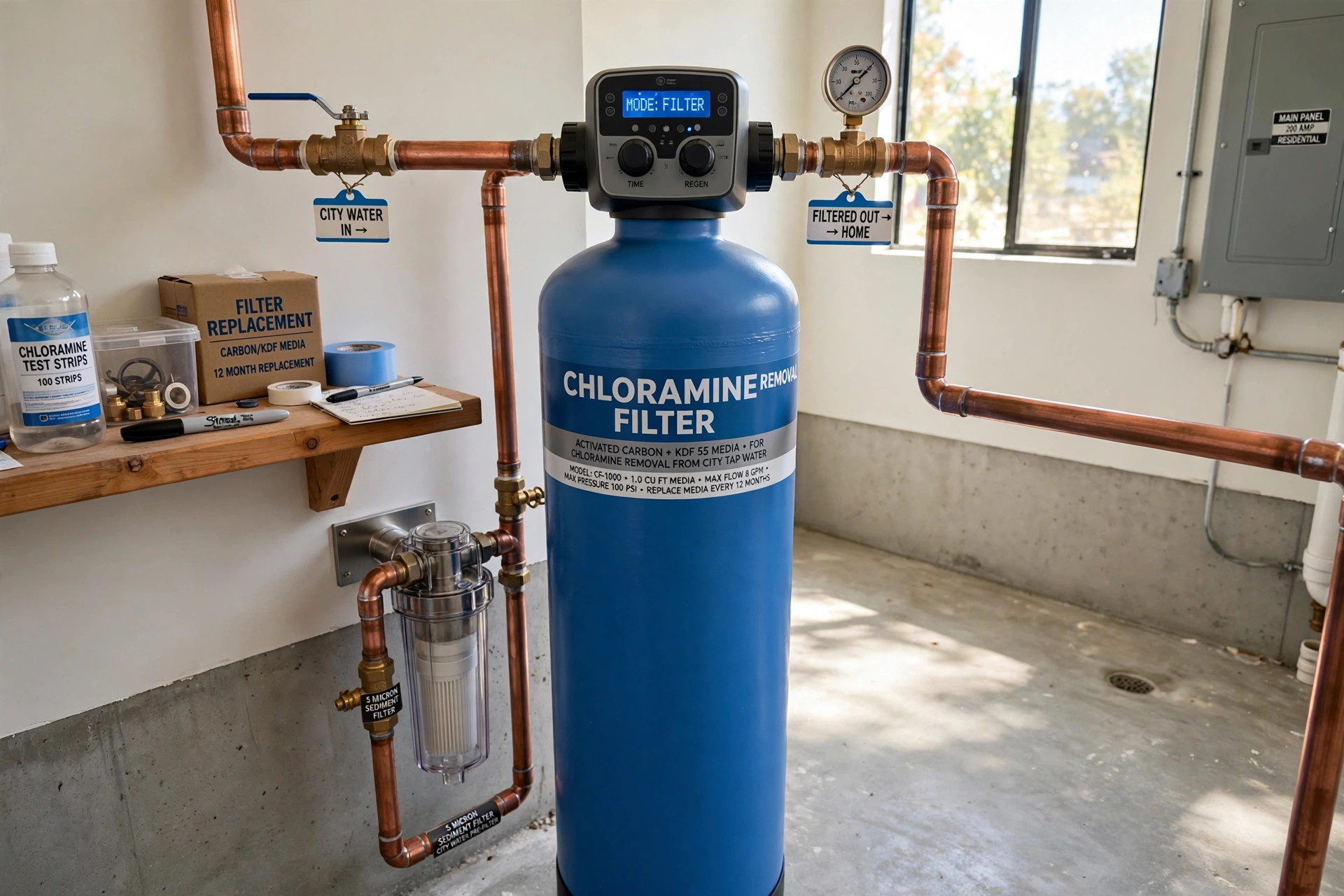
A whole house unit sits where water enters the home. It treats every tap, shower, and appliance. This is the most complete answer to chloramine. Tanks hold a large bed of catalytic carbon. Contact time is long. Flow rates suit full homes. The trade-off is cost and space. You need room near the main line, often in a garage or utility room. Our guide to the best whole house water filter system usa compares popular whole house options side by side.
Under-Sink Filters
Under-sink units treat only the kitchen tap. They cost less and install in an afternoon. For drinking and cooking water, they can do a fine job. But the small cartridge gives short contact time. Removal of chloramine may be partial. If your main complaint is taste in drinking water, this can still be a good buy. If you want full-home results, it will fall short.
Countertop Filters
Countertop units hook to the faucet with a diverter. They are renter friendly. No plumbing changes are needed. They hold more media than a tiny under-sink cartridge. But they sit on the counter and slow the faucet flow. For a small kitchen, that trade may be fine.
Shower Filters
Shower filters aim at skin and hair comfort. They use vitamin C or carbon cartridges. They reduce chloramine in shower water. They do not treat the rest of the house. Read a shower head filter for chlorine reviews usa roundup before you buy. Realistic expectations matter here.
Reverse Osmosis Add-Ons
Reverse osmosis systems strip almost everything from water, including chloramine. They waste some water in the process. They also strip healthy minerals. Many owners pair them with a remineralization stage. They suit drinking water only, not the whole home.
Big home improvement stores such as Lowe’s and Home Depot stock all these types. You can compare sizes and prices in person before you decide.
Cost and Price
Prices spread wide. A countertop unit may cost under one hundred dollars. A good under-sink system runs from one hundred fifty to four hundred dollars. A whole house catalytic carbon tank runs from six hundred to two thousand dollars for the unit alone. Professional installation adds two hundred to eight hundred dollars depending on your plumbing.
Replacement media is the real long-term cost. Catalytic carbon tanks often last three to five years before the media needs a change. A media swap can cost two hundred to five hundred dollars. Under-sink cartridges need changing every six to twelve months. Shower cartridges last two to three months.
Do the math over five years before you buy. A cheap unit with costly cartridges can pass a dear unit with cheap media. Reviews rarely do this math for you. A Family Handyman cost guide can help you frame the numbers.
Installation Basics
Many under-sink and countertop units are do-it-yourself projects. You need basic tools and an hour or two. Shut off the water first. Follow the maker steps in order. Flush the new cartridge before drinking from it. New carbon sheds fine dust at first. That is normal.
Whole house units are a bigger job. You cut into the main line. You add shutoff valves and a bypass loop. Most owners hire a plumber. A bypass loop lets water flow to the house while you service the filter. Ask for one by name.
Fixture brands like Moen, Delta Faucet, and Kohler publish plumbing guides that help you understand your supply lines before the plumber arrives.
Care and Upkeep
A filter only works if you maintain it. Set a calendar reminder for cartridge changes. Mark the install date on the unit with a marker. Test your water once a year. Cheap test strips show chlorine, but chloramine needs a specific test. Buy strips made for total chlorine, which includes chloramine.
Watch for warning signs. A return of pool smell means the media is spent. A drop in water pressure can mean a clogged pre-filter. Sediment pre-filters protect the carbon bed. Change them on schedule. In homes with old pipes, sediment loads can be high.
Keep the area around a whole house tank dry and clean. Check for leaks monthly. Tighten fittings that weep. Small drips become big problems if ignored.
It also helps to keep your receipts and model numbers in one folder. When a cartridge wears out in two years, you will not remember the exact part name. A photo of the unit label on your phone works just as well. Many owners tape the replacement schedule inside the cabinet door. That small habit keeps the system working at full strength year after year.
Safety Notes
Chloramine filters are safe home equipment. Still, follow a few rules. Never drink from a new cartridge until you flush it per the maker guide. Never bypass a whole house unit without a reason; untreated water can harm fish tanks and sensitive plants. If anyone in the home has a health condition tied to water quality, talk to a doctor first.
Do not mix filter media types unless the maker says it is safe. Some media need backwashing. Others must never be backwashed. Read the manual for your exact model.
If your water comes from a private well, chloramine is likely not your problem. Well owners face different issues. A fluoride water filter for home reviews usa search may fit better for some city homes with other concerns.
Frequently Asked Questions
How do I know if my city uses chloramine?
Read your annual water quality report. Utilities mail it or post it online. It lists disinfectants used. You can also call the water department and ask directly. Test strips for total chlorine confirm it at the tap.
Will a Brita-style pitcher remove chloramine?
Standard pitcher filters help a little with taste. They do not remove chloramine well. Their contact time is too short and their carbon is too basic. They are better than nothing for drinking water. They are not a real answer to chloramine.
How long does catalytic carbon last?
Most makers claim three to five years for whole house tanks. Real life depends on water use and chloramine levels. Heavy use wears media faster. Annual testing tells you the truth for your home.
Does boiling remove chloramine?
Boiling removes chlorine fast. Chloramine breaks down much slower. You would need to boil water for a long time. It is not practical for daily use. A filter is the sane choice.
Can I install a whole house filter myself?
Skilled do-it-yourself owners can. You need to cut and join the main line. You need to know your pipe material. Most people hire a plumber for safety. The cost is worth the peace of mind.
Do chloramine filters waste water?
Carbon filters do not waste water during normal use. Some tanks backwash on a timer. Backwashing uses some water to clean the media bed. It is far less waste than a reverse osmosis system.
A Short Final Word
The phrase chloramine filter for city water reviews usa points to a smart shopping habit. Read the reviews. Then go one step further. Check the filter media. Check the certifications. Match the size to your home. Plan for the long-term cost of replacement media. A well-chosen catalytic carbon filter can turn sharp, pool-smelling tap water into clean, neutral water at every tap. Take your time, do the math, and buy once.
References
Aquasana. (n.d.). Water filtration systems. https://www.aquasana.com Delta Faucet. (n.d.). Kitchen and bathroom faucets. https://www.deltafaucet.com Family Handyman. (n.d.). DIY home repair and maintenance. https://www.familyhandyman.com Kohler. (n.d.). Bathroom and kitchen fixtures. https://www.kohler.com Lowe’s. (n.d.). Home improvement products. https://www.lowes.com Moen. (n.d.). Faucets and plumbing fixtures. https://www.moen.com The Home Depot. (n.d.). Home improvement products. https://www.homedepot.com This Old House. (n.d.). Home renovation guidance. https://www.thisoldhouse.com U.S. Environmental Protection Agency. (n.d.). Protecting human health and the environment. https://www.epa.gov
Was this guide helpful?

About Emily Rodriguez
The My Garden US editorial team writes practical, in-depth home and garden guides for American homeowners — tested advice, no fluff.
You May Also Like
Best Sediment Filter for Well Water USA: A Plain Guide for Homeowners
August 28, 2026 0 views
Garbage Disposal Installation Cost Near Me: A Plain Guide for Homeowners
May 3, 2026 0 views
Stainless Steel Sink Gauge Comparison Guide
January 19, 2026 0 views