New outdoor cushions cost a small fortune. A full set for a sectional can run into the hundreds. But the foam inside your old cushions is probably fine. It is the fabric that gave up, faded by the sun and stained by summers of use. Reupholstering lets you keep the good foam and get a fresh look for the price of fabric and a weekend. This guide covers reupholster outdoor cushions in plain steps.
Table of Contents
Table of Contents
This guide walks through the whole job at home. You will learn how to measure, which fabric to buy, how to sew a simple box cushion cover, and what to do if you do not sew at all.
Reupholster Outdoor Cushions: Decide: Recover or Start Fresh?
When it comes to reupholster outdoor cushions, getting the details right makes all the difference.
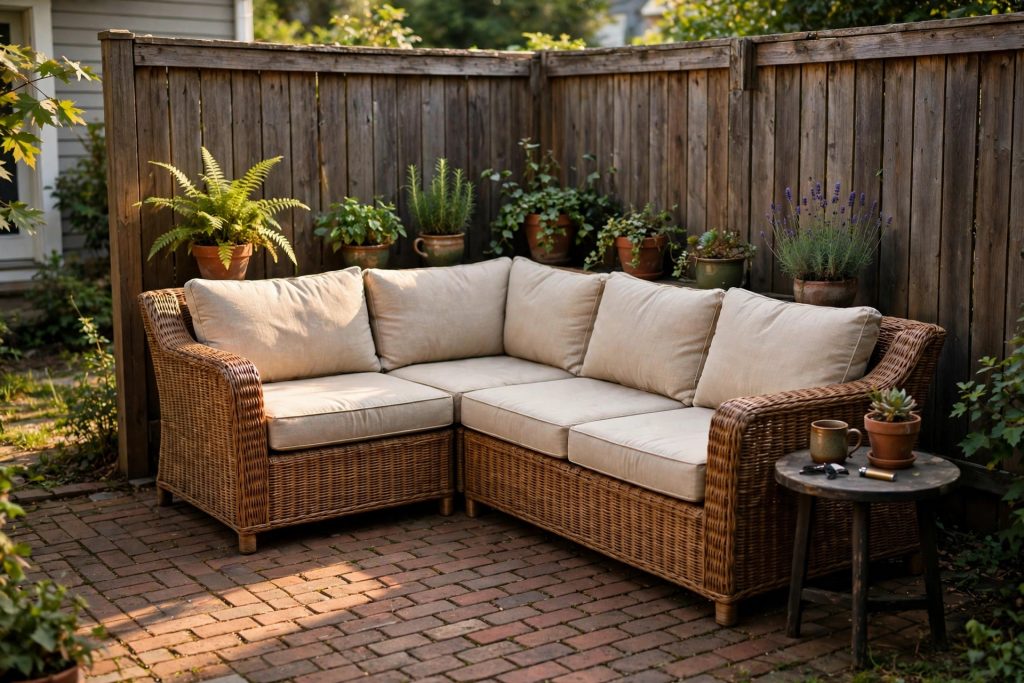
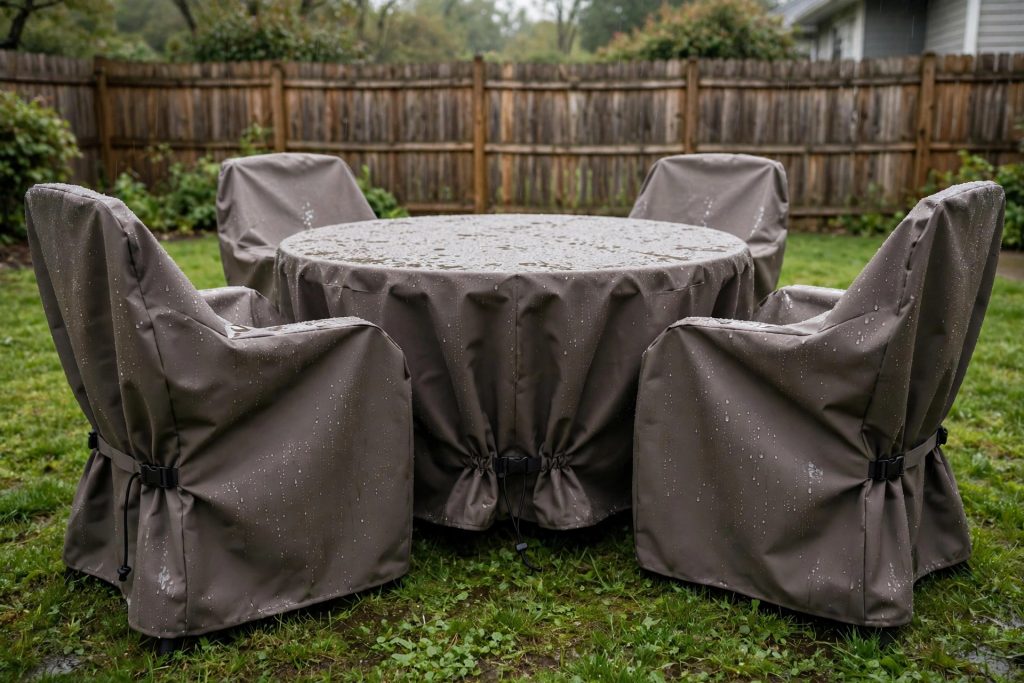
Many homeowners find that reupholster outdoor cushions is easier than they expected once they know the basics.
Most patio cushions fall into two types. Knowing which you have sets the whole project.
Zippered cushions have a removable cover that slips off the foam. These are the beginner's dream. You pull off the old cover, use it as a pattern, sew a new one, and zip it on. No tools beyond a sewing machine.
Stapled cushions have fabric sewn or stapled directly to the foam or a board. These take more work. You pry out the old staples, use the old fabric as a pattern, sew the new cover, then pull it tight and staple it back on with rustproof staples. One detailed guide to both types notes that the core workflow is the same after the cover comes off: trace, cut, sew, reattach.
Check your foam before you buy fabric. Squeeze it. If it springs back, it is good. If it stays dented or crumbles, replace it. High-density foam holds its shape longest, and outdoor cushion reviews can help you pick the right thickness if you need new inserts.
Pick the Right Fabric
Many homeowners find that reupholster outdoor cushions is easier than they expected once they know the basics.
The key to reupholster outdoor cushions is choosing the right approach for your space and budget.
Fabric makes or breaks this project. Indoor fabric will fade and mildew in one season outside. Buy fabric made for the outdoors.
Solution-dyed acrylic is the gold standard. Brands like Sunbrella weave the color all the way through the fiber, so it resists fading for years. It cleans easily and stands up to rain. It costs more than other options, but it lasts.
Outdoor polyester is the budget pick. It looks good and handles weather reasonably, though it fades faster than acrylic. Fine for covered porches or if you like changing colors often.
Vinyl is waterproof and wipes clean. It gets hot in direct sun and can feel sticky, but for poolside cushions it is hard to beat.
Buy from a fabric store that sells outdoor yardage, not the craft aisle. You need 54-inch wide goods. Measure your cushions first, then buy. A common rule is to add up the surface area of all panels plus seam allowances, then add ten percent for mistakes. Sailrite's fabric calculator, mentioned in sewing forums, does this math for you.
Choose a pattern that hides dirt. Small prints and textured solids forgive a lot. Big white cushions look great in photos and terrible by midsummer.
Tools and Supplies
The key to reupholster outdoor cushions is choosing the right approach for your space and budget.
With a little planning, reupholster outdoor cushions can fit even a busy schedule.
- Outdoor fabric
- UV-resistant polyester thread (regular thread rots in sun)
- Zippers made for outdoor use, or enough fabric for an envelope closure
- Seam ripper
- Fabric scissors or a rotary cutter
- Measuring tape and chalk or fabric marker
- Straight pins or fabric clips
- Sewing machine with a heavy-duty or denim needle
- Old cushion covers to use as patterns
On thread: this matters more than beginners expect. Threads magazine's outdoor fabric tips stress using thread rated for outdoor use, since standard thread breaks down in sunlight and your seams will pop within a season.
Step 1: Take Apart the Old Cover
With a little planning, reupholster outdoor cushions can fit even a busy schedule.
Before you start, it helps to understand how reupholster outdoor cushions works in real homes.
If the cover zips off, unzip it and slide out the foam. Set the foam aside somewhere clean and dry.
If the cover is stapled on, pull the staples with a staple remover or flat screwdriver. Work slowly. You want the old fabric intact because it becomes your pattern. Note how the pieces fit together before you take them apart. A quick phone photo of each step saves confusion later.
Open the seams with a seam ripper and lay the pieces flat. Press them with an iron on low if they are wrinkled. These are now your pattern pieces.
Step 2: Cut the New Fabric
Before you start, it helps to understand how reupholster outdoor cushions works in real homes.
A good plan for reupholster outdoor cushions saves time, money, and frustration.
Lay your pattern pieces on the new fabric. If the fabric has a directional print, keep all the pieces facing the same way.
Trace around each piece with chalk, then add a half-inch seam allowance all around. This extra half inch is what gets sewn. Skip it and the cover will be too tight to fit the foam.
Cut carefully. Outdoor fabric is thick and shifts. Pin the pattern to the fabric or weigh it down. A rotary cutter on a cutting mat gives the cleanest lines, but sharp scissors work fine.
Label each piece with chalk: top, bottom, front boxing, back boxing. When you have six rectangles that all look alike, labels prevent misery.
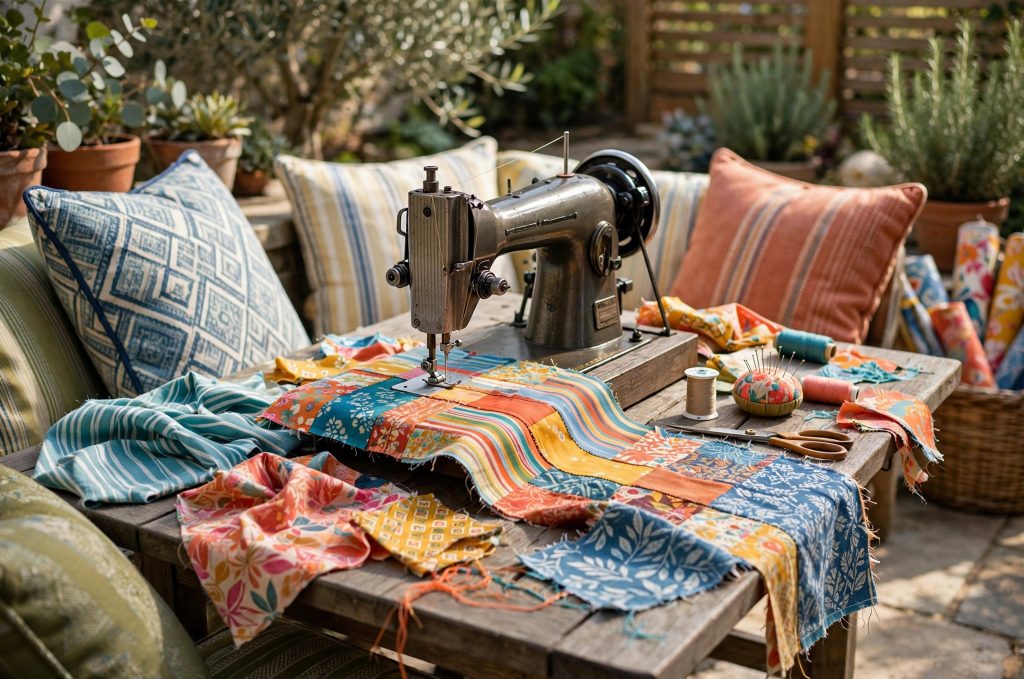
Step 3: Sew the Cover
A good plan for reupholster outdoor cushions saves time, money, and frustration.
For most people, reupholster outdoor cushions comes down to a few smart choices.
You are making a box cushion cover: a top plate, a bottom plate, and a boxing strip that wraps around the sides. Here is the order.
Sew the zipper first. Pin the zipper to one end of the boxing strip, right sides together, and sew it in. The zipper goes on the back or bottom edge where it will not show. If zippers scare you, make an envelope closure instead: overlap two fabric panels on the back like a pillow sham. No zipper needed, and it still looks tidy.
Join the boxing ends. Sew the short ends of the boxing strip together so it forms a loop. If you are adding piping for a tailored look, sandwich the piping cord between the boxing and the plate as you sew. Piping is optional. It looks sharp but adds fiddly steps.
Attach the top plate. Pin the boxing loop to the top plate, right sides together, easing around the corners. Sew with a half-inch seam. Go slow around corners. Clip the seam allowance at the corners so the fabric turns smoothly.
Attach the bottom plate. Repeat with the bottom plate, leaving the zipper open so you can turn the cover right side out later.
Turn and fit. Turn the cover right side out through the open zipper. Push out the corners. Slide the foam in. Zip it shut.
Sailrite's box cushion tutorial walks through this same sequence with video, and their quick box cushion method shows a faster variation that skips separate boxing strips.
No-Sew Options
For most people, reupholster outdoor cushions comes down to a few smart choices.
If you are new to reupholster outdoor cushions, start with the simplest option and build from there.
No sewing machine? You still have options.
Dye the old covers. If the fabric is faded but otherwise sound, fabric dye made for synthetics can bring back the color. Southern Living tested this approach and found that soaking in synthetic dye gives the most even results. It will not fix worn fabric, but it rescues faded color.
Envelope covers by hand. A simple envelope-style cover can be sewn by hand with a backstitch. It is slow but doable for a couple of cushions.
Outdoor fabric spray paint. Made for exactly this, it coats faded fabric with new color. It works best on light color changes and flat weaves. Test underneath first.
Hire the sewing. Many dry cleaners and alteration shops will sew cushion covers if you bring the fabric and the old covers as patterns. You do the measuring and shopping, they do the machine work. It still costs far less than new cushions.
Caring for Your New Covers
If you are new to reupholster outdoor cushions, start with the simplest option and build from there.
You just did the work. Protect it.
Brush off dirt weekly. Hose the cushions down now and then, or sponge them with mild soap and water. Sunbrella's care guide recommends cleaning the whole panel seam to seam to avoid water rings, and letting the fabric air dry.
Store cushions out of the rain when you can. A deck box or cushion storage bags keep them clean between uses and through the off-season. Covers that stay dry last years longer than covers that sit in puddles.
Reapply a fabric guard spray once a season to keep water beading. Clean the fabric first, let it dry, then spray in a ventilated spot.
When to Replace the Foam
When it comes to reupholster outdoor cushions, getting the details right makes all the difference.
Sometimes the fabric is not the problem. Foam wears out too. Replace it if the cushion stays flat when you get up, if it crumbles at the edges, or if it smells musty even after cleaning.
Buy high-density polyurethane foam rated for outdoor use. Wrap it in a layer of polyester batting before sliding it into the cover. The batting smooths the corners and makes the cushion look plump. Cut the foam slightly larger than the cover so the cover fits snug, not saggy.
Cost and Time Reality Check
Many homeowners find that reupholster outdoor cushions is easier than they expected once they know the basics.
A set of four dining chair cushions takes about three to four yards of fabric and one relaxed weekend, including learning time. A full sectional is a bigger project, maybe two weekends. The fabric is the main cost. Even with premium acrylic at full price, you will spend a fraction of what new cushions cost.
Start with one cushion. Make your mistakes on the least visible piece. By the third one you will be sewing like you have done it for years.
Finish the Look
New cushions deserve a pulled-together space. If your set needs more than new covers, browse our outdoor conversation sets for small decks for right-sized frames. And once the cushions look new, keep them that way with proper off-season storage. With these steps, reupholster outdoor cushions stays simple and safe.
References
- Advanced Textiles Association. (n.d.). How to make a quick and easy box cushion. https://www.textiles.org/video-library/how-to-make-a-quick-and-easy-box-cushion/
- Royal Comport. (n.d.). How to reupholster patio cushions yourself for cheap. https://royalcomport.com/want-to-reupholster-patio-cusions/
- Sailboat Owners Forums. (n.d.). Reupholster cushions. https://forums.sailboatowners.com/threads/reupholster-cushions.1249926118/
- Sailrite. (n.d.). DIY box cushion: How to make a vinyl box cushion. https://www.sailrite.com/how-to-make-box-cushion
- Sailrite. (n.d.). Make your own cushion: Box cushion with seamed corners. https://www.sailrite.com/box-cushion-seamed-corners
- Southern Living. (n.d.). How to make faded outdoor cushions look like new. https://www.southernliving.com/how-to-make-faded-outdoor-cushions-look-like-new-12030132
- Sunbrella. (n.d.). Upholstery care and cleaning guide. https://d17dfdys9mu8rp.cloudfront.net/sunbrella-upholstery.pdf
- Threads Magazine. (n.d.). Tips for outdoor fabric. https://www.threadsmagazine.com/forum/tips-for-outdoor-fabric
Was this guide helpful?

About My Garden US
The My Garden US editorial team writes practical, in-depth home and garden guides for American homeowners — tested advice, no fluff.
You May Also Like

Patio Furniture for Rooftop Deck Ideas: A Complete Guide
September 29, 2026 19 views
Outdoor Bar Height Chairs Set of Four: A Plain Guide for Your Patio
May 22, 2026 15 views
How to Pick the Best Patio Door Screen for Dogs
February 22, 2026 18 views