
Many people in California decide to buy closet organizer systems online in California instead of driving to a store. It is easy to see why. You can compare many designs at your kitchen table, read reviews from other buyers, and have the boxes shipped to your door. But buying online also takes care. You cannot touch the parts before you pay. You must trust the measurements, the pictures, and the return rules. This guide walks you through the whole process in plain terms. It covers why these systems matter, what to look for, the main types, what they cost, how to care for them, and how to stay safe during setup.
Why a Closet Organizer System Matters
A closet without a plan wastes space. Clothes pile up. Shoes hide in corners. Belts and ties end up in drawers where they get bent out of shape. A good organizer system gives every item a place. When you buy closet organizer systems online in California, you are really buying time. You get dressed faster in the morning. You find what you need without a search. You also protect your clothes, since proper hanging and folding keep their shape longer.
There is also the money side. Replacing clothes that were ruined by bad storage costs money. A crushed suit or a scuffed pair of shoes could have lasted years with the right shelf or hook. An organizer system pays for itself in this quiet way. It also helps resale. A tidy, well-fitted closet is one of the first things a buyer notices in a bedroom. Realtors in California often point out good closets in listings because buyers ask about storage.
For renters, the gain is comfort. Even a small rental closet feels bigger when it is organized. Many systems come out cleanly when you move, so you do not lose your deposit. For owners, a fixed system adds lasting value to the home. Either way, the result is a calmer room and a calmer start to the day.
What to Look for Before You Order: Buy Closet Organizer Systems Online in California
Ordering a system online means you are the measurer, the planner, and the judge. Take care with the details below, and you will avoid most problems.
Measure the closet first. Take a tape measure and write down the width, height, and depth of the inside of the closet. Note where the door swings. Note where vents, outlets, or light switches sit. Online sellers list their systems in inches. If your numbers are off by even one inch, a shelf may not fit. Measure twice and write the numbers on paper. Many shoppers who buy closet organizer systems online in California find that the shipping wait is short, but a wrong size means a long return trip. Good numbers prevent that.
Check the wall material. Most homes in California have drywall. Heavy shelves and rods need anchors or screws that bite into studs. Look at what the maker includes in the box. Some kits include only light anchors. You may need to buy stronger ones yourself. If your walls are plaster or concrete, you will need a drill and the right bits. Think about this before the boxes arrive.
Read the weight limits. Every shelf and rod has a weight limit. A shelf rated for 15 pounds will bow under a pile of jeans. Rod brackets have limits too. Check the limits in the product page and compare them to what you plan to store. Heavy winter coats and bags need stronger parts than summer shirts.
Study the photos and diagrams. Real photos from buyers are worth more than studio shots. Look at the close-ups of joints, brackets, and finishes. Diagrams show how parts connect. If the page has no clear diagram, be cautious. A well-made product is usually shown in detail.
Check the return policy. Read the return window, who pays return shipping, and whether the item must be unopened. Some large systems are costly to ship back. Know the terms before you click buy. Sites like Wayfair and IKEA publish clear return rules, and Consumer Reports offers broad buying advice on home goods.
Types of Closet Organizer Systems
Systems fall into a few main groups. Each has strengths. Pick the one that fits your closet, your budget, and your skills.
Wire systems. These use coated metal rods and shelves. They are light, cheap, and easy to adjust. Air moves through them, which helps clothes stay fresh. The downside is that folded clothes can get lines from the wires, and small items can tip through the gaps. Wire systems suit walk-in closets and laundry rooms well.
Laminate and wood systems. These use flat panels that look like wood or painted wood. They feel solid and look neat. Shelves hold heavy loads without sagging. You can add drawers, doors, and trim to match your room. They cost more and are heavier to hang. Many are the best pick for a main bedroom closet. Advice on finishes and design ideas often appears at The Spruce and Apartment Therapy.
Freestanding units. These stand on their own feet and need no wall screws. They work well for renters and for closets with odd walls. You can move them when you move. The trade-off is that they hold less weight than wall-fixed systems and can wobble if loaded unevenly. If you are also shopping for movable storage, you may like this guide to buy rolling storage carts online in Florida.
Custom-fit modular systems. These are kits of parts you mix and match: towers, rods, shelves, and drawers. You plan the layout online with a tool, then order the exact parts. This gives a near-custom result at a lower price than a full custom job. It takes more planning. Read the planning guide twice.
Small add-ons. Not every job needs a full system. Shelf dividers, over-door hooks, hanging shelves, and freestanding wardrobe closets can fix a closet for little money. These are good for a first step or a tight budget.
Cost and Price: What You Will Pay
Prices range wide. A simple wire kit for a small reach-in closet may cost 60 to 150 dollars. A mid-range laminate system for a walk-in closet often runs 300 to 800 dollars. Full custom-looking systems with drawers and doors can reach 1,500 to 3,000 dollars or more. Shipping to California is often free over a set order total, but large boxes may carry a freight fee. Check the shipping line before you pay.
Watch for these extra costs. Delivery to a second floor may cost more. White-glove delivery, where the crew brings boxes inside, adds a fee. If you hire a handyman to install it, add 150 to 500 dollars depending on the size of the job. Tools you do not own, like a stud finder or a level, add a little more.
To keep costs down, compare the price per linear foot of hanging space. Two systems at the same price can give very different amounts of storage. Sales are common around holidays, so if you can wait a month, you may save. Read reviews that mention long-term use. A cheap system that sags in a year is no bargain. The Home Depot and Lowe’s list many systems with price filters that make this comparison easier.
How to Plan Your Layout
Start with an empty closet. Take everything out. This is the only way to see the true space. Then sort your clothes into groups: long hang, short hang, folded, shoes, and extras like bags. Count the hangers in each group. This tells you how much rod space you need.
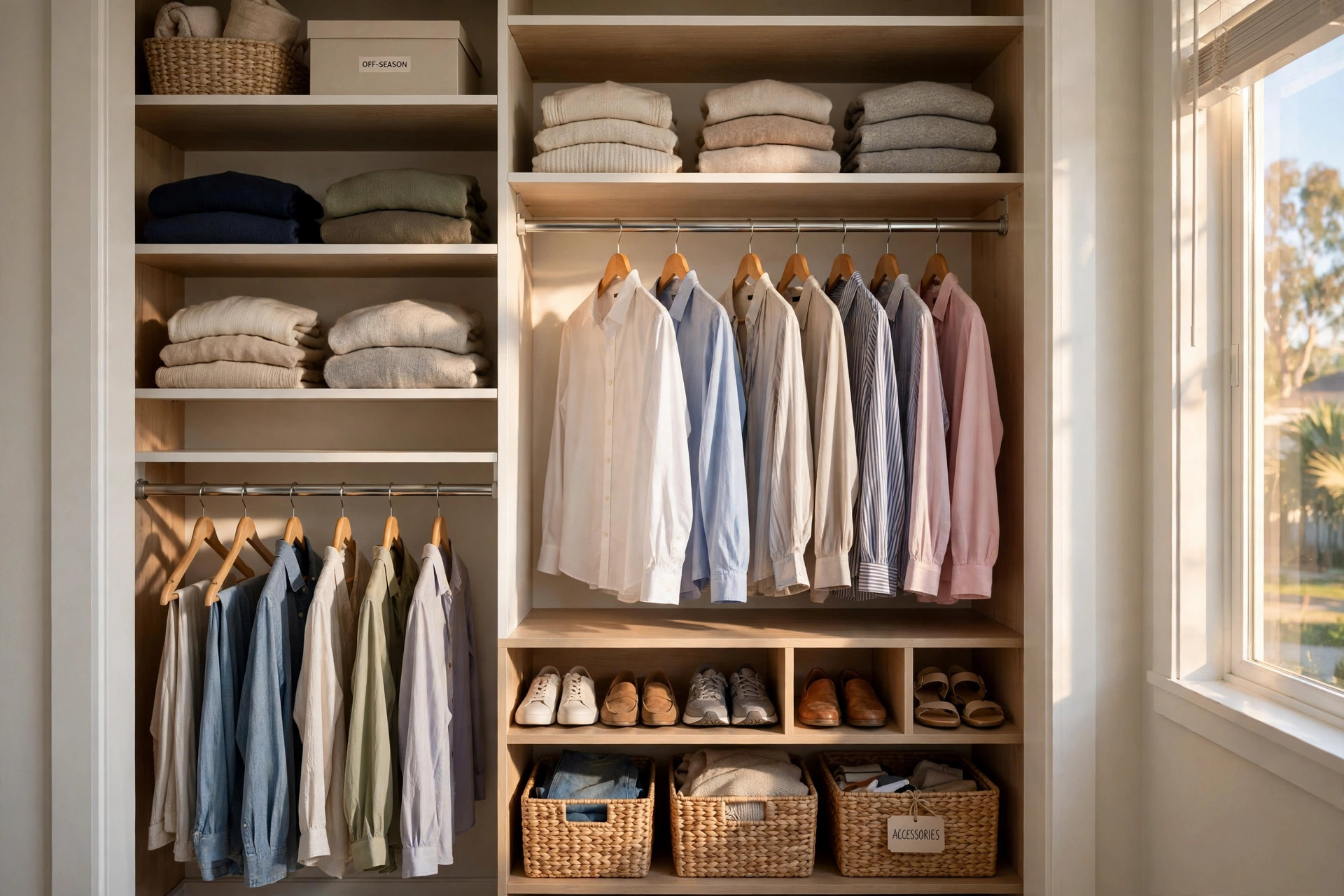
A common layout puts double-hang rods on one side for shirts and pants, a single high rod on the other side for dresses and coats, shelves above for less-used items, and drawers or baskets below for small things. Leave a few inches of air at the ends so doors close. If you share the closet, split it down the middle and give each side its own rods.
Draw the plan on paper with your measurements. Mark where each part goes. Then match your plan to the kit you want to buy. Most makers show the finished size of each unit. Make sure the parts fit your paper plan before you order. If the site has a free design tool, use it. It will catch mistakes like a shelf that is too deep for the closet. For step-by-step how-to help, Family Handyman and Bob Vila both publish closet planning guides.
Delivery and Setup in California
When you buy closet organizer systems online in California, delivery is usually fast. Most orders arrive in three to seven business days. Big metro areas like Los Angeles, San Francisco, and San Diego often get quicker service. Rural areas may take longer. Track your package and be home for large boxes, since carriers may not leave them at the door.
Open the boxes right away. Check every part against the parts list. Count screws and brackets. If a part is missing or broken, report it at once. Most sellers ship replacement parts free, but only if you report the problem soon. Keep the packaging until the job is done, in case you need to return something.
For setup, read the manual fully before you lift a tool. Lay out all parts in order. Mount the horizontal rails first and check them with a level. Then add the vertical pieces, shelves, and rods. Work with a partner for long rails; they are hard to hold alone. If you are drilling into tile or concrete, wear eye protection and go slow. Take breaks. Rushing causes crooked shelves.
Care and Upkeep
A closet system needs little care, but a little care keeps it strong for years. Dust shelves once a month. A damp cloth is enough for most finishes. Do not soak laminate panels; water can seep into the edges and cause swelling. For wire systems, wipe the coating gently and check for chips that could snag clothes.
Once a year, check the screws and brackets. Houses settle and screws loosen. Tighten anything that has worked free. Look at the shelves for sag. If a shelf bows, move heavy items off it and add a center support bracket. Keep the load under the rated weight. This is the main rule for a long life.
Keep the closet aired. California homes can get warm, and closed closets trap heat. Leave the door open now and then. A small moisture absorber helps in damp rooms. This care keeps clothes fresh and the system sound. If you store sports gear nearby, a separate sports equipment organizer keeps bulky items out of your clothing space.
Safety Notes
Safety matters more than speed. Always find wall studs before hanging heavy parts. A shelf that pulls out of drywall can hurt someone and ruin the wall. Use a stud finder and mark the studs with tape. If you cannot hit a stud, use heavy-duty toggle anchors rated for the load.
Wear safety glasses when drilling. Keep small screws away from children and pets. Do not let children climb on shelves or hang from rods. Rods are for clothes, not for play. If the system has tall towers, anchor them to the wall so they cannot tip. This is vital in homes with small children.
Check for recalls. Rarely, a maker recalls a bracket or a tower. The Container Store and other large sellers post recall notices on their sites. If your parts list matches a recall, stop and get the free fix before you hang anything.
Common Mistakes to Avoid
The first mistake is skipping the measure step. The second is buying for looks alone. A pretty system that cannot hold your wardrobe is a waste. The third is ignoring the depth. A shelf that is two inches too deep can block the door. The fourth is overloading. Spread heavy items across many shelves, not one. The fifth is throwing away the manual. Keep it in a drawer; you will need it when you move a shelf later.
Another common error is ordering before clearing the closet. You cannot plan around piles. Clear it, sort it, then order. This order of work saves money because you buy only what you need. Shoppers who follow this order rarely need to return parts.
Frequently Asked Questions
How long does delivery take when I buy closet organizer systems online in California? Most orders arrive in three to seven business days. Large systems may ship by freight, which can add a few days. Check the estimated date on the product page before you pay.
Can a renter install these systems? Yes. Choose freestanding units or systems that use a few small holes you can patch later. Ask your landlord first. Many landlords allow small holes if you fill them at move-out.
Do I need special tools? A tape measure, a level, a stud finder, a drill, and a screwdriver cover most jobs. Some kits need a saw to trim a rail. Check the tool list in the manual before the boxes arrive.
What is the best system for a small reach-in closet? A wire kit or a small laminate set with double-hang rods works well. Add a top shelf for boxes and a shoe rack below. Keep the depth under 14 inches so the door closes.
Are online prices lower than store prices? Often yes, because online sellers run frequent sales. But add shipping and possible return costs to the true price. Compare the full cost, not just the sticker price.
What if a part arrives broken? Do not install it. Take a photo and contact the seller at once. Most sellers ship a free replacement. Keep the box until the claim is closed.
A Final Word
To buy closet organizer systems online in California is to take control of a small but daily part of life. Measure well, pick a system that fits your load, read the return rules, and install with care. The result is a closet that works as hard as you do. Start with your measurements today, and by next week your mornings can be simpler.
References
Apartment Therapy. (n.d.). Home design ideas and inspiration. https://www.apartmenttherapy.com Bob Vila. (n.d.). Home improvement advice. https://www.bobvila.com Consumer Reports. (n.d.). Product reviews and ratings. https://www.consumerreports.org Family Handyman. (n.d.). DIY home repair and maintenance. https://www.familyhandyman.com IKEA. (n.d.). Home furnishings. https://www.ikea.com Lowe’s. (n.d.). Home improvement products. https://www.lowes.com The Container Store. (n.d.). Storage and organization products. https://www.containerstore.com The Home Depot. (n.d.). Home improvement products. https://www.homedepot.com The Spruce. (n.d.). Home and garden advice. https://www.thespruce.com Wayfair. (n.d.). Furniture and home goods. https://www.wayfair.com
Was this guide helpful?

About Jennifer Lee
The My Garden US editorial team writes practical, in-depth home and garden guides for American homeowners — tested advice, no fluff.
You May Also Like

Wall Mounted Storage Shelves: A Price Comparison Guide for the USA
September 24, 2026 0 views
Top Rated Craft Room Storage Cabinets: A Buying Guide
May 29, 2026 0 views
How to Buy Heavy Duty Wire Shelving Online in Florida
May 7, 2026 0 views