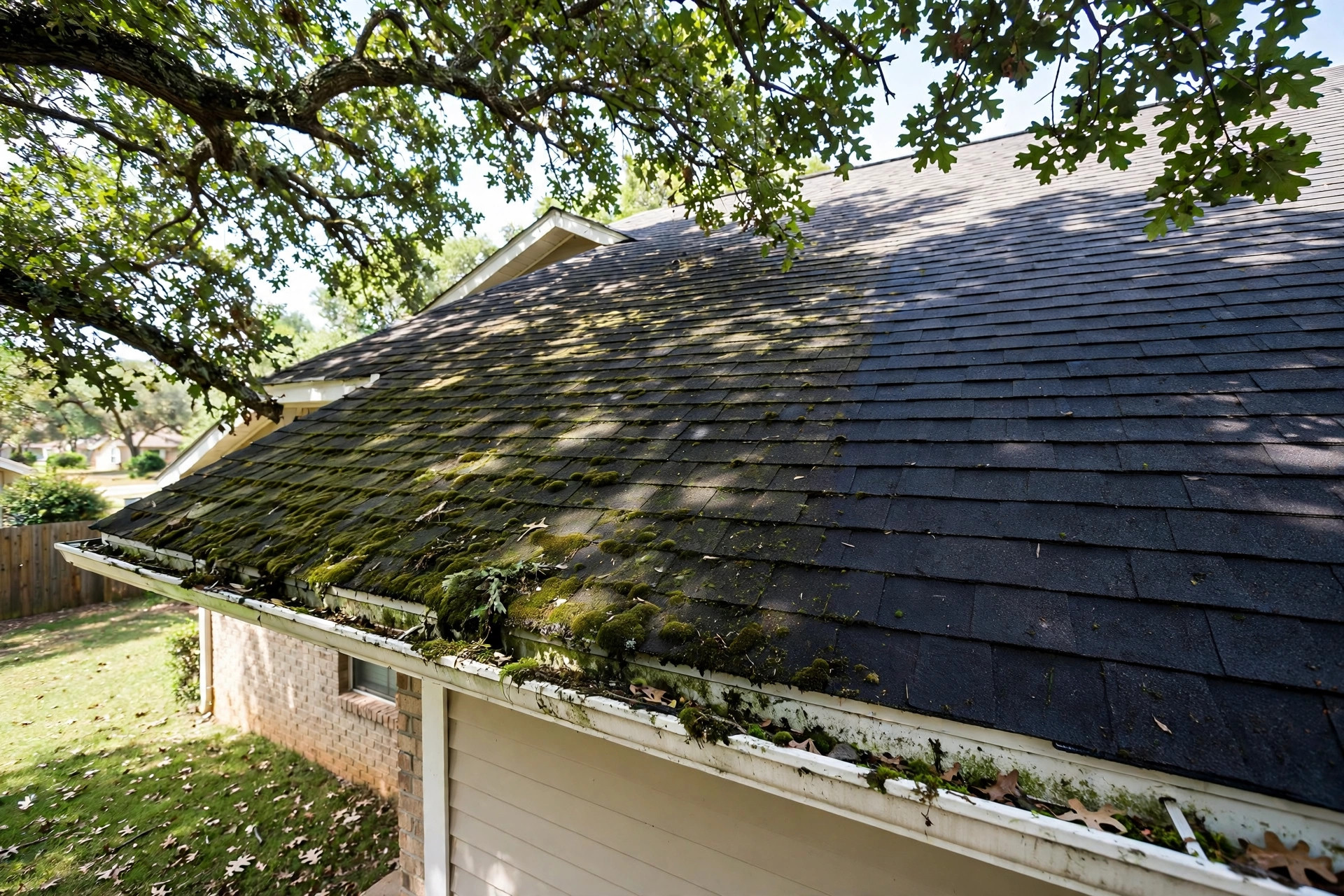

Many Texas homeowners believe moss is a problem for the rainy Pacific Northwest, not for the Lone Star State. The truth is different. In the piney woods of East Texas, in the hill country west of Austin, and in the older neighborhoods of Houston and Dallas where big oak trees shade the rooftops, moss grows with quiet speed. Once it takes hold, it does more than change the color of your roof. It traps water against the shingles, and over time it can shorten the life of the roof itself. That is why reliable roof moss removal services in texas matter to so many families across the state. A good service does not just wash the green away. It clears the growth at the root, protects the shingle surface, and leaves the roof in a state that resists new growth for years.
This guide explains why moss grows on Texas roofs, how to choose a service you can trust, what the work costs, and how to keep the roof clean after the crew leaves.
Why Moss on a Texas Roof Deserves Attention
Moss is a simple plant. It has no roots and no flowers. It spreads by spores that drift on the wind and settle wherever moisture lingers. A roof gives moss almost everything it asks for. Shingle surfaces hold morning dew. Shaded slopes stay damp long after the rain stops. Dust and leaf matter gather in the valleys and feed new colonies.
Texas may be hot, but it is not dry everywhere. East Texas sees heavy rain through much of the year. Houston and the Gulf Coast bring heat and humidity together, which is the exact recipe moss prefers. Even in drier parts of the state, a roof under a heavy tree canopy can stay shaded and cool enough for moss to grow.
The harm moss causes is slow and easy to miss. Each moss cushion works like a small sponge. It holds rainwater against the shingle surface for days. With each wet and dry cycle, the shingle edges lift a little more. Granules wash off the asphalt shingles. The Environmental Protection Agency notes that damp building materials invite decay, and a roof that stays wet is no exception.
Moss also hides other trouble. It can cover cracked shingles, loose flashing, and early spots of rot. When a homeowner or an inspector cannot see the surface, small problems grow into big ones. Removing the moss brings the roof back into view so that needed repairs can be found in time.
How to Choose a Reliable Roof Moss Removal Service: Reliable Roof Moss Removal Services in Texas
Texas has no statewide license for roof cleaning, so the quality of work varies widely from one company to the next. Some firms do careful, gentle work. Others blast roofs with high pressure and leave the shingles worn thin. Choosing well takes a little homework, but it pays for itself in a roof that lasts longer.
What to Look For
Start with proof that the company is real. A reliable firm carries liability insurance and can show a certificate on request. Insurance protects you if a worker is hurt on your property or if equipment damages the house. The company should also have a physical address and a working phone number, not just a social media page.
Experience with Texas roofs matters more than general cleaning experience. A company that knows how Texas heat, humidity, and storm seasons wear on asphalt shingles will treat the surface with proper care. Look for firms that describe their method in plain terms on their website. If a company cannot say how it cleans a roof, that is a warning sign.
Good reviews help, but read them with care. Look for reviews that mention towns near you, and for comments about how the crew handled gutters, plants, and cleanup.
Questions to Ask Before You Hire
Ask each company the same questions and write down the answers:
1. Do you use soft washing or high-pressure washing on the roof? 2. What products do you apply to kill the moss at the root? 3. How do you protect my plants, gutters, and downspouts? 4. Will you show me photos of roofs you have cleaned in my town? 5. What is the total price in writing, and what does it include?
A trustworthy company answers these questions without hesitation and puts the price in writing. If a cleaner promises that pressure washing is safe for shingles, look elsewhere. The shingle makers themselves, including GAF and Owens Corning, warn against high pressure on asphalt shingles.
Types of Roof Moss Removal Methods
There are three common ways to clean moss from a roof. Each has its place, and a reliable service will choose the method that fits your roof type and the weight of the growth.
Soft washing is the standard method recommended by most roof experts. The cleaner applies a cleaning mix at low pressure, similar to the flow of a garden hose. The mix kills the moss, lichen, and algae down to the root. After a dwell time, the residue is rinsed away gently. Soft washing does not strip the shingle granules, and it is the method most shingle makers approve. It also reaches under shingle edges where moss likes to hide.
Hand removal with brushes is used for heavy moss that has formed a thick mat. The worker uses a soft brush to sweep the loose moss away after it has been treated and killed. The key word is soft. Stiff wire brushes score the shingle surface and take years off the roof. A careful crew brushes only in a downward motion and stops if the granules start to come loose.
Zinc or copper treatment strips are not a cleaning method but a prevention tool. Metal strips are fixed near the roof ridge. Rain carries tiny amounts of metal down the roof, and moss and algae cannot grow in the treated path. Many Texas homeowners ask for these strips during a cleaning visit.
What should be avoided is high-pressure washing on shingles. A pressure washer can cut through the asphalt layer and leave the shingle bare. Damage from pressure washing may not show for months, but when it shows, the repair is costly. Consumer Reports has long advised readers to treat roofs gently, and the same care applies to Texas roofs.
Cost and Price of Roof Moss Removal in Texas
Prices vary by the size of the roof, the steepness of the slope, and how much moss has grown. A small ranch house with light growth costs far less than a two-story home with a steep roof and a heavy moss mat.
Across Texas, most homeowners pay between $250 and $600 for a standard moss removal on an average single-story roof. Larger or steeper roofs can run $600 to $1,200 or more. If the roof also needs a full soft wash for algae stains, the price may rise by another $150 to $300. Adding zinc strips usually costs $100 to $250 for the materials and labor.
Get at least three written quotes. Be wary of any price that seems too low. A rock-bottom price often means the crew plans to rush the job with a pressure washer and move on. Also watch for vague quotes that list only a total with no detail. A clear quote names the method, the products, the areas to be cleaned, and what happens if it rains on the work day.
Payment terms should be fair. A deposit of ten to twenty percent is normal for scheduling. The balance is due when the work is done and you have walked the property with the crew. Never pay the full amount before the work starts. Many homeowners bundle roof work with other exterior jobs, and it helps to compare pricing, such as how window cleaning companies set their rates.
Care and Upkeep After the Cleaning
A clean roof does not stay clean on its own. The steps below are simple, and they stretch the time between cleanings.
Trim the tree limbs. Shade and leaf litter are the main causes of moss on Texas roofs. Keep branches at least six feet back from the roof line. This lets sunlight dry the shingles after rain and keeps leaves out of the gutters.
Keep the gutters clear. Full gutters spill water back onto the roof edge. Clean the gutters twice a year, once after the spring storms and once after the fall leaf drop. Family Handyman offers practical guides for safe gutter cleaning, and seasonal home upkeep guides from This Old House cover the same routine any homeowner can follow.
Remove leaves from roof valleys. A leaf blower used at low speed works well. Work from the ridge down so that debris falls off the roof instead of being driven under the shingles.
Check the roof twice a year. Walk around the house in spring and fall and look at the roof with binoculars. Watch for green patches in shaded spots, for lifted shingle edges, and for dark streaks that signal algae. Catching moss early means a light treatment instead of a full cleaning.
Consider prevention strips. If your roof grew moss once, it is likely to grow it again. Zinc or copper strips near the ridge are a proven way to slow regrowth. Ask your cleaning company about them while the crew is already on the roof.
Between cleanings, some homeowners also take care of related jobs at the same time. Simple upkeep tasks such as mold removal on siding and patios and scheduling pest control visits around the home help keep the whole property in good shape, and household cleaning guides from Good Housekeeping lay out easy schedules for the rest of the house.
Safety Notes for Texas Homeowners
Roof work is dangerous. Falls are one of the leading causes of injury around the home, and a wet, moss-covered roof is slippery beyond what most people expect. Do not climb onto the roof to scrape or spray moss yourself unless you have proper safety gear and training.
The cleaning products used against moss also need respect. Many contain bleach or similar agents that can burn eyes and skin and can harm plants and pets if they run off carelessly. A professional crew covers landscaping, collects the rinse water at the downspouts, and keeps pets and children away from the work area. If you treat small patches yourself, wear gloves and eye protection, keep the mix off the plants, and follow the label exactly.
Heat is another Texas factor. Roof surfaces in summer can reach temperatures that burn skin on contact. Schedule cleaning work for the cooler months or for early morning hours, and make sure any crew you hire brings water and takes shade breaks.
Frequently Asked Questions
How often does a Texas roof need moss removal? Most roofs need attention every two to three years in shaded or humid areas, and less often in open, sunny spots. After the first professional cleaning and prevention treatment, many homeowners find they only need a light check each spring.
Can moss damage my roof in one season? One season of light moss rarely causes real harm. The damage builds up over years as the moss holds moisture against the shingles through many wet and dry cycles. That is why regular checks matter more than panic over a few green spots.
Will cleaning void my shingle warranty? It can if the method is wrong. Most shingle makers allow gentle cleaning but forbid high-pressure washing. Keep the written method from your cleaning company and your warranty papers together. The National Roofing Contractors Association recommends following the shingle maker’s care rules to protect the warranty.
Is the cleaning safe for my plants and pets? It is safe when the crew takes the right steps. Plants near the house should be watered first and covered with tarps during the wash. Pets should stay indoors until the rinse water has dried. Ask your company to describe its plant and pet protection plan before the work starts.
Can I just let the moss die on its own in a Texas summer? Heat alone will not kill moss that has a hold on a shaded roof. Some of the surface may brown in August, but the base of the plant survives and greens up again with the fall rains. A proper treatment kills it down to the root.
Should I replace my roof instead of cleaning it? Cleaning is enough for most moss cases. Consider replacement only if the roof is near the end of its rated life, if shingles are curling or missing granules across wide areas, or if leaks have already started. A home guide like The Spruce can help you tell the difference between a roof that needs cleaning and one that needs replacing.
A Final Word
Moss on a Texas roof is common, but it is not harmless. Left alone, it shortens the life of the shingles and hides damage that only gets worse with time. The good news is that the fix is simple and well proven. A reliable roof moss removal service in texas will kill the growth at the root, rinse the roof gently, and set you up with prevention that lasts for years. Choose a company that is insured, that explains its method in writing, and that treats your shingles with the care they deserve. With a little upkeep between visits, your roof can stay clean, dry, and strong for a long time to come.
References
Consumer Reports. (n.d.). Product reviews and ratings. https://www.consumerreports.org Family Handyman. (n.d.). DIY home repair and maintenance. https://www.familyhandyman.com GAF. (n.d.). Roofing shingles and materials. https://www.gaf.com Good Housekeeping. (n.d.). Product reviews and home advice. https://www.goodhousekeeping.com National Roofing Contractors Association. (n.d.). Roofing industry standards. https://www.nrca.net Owens Corning. (n.d.). Roofing and insulation products. https://www.owenscorning.com The Spruce. (n.d.). Home and garden advice. https://www.thespruce.com This Old House. (n.d.). Home renovation guidance. https://www.thisoldhouse.com U.S. Environmental Protection Agency. (n.d.). Protecting human health and the environment. https://www.epa.gov
Was this guide helpful?

About David Wilson
The My Garden US editorial team writes practical, in-depth home and garden guides for American homeowners — tested advice, no fluff.
You May Also Like

Cordless Handyman Services for Homeowners Near Me: A Practical Guide
June 21, 2026 0 views
Upholstery Cleaning Machines Reviews and Buying Guide
January 23, 2026 0 views
Pet Hair Removal Tools Reviews and Buying Guide
August 13, 2026 0 views