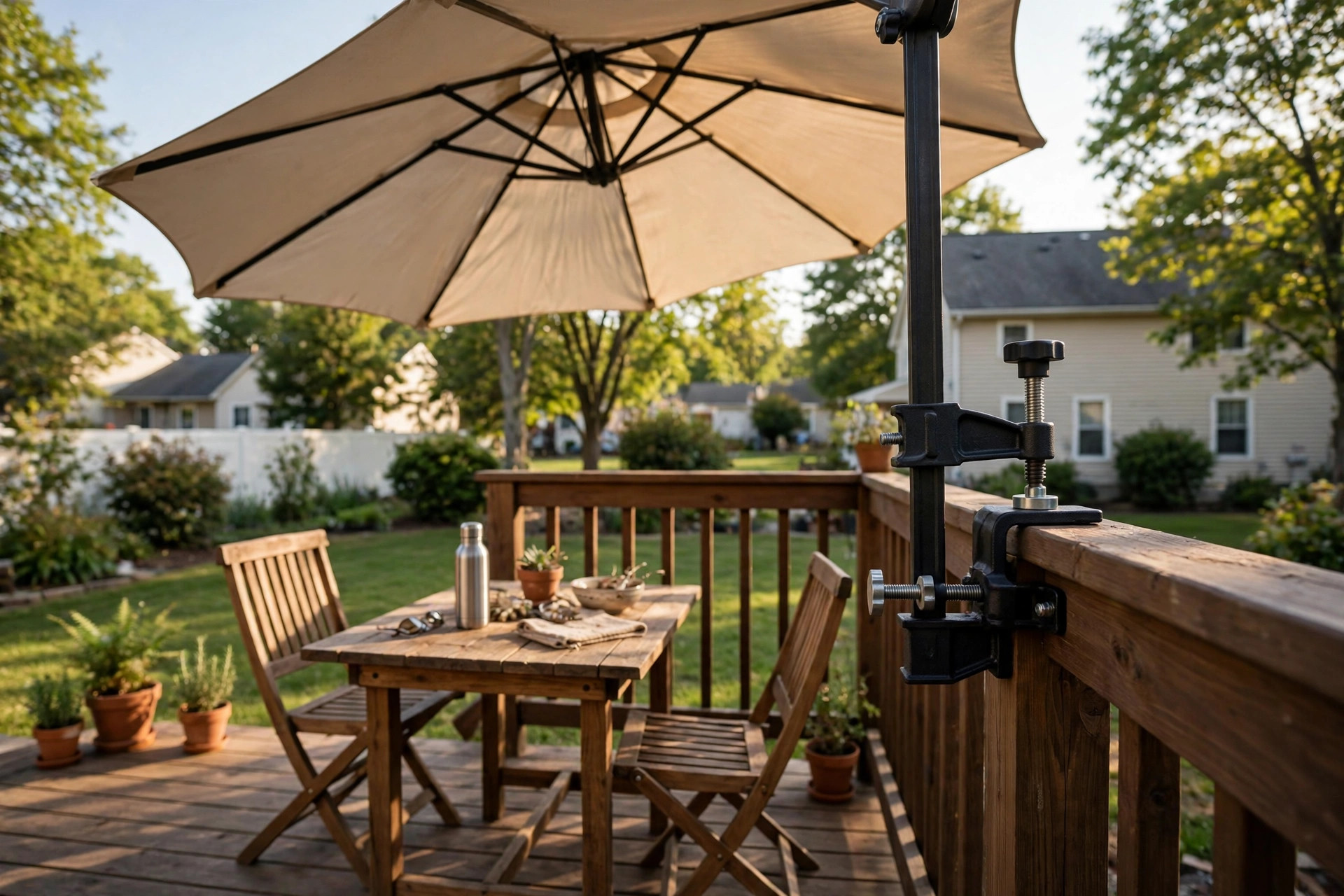

A patio umbrella stand for deck railing is a small holder that fixes to the top rail of a deck. It holds a patio umbrella where a normal heavy base will not fit. Many American decks have no free floor space. A railing mount solves this problem. It clamps to the rail, holds the pole, and gives shade over a table or chairs. This guide explains how it works, what to look for, what it costs, and how to keep it safe.
Why It Matters
Shade makes a deck usable. On a hot afternoon, direct sun can make deck boards too warm to touch. It fades chair cushions and warps table tops. A large umbrella fixes this, but a standard umbrella base is heavy and wide. On a small deck, it eats up floor space. Some decks have built-in benches that leave no room for a base at all.
A railing stand uses space you do not need. The top rail of the deck becomes the anchor. The umbrella sits off to the side of the seating area. Wind flows under it. Rain runs off away from the chairs. This is why railing stands have grown popular with city homes, town houses, and any deck under two hundred square feet.
There is a comfort gain too. The umbrella hangs higher than on a table mount. You do not bump your head. The shade moves with the sun when you loosen the tilt. For the price, few patio add-ons change a deck as much.
How It Works: Patio Umbrella Stand for Deck Railing
A railing stand has two parts. The clamp grips the deck rail. The socket holds the umbrella pole. Most designs use a screw-down jaw with rubber pads. The pads protect the rail from scratches. The socket fits standard umbrella poles, which measure about one and a half inches across. A set screw or thumb screw locks the pole in place.
The whole unit weighs three to eight pounds. It mounts in minutes with no tools beyond what comes in the box. You slide it onto the rail, tighten the clamp screws, drop in the umbrella pole, and tighten the socket. Some models tilt. Some rotate a full circle. The better ones do both.
Types and Options
Railing stands come in four main styles. Each suits a different deck.
Clamp-on stands
These are the most common. Two jaw plates close around the rail from above and below. They fit rails two to six inches wide. They work on wood, composite, and metal rails. Most use powder-coated steel or cast aluminum. They cost less than the other types and mount fastest.
Bolt-through stands
These replace two short screws in the rail cap with longer bolts that pass through the stand bracket. They hold the most weight. They are the right choice for large umbrellas over nine feet wide. The trade-off is two small holes in the rail cap. On composite rails, use the bolts the maker supplies.
Balcony rail adapters
These hook over the rail and rest against the balusters. They suit decks with thin metal rails, like many apartment balconies. They carry less weight than clamp stands. Use them only with umbrellas under eight feet.
Table-height pole holders
These clamp to the rail and rise to table height. They let a free-standing umbrella rest in them without a base. They are simple but limited. The umbrella can lift out in a gust, so they suit calm, sheltered spots only.
Pole diameter matters across all types. Measure your umbrella pole before you buy. Most sockets take one and three-eighths to one and five-eighths inches. Adapters exist for smaller market poles, but a tight native fit is always safer.
What to Look For When You Choose
Start with the rail. Measure the width of your top rail and note its shape. Flat rail caps are easy. Rounded or beveled caps need a clamp with deep jaws. Take a photo of the rail cross-section when you shop. It saves a return.
Check the material. Cast aluminum resists rust and weighs little. Powder-coated steel is strong but needs touch-up paint where the coating chips. Stainless steel hardware matters most. The screws and bolts live in rain and sun all year. Cheap zinc screws rust within one season.
Look at the grip pads. Rubber or silicone pads keep the clamp from sliding and stop it from marking the rail. Felt pads wear through fast. Replaceable pads are a good sign of a well-made stand.
Weight rating is the number that counts. Makers list a maximum umbrella size, often seven and a half or nine feet. Treat these as fair-weather ratings. In wind, an umbrella is a sail. A nine-foot canopy can pull hard enough to bend a cheap clamp. When in doubt, pick the stand one size stronger than you think you need.
Tilt and rotation help daily use. A tilt joint lets you angle the canopy against low sun. A rotation ring lets you swing the shade around the table. Both add moving parts, so check that the locks are metal, not plastic. Plastic locks crack after two summers.
Finish should match your deck. Black and bronze suit most rails. White suits vinyl rail systems. A powder coat that is thick and even lasts longer. Thin paint flakes at the edges of the jaws first.
Cost and Price
Most railing stands sell between twenty and eighty dollars. Simple clamp models sit at the low end. Bolt-through and tilt models sit at the high end. Prices track material more than brand. Cast aluminum with stainless hardware costs more and lasts longer.
Umbrellas are a separate cost. A seven-and-a-half-foot market umbrella runs forty to one hundred dollars. A nine-foot model with tilt runs eighty to two hundred. Pair a good stand with a mid-range umbrella for the best value. There is no sense in a hundred-dollar stand holding a twenty-dollar umbrella.
Replacement parts are cheap. Pad kits run under ten dollars. Stainless bolt sets run five to fifteen. Keep the box and the instructions. In three years, when a pad wears out, you will want the part number.
Buy from a shop with easy returns. Fit is the main risk. A stand that almost fits your rail is useless. Online stores like Wayfair and IKEA carry many models and take returns without fuss. Product reviews at Consumer Reports can help you compare build quality before you order.
Care and Upkeep
A railing stand needs little care. Wipe it down in spring when you set out the deck furniture. Check the clamp screws for tightness once a month in the season. Vibration from wind loosens them.
Oil the moving parts once a year. A drop of light machine oil on the tilt joint and the set screw threads stops rust. Do not use cooking spray. It turns gummy in heat.
Touch up chipped paint with matching outdoor spray paint. Bare metal rusts, and rust stains the rail. A small bottle of touch-up paint costs little and lasts for years.
Take the umbrella down in winter. Leave the stand clamped if it is aluminum and the hardware is stainless. Remove steel stands for the winter in wet climates. Store them dry in a garage or shed. Freezing rain gets into small joints and cracks cheap castings.
Check the pads each spring. Sun and heat harden rubber over time. Hard pads slip. New pads cost little and restore the grip. This is the most ignored maintenance task on a deck, and it takes five minutes.
Safety
Safety is not a footnote here. A loose umbrella in wind is dangerous. It can lift off, fly across the yard, and hurt someone. Every year brings news of such accidents. A railing stand is only as safe as its mount.
Close the umbrella when you leave the house. This is the single most important rule. No stand, however strong, holds an open umbrella in a storm. Wind gusts multiply the force on the canopy. What felt solid at noon can fail at midnight.
Close it in rising wind too. If the canopy starts to strain or the rail creaks, take it down. Do not wait for the storm to arrive. It takes ten seconds to lower an umbrella and far longer to repair a torn rail.
Check the rail itself. The stand is only as strong as what it grips. Old wood rails with rot give way. Grab the rail and push. If it moves or feels soft, fix the rail before you mount anything. Composite rails are strong but check the maker’s guidance on clamping. Some makers warn against point loads.
Never hang weight from the umbrella. Some people hang lights or planters from the ribs. This adds load the stand was never rated for. Keep the canopy clear.
Keep the pole locked. After setup, tug the pole hard. It should not move in the socket. Check the set screw each month. Mark the tight position with a small paint dot. If the dot moves, the screw has backed off.
The Consumer Product Safety Commission offers general guidance on outdoor product safety. Read it once. Most of it is common sense, but common sense is easy to skip on a busy weekend.
Setting It Up Step by Step
Mounting takes about fifteen minutes. First, clean the rail where the stand will sit. Dirt under the pads causes slipping. Second, open the clamp jaws wide and set the stand on the rail. Center it over a rail post if you can. Posts are the strongest point.
Third, tighten the clamp screws a little at a time, alternating sides. This keeps the jaws level. Snug is enough. Over-tightening dents wood rails and cracks vinyl caps. Fourth, drop the umbrella pole into the socket. Leave the canopy closed for now.
Fifth, tighten the set screw. Tug the pole hard in every direction. If it shifts, tighten more. Sixth, open the umbrella slowly and watch the stand. It should not creep or tilt. If it does, close the umbrella and re-seat the clamp.
Pick the spot with care. Mount near a corner post for strength. Keep the canopy clear of the house wall, gutters, and light fixtures. Leave room for the tilt range. An umbrella that hits the wall when tilted is an umbrella that strains the mount.
How It Compares to Other Options
A heavy base is the classic choice. It needs no rail and fits any deck. But it weighs fifty pounds or more and takes up floor space. Moving it is a chore. A table umbrella needs a table with a hole. It is steady but locks the shade to one spot.
A railing stand wins on small decks. It uses no floor space. It moves the shade where you want it. It loses to a heavy base in open wind. On a high balcony, gusts are stronger. There, a bolt-through stand or no umbrella at all is the honest answer.
Some owners pair a railing stand with weatherproof patio furniture covers for the off season. The covers protect the chairs and table. The stand stays clamped all year. Come spring, the setup takes minutes.
If your deck is large enough for a full set, a best porch swing for two people can sit under the shade line. An best adirondack chair for tall people pairs well too. Shade turns any chair into the best seat on the deck.
FAQ
Will a railing stand fit my deck? Most fit rails two to six inches wide. Measure your rail first. Flat caps are easiest. Round or beveled caps need deep jaws. If your rail is outside the range, a bolt-through model or a heavy base is better.
What size umbrella can it hold? Most stands rate for seven-and-a-half to nine-foot umbrellas. Treat this as a calm-day rating. In wind, close any umbrella. For a nine-foot canopy, choose a bolt-through stand for the strongest hold.
Can I leave it up all summer? Yes, with care. Keep the umbrella closed when you are away and in wind. Check the screws monthly. Take the canopy down for winter in cold climates. The stand itself can stay mounted if it is aluminum with stainless hardware.
Does it damage the rail? Rubber pads protect the finish. Over-tightening is the main cause of dents. Tighten evenly and stop at snug. Check the pads each spring and replace them when they harden. Cheap stands with bare metal jaws will mark any rail.
Is it safe on a second-floor deck? It can be, with rules. Use a bolt-through stand near a rail post. Never leave the umbrella open when you are not there. Wind is stronger above the ground. Many owners on high decks close the umbrella every evening as a habit.
Can I use it on a metal balcony rail? Yes, if the rail is thick enough. Balcony rail adapters suit thin rails but carry less weight. Keep to umbrellas under eight feet. Check that the clamp pads grip metal. Some pads slide on painted metal when wet.
A Final Word
A patio umbrella stand for deck railing is a small purchase that pays off every sunny day. It gives shade where a base cannot fit. It costs little. It mounts in minutes. Choose a stand that fits your rail, rate it for your umbrella size, and respect the wind. Do that, and your deck gains a cool corner that lasts for years.
References
IKEA. (n.d.). Outdoor furniture and patio accessories. https://www.ikea.com Wayfair. (n.d.). Patio furniture and outdoor decor. https://www.wayfair.com Consumer Reports. (n.d.). Product reviews and ratings. https://www.consumerreports.org U.S. Consumer Product Safety Commission. (n.d.). Outdoor product safety. https://www.cpsc.gov
Was this guide helpful?

About David Wilson
The My Garden US editorial team writes practical, in-depth home and garden guides for American homeowners — tested advice, no fluff.
You May Also Like
Patio Furniture Storage Ideas for Winter
August 8, 2026 0 views
Outdoor Grill Cart With Storage Reviews: What to Know Before You Buy
May 17, 2026 0 views
How to Choose the Best Outdoor Dining Set for Ten
June 3, 2026 0 views