
Anyone who has tried to fix a leaky pipe knows the feeling. Water on the floor. A trip to the store. Too many choices on the shelf. This guide to the best pex fittings for diyers reviews usa will help you choose with calm and care. PEX tubing is now the most common pipe in new American homes. It is cheap. It is easy to cut. It does not rust or corrode. But the pipe is only half the job. The fittings join it all together. A bad fitting will leak. A good fitting will last for decades. This article reviews the main types of PEX fittings sold in the United States: how each works, what tools you need, and plain notes on cost, care, and safety. You do not need to be a plumber to use this guide. You only need to read it with care and take your time.
Why PEX Fittings Matter
The joints are the weak points of any plumbing system. The pipe itself rarely fails. The connections fail first. That is why fittings deserve more thought than most people give them. A good fitting makes a tight seal. It holds under pressure. It survives hot and cold cycles for years.
PEX has one more strength worth noting. It can expand a little when water freezes inside it. Copper pipe will burst in the same case. The fittings must still be strong enough to handle the stress. Cheap or wrong fittings can crack or pull loose when a line freezes and thaws.
Most local codes in the United States now accept PEX for home water lines, and crimp, clamp, push-fit, and expansion fittings are all approved in most areas. Still, check your local rules before you buy. If you are changing a whole house from old pipe, read a full comparison of PEX and copper repiping before you plan the job. For plain step-by-step repair help, many owners trust home repair guides that show each method in clear photos.
What to Look For: How to Choose PEX Fittings: Best Pex Fittings for Diyers Reviews Usa
Start with your pipe. Then match the fitting to it, and both to your tools and your skill.
Know Your Pipe Type
PEX comes in three kinds: PEX-A, PEX-B, and PEX-C. Most do-it-yourself stores sell PEX-B. It is the most common and the least costly. PEX-A is more flexible and works with the expansion method. Many fittings work with all three types, but some work only with one. Read the label on the box. Make sure the fitting lists your pipe type.
Pick the Right Material
Fittings come in brass, plastic (polysulfone), and stainless steel. Brass is the most trusted. It is strong and it lasts, but it costs more than plastic. Plastic fittings are light and cheap. They do not corrode. They can crack if overtightened or frozen hard. For drinking water, choose fittings marked “lead-free” and listed to NSF/ANSI 61. This mark means the part is tested safe for drinking water. It matters most on hot water lines and on the cold lines that feed sinks and showers. When you connect new PEX to sinks or tubs, match the fittings to quality fixtures from trusted plumbing brands such as Kohler.
Choose a Connection Style You Can Do Well
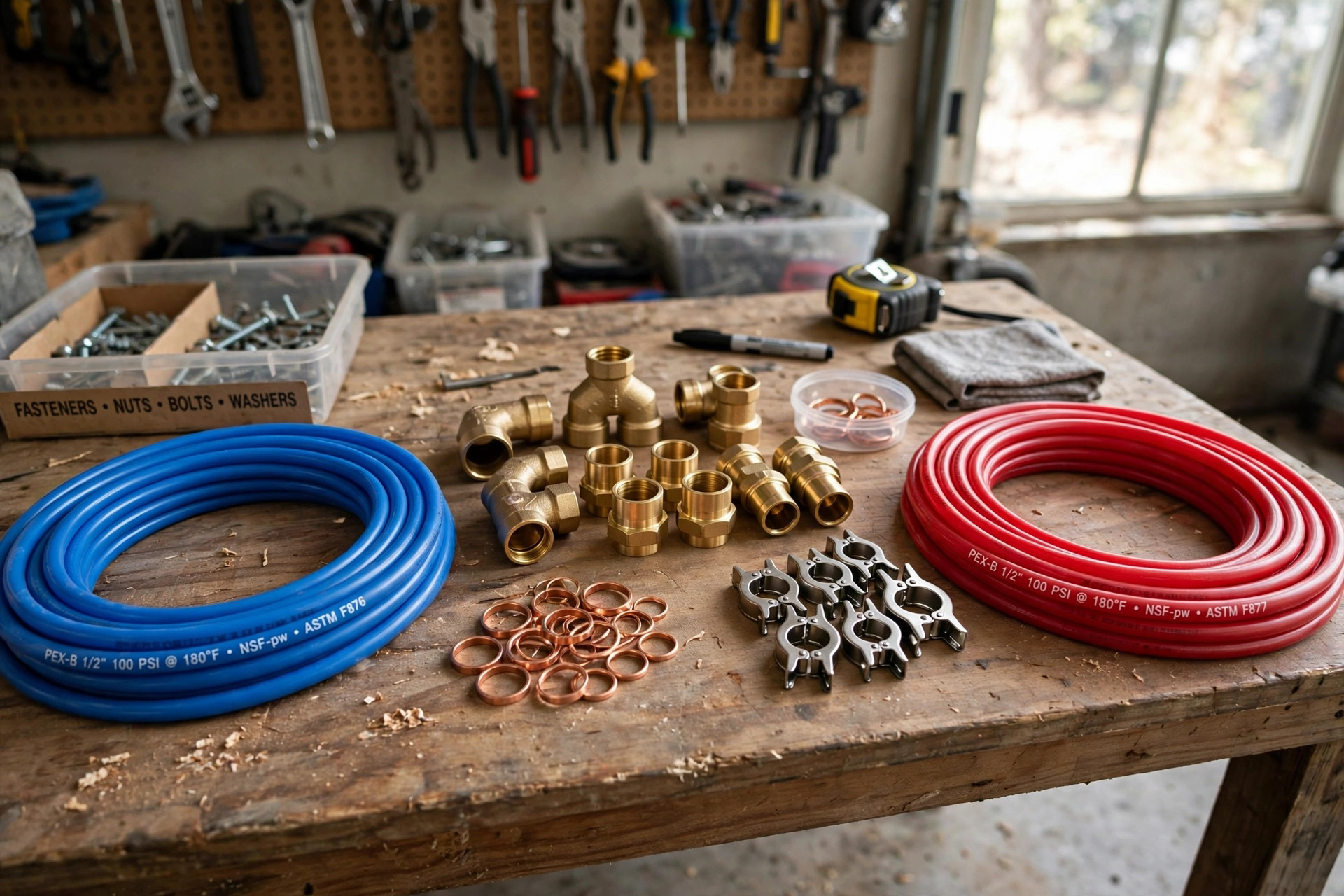
There are four main ways to join PEX: crimp, clamp, push-fit, and expansion. Each needs its own tool. Crimp needs a crimp tool. Clamp needs a cinch tool. Expansion needs an expander tool. Push-fit needs no tool at all. Pick the method that fits your budget and your comfort. A fitting you install well beats a “better” fitting you install badly. For one small repair, push-fit saves you from buying a tool.
Check the Tools You Already Own
Before you buy fittings, list your tools. A PEX cutter is a must. It makes a clean, square cut, and a ragged cut will not seal. A go/no-go gauge checks crimp rings after you press them. Many home improvement stores sell starter kits that hold the cutter, the tool, and a box of fittings. For a first job, a kit is often the best buy.
Types of PEX Fittings: Honest Reviews
Crimp Fittings
Crimp fittings are the classic choice. You slide a copper ring over the pipe, push the brass fitting in, and press the ring with a crimp tool. The tool squeezes the ring tight around the pipe and the fitting barbs. When done right, the joint is very strong. In this pex crimp fittings review style of test, most owners find crimp joints hold for decades without a drip.
Strengths: low part cost, strong track record, simple to learn, works with PEX-A, B, and C. Weak points: you must buy the crimp tool, and a bad crimp is hard to see without a gauge. Best for: owners who plan more than one job. Look for solid brass PEX fittings from established makers, and check each ring with a go/no-go gauge before you close the wall.
Push-Fit Fittings
Push-fit fittings, also called push-to-connect fittings, are the fastest option. You push the pipe into the fitting until it clicks. Inside, a metal grip ring holds the pipe and an O-ring makes the seal. There is no tool, no heat, no waiting. Many owners call these the best push fit fittings for home plumbing repairs because a leak can be fixed in minutes, even in a tight crawl space.
Strengths: no tools, very fast, easy to remove and reuse with a small release tool. Weak points: high cost per fitting, bulkier than crimp fittings, and they need a clean, straight cut to seal well. Best for: quick repairs and anyone who wants to avoid buying tools. If you want a deeper look at how they stack up against old methods, read this comparison of push-fit and soldered joints.
Expansion Fittings
Expansion fittings work only with PEX-A pipe. You slide an expansion ring over the pipe, stretch the pipe and ring with an expander tool, and push the fitting in. As the pipe shrinks back, it grips the fitting tight. The seal is excellent because the pipe itself does the holding. There is no metal ring left on the joint to corrode.
Strengths: very strong seal, full-flow design with less pressure loss. Weak points: costly expander tools, works only with PEX-A, and you must work fast before the pipe shrinks. Best for: large jobs where owners want top quality and can rent or buy the expander. Makers like Uponor built their name on this expansion system, and many pros still call it the best joint in PEX plumbing.
Clamp (Cinch) Fittings
Clamp fittings are the close cousin of crimp fittings. Instead of a copper ring, you use a stainless steel cinch clamp, and a cinch tool pulls it tight. The tool is cheaper and smaller than a crimp tool, so it fits in tight spots.
Strengths: low tool cost, compact tool, stainless clamps resist corrosion. Weak points: clamps must be sized right, and the little tab left on the clamp can catch on insulation. Best for: owners on a tight budget who still want a tool-made joint.
Manifold Fittings
A manifold is a central hub with many outlets. One line feeds the manifold. Short home-run lines go from the manifold to each fixture. Each outlet often has its own shutoff valve. This “home run” design gives steady pressure at every tap. If one line needs work, you shut off just that outlet.
Strengths: even pressure, easy shutoff per fixture, fewer hidden joints inside walls. Weak points: more pipe to run, higher upfront cost. Best for: full repipes and new additions where you can plan the layout from the start. Manifolds pair well with any fitting type, but many owners use press-fit plumbing products at the manifold for a clean, fast build.
Cost and Price: What You Will Pay
Tool cost changes the math on fitting prices. Here is a plain look at typical USA costs.
Crimp fittings cost the least per piece. A brass elbow or tee often runs one to three dollars. Copper crimp rings cost well under a dollar each in bulk bags. The crimp tool is the big cost. A basic manual crimp tool runs thirty to eighty dollars. A good one lasts for many jobs.
Clamp fittings cost about the same per piece as crimp fittings. Stainless cinch clamps are cheap in bags of fifty or a hundred. The cinch tool often costs less than a crimp tool. Some combo tools do both crimp and cinch work. That is a smart buy for a first-timer.
Push-fit fittings cost the most per piece. A single elbow can cost six to twelve dollars. But there is no tool to buy. For a repair that needs two or three fittings, push-fit is often the cheapest total. For a job that needs fifty fittings, the cost adds up fast.
Expansion fittings sit in the middle per piece, but the expander tool is costly. A manual expander can run over a hundred dollars. Renting the tool for a weekend is the smart move for most owners.
Do not forget the small extras. You will need a PEX cutter, Teflon tape for threaded ends, and pipe straps or hangers. Buy ten percent more fittings than your plan calls for. Mistakes happen. A return trip to the store costs more in time than a few spare elbows. Prices swing by region and season, so check your large home stores and compare a bulk online pack before you commit. For the bigger picture of pipe cost, read the honest cost comparison of PEX and copper plumbing first, then price your fitting list.
Care and Upkeep
PEX fittings need little care, but a few habits will keep them sound for decades.
Keep them out of direct sun. UV light breaks down PEX pipe and can weaken plastic fittings. Pipe stored in a sunny yard should move indoors fast.
Check exposed fittings once a year. Look under sinks. Look at the water heater connections. Look in the basement or crawl space. Feel for damp spots. Look for green or white crust on brass. A tiny crust can mean a slow weep. Catch it early and the fix is small.
Protect lines from freezing. PEX resists freeze damage better than copper, but fittings are the weak link. Insulate pipes in cold walls and unheated spaces. Drain outdoor lines before winter.
Keep chemicals away from the pipe. Do not let paint thinner, drain cleaner, or strong solvents sit on PEX. Store extra fittings in a dry box, not on a damp garage floor.
Watch your water quality too. Very hard water leaves scale in any system. Acidic water can attack metal parts over time. A simple test from your water utility tells you where you stand. If treatment is needed, a whole-home water filtration unit protects both your fittings and your fixtures.
Safety
Plumbing safety is simple but it matters. Turn off the main water before you cut any line. Open a low faucet to drain pressure.
Use only lead-free fittings on drinking water lines. The box should say “lead-free” and show an NSF/ANSI 61 listing. This rule has been federal law for years. Old stock or cheap import fittings may not comply. When in doubt, buy from known faucet and fixture makers and name-brand fitting lines.
Wear gloves when you cut and press. PEX edges are sharp and crimp tools pinch hard. Keep fingers clear of the jaws. Work in a dry area when you can.
Never use a torch near PEX. PEX melts and burns. If you are tying new PEX into old copper, make the solder joint first, let it cool fully, and only then connect the PEX with a push-fit or threaded adapter.
If a fitting blows off under pressure, shut the main valve at once. Then find why it failed. Was the pipe cut square? Was the ring the right size? Fix the cause, not just the leak.
Frequently Asked Questions
What are the best PEX fittings for a first-time DIYer?
Push-fit fittings are the easiest start. They need no tools and no skill beyond a square cut. If you plan to do more plumbing later, buy a crimp tool kit instead. It costs more up front but each joint after that is cheap.
Are brass PEX fittings better than plastic ones?
Brass is stronger. Plastic fittings cost less and never corrode. For hot water lines and main runs, most owners choose brass.
Can I mix crimp and push-fit fittings on one job?
Yes. All approved PEX fitting types can live on the same line. Many owners use crimp fittings for the main runs and push-fit fittings for the last connections in tight spots. Just make sure every fitting matches your pipe type and size.
Do PEX fittings work with PEX-A, PEX-B, and PEX-C pipe?
Most crimp, clamp, and push-fit fittings work with all three types. Expansion fittings work only with PEX-A. Read the fitting box before you buy. Using the wrong match can cause slow leaks that show up months later.
How long do PEX fittings last?
Good fittings last as long as the pipe, often fifty years or more in normal use. Brass fittings in clean water can outlast the house. The key is a correct install: square cut, right ring, right tool.
A Final Word
There is no single best fitting for every job. There is only the best fitting for your job, your pipe, and your skill. Buy a few extra pieces. Cut with care. Check each joint before you close the wall. Do that, and the best pex fittings for diyers reviews usa will not be a list you read — they will be the quiet joints behind your walls, doing their job for decades without a thought.
References
Aquasana. (n.d.). Water filtration systems. https://www.aquasana.com Kohler. (n.d.). Bathroom and kitchen fixtures. https://www.kohler.com Lowe’s. (n.d.). Home improvement products. https://www.lowes.com Moen. (n.d.). Faucets and plumbing fixtures. https://www.moen.com SharkBite. (n.d.). Push-to-connect plumbing fittings and valves. https://www.sharkbite.com The Home Depot. (n.d.). Home improvement products. https://www.homedepot.com This Old House. (n.d.). Home renovation guidance. https://www.thisoldhouse.com Uponor. (n.d.). PEX plumbing systems. https://www.uponor.com Viega. (n.d.). Press plumbing systems. https://www.viega.us Zurn. (n.d.). Plumbing and water control products. https://www.zurn.com
Was this guide helpful?

About Lisa Anderson
The My Garden US editorial team writes practical, in-depth home and garden guides for American homeowners — tested advice, no fluff.
You May Also Like
How to Thaw Frozen Pipes Safely: A USA Guide
February 1, 2026 0 views
RV Water Filtration System Reviews 2026 USA: What Real Owners Say
May 21, 2026 0 views
Water Softener Installation Cost Near Me: What Homeowners Pay
September 24, 2026 0 views