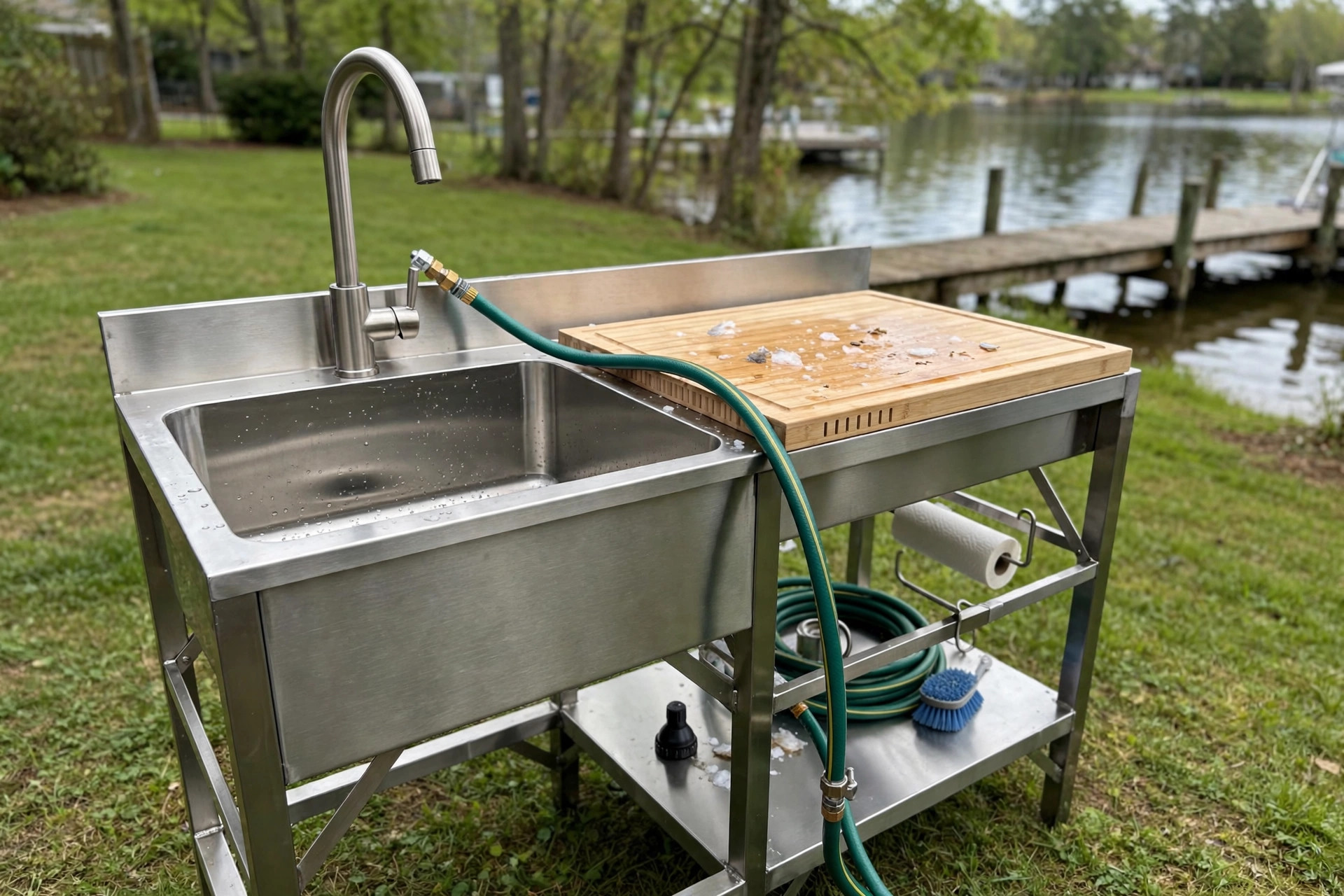

For many anglers, the hardest part of a fishing trip does not end at the dock. It begins when the boat is home and the fish need to be cleaned. A kitchen sink can do the job, but it leaves scales in the drain, strong smells in the room, and a wet floor to mop. The best outdoor sink for fish cleaning moves all of that work outside, where the mess belongs. With running water, a deep basin, and a sturdy frame, an outdoor cleaning station turns a chore into a simple part of the day.
Why an Outdoor Sink Matters for Fish Cleaning
Cleaning fish in the house creates problems that most people do not think about until they face them. Fish scales slip into the garbage disposal and dull the blades. Fish blood and guts leave stains in a light-colored sink. The smell can linger for hours, even with the windows open. An outdoor sink avoids every one of these troubles. Water flows away from the house. Waste goes into a bucket or a trash bag. The smell stays in the open air and fades fast.
There is also a practical side. Fish are slippery. A deep basin keeps them from sliding onto the ground. A raised station puts the work at waist height, which spares the back during a long cleaning session. After a full day on the water, a tired angler can clean twenty or thirty fish without kneeling on a dock or bending over a cooler. That comfort alone makes the best outdoor sink for fish cleaning worth the money for many families.
What to Look for When You Choose: Best Outdoor Sink for Fish Cleaning
Not every sink works well for fish. The following points help separate a good choice from a poor one.
Basin Size and Depth
The basin is the heart of the sink. Look for a basin that is wide enough to hold the fish you catch most often. For panfish and small bass, a medium basin works. For salmon, catfish, and saltwater fish, a wide and deep basin is better. Depth matters as much as width. A shallow basin lets water and scales splash out. A deep basin holds the work inside.
Material
Stainless steel is the most common material, and for good reason. It resists rust, washes clean, and does not absorb odors. A brushed finish hides small scratches from knives and scaler tools. Plastic tubs cost less, but they stain and can crack in cold weather. Galvanized metal is strong but may corrode over time in salt water. For the best outdoor sink for fish cleaning, stainless steel is the safest choice in most climates.
Frame and Legs
A cleaning station is only as good as its frame. Cheap legs wobble when a heavy fish lands on the table. Look for steel or aluminum legs with cross braces. Foldable legs are useful if the sink must be stored in winter, but they should lock firmly in place. Adjustable feet help on uneven ground near a dock or in a backyard.
Faucet and Water Supply
Some sinks connect to a garden hose. Others have a real faucet with hot and cold water. A hose connection is fine for rinsing fish and tools. A plumbed faucet gives better pressure for scrubbing the basin. Consider how close the sink will sit to a water source. A long hose run is cheap and works well, but it can freeze in cold months.
Types of Outdoor Fish Cleaning Sinks
The market offers several styles. Each suits a different kind of angler.
Portable Folding Tables
Portable tables fold flat and travel well. They suit anglers who fish at different lakes and want a cleaning surface at the camp. Most have a plastic or metal basin with a drain hole and a short hose. They cost the least. Their weakness is stability. A folding table can rock on soft ground, and the basin is usually shallow.
Stainless Steel Workstations
These are the most popular choice for the best outdoor sink for fish cleaning at home. A steel cabinet or open frame holds a large sink basin, often with a cutting board on one side and a small side shelf for tools. Many models have a built-in faucet that takes a garden hose. They stand firm and last for many years with basic care.
Plumbed Dock and Shore Stations
A fixed station mounts to a dock or a concrete pad near the water. It connects to a real water line, sometimes with hot water. These are common at marinas, fishing clubs, and lake houses. They cost the most and need plumbing work, but they offer the best comfort. Waste drops straight into a deep basin and flushes away with strong water flow.
Simple Trough and Barrel Setups
Some anglers build their own station from a stock tank or a food-grade barrel cut in half. This can work on a tight budget. The trouble is drainage and height. A barrel on the ground forces the cleaner to bend low. A stock tank needs a stand. Homemade setups save money, but they rarely match a purpose-built sink for ease of use.
For more ways to round out an outdoor cooking area, see our guide to outdoor kitchen design ideas for backyard, our step-by-step plan for how to build an outdoor kitchen on budget, and our look at the best flat top grill for outdoor kitchen.
Cost and Price
Prices for a fish cleaning sink cover a wide range. A simple portable folding table may cost between thirty and eighty dollars. A quality stainless steel workstation with a faucet usually costs between one hundred fifty and four hundred dollars. Fixed plumbed stations run higher, often five hundred dollars or more, plus the cost of a plumber.
What drives the price is mostly material and build quality. Thicker stainless steel costs more but resists dents. A welded frame costs more than a bolted one but does not loosen over time. A included cutting board and knife holder add value. Buyers should weigh how often the sink will be used. A weekend angler may do fine with a mid-range model. A guide who cleans fish daily will save money over time by buying the sturdier unit once.
It also helps to check what is included in the price. Some sinks come with a drain hose, a spray nozzle, and a cutting board. Others sell these parts separately. Adding them later can raise the total cost by fifty dollars or more. Read the product details before comparing prices, or look at trusted review sites like Consumer Reports for tested comparisons of outdoor gear.
Care and Upkeep
An outdoor sink faces sun, rain, and fish waste. A little care keeps it in good shape.
Rinse the basin after every use. Fish slime dries fast and hardens into a film that is tough to remove later. A quick rinse with the hose takes less than a minute. Once a month, scrub the basin with dish soap and a soft brush. Avoid steel wool on stainless steel, because it scratches the surface and invites rust.
Check the drain hose for clogs. Scales and small bones gather in the trap. Clear them with a garden hose or a small brush. If the sink sits outside all year, drain the water lines before the first freeze. Standing water in a hose or faucet can crack the fittings when it turns to ice.
Wipe the legs and frame dry after heavy rain. Stainless steel resists rust, but standing water on joints can still stain. A coat of paste wax on the frame once a season adds a layer of protection. Cover the sink in the off season with a tarp or a fitted cover to keep leaves and snow out of the basin.
The cutting board needs its own care. Rinse it after each session and let it dry in the sun. Plastic boards can go in the dishwasher. Wood boards need oil from time to time. Replace a board when deep knife cuts trap waste that washing cannot reach.
Safety
Fish cleaning involves sharp knives, and safety starts with a stable surface. Set the sink on flat, firm ground. A rocking station can cause a knife to slip. Keep the cutting area free of clutter. One knife, one scaler, and a small bucket for waste are enough.
Always cut away from the body. Use a knife with a sharp blade, since dull knives slip more often. A fillet glove on the holding hand protects against slips. Keep a first aid kit nearby with bandages and disinfectant, because even careful cleaners get nicked.
Water safety matters too. If the station sits on a dock, watch the edge. Wet docks are slick. Wear shoes with good grip. Keep electrical cords away from standing water, and never run an extension cord across a wet cleaning area. Guides on safe outdoor work remind readers that water and power do not mix, and that warning applies at a fish cleaning station as well.
Frequently Asked Questions
Can I use a regular utility sink for fish cleaning?
Yes, in many cases. A deep utility sink works if it is made of stainless steel or heavy plastic and stands at a comfortable height. The main drawback is drainage. Purpose-built fish cleaning sinks have wide drains and high backs that keep splash inside. A standard laundry sink may need a cutting board placed across the top to work well.
What size sink do I need for cleaning large fish?
For fish over twenty pounds, look for a basin at least thirty inches wide and twelve inches deep. Salmon, large catfish, and saltwater species need room to lie flat. A cramped basin makes the work slow and messy. When in doubt, choose the larger basin. Extra space never hurts.
Do I need hot water at an outdoor fish cleaning station?
Hot water is nice but not required. Cold water rinses fish and tools just fine. Hot water helps cut grease and makes winter cleaning more pleasant. If a hot water line is easy to run, add it. If not, a hose connection with cold water serves most anglers well for years.
How do I keep the sink from smelling?
The smell comes from waste left behind, not from the sink itself. Rinse well after each use and clean the drain trap. A paste of baking soda and water scrubbed into the basin removes lingering odor. Letting the sink dry fully in the sun also helps. Fish waste should go in a sealed trash bag, not left in an open bucket.
Can I leave my outdoor sink out all winter?
Most steel sinks can stay out, but the water supply cannot. Drain all hoses and faucets before freezing weather. Cover the basin to keep snow and ice out. In very cold regions, many owners fold portable units and store them in a garage. Fixed stations should have their water lines blown clear in the fall.
Is a stainless steel fish cleaning table worth the cost?
For most regular anglers, yes. Stainless steel lasts longer than plastic, cleans faster, and holds its value. A mid-range steel workstation used for five years costs less per trip than replacing cheap plastic tables. The comfort of a stable, waist-high station matters most on days with a big catch.
A Short Final Word
The best outdoor sink for fish cleaning is the one that fits the way you fish. A weekend angler with a small boat needs less than a guide who cleans fish every day. But every angler benefits from moving the work outside. A deep basin, a strong frame, and running water turn fish cleaning from a kitchen mess into a quick outdoor task. Choose stainless steel, size the basin to your catch, and take care of the drain. Do that, and the station will serve for many seasons.
For more background, see Char-Broil, Traeger, and Napoleon. For more background, see Big Green Egg, Broil King, and The Home Depot. See The Spruce Eats for more detail.
References
Big Green Egg. (n.d.). Kamado grills and outdoor cooking. https://www.biggreenegg.com Broil King. (n.d.). Gas and charcoal grills. https://www.broilkingbbq.com Char-Broil. (n.d.). Gas and charcoal grills. https://www.charbroil.com Consumer Reports. (n.d.). Product reviews and ratings. https://www.consumerreports.org Napoleon. (n.d.). Fireplaces, grills, and heating products. https://www.napoleon.com The Home Depot. (n.d.). Home improvement products. https://www.homedepot.com The Spruce Eats. (n.d.). Recipes and cooking guides. https://www.thespruceeats.com Traeger. (n.d.). Wood pellet grills. https://www.traeger.com
Was this guide helpful?

About James Carter
The My Garden US editorial team writes practical, in-depth home and garden guides for American homeowners — tested advice, no fluff.
You May Also Like
Gas Grill Safety Tips for Homeowners
March 19, 2026 0 views
Best Smoker for Beginners Under 300: A Plain Guide
July 30, 2026 0 views
Gas Grill vs Charcoal Taste Difference: What Every Cook Should Know
January 16, 2026 0 views