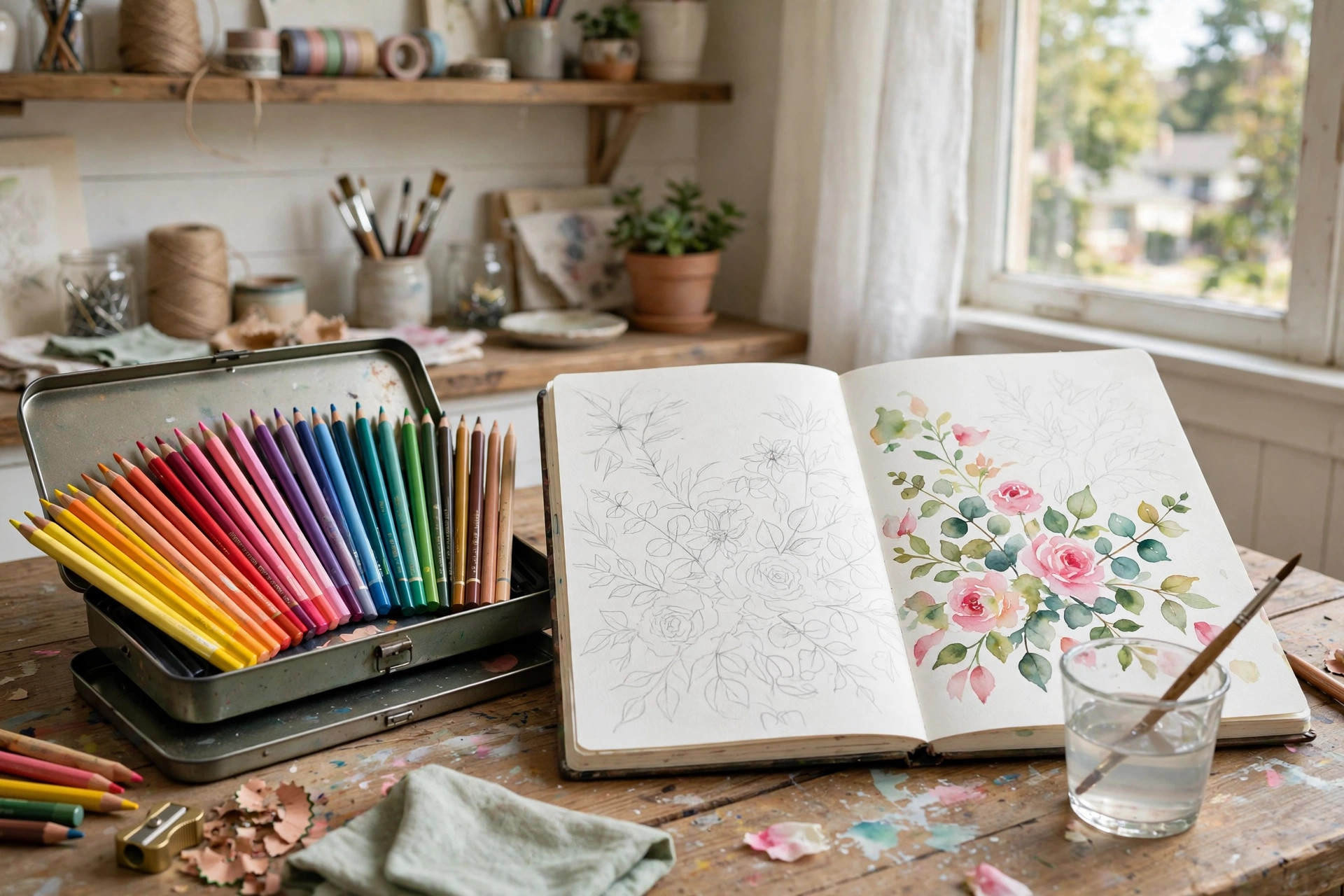

Finding the best watercolor pencils set for sketching art is one of the most pleasant tasks a new artist can take on. These tools sit halfway between drawing and painting. They look like ordinary colored pencils. They sharpen like ordinary colored pencils. But when you touch them with a wet brush, the lines melt into soft washes of watercolor. That small act of magic is what makes them so loved by sketchers, travelers, and weekend painters across the country.
A good set lets you draw on the train with dry pencils and finish the work at the kitchen table with water. A poor set breaks in the sharpener, turns muddy on the page, or leaves grainy streaks you never intended. The difference between the two is rarely about price alone. This guide explains the points that matter in plain language.
Why Watercolor Pencils Deserve a Place in Your Kit
Most sketchers start with a graphite pencil or a pen. Both are fine. But color adds feeling to a sketch. A blue-gray wash behind a barn turns a quick drawing into a memory. A splash of green on a bush suggests spring. Watercolor pencils give you that color without the bulk of a full paint kit. They fit in a pocket. They need only a small brush and a jar lid of water to come alive. Many artists who keep a travel sketchbook treat them as their first choice for color work.
They also teach good habits. Because the pencil marks stay on the page until water moves them, you learn to place color with care. Teachers at community art classes often start beginners on watercolor pencils for this reason. The tool is forgiving, the cleanup is simple, and the results look pleasing even in untrained hands.
Another virtue is control. With a tube of paint, a slip of the brush can flood a small sketch. With a watercolor pencil, you lay down the color dry, exactly where you want it. Then you wake it up with a damp brush. That control makes the medium ideal for small studies, architectural details, and flower petals.
What to Look for in a Watercolor Pencil Set: Best Watercolor Pencils Set for Sketching Art
The market holds dozens of sets, from twelve-pencils-in-a-box school kits to one-hundred-twenty-pencil studio collections. The best watercolor pencils set for sketching art is not always the largest. It is the one whose qualities match your hand and your habits. Here are the traits that matter most.
Pigment Strength and Lightfastness
Pigment is the colored powder inside the pencil core. Strong pigment gives rich marks that stay bright after water. Weak pigment fades to a pale ghost of itself. You cannot judge pigment from the box alone, but two clues help. First, artist-grade sets name their pigments and list lightfastness ratings, often as small stars or a code. Lightfastness tells you how well the color resists fading in sunlight. If you plan to hang your sketches or sell prints, this rating matters. Second, check independent product reviews and art supply guides for notes on color staying power.
Core Strength and Breakage
Nothing spoils a sketching trip like a core that snaps each time the pencil touches the sharpener. A good core is bonded to the wood along its whole length so it survives drops and normal sharpening. Student-grade pencils often use weaker cores to keep costs down. That is acceptable for practice, but for serious sketching it becomes a daily annoyance. Look for reviews that mention how the pencils sharpen. If several buyers complain of breakage, keep looking.
Wood Quality and Sharpening
The cedar casing around the core should cut cleanly. Cheap wood tears and splinters, and a ragged point lays down uneven color. Premium pencils use soft, even cedar that sharpens to a fine needle. You can test this with one pencil before you commit to a big set. Buy the open-stock single first if the store offers it. Major art suppliers usually sell single pencils so artists can try before they buy the full box.
Color Range and Selection
For sketching, you do not need one hundred colors. Most experienced sketchers work with twenty-four to forty-eight pencils. What matters more is the spread of the range. Look for warm and cool versions of the primary colors, a few earth tones, and two or three greens that match real leaves.
Brush and Water Compatibility
Some cores dissolve at once and flood the page. Others need more scrubbing. Neither is wrong, but you should know which you own. A pencil that lifts easily suits loose, painterly work. A pencil that resists suits fine detail. If you like to work small and tight, lean toward the controlled kind.
Types of Watercolor Pencil Sets
Makers sell their sets in a few broad families. Each family serves a different kind of user.
Student Grade
Student sets cost the least. They carry less pigment and more filler, so the colors are paler and the washes are thinner. For a beginner who only wants to try the medium, a student set is a fair start. Large retailers carry several brands at low prices.
Artist Grade
Artist-grade sets cost more because the pigment load is much higher. The colors lay down bold and wet into deep, clear washes. Lightfastness ratings are printed for each color. If you sketch often, this grade pays for itself in pleasure. Specialty art stores carry the leading artist lines.
Travel and Pocket Sets
Some makers sell sets of twelve or eighteen half-size pencils in a flat tin. These are built for the backpack and the coat pocket. They suit quick street sketches and vacation journals. Many sketchers keep a travel set in the car and a full set at the desk. The packing logic is the same one behind a mini sewing machine made for travel crafts: small tools can still do real work.
Specialty and Pastel Variants
A few lines offer water-soluble graphite for monochrome studies, or pastel-like pencils with a chalky core for soft portraits. These are not standard watercolor pencils. They serve niche tastes. Try them only after you know the standard kind well.
How to Choose the Right Set for Your Sketching Style
Your style decides your set. A loose urban sketcher who washes whole pages wants strong pigment and easy lift. A botanical sketcher who draws petals line by line wants fine points and controlled color. Ask yourself where you draw, how big you draw, and how wet you like your washes. Then match those answers to the traits above.
Beginners should start small. A set of twenty-four good pencils teaches you more than a set of seventy-two weak ones. With a small set you learn to mix, and mixing is the heart of color work. Many teachers suggest starting with a basic supply list and adding colors as gaps appear in your work.
Check the tin before you buy. A metal tin protects pencils in a bag. A cardboard box is fine for the studio shelf. Some sets add a water brush or a sharpener. These extras are handy for travel, though the brushes in kits are rarely excellent.
If you shop online, read the buyer comments for notes on breakage and true color. Photographs of the box tell you little. Photographs of actual swatch cards tell you a great deal. General online marketplaces show many such photos in their review sections, and craft-focused chains often display scanned swatches on the product page.
Price deserves a level head. A forty-eight-pencil artist set may cost four or five times a student set. But the artist set holds more pigment per pencil, and the pencils last longer per stroke. Over a year of steady sketching, the gap narrows. Buy the best grade you can afford without strain.
Cost and Price: What to Expect
Prices move with grade and count. As a rough guide, student sets of twelve to twenty-four pencils sell for a few dollars. Mid-range sets of thirty-six to forty-eight sell in the low tens of dollars. Artist-grade sets of forty-eight sell in the middle tens, and large studio sets of one hundred or more can reach well past one hundred dollars. Sale seasons at home and craft retailers often cut these prices by a third, so patient buyers do well.
Watch for false bargains. A huge count at a tiny price usually means weak pigment and brittle cores. It is better to own thirty-six strong pencils than one hundred weak ones. Also weigh the cost of paper. Watercolor pencils need paper thick enough to take water.
For crafters who sell their work, the math changes. If you make wall art with embroidery hoops or decorate garments with iron-on vinyl for Cricut projects, art supplies are a business cost. Track what you spend per project. Watercolor pencils are cheap per finished piece, which is one reason handmade cards and small prints stay profitable.
Care and Upkeep of Your Pencils
Watercolor pencils ask for little care, but a few habits keep them at their best.
Store them dry and flat. The core is water-soluble, so a damp tin rusts and a wet core swells. Keep the set away from the sink. A tin with a clasp stays shut in a bag.
Sharpen with a light hand. A sharp blade and slow turns beat a rough electric sharpener. If a core keeps breaking, try a wider point. A slightly blunt tip still lays good color and survives longer.
Protect the tips. A foam sheet cut to fit the tin keeps points from snapping in transit. When a pencil gets short, a wooden extender restores the grip for a few more weeks of use.
Clean your brush between colors. Muddy water dulls every wash. Rinse the brush well, blot it on a rag, and test the next color on scrap paper before it touches the sketch. Keep a folded paper towel in the kit. It is the cheapest tool you own and one of the most used.
Test colors before a trip. Make one swatch card per set: each pencil marked dry, then washed. When you are outdoors and the light is failing, that card tells you in seconds which pencil gives the green you need.
Safety Notes
Watercolor pencils are among the safest art tools. Still, a few cautions are worth stating.
Keep them away from small children who might chew the cores. Many sets carry a label warning against use by children under three, and safety guidance from consumer agencies is worth a look for any household with toddlers. Older children can use student sets with normal care.
Do not wet the pencil tip in your mouth. Some sketchers do this out of habit. It is unnecessary and unwise. Use a brush or a water cup. Wash your hands after long sessions, especially with older or unknown brands, and keep food and drink away from the work area so pigment does not end up in the coffee.
Check labels if you have allergies. Most modern pencils use non-toxic binders, and artist sets often carry an AP seal meaning approved for safe use. If a set lacks such a mark and you are unsure, choose one that carries it. Ventilation matters little for pencils, unlike solvent paints, but a tidy desk keeps dust down.
Store sets out of reach of pets. Dogs chew anything, and a mouthful of colored core means a vet visit. A closed tin on a high shelf solves the problem.
Frequently Asked Questions
Are watercolor pencils good for beginners?
Yes. They are one of the best first color tools. You draw dry, which feels familiar, and add water when you feel ready. Mistakes stay small because you control where the color goes. Start with a student or mid-range set of twenty-four, practice on thick paper, and upgrade when your skills outgrow the box.
What paper should I use with watercolor pencils?
Use paper made for watercolor or mixed media, at least ninety-pound weight. Thin office paper buckles and pills under a wet brush. Cold-press paper has a gentle texture that holds the wash nicely, and practical craft guides often compare the common pad types side by side.
Can I use watercolor pencils without water?
You can. Used dry, they behave like firm colored pencils. The marks are a little harder and less waxy than standard colored pencils, which some artists prefer for detail. The real charm appears with water, but a dry sketch in watercolor pencil is a fine thing on its own.
How do I keep colors from turning muddy?
Limit each area to two or three colors, and let layers dry before adding more. Clean the brush between colors. Work light to dark. Muddy color usually comes from too many pigments stirred together while wet. A small test swatch before each passage saves many sketches.
Do watercolor pencils expire?
They last for years if stored dry. The core does not spoil. Very old pencils may sharpen with more breakage as the binder dries out, but this takes a decade or more. Keep the tin closed and out of damp rooms, and your set will serve you for a long time.
What is the difference between watercolor pencils and water-soluble crayons?
Crayons carry more wax and lay down broader, bolder strokes. They suit big washes and loose work. Pencils give finer lines and more control. Many artists own both and choose by the size of the job. For sketchbook detail, pencils win. For a full-page sky, a crayon or a pan of paint is faster.
A Short Final Word
The best watercolor pencils set for sketching art is the one you will carry, sharpen, and reach for without thinking. Choose strong pigment, an honest color range, and a core that survives the sharpener. Start smaller than your ambition and grow the set as your eye grows. Keep the pencils dry, the brush clean, and the paper thick enough for water.
References
Amazon. (n.d.). Online shopping. https://www.amazon.com Blick Art Materials. (n.d.). Art and craft supplies. https://www.dickblick.com Consumer Reports. (n.d.). Product reviews and ratings. https://www.consumerreports.org JOANN. (n.d.). Fabric and craft supplies. https://www.joann.com Michaels. (n.d.). Arts and crafts supplies. https://www.michaels.com The Home Depot. (n.d.). Home improvement products. https://www.homedepot.com The Spruce. (n.d.). Home and garden advice. https://www.thespruce.com U.S. Consumer Product Safety Commission. (n.d.). Product safety information. https://www.cpsc.gov Walmart. (n.d.). Everyday low prices. https://www.walmart.com
Was this guide helpful?

About David Wilson
The My Garden US editorial team writes practical, in-depth home and garden guides for American homeowners — tested advice, no fluff.
You May Also Like

DIY Welcome Sign Kit for Front Porch Decor: How to Make One That Lasts
March 7, 2026 0 views
DIY Mosaic Tile Kit for Garden Art Projects: A Plain Guide for Home Crafters
April 9, 2026 0 views
Bead Organizer Box for Jewelry Making Storage: A Practical Guide
July 12, 2026 0 views