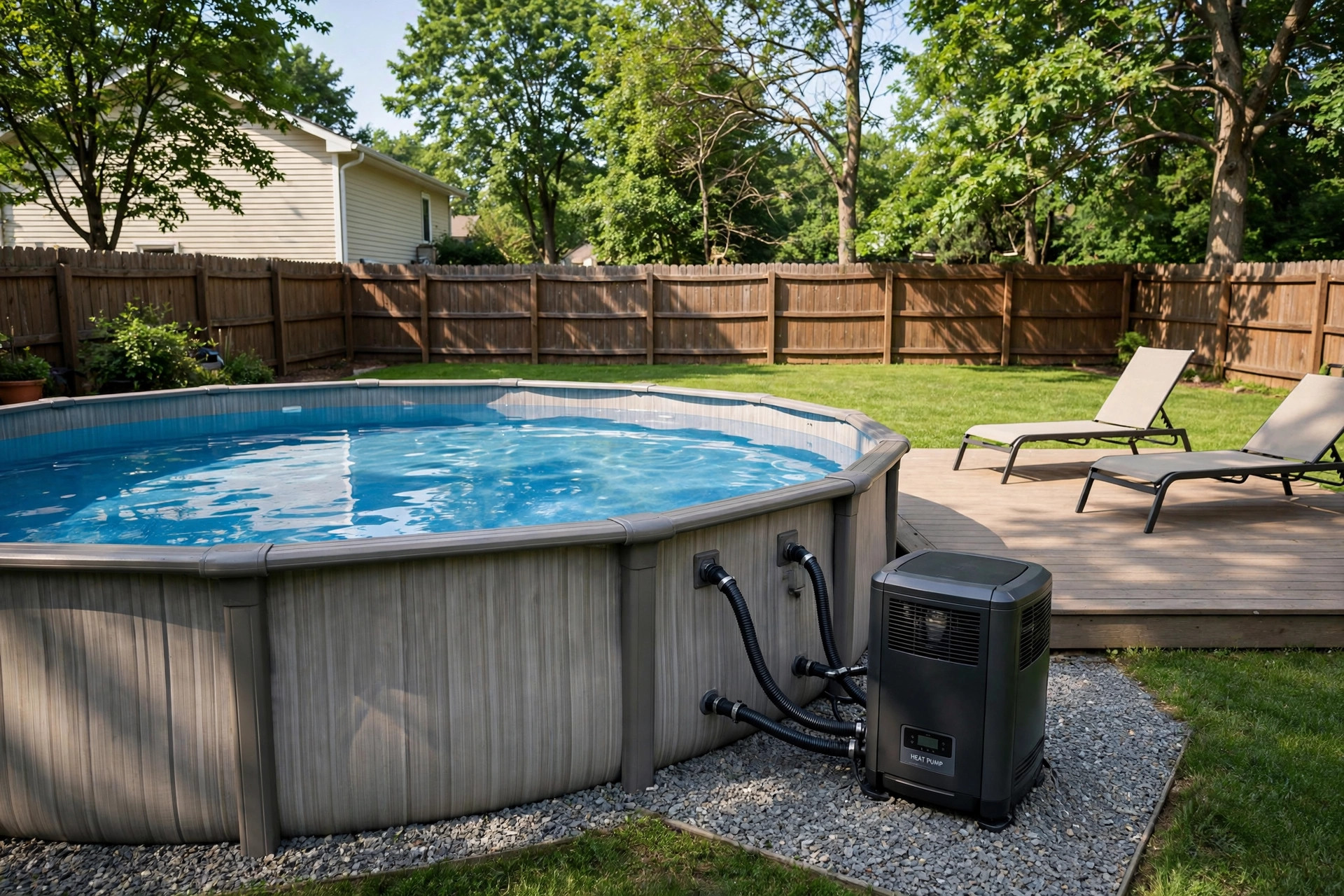

An above ground pool is one of the great simple pleasures of an American summer. Yet without heat, the season feels short. In many parts of the country, the water stays too cold for comfort well into May and cools off again by late August. A good heater changes that. This guide to the best pool heater for above ground pools will walk you through the main types, what to look for, what they cost to buy and run, how to keep them safe, and how to care for them. By the end, you will know how to pick a unit that fits your pool, your climate, and your budget.
Why Heating an Above Ground Pool Matters
Most above ground pools hold far less water than an inground pool, often between 4,000 and 15,000 gallons. That small volume loses heat fast on a cool night or a windy day. Unheated water in spring may sit in the low 60s, which feels bracing for about thirty seconds and unpleasant for much longer. A heater holds the water in the mid-70s to mid-80s, where swimming feels easy and natural.
A heater also gives you control. Instead of waiting for a hot spell, you decide when the season starts. Families in the Midwest often swim a month earlier and a month later once they add heat. If your pool sits in partial shade, heating matters even more, because the sun alone cannot catch up overnight heat loss.
There is a comfort point as well as a safety one. Children and older swimmers chill faster in cool water. Warm water keeps everyone in the pool longer and makes the whole backyard feel like a resort rather than a test of courage.
How to Choose the Best Pool Heater for Above Ground Pools
Match the Heater Size to Your Pool
Pool heaters are rated in BTUs, a measure of heat output. For an above ground pool, a common range is 50,000 to 150,000 BTU for gas and heat pump units. A good rule of thumb is to pick a heater that can raise your pool temperature by about one to two degrees per hour. A 10,000-gallon pool needs roughly 100,000 BTU for brisk heating, though a smaller unit works if you are patient and use a solar cover to hold the heat in.
Measure your pool in gallons before you shop. Multiply length by width by average depth by 7.5 for a rectangular pool, or use the round-pool formula. If you do not know the volume, a retailer can help you work it out. Shoppers browsing the pool department at Home Depot often find sizing charts posted next to the heater displays, which make the math plain.
Know Your Local Climate
Climate decides which type of heater makes sense. Heat pumps pull warmth from the air, so they shine in warm regions where the air stays above 50 degrees. Gas heaters make their own heat and work in any weather, which suits cooler northern states. Solar heaters need full sun for most of the day and work best as a supplement in sunny climates.
Check Power and Gas Connections
A gas heater needs a natural gas or propane line run to the pool pad, and that work must be done by a licensed professional. A heat pump needs a dedicated electrical circuit, usually 220 volts for larger units. Solar heaters need only a small pump or your existing pool pump. Before you fall in love with a model, check what your home and yard can support, and get the real cost of the hookup.
Types of Pool Heaters for Above Ground Pools
Electric Heat Pumps
Heat pumps are the most popular choice for above ground pools, and for good reason. They move heat from the surrounding air into the water rather than making heat from fuel, so they use far less electricity than straight electric resistance heaters. A heat pump costs more up front than a gas unit of the same size, but it usually costs much less to run month to month.
Heat pumps warm water slowly and steadily. Expect a rise of one to two degrees per hour in good weather. They lose efficiency when the air drops below about 50 degrees, so in the deep north they may not extend the season as far as gas. Guides on pool equipment at SwimUniversity explain this slow-and-steady character well and help set fair expectations.
Gas Heaters: Natural Gas and Propane
Gas heaters warm water fast. A 150,000 BTU gas unit can raise a mid-size above ground pool by two to three degrees per hour even on a chilly evening. They do not care about air temperature, which makes them the answer for northern families who want a hot pool in October or a quick warm-up for a weekend party.
The trade is running cost. Gas prices swing by region, and heating a pool through shoulder season on propane can run into hundreds of dollars a month. Gas units also need venting clearances, a gas line, and regular professional service. Still, for speed and all-weather power, nothing beats them.
Solar Heaters
Solar panels or mats lay on the ground or a rack near the pool. Pool water flows through them on its way back from the filter, picks up heat from the sun, and returns to the pool warmer. There is no fuel bill at all. The catch is that solar output depends entirely on sun and air temperature. On a bright 85-degree day, a well-sized solar array can raise the pool by three to five degrees. On cloudy weeks, it does little.
Solar works best as a helper: it stretches a short season at almost no running cost, and many owners pair a modest solar setup with a heat pump for cloudy stretches. Practical tips for sizing and plumbing solar panels are easy to find in pool how-to libraries online.
Liquid Solar Covers
A liquid solar cover is not a heater at all, but it deserves a mention. It is a thin, safe liquid you add to the water that forms an invisible layer on the surface, cutting evaporation, which is where most pool heat escapes. It cannot replace a real heater, but paired with one it can cut running costs noticeably.
What the Best Pool Heater for Above Ground Pools Costs
Prices move with size and type, but rough 2026 figures help set expectations:
– Heat pump, 50,000 to 110,000 BTU: about $1,500 to $3,500 for the unit. – Gas heater, 100,000 to 200,000 BTU: about $1,500 to $3,000 for the unit, plus $500 to $2,000 for gas line and electrical work. – Solar panel kits: about $200 to $800 for panels and plumbing, depending on pool size.
Running costs are the real story. A heat pump may cost $50 to $150 a month to run in season. A gas heater may cost $200 to $600 a month, depending on fuel prices and how much you heat. Solar costs nearly nothing to run. A floating solar cover, covered in detail in our guide to the best pool cover for winter reviews, pairs with any heater type to trap heat and trim the bill.
When you compare models, look at the warranty as part of the price. A heat pump with a five-year compressor warranty may outlast two cheap gas units, which changes the real cost over a decade. Reviews and buyer guides at The Spruce often track which brands honor their warranties without a fight.
Installation: What to Expect
Most above ground pool heaters sit on a small level pad beside the pool and tie into the filter plumbing. The water should flow through the heater after the filter and before any chlorinator, so clean water enters the heater and treated water goes back to the pool.
A heat pump installation is often a one-day job for an electrician and a pool technician. Gas installation takes longer because of the gas line and venting rules. Solar panels take a handy homeowner a weekend. Whichever type you choose, buy a model sized for above ground pools rather than adapting an inground unit, which may need more flow than your pump can give.
If your pool equipment area also serves a spa, note that spa heating works on the same principles. Our guide to the best hot tub for cold climates covers how heat pumps and gas units behave for small hot bodies of water, which shares much with pool heating.
Care and Upkeep Through the Season
A little care keeps a heater running for many years. At the start of the season, clear leaves and debris from around the unit, check that air intakes are open, and look over the plumbing for winter cracks. Keep the water chemistry balanced all summer. Acidic or scaling water eats the inside of a heater faster than anything else. Test the water weekly, and keep pH between 7.2 and 7.8 and chlorine in the normal range. Water-care tutorials from pool specialists such as Leslie’s make weekly testing a simple habit.
For heat pumps, hose off the evaporator coil once or twice a season so dust and cottonwood do not choke the airflow. For gas heaters, have a professional inspect the burner and heat exchanger once a year, and check that the vent stack is clear of nests and leaves.
At season end in cold regions, drain the heater fully and blow out the lines. Water left inside can freeze, expand, and crack the heat exchanger, which is an expensive repair. A winterizing routine like the one in our article on pool heater for above ground pools maintenance covers this step by step.
Safety Rules Every Owner Should Follow
Pool heaters are safe when installed and used right, and dangerous when they are not. Keep these rules firm.
First, gas work belongs to licensed professionals. Never run a gas line yourself, and never bypass the heater’s safety switches. Carbon monoxide from a poorly vented gas heater is a silent killer, so the venting must be exactly to code and the unit must sit the required distance from windows and doors.
Second, electricity and water demand respect. A heat pump needs a properly grounded circuit with a ground-fault breaker. Keep the area around the unit dry and free of clutter so it can breathe and so you can reach the shutoff fast.
Third, think about the whole pool area. The federal safety agency publishes pool and spa safety guidance, and the product-safety standards on its site at the Consumer Product Safety Commission remind owners that barriers, alarms, and covers matter as much as warm water. Warm water invites more swimming, which means more care around children. Never leave children alone in or near the pool, and keep rescue equipment within reach.
Finally, do not run a gas heater with the pool cover fully on unless the maker allows it. Trapped heat can damage the cover, and trapped fumes can damage you. Read the manual before you improvise.
Frequently Asked Questions
How long does it take to heat an above ground pool?
It depends on the heater size, the pool size, and the weather. A 100,000 BTU heat pump typically raises a 10,000-gallon pool by one to two degrees per hour in warm weather. From 65 to 80 degrees, expect most of a day. A gas heater of similar size works about twice as fast.
What size heater do I need for a 24-foot round above ground pool?
A 24-foot round pool holds roughly 13,500 gallons. For brisk heating, look at 100,000 to 150,000 BTU in a gas or heat pump unit. If you mostly want to take the chill off and hold the temperature, 70,000 to 100,000 BTU with a solar cover works fine.
Are solar pool heaters worth it for above ground pools?
Yes, in sunny climates. A solar setup costs little to buy and nothing to run, and it can add several degrees on sunny days. It will not heat a pool on cloudy weeks, so many owners use solar as a partner to a heat pump rather than a replacement. Specialty pool retailers such as Pool Warehouse carry solar kits sized for common above ground models.
Can I install a pool heater myself?
Solar kits and some small heat pumps are realistic do-it-yourself projects for a handy owner. Gas heaters are not. Gas lines, venting, and high-voltage electrical work require licensed professionals in almost every state, and a bad installation can void the warranty and endanger the family.
How much does it cost to run a pool heater each month?
A heat pump usually costs $50 to $150 a month in season, depending on electricity rates and how much you heat. A gas heater usually costs $200 to $600 a month, depending on fuel prices. A solar cover on the pool overnight can cut either bill by a third or more.
Do I need a special heater if I also have a hot tub?
Not necessarily. Many above ground pool heaters can serve a small spa plumbed into the same system, though the heater must be sized for the combined water volume. Spa makers such as Hot Spring and Bullfrog Spas publish guidance on heating small bodies of water efficiently, and the same rules of insulation and covers apply.
A Final Word
The best pool heater for above ground pools is the one that fits your pool size, your climate, and your wallet. Heat pumps win for steady, low-cost seasonal heating in warm and mild regions. Gas heaters win for speed and cold-weather power. Solar wins for near-zero running cost in the sun belt. Whichever you choose, pair it with a good solar cover, keep the chemistry balanced, and follow the safety rules. Do that, and your backyard season will feel twice as long, from the first warm weekend of spring to the last golden afternoon of fall.
References
Bullfrog Spas. (n.d.). Hot tubs and spas. https://www.bullfrogspas.com Hot Spring Spas. (n.d.). Hot tubs and spas. https://www.hotspring.com Leslie’s Pool Supplies. (n.d.). Pool supplies and equipment. https://www.lesliespool.com Pool Warehouse. (n.d.). Pool equipment and supplies. https://www.poolwarehouse.com Swim University. (n.d.). Pool and hot tub care guides. https://www.swimuniversity.com The Home Depot. (n.d.). Home improvement products. https://www.homedepot.com The Spruce. (n.d.). Home and garden advice. https://www.thespruce.com U.S. Consumer Product Safety Commission. (n.d.). Product safety information. https://www.cpsc.gov
Was this guide helpful?

About Emily Rodriguez
The My Garden US editorial team writes practical, in-depth home and garden guides for American homeowners — tested advice, no fluff.
You May Also Like
How to Clean Pool Coping Tiles: A Simple Step-by-Step Guide
September 26, 2026 0 views
Best Pool Alarm for Child Safety: What Every Pool Owner Should Know
February 16, 2026 0 views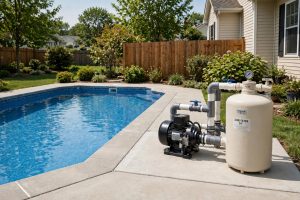
How to Figure the Pool Pump Running Cost Per Month
June 1, 2026 0 views