Every spring, American homeowners walk out to their yards and see plants they did not plant. Some are low and flat, some grow in thick bunches, and some carry small yellow or purple flowers. A lawn weed identification chart with pictures helps you put a name to each one. Once you know the name, you can learn how it grows, when it spreads, and what stops it. That knowledge saves money and keeps your grass thick and healthy.
Why Weed Identification Matters
Pulling or spraying a weed without knowing what it is often fails. Many weeds grow back from small roots left in the soil. Some spread by seeds, others by runners under the ground. A treatment that kills one kind may leave another untouched.
A lawn weed identification chart with pictures shows clear photos of each common weed next to its name and key traits. You match what you see in your yard to the picture. Then you read how that weed behaves. With the right name, you can pick the right plan: pull by hand, mow higher, water deeper, or apply a product made for that exact weed.
Correct identification also protects your lawn. Some products kill grass as well as weeds. If you treat dandelions with a product meant for crabgrass, you may damage your turf and waste your time.
How to Use a Lawn Weed Identification Chart With Pictures
Start by walking your yard slowly. Look for patches of green that look different from the rest of your grass. Pull one weed and look at its leaves, stems, and roots.
Compare what you hold with the pictures on the chart. Look for leaf shape first. Broad leaves point to one group; thin grass-like blades point to another. Then check the stem. Some weeds have round stems, some have flat or square ones. Flowers and seed heads also help. Dandelions make yellow flowers that turn into white seed puffs. Crabgrass sends out low stems that spread like fingers.
Write down the names of the weeds you find. Most lawns hold two or three kinds at once. Knowing the mix helps you plan the full season instead of chasing one problem at a time.
The Main Groups of Lawn Weeds
Weeds fall into three broad groups. Charts use these groups to sort the pictures.
Broadleaf Weeds
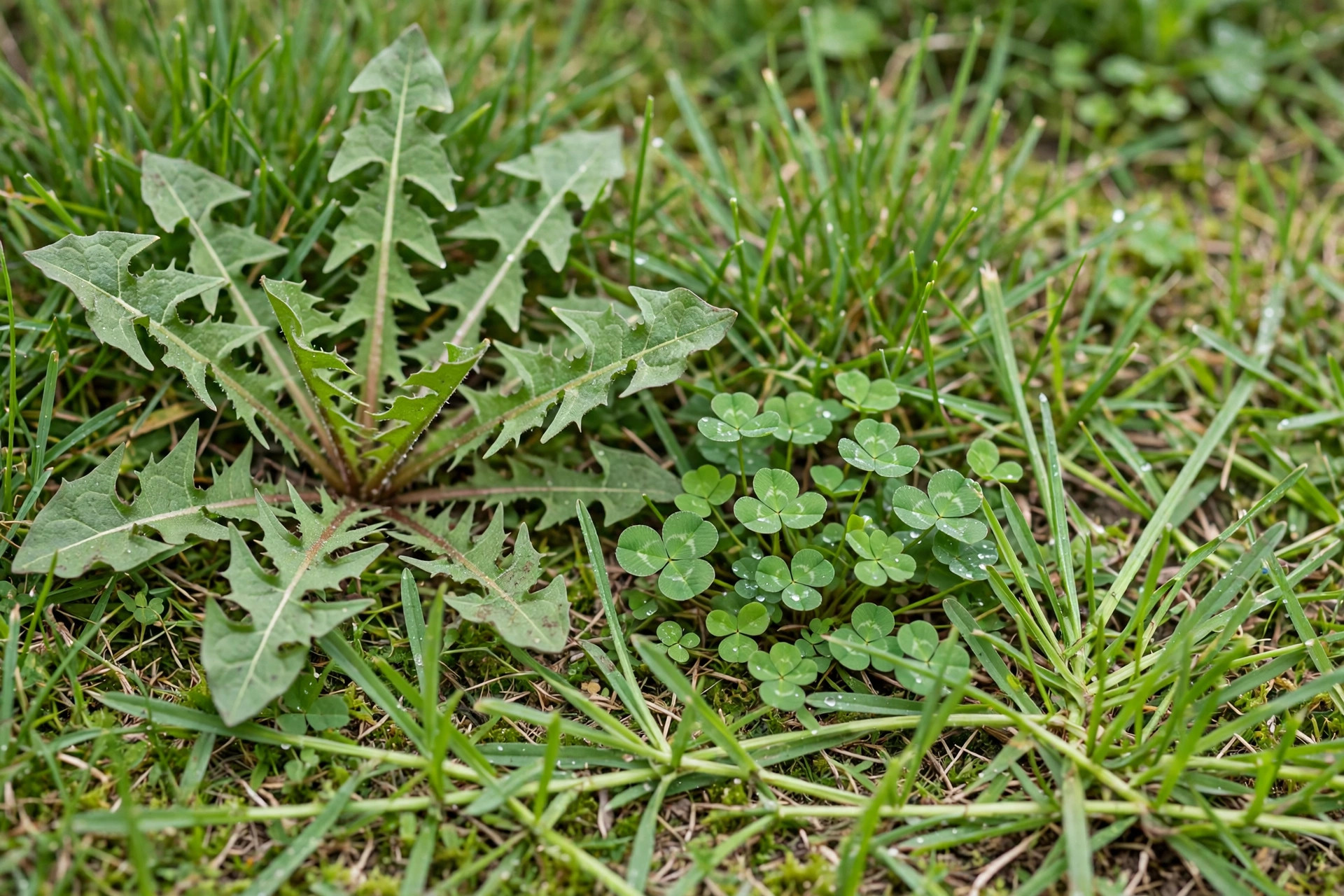
These weeds have wide, flat leaves that look nothing like grass. They are the easiest to spot. Common ones include dandelions, clover, plantain, and ground ivy. Broadleaf weeds stand out because their leaves grow in pairs or circles from one stem.
Many broadleaf weeds grow from deep taproots. A dandelion root can reach several inches down. If the root breaks off during pulling, the plant grows back. That is why many homeowners prefer to dig these weeds out with a long tool that takes the full root.
Grassy Weeds
Grassy weeds look like grass but grow faster and coarser than your lawn. Crabgrass is the most famous example. It forms low, spreading patches with wide blades. Other grassy weeds include goosegrass, foxtail, and annual bluegrass.
These weeds fool many people because they blend in at first. By mid-summer they form bare patches as they outgrow the lawn. Most grassy weeds are annuals, which means they die each fall but drop thousands of seeds first. A pre emergent weed killer application timing guide can help you stop them before they sprout in spring.
Sedge Weeds
Sedges grow in wet spots and look like grass at a glance. Their stems have a triangle shape, and their leaves grow in sets of three. Yellow nutsedge is the common one in home lawns. It grows faster than the grass around it and often stands taller a few days after mowing.
Sedges spread through small tubers under the soil. Pulling them often breaks the stems and leaves the tubers behind, so each tuber can start a new plant. Charts mark sedges with close-up photos of the triangle stems so you can tell them apart from true grasses.
Common Weeds You Will See on a Lawn Weed Identification Chart With Pictures
Most charts show the same core list. Here are the weeds almost every chart covers.
Dandelion grows a circle of jagged leaves close to the ground. Yellow flowers appear in spring. The white seed head that follows can scatter hundreds of seeds in one day of wind.
Clover forms low mats of small round leaflets in groups of three. White or pink flowers appear in late spring. Clover spreads by runners and often signals that the soil is low in nitrogen.
Crabgrass spreads low to the ground in star-shaped patches. Blades are wide and lighter green than most lawns. It thrives in thin or bare spots where sunlight hits the soil.
Plantain has broad, ribbed leaves that lie flat in a rosette. A tall seed stalk rises from the center in summer. It grows well in compacted soil where grass struggles.
Ground ivy creeps along the ground with round, scalloped leaves and a mint-like smell. Small purple flowers appear in spring. It roots at every stem joint, so hand pulling takes patience.
Chickweed grows in cool weather and forms soft mats of small leaves with tiny white flowers. It often shows up in spring and fall in shady, moist areas.
Spurge lies flat on hot sidewalks and driveways edges. Its small leaves grow opposite each other on thin red stems. It spreads fast in summer heat.
Henbit and deadnettle appear in early spring with square stems and small purple flowers. They die out as heat arrives but drop seeds for next year.
Nutsedge grows faster than the lawn in wet areas. Its blades are bright green and stand out right after mowing. The triangle stem is the key mark to check.
Goosegrass forms a flat white-centered rosette in hard, compacted soil. It resists some herbicides, so charts flag it as one to treat early.
Choosing the Right Chart or Reference
Not all charts are equal. A good lawn weed identification chart with pictures uses sharp color photos, not drawings. Look for photos that show the weed at full size and in close-up. The best charts also show the weed in different seasons, since young plants look different from mature ones.
Pick a chart made for your region. Weeds in the warm South differ from weeds in the cool North. Charts from state university programs tend to be the most accurate for local lawns. Many of these are free online and print well.
Laminated garden charts hold up outdoors. If you plan to carry the chart while you work in the yard, a waterproof copy pays for itself. Some homeowners keep a phone bookmark of a digital chart instead, which works fine as long as the photos are clear.
When you use any chart, compare two or three traits before you decide. One photo can mislead, but leaf shape plus stem shape plus flower usually gives a firm match.
Cost and Price
A printed weed chart costs very little. Simple wall charts sell for about five to fifteen dollars at garden centers. Laminated field guides run ten to twenty-five dollars. Free digital charts from university extension services cost nothing to download.
The real value of a chart is what it saves you. One misused bag of weed killer costs twenty to forty dollars and may not touch your weed. A chart helps you buy the right product the first time. It also helps you skip chemicals entirely when hand pulling or better mowing would do the job.
If you plan to treat weeds yourself, a pet safe lawn weed killer review can help you compare products that are gentler around dogs and children. For weeds along edges and paths, a top rated string trimmer for thick weeds helps you cut them down before they set seed.
Care and Upkeep: Keeping Weeds From Coming Back
Identification is only the first step. A thick, healthy lawn is the best weed control. Weeds need light and bare soil to grow. Dense grass blocks both.
Mow at the right height. Most cool-season grasses do best at three to three and a half inches. Most warm-season grasses do well at two to two and a half inches. Tall grass shades the soil and starves young weeds.
Water deeply and less often. One inch of water once a week pushes roots deep. Light daily watering keeps the soil surface damp, which helps weed seeds sprout.
Feed your lawn on a steady schedule. Thin, hungry grass leaves gaps where weeds move in. A soil test from your local extension office tells you exactly what your lawn needs, so you do not guess.
Overseed bare spots in fall. Fresh seed fills gaps before weeds find them. This step alone cuts spring weed pressure in half for many lawns.
Remove weeds before they set seed. One dandelion clock can seed a whole block. Walk the yard each week in spring and pull what you see. Early action beats any product.
Safety Notes
Wear gloves when pulling weeds. Some weeds cause skin irritation, and garden soil can hide sharp objects. Wash your hands after handling weed killers, even the ones sold as natural.
Read every product label before you buy and again before you use it. Labels tell you which weeds the product treats, how much to apply, and when to keep people and pets off the lawn. More is not better. Using more than the label rate can burn your grass and run off into streams.
Keep children and pets off treated areas until the product dries or the label says it is safe. Store all weed killers in their original containers, locked away from children.
Hand tools stay safe if you keep them sharp and use them as intended. A long dandelion digger takes roots with less strain on your back than bending to pull by hand.
Frequently Asked Questions
What is the fastest way to identify a lawn weed? Take a clear photo of the leaves, stem, and any flowers. Then match the photo to a lawn weed identification chart with pictures. Check two or three traits, such as leaf shape, stem shape, and growth pattern, before you settle on a name.
Are free online weed charts reliable? Charts from state universities and agricultural extension services are usually very reliable. They use real photos and list weeds by region. Charts from random sites may use wrong names, so stick with known sources.
Can I identify weeds in winter? It is harder but still possible. Annual weeds die in winter, but their dead stems or seed heads may remain. Perennial weeds keep small green leaves or crowns. Spring is the best time to identify, when growth is fresh.
Do I need to identify every weed in my yard? You only need to name the most common two or three. Those cause most of the damage. Rare or single plants can be pulled by hand without a name.
Will a weed chart tell me how to kill the weed? Good charts give brief control notes next to each picture. They tell you whether the weed is annual or perennial, when it spreads, and whether hand pulling works. For full product advice, the chart usually points you to a local extension guide.
Why do my weeds come back after I pull them? Most likely the roots or underground tubers stayed in the soil. Dandelions grow back from root pieces, and nutsedge grows back from tubers. Dig deeper, or treat the weed at the right time of year with the right method for that species.
A Final Word
A lawn weed identification chart with pictures turns a confusing yard into a clear plan. You stop guessing, you stop buying the wrong products, and you start fixing the real causes behind the weeds. Keep a chart handy, walk your lawn each week, and deal with weeds while they are small. Your grass will thank you with a thick, even green that leaves little room for invaders. For guidance on equipment and care routines, trusted makers such as Toro and John Deere publish helpful lawn care resources, and Briggs & Stratton offers maintenance tips for the machines that keep your yard in shape.
References
Toro. (n.d.). Lawn care and yard equipment. https://www.toro.com Deere & Company. (n.d.). Lawn care equipment and resources. https://www.deere.com Briggs & Stratton. (n.d.). Engine and outdoor power equipment maintenance. https://www.briggsandstratton.com
Was this guide helpful?

About Michael Thompson
The My Garden US editorial team writes practical, in-depth home and garden guides for American homeowners — tested advice, no fluff.