Winter changes the ground your dog walks on. Sidewalks and driveways get covered with rock salt and chemical de-icers. These products keep people from slipping, but they are hard on a dog’s paws. The best dog paw balm for winter salt protection gives your dog a simple layer of defense. It is a wax or oil blend that you rub into the paw pads before a walk. This guide explains why salt is a problem, how paw balm works, and how to pick a safe product for your dog.
Why Winter Salt Is Hard on Dog Paws
Road salt is made to melt ice. It does this job well. But the same salt dries out skin and can burn raw tissue. A dog’s paw pads are tough, but they are not built for daily contact with salt and de-icing chemicals. After a walk on a salted street, many dogs lick their paws. They do this because the paws sting. That licking lets them swallow salt, which can upset the stomach and cause vomiting or diarrhea in larger amounts.
Cold adds a second problem. Ice can form between the toes. This balling of ice pulls at the fur and skin and makes walking painful. Dry winter air also pulls moisture from the pads. Pads that dry out can crack. A crack in a pad is an open path for salt and germs. It can make a dog limp for days. Dogs that walk daily in northern states, the Midwest, and mountain regions face these risks from the first snow until the spring melt. Even a short walk to the corner can be enough to irritate bare paws.
Paw balm does not replace common sense. It is one tool. Short walks in deep salt, rinsing paws after each outing, and booties on the worst days all help. But balm is the easiest habit to keep, and it works on dogs that refuse to wear boots.
How Paw Balm Works: Best Dog Paw Balm for Winter Salt Protection
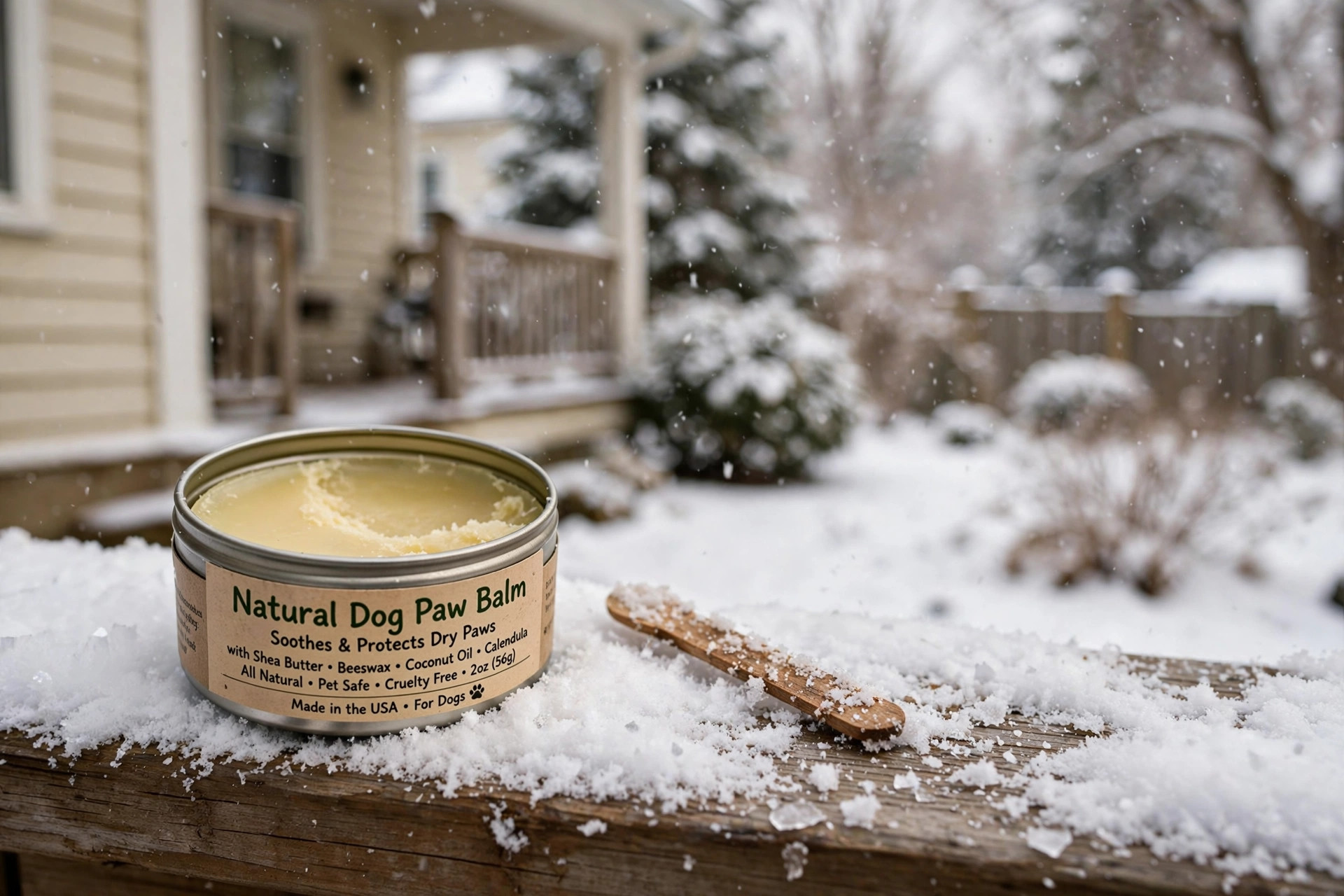
Paw balm is a thick ointment made from waxes and plant oils. Common bases are beeswax, shea butter, and coconut oil. When you massage it into the paw pads, it forms a thin, water-resistant film. This film does three things. First, it keeps salt and chemical de-icers from sitting directly on the skin. Second, it locks in the pad’s own moisture so the pad stays soft and flexible in dry air. Third, it gives the paw a little grip on slick ice.
The balm soaks in slowly. Most products need five to ten minutes of contact time before the walk. That is why it helps to apply balm a little before you head out the door. Some owners keep a jar by the leash so they do not forget. Reapply after long walks, and apply a thin coat at night so the pads can heal while the dog sleeps. The American Kennel Club notes that routine paw checks in winter catch small cuts before they turn into bigger problems.
What to Look for When You Choose a Paw Balm
Not all balms are equal. The market holds dozens of products, and labels can be confusing. A few clear rules will guide you to a safe choice.
Ingredients That Help
Look for a short list of natural ingredients. Beeswax is the backbone of most good balms. It forms the protective layer and holds the other oils together. Shea butter and cocoa butter add deep moisture. Coconut oil and olive oil soften dry pads. Calendula and vitamin E help skin that is already rough. These are the same gentle ingredients found in many pet care guides on PetMD.
Unscented or lightly scented products are best. Strong fragrance can make a dog want to lick the balm off at once. A balm made for dogs, not for humans, matters too. Human lotions often contain ingredients that are not safe if a dog licks them.
Ingredients to Avoid
Read the label before you buy. Avoid balms with tea tree oil, which can be toxic to dogs even in small amounts. Avoid products with xylitol, a sweetener that is dangerous for dogs. Skip anything with artificial dyes, heavy perfumes, or menthol. If a product lists an ingredient you cannot pronounce and cannot look up, choose a simpler one. The ASPCA keeps current lists of substances that are harmful to pets, and it is worth checking anything new against that list.
Types and Options on the Market
Paw balms come in a few common forms. Stick balms look like a large lip balm and roll on cleanly. They are tidy and good for travel. Tin balms are the classic form. You scoop a small amount with your finger and work it into the pad. They tend to be thicker and last longer on the paw. Tube balms squeeze out like ointment and suit owners who dislike dipping fingers into a tin.
There are also specialty products. Some balms add a light SPF for dogs that spend time on bright snow, since snow reflects strong sun. Others are made extra thick for working dogs and sled dogs that run for miles on ice. For the average pet dog walking a neighborhood route, a simple beeswax tin is usually enough. Reviews and product comparisons at Chewy and The Spruce Pets can help you compare textures and prices before you buy.
Price is not a perfect guide to quality. A small tin often lasts a full winter because you use so little each time. Buy from a maker that lists full ingredients and gives clear directions for dogs.
How to Apply Paw Balm the Right Way
Good technique makes the balm work better. Start with clean, dry paws. If the paws are wet from melted snow, pat them dry with a towel first. Warm a pea-sized amount between your fingers. The warmth helps it spread. Massage it into each pad with gentle pressure, and work a little between the toes where ice balls form.
Give the balm time to sink in. Ten minutes before the walk is ideal. If your dog licks at once, distract with a short training game or a toy. A thin layer is enough. Thick globs do not protect better. They just make the floor slippery when the dog walks across it.
After the walk, rinse the paws in lukewarm water to wash off salt, then pat dry and apply a second thin coat. This night-time coat heals the small damage of the day. Keep the routine through the whole salt season, not just on snowy days. City crews often spread salt on bare pavement when ice is only a risk, and those invisible days can be the worst for paws.
If your dog spends long hours in a cold yard, winter shelter matters too. A heated dog house for winter cold climates gives outdoor dogs a warm place to rest their paws between outings.
Cost and Price
Paw balm is one of the cheapest winter supplies you can buy. A standard tin or stick usually costs between five and fifteen dollars. One tin often lasts a single dog through an entire winter with daily use. Larger multi-packs bring the per-ounce cost down for homes with two or three dogs.
Specialty balms for working dogs cost more, sometimes twenty dollars or above. They use denser waxes that hold up under hard use. For most family dogs, the basic product does the job. Compared with a vet visit for cracked, infected pads, which can easily run into the hundreds of dollars, a ten-dollar tin is plain common sense.
Care and Upkeep Through the Winter
Balm works best as part of a steady routine. Check the paws once a week for cracks, redness, or swelling between the toes. Trim the fur between the pads so ice cannot cling to it. Keep nails trimmed, since long nails force the paw to spread and expose more skin to salt.
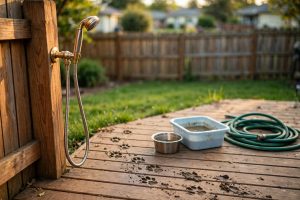
Wash paws after every walk on treated ground. A shallow basin of lukewarm water by the door makes this quick. Dry the paws well, since damp pads chill fast in cold air. On bitter days, shorten the walk rather than pushing through. Dogs that rest on a dry surface stay warmer. A best outdoor dog bed waterproof for patio keeps a yard dog off frozen concrete.
Watch how your dog walks. A sudden limp, constant licking, or a paw held off the ground means something is wrong. Rinse the paw, look for a cut or a salt burn, and call your vet if the limp lasts more than a day. Paw problems are easier to fix early.
Safety Notes
Paw balm is safe when used as directed, but a few cautions apply. Choose products labeled for dogs and made with food-safe ingredients, since dogs will lick some of it. The ASPCA advises that even natural products can upset a sensitive stomach if a dog eats a large amount, so store the tin where the dog cannot chew it.
Never use human products with pain relievers or steroids on paws unless your vet tells you to. Never pour hot water on icy paws to warm them. Sudden heat can damage cold tissue. Lukewarm water and a towel are enough. If a pad is deeply cracked or bleeding, skip the balm and see your vet first. Balm protects healthy skin. It is not a treatment for open wounds.
Also remember that balm does not make a dog safe in extreme cold. Frostbite can still strike ears, tails, and paws on very cold days. Short outings and warm shelter remain the best defense. For winter walks in busy neighborhoods, a best no pull dog harness for strong pullers keeps your dog close and under control on icy sidewalks.
Frequently Asked Questions
Can I make paw balm at home?
Yes. Many owners melt equal parts beeswax, shea butter, and coconut oil, pour the mix into a tin, and let it cool. Homemade balm works well if you use clean ingredients and skip all essential oils. Store it in a cool place. It will keep for months.
How often should I apply paw balm in winter?
Apply a thin coat before each walk on salted or icy ground, and once more at night. On days with no walk, one application keeps the pads from drying out. Daily use through the salt season gives the best results.
Will paw balm stop my dog from slipping on ice?
Balm improves grip a little, but it does not turn paws into ice cleats. Walk at a slow pace on icy patches and avoid steep frozen slopes. Booties give more traction than balm on sheer ice.
Is paw balm safe if my dog licks it off?
Balms made for dogs use lick-safe ingredients, and small amounts are fine. Try to let the balm soak in for ten minutes before the dog can lick it. If your dog eats a large amount of any balm, call your vet or a poison hotline.
Do indoor dogs need paw balm?
Indoor dogs that only step out for quick bathroom breaks need it less. But if your building salts the walkways, even a short trip can irritate paws. A light coat on heavy salt days is still wise.
Can puppies use paw balm?
Yes, once a puppy is old enough for outdoor walks. Use a simple unscented balm and apply a very thin coat. Puppies chew and lick more, so watch them for the first few minutes after application.
A Final Word
The best dog paw balm for winter salt protection is the one you will actually use every day. Pick a simple product with safe ingredients, keep it by the door, and make it part of the walk routine. Your dog cannot tell you when salt burns. Clean paws, soft pads, and a quick check each week will carry both of you through the winter in comfort. More winter pet care ideas are easy to find at PetMD, Chewy, and the American Kennel Club.
See The Home Depot for more detail. See also Petco and PetSmart for further detail.
References
American Kennel Club. (n.d.). Dog care and training resources. https://www.akc.org ASPCA. (n.d.). Pet care and animal welfare resources. https://www.aspca.org Chewy. (n.d.). Pet supplies. https://www.chewy.com Petco. (n.d.). Pet supplies and services. https://www.petco.com PetMD. (n.d.). Pet health information. https://www.petmd.com PetSmart. (n.d.). Pet supplies and services. https://www.petsmart.com The Home Depot. (n.d.). Home improvement products. https://www.homedepot.com The Spruce Pets. (n.d.). Pet care guides and product reviews. https://www.thesprucepets.com
Was this guide helpful?

About James Carter
The My Garden US editorial team writes practical, in-depth home and garden guides for American homeowners — tested advice, no fluff.