Learning how to grill salmon without skin sticking is one of the most useful skills a backyard cook can gain. Few moments feel worse than lifting a spatula and watching a beautiful fillet tear apart, with the skin glued to the grate and the flesh left behind. The good news is simple. Sticking is not a matter of luck. It is a matter of heat, oil, and timing. When each of those three is right, the skin firms up, crisps, and lets go of the metal on its own. The fillet slides free in one piece. This guide walks through every part of the process, from buying the fish to cleaning up after the meal, so the skin comes off the grill crisp and golden instead of stuck and torn.
Why the Skin Sticks
Salmon skin sticks to grill grates for a few plain reasons. First, metal expands when it gets hot and grips food that touches it while cool. If you lay a cold fillet on a lukewarm grate, the proteins in the skin bond with the steel before the heat can form a crust. Second, the skin holds moisture and natural fat. Moisture turns to steam, and steam keeps the skin soft and glued in place. Third, old grease and charred bits from past cooks make the surface rough. A dirty grate acts like glue.
Heat fixes the first two problems. When the grate is truly hot, the skin sears in seconds. The proteins set and tighten. A crisp layer forms between the flesh and the metal. Steam escapes fast instead of pooling under the skin. After a few minutes the skin dries, shrinks a little, and releases. That is why every experienced grill cook repeats the same rule: hot grate, oiled fish, and hands off until it is ready to turn. guides from AmazingRibs have long taught that high, even heat is the heart of clean grilling.
What to Look for When You Buy the Salmon: How to Grill Salmon Without Skin Sticking
Good results start at the fish counter. Ask for fillets with the skin on and the scales removed. Scales left on the skin will keep it from crisping and make release harder. The skin should be shiny and moist, not dried or curling at the edges. The flesh should smell fresh and faintly of the sea.
Thickness matters. A fillet of even thickness cooks at an even rate. Thin tail pieces cook faster than the thick center cut, and the thin parts dry out and tear while the thick parts are still raw inside. Ask the fishmonger to cut center-cut pieces about one inch thick. If you buy a whole side, cut it into portions at home with a sharp knife so each piece has a flat skin side.
Fresh fish releases better than fish that has been frozen and thawed badly. Frozen salmon works fine if it was frozen quickly and thawed slowly in the refrigerator. Before grilling, set the fillets on the counter for twenty to thirty minutes. Fish near room temperature hits the grate and sears instead of cooling the metal down. Pat the skin very dry with paper towels. Dry skin crisps. Wet skin sticks.
Types of Grills and Which Ones Work Best
You can grill salmon on any grill, but each type calls for a small adjustment.
Gas grills give steady, easy heat. You set the dials, close the lid, and the grates reach full temperature in ten to fifteen minutes. Makers like Weber, Char-Broil, Broil King, and Napoleon all build gas grills with heavy grates that hold heat well. Heavy grates are your friend. They stay hot when the cold fish lands.
Charcoal grills give strong heat and a smoky taste. Spread the coals in an even layer and wait until they are covered with white ash. The grate should be too hot to hold your hand above for more than two seconds.
Pellet grills, like those made by Traeger, hold exact temperatures with wood smoke. Set the grill near 450 degrees and let it heat fully with the lid closed.
Kamado cookers, such as the ceramic cookers from Big Green Egg, hold heat for a long time. They work well for salmon because the heat stays steady after the lid opens. A large grill of any type also handles bigger jobs, such as the best BBQ for Thanksgiving turkey outdoors.
The type matters less than the state of the grates. Clean, hot, well-oiled grates keep fish from sticking to the grill on any of these machines.
Prepare the Grill
Preparation takes ten minutes and decides most of the result.
First, clean the grates while they are hot. Light the grill and close the lid for ten minutes. Then scrub the grates hard with a stiff grill brush. Every dark flake you remove is one less spot for skin to grab.
Second, oil the grates. Fold a paper towel into a pad, grip it with long tongs, dip it in canola or peanut oil, and wipe the hot grates three or four times. The grates should shine. Repeat the oiling right before the fish goes down.
Third, oil the fish. Brush both sides of each fillet lightly with oil. The skin needs a thin, even coat. Season the flesh side with salt and pepper after the oil goes on.
The Step-by-Step Method
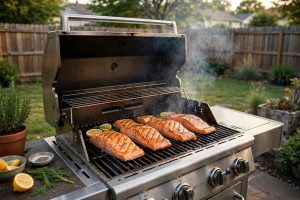
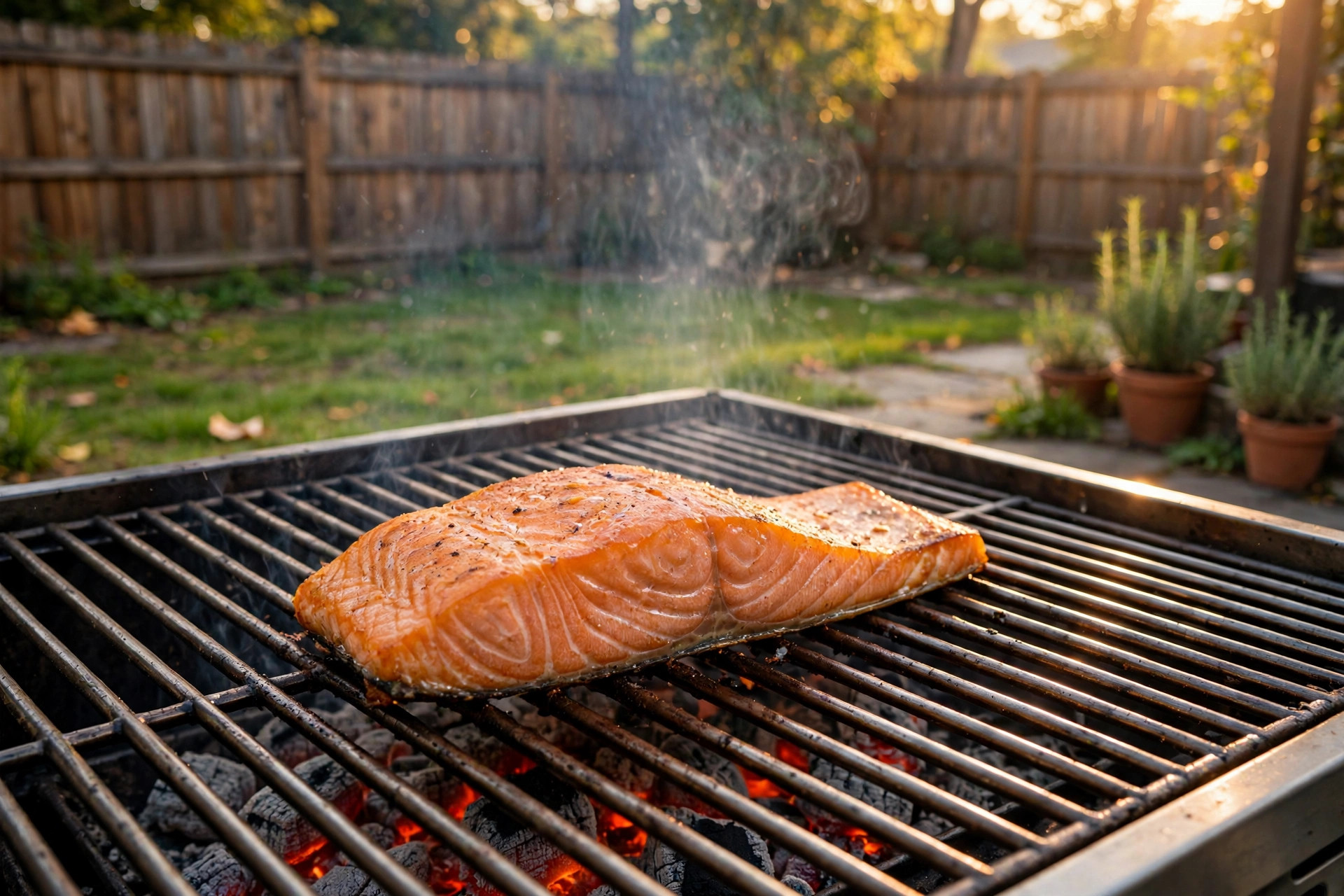
Place the fillets skin-side down on the hot, oiled grates. Lay them away from you so the oil does not splash. Close the lid. This is the hardest part: do not touch the fish. Let it cook undisturbed for five to six minutes over medium-high heat, about 400 to 450 degrees. The lid traps heat and cooks the fillet from above as well.
Watch the sides of the fillet. You will see the color change creep up from the bottom. Slide a thin metal spatula under the edge. If it resists, give it one more minute. When the skin is ready, it lifts free with almost no effort.
Once free, flip each fillet gently with a wide spatula. The flesh side needs only one to two minutes. Salmon is done when the center flakes easily with a fork and the inside looks just barely translucent. Many cooks pull the fish at 125 degrees internal temperature for a moist center. A thin fillet needs about eight minutes total. A thick center cut may need ten.
Move the fish to a warm platter skin-side up and serve it hot with lemon wedges.
A Few Extra Tricks That Help
A grill basket or a sheet of heavy foil with holes punched in it can save a fillet that still wants to stick. Oil the basket well and it works like a cradle. Cedar planks give smoky flavor and the fish never touches the metal at all. Some cooks grill the salmon skin-side down and serve it on the crisp skin, which tastes like a cracker. Some cooks add smoke flavor with a pellet grill, and choosing the best BBQ wood pellets makes the smoke taste clean without changing how the skin releases.
Another trick is the two-zone fire. Pile the heat on one side of the grill and leave the other side cooler. Sear the skin over the hot side for three minutes, then move the fillets to the cool side to finish with the lid closed. The skin sets fast and the flesh cooks gently.
If you want smoke flavor on a gas grill, add a small foil pouch of soaked wood chips over the burner.
Cost and Price
Grilling salmon at home costs far less than ordering it at a restaurant. Fresh Atlantic salmon fillets sell for about eight to fourteen dollars per pound at most grocery stores. Wild-caught sockeye or king salmon runs higher, often sixteen to twenty-eight dollars per pound when in season.
The grill itself is the bigger purchase, but it serves for years. A basic kettle charcoal grill costs around one hundred to one hundred fifty dollars. A mid-size gas grill runs from two hundred fifty to six hundred dollars. Pellet grills start near five hundred dollars and rise past one thousand for large models. Guides from Home Depot list current models across every price band, and reviews from Consumer Reports compare how well they hold heat, which matters most for fish.
Small supplies cost little. A stiff grill brush runs ten to twenty dollars. A wide metal fish spatula costs twelve to twenty-five dollars. A bottle of high-smoke-point oil costs under ten dollars and lasts many cooks. An instant-read thermometer costs fifteen to thirty dollars. For a family that grills salmon twice a month, the per-meal cost settles near the price of the fish alone.
Care and Upkeep
A clean grill is a non-stick grill. The habit takes five minutes.
After each cook, while the grates are still hot, scrub them with the brush. Burn off the residue with the lid closed for five to ten minutes. Once cool, wipe the grates lightly with an oiled paper towel. Cleaning your pellet grill after use keeps the surface smooth for the next cook. This thin oil coat protects the metal between cooks and keeps the surface slick.
Once or twice a season, give the grill a deep clean. Remove the grates and soak them in hot soapy water. Scrub off the built-up grease. Empty the grease tray or drip pan. Grease fires start in neglected drip pans, and a flare-up will char salmon skin in seconds.
Cover the grill when it cools. Rain and dew rust steel grates. A good cover costs twenty to forty dollars and adds years to the life of the grill. Stainless steel grates resist rust better than plain steel, and cast iron grates hold heat best but need regular oiling to stay seasoned.
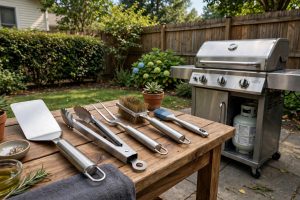
Store brushes, tongs, and spatulas in a dry spot. Replace the brush when the bristles bend or thin out.
Safety
Grilling is safe when a few rules are kept.
Keep the grill outdoors, away from the house, deck rails, and low branches. Never grill in a garage or under a covered porch. Charcoal and gas both give off carbon monoxide, which has no smell.
Keep a spray bottle of water nearby for small flare-ups. For a grease fire, close the lid and shut off the gas or smother the coals.
Wash your hands, the cutting board, and the knife after they touch raw fish. Keep raw salmon away from cooked food. Use one plate for raw fillets and a clean plate for the cooked fish.
Use long-handled tools and heat-proof mitts. Grill grates reach 500 degrees and more. Wear closed shoes. Keep children and pets at least three feet from the hot grill. Let the grill cool fully before you cover it or move it.
Buy fish from a trusted seller and keep it cold until you are ready to cook. If the salmon smells strongly of ammonia or the flesh feels mushy, throw it out. No recipe can save spoiled fish.
Frequently Asked Questions
Should I grill salmon with the skin on or off? Keep the skin on. The skin protects the flesh from direct heat, holds the fillet together, and turns crisp and tasty. Skinless fillets fall apart more easily and dry out faster.
What is the best temperature to grill salmon? Medium-high heat, about 400 to 450 degrees at the grate, works best. Hotter heat chars the skin before the center cooks. Let the grill heat fully with the lid closed before the fish goes down.
How do I keep fish from sticking to the grill without special tools? Three steps do the work. Scrub the grates clean while hot. Wipe them with oil on a paper towel held by tongs. Pat the fish skin dry and brush it lightly with oil. Then leave the fillet alone until the skin crisps and releases on its own.
How long does salmon take on the grill? A one-inch fillet needs about eight to ten minutes total, most of it skin-side down. Cook it undisturbed for five to six minutes, flip once, and give the flesh side one to two minutes more. Pull it when the center flakes with a fork.
Can I grill frozen salmon? It is better to thaw it first. Frozen fillets drip water as they thaw on the heat, and that water turns to steam under the skin and glues it to the grate. Thaw the fish overnight in the refrigerator and pat it dry before grilling.
Why did my salmon skin stick even though I oiled the grates? The usual causes are a grate that was not hot enough, wet skin, or flipping too soon. Next time, heat the grill a full ten minutes with the lid closed, scrub and oil the grates twice, dry the skin well, and wait until the spatula slides under with no fight.
A Final Word
Grilling salmon without the skin sticking comes down to habit, not talent. Buy fillets of even thickness. Pat the skin dry. Heat the grill fully. Scrub the grates clean and oil them well. Lay the fish down skin-side first and leave it alone until it tells you it is ready. Follow these steps and the fillets will lift free every time, crisp and whole, ready for the table.
References
AmazingRibs.com. (n.d.). Barbecue and grilling science. https://www.amazingribs.com Big Green Egg. (n.d.). Kamado grills and outdoor cooking. https://www.biggreenegg.com Broil King. (n.d.). Gas and charcoal grills. https://www.broilkingbbq.com Char-Broil. (n.d.). Gas and charcoal grills. https://www.charbroil.com Consumer Reports. (n.d.). Product reviews and ratings. https://www.consumerreports.org Napoleon. (n.d.). Fireplaces, grills, and heating products. https://www.napoleon.com The Home Depot. (n.d.). Home improvement products. https://www.homedepot.com Traeger. (n.d.). Wood pellet grills. https://www.traeger.com Weber. (n.d.). Grills and outdoor cooking. https://www.weber.com
Was this guide helpful?

About David Wilson
The My Garden US editorial team writes practical, in-depth home and garden guides for American homeowners — tested advice, no fluff.