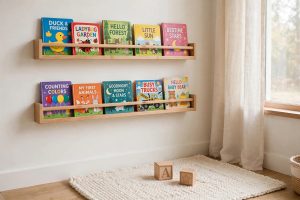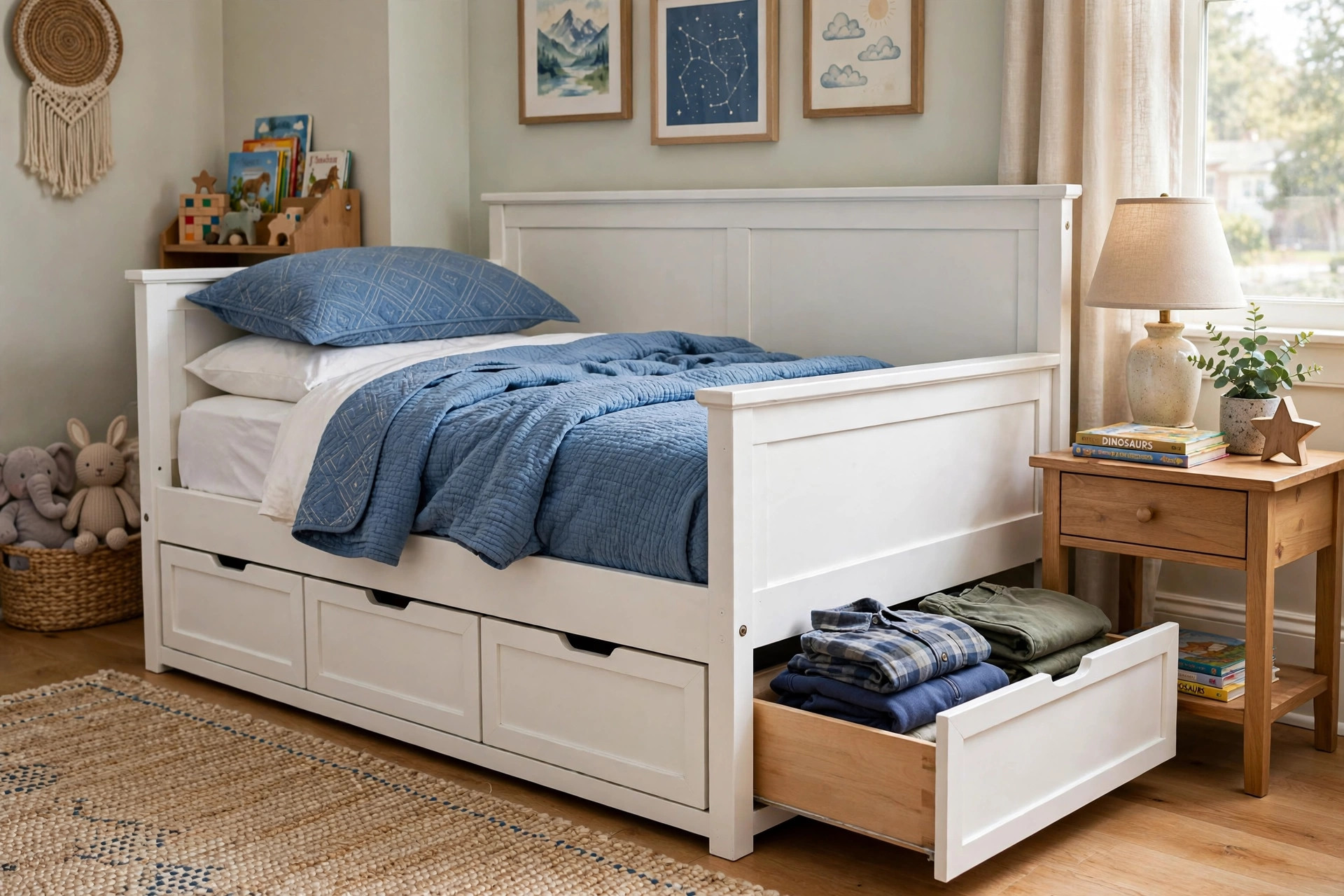

A child’s room fills up fast. Clothes, toys, books, and shoes seem to take over every corner. The best kids bed with storage drawers underneath can solve this problem in one move. It turns the empty space under the mattress into useful storage. No extra dresser is needed. The room stays neat, and the child gets a strong, safe bed.
Parents in the United States buy this style of bed more each year. Small bedrooms, shared rooms, and rented homes make storage beds a smart choice. This guide will walk you through the main points. You will learn why these beds work, what to check before you buy, the main types, and how much they cost. Simple facts, plain words, no fuss.
Why a Bed With Storage Drawers Makes Sense
A regular bed wastes the space below it. Dust collects there, or lost toys roll under it. A kids bed with drawers changes that dead space into a storage chest. Two or three drawers can hold a full set of sheets, out-of-season clothes, or a large toy collection. Some wide models have four to six drawers.
This matters most in small rooms. When floor space is tight, a dresser may block the door or the play area. A storage bed removes that need. The room feels bigger because the storage is built into furniture that is already there.
It also helps children learn order. A drawer is easy for a small child to open and close. Put picture labels on each drawer front, and even a four-year-old can sort toys by type. Morning routines go faster when clothes live right under the bed.
For growing families, the value lasts. A twin-size storage bed fits a child from age six to the teen years. The drawers hold different things at each stage: diapers and wipes in the early years, school clothes later, and hobby gear in the teen years. If you are already planning ahead, a toddler bed with guard rails for first bed may serve a younger child first, before you move up to a storage bed for the elementary years.
What to Look for Before You Buy: Best Kids Bed with Storage Drawers Underneath
Not all storage beds are equal. Check these points before you spend money.
Measure the Room First
Drawers slide out. That sounds simple, but it matters. Measure how far the drawers open, then add a few inches of hand room. Place a mark on the floor with tape where the drawer fronts will stop. Make sure nothing blocks that zone: no door swing, no toy box, no heating vent.
Also check the ceiling height if you plan a captain bed with a raised platform. A child should be able to sit up in bed without hitting his or her head.
Drawer Size and Depth
Shallow drawers hold sheets, socks, and small toys. Deep drawers hold bulky sweaters, blankets, and board games. Decide what will live in the drawers, then pick depth to match. Many models mix one shallow drawer with one deep drawer.
Check the drawer guides. Metal ball-bearing slides move smooth and last long. Wooden runners cost less but can stick over time. Soft-close slides keep little fingers safe from pinched skin. This is one feature worth paying for.
Frame Material
Solid wood frames last the longest. Pine and rubberwood are common and hold up well to rough play. Engineered wood with a wood veneer costs less and still looks nice, though it chips more easily. Metal frames exist too, but they rarely come with built-in drawers.
Look at the weight limit. A good twin storage bed should hold at least 200 pounds. This covers the child, the mattress, and an adult who sits down to read a bedtime story. The best bunk bed with stairs for kids room sets a similar standard, and a storage bed should match it.
Headboard, Footboard, and Finish
Low headboards suit small children. Tall headboards look nice but can tip if a child climbs them. Round the corners if the child is under six. Choose a finish that wipes clean: lacquer, laminate, or sealed wood. Painted beds show dings, so keep a small pot of touch-up paint if you pick white.
Retailers like Pottery Barn Kids and IKEA show many finish options on their homepages. Wide online stores such as Wayfair list hundreds of models with full measurements. Independent testing groups such as Consumer Reports review bed strength and drawer quality.
Types of Kids Beds With Storage Drawers
Four main styles cover most homes. Each has its own strengths.
Twin Beds With Under-Drawers
The basic twin bed with two or three drawers is the most common pick. It fits standard twin bedding. The frame sits at normal bed height, so a child can climb in and out with ease. This style fits almost any room and most budgets. It is also the easiest to move, since the drawers come out as separate units.
Captain Beds
A captain bed raises the sleeping surface a few inches. The extra height makes room for deep, wide drawers on both sides. Some captain beds add a small bookcase in the headboard. These beds store more than any other type, but they take more floor space when drawers on both sides are open. Measure both sides before you buy.
Trundle Beds With Drawer Fronts
A trundle bed hides a roll-out bed under the main mattress. Some models replace the second mattress with deep drawers. Others offer both: a trundle on one side and drawers on the other. These suit children who host sleepovers, since the spare bed rolls out in seconds.
Daybeds With Storage Drawers
A daybed sits against the wall and doubles as a sofa by day. Drawers under a daybed hold spare bedding, books, and games. This style works well in a playroom or a guest room that doubles as a child room. Add throw pillows, and the bed looks like a couch during the day.
Cost and Price: What to Expect
Prices run wide. A basic engineered-wood twin storage bed costs between $200 and $400. Solid pine or rubberwood models run from $400 to $800. High-end hardwood captain beds with soft-close drawers can reach $1,000 to $1,500.
The mattress is not included. Budget $150 to $400 for a good twin mattress. Add delivery fees, which run $50 to $150 for large furniture. Some stores charge extra to carry the bed upstairs.
Watch for seasonal sales. Presidents Day, Memorial Day, Labor Day, and Black Friday bring deep cuts on kids furniture. Floor models can save 20 to 30 percent, but check the drawer slides for wear before you buy. Small add-ons like nursery storage baskets for diapers and wipes show how much little storage extras can add to a final bill, so plan the full cost at the start.
Simple rule: pay for the frame and the slides first. Fancy finishes and extra shelves can wait. A strong frame with smooth drawers will outlast a pretty bed with weak hardware.
Care and Upkeep
A storage bed needs little care, but small habits add years to its life.
Vacuum inside the drawers twice a year. Crumbs and dust work into the slides and make drawers stick. Wipe the drawer tracks with a damp cloth, then let them dry fully before you slide the drawers back in.
Tighten the bolts every six months. Kids rock, jump, and bounce. Screws loosen. A loose frame wobbles, and wobble wears the drawer fronts out of line. Keep the small Allen key that came with the bed in one of the drawers so it is always at hand.
Watch the weight. Drawers hold a lot, but each one has a limit. Most drawers take 25 to 50 pounds. Overloading bends the slides and makes drawers sag. Heavy items, like books, belong on a bookshelf, not in a drawer. Sites like Family Handyman give useful tips on furniture repair and upkeep on their homepage.
Sunlight fades finishes. If the bed sits near a window, close the blinds in the bright afternoon hours. This keeps the color even across the frame and drawer fronts. Home guides on The Spruce cover room layout and sun damage in plain terms.
Safety Notes for Parents
Safety comes first with any child bed. Follow these steps.
Buy from a maker that meets current safety rules. The U.S. Consumer Product Safety Commission lists bed and bunk bed rules on its homepage, and many recalls start there. Check the model number against the recall list before you bring the bed home.
Secure the bed to the wall if it is tall or if the child climbs. Anti-tip straps cost a few dollars and stop the frame from tipping forward. This is vital for captain beds with raised platforms.
Keep gaps small. A gap between the mattress and the frame should be under two inches. Larger gaps can trap a small arm or leg. Use the mattress size the maker lists. A too-small mattress slides and leaves gaps.
Teach drawer rules early. Show the child how to open one drawer at a time. Two open drawers at once can tip a light frame. Remind small children never to climb into a drawer or stand on it. Drawer slides are not steps.
Health sites such as HealthyChildren.org and What to Expect offer age-by-age sleep safety advice on their homepages. Their checklists help you pick the right bed height and guard rail for each age.
Frequently Asked Questions
What age is a storage bed right for?
Most children are ready around age six, when they can climb in and out with ease and follow simple rules about the drawers. Younger children do better with a low toddler bed first. Older children and teens also use storage beds well, since the drawers hold clothes and school gear.
Do the drawers fit under a bunk bed?
Some bunk beds have drawers under the lower bunk. They are smaller than the drawers in a storage bed, because the bunk frame leaves less height. If storage is the main goal, a captain bed holds more than a bunk bed.
Can an adult assemble the bed alone?
Yes, but it takes time. Plan two to three hours. Drawers add steps, since each drawer needs its own slides and fronts. A second pair of hands helps with the heavy headboard. Follow the manual in order and do not skip the wall strap step.
Will drawers scratch hardwood floors?
They can. Stick felt pads on the drawer bottoms and on the frame legs. Felt pads cost little and stop scratches. Check them twice a year and replace them when they wear thin.
How do I keep drawers clean inside?
Line each drawer with washable shelf liner. Shake the liners out once a month. Wash them in the sink when they look dirty. The liner also stops small items from sliding around when the drawer opens.
Are storage beds good for renters?
Yes. A storage bed cuts the need for a dresser, which means fewer pieces to move. The drawers pull out, so the bed breaks down into small parts for the moving truck. Nothing bolts to the wall unless you add anti-tip straps, and those leave only two small screw holes.
A Final Word
The best kids bed with storage drawers underneath is the one that fits your room, your budget, and your child. Measure first. Pick strong materials and smooth slides. Put safety above style. Do that, and the bed will serve your family for ten years or more.
Start with a short list of three or four models that match your measurements. Read the reviews. Check the recall list. Then buy with calm. A tidy room is a gift to the whole house, and a storage bed is one of the simplest ways to get there.
References
American Academy of Pediatrics. (n.d.). HealthyChildren.org. https://www.healthychildren.org Consumer Reports. (n.d.). Product reviews and ratings. https://www.consumerreports.org Family Handyman. (n.d.). DIY home repair and maintenance. https://www.familyhandyman.com IKEA. (n.d.). Home furnishings. https://www.ikea.com Pottery Barn Kids. (n.d.). Kids furniture and decor. https://www.potterybarnkids.com The Spruce. (n.d.). Home and garden advice. https://www.thespruce.com U.S. Consumer Product Safety Commission. (n.d.). Product safety information. https://www.cpsc.gov Wayfair. (n.d.). Furniture and home goods. https://www.wayfair.com What to Expect. (n.d.). Pregnancy and parenting guidance. https://www.whattoexpect.com
Was this guide helpful?

About Michael Thompson
The My Garden US editorial team writes practical, in-depth home and garden guides for American homeowners — tested advice, no fluff.
You May Also Like
Nursery Glider Swivel for Easy Movement: A Full Buying Guide
September 4, 2026 0 views
The Toddler Floor Bed Montessori Style Low: A Parent’s Complete Guide
April 22, 2026 0 views
Kids Wall Decal Growth Chart for Measuring Height: A Complete Guide
September 18, 2026 0 views