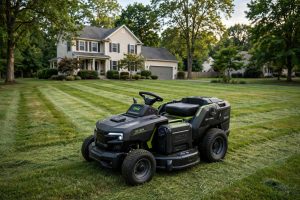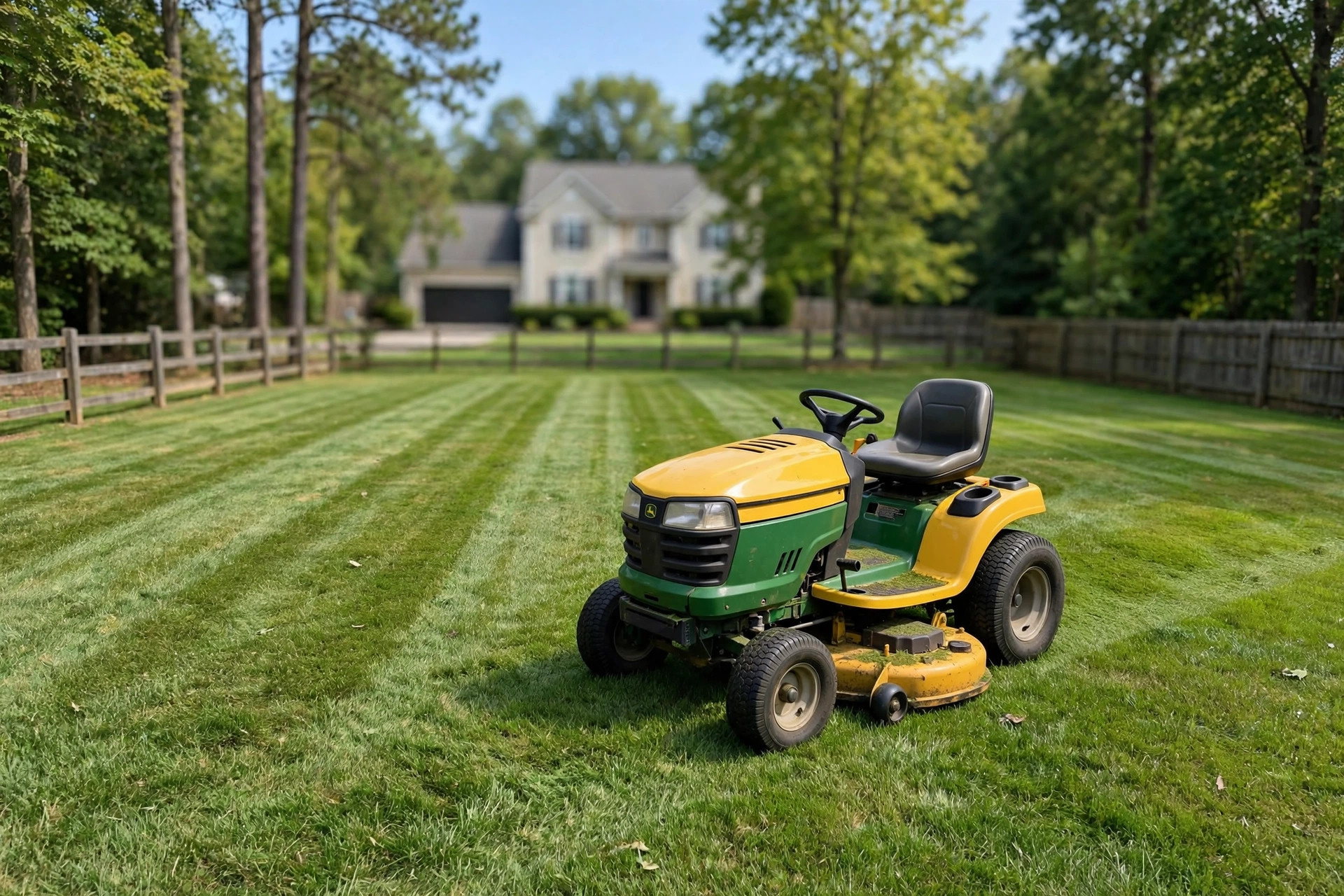
An acre of grass is a fine thing to own. It gives a family room to breathe and children a place to play. But when Saturday morning comes and the grass stands tall, one acre can feel like ten. A push mower can eat up three hours of a Saturday, and a working family has no three hours to spare. This is why so many one-acre owners turn to the riding mower. It cuts the job to under an hour and saves back and legs. Chosen with care, it serves a family well for fifteen years or more.
This guide is written in plain words for the homeowner who wants to buy it once and buy it right. Only the facts that matter: power, size, price, care, and safety.
Why One Acre Calls for a Riding Mower
An acre holds 43,560 square feet of land. Even after the house, the driveway, and the garden beds are taken out, most one-acre lots still leave 30,000 square feet of grass or more. A walk-behind mower cuts a path about 21 inches wide. A riding mower cuts a path 42 to 54 inches wide. The arithmetic is simple. The riding mower covers twice the ground with each pass, and the driver sits down while it does the work.
Time is the true reason. A good rider finishes the weekly cut in 45 to 60 minutes; a push mower asks for three hours. Over a 30-week season, that is nearly 75 hours given back to the family.
There is also the land itself. One-acre lots are seldom flat and square. They have slopes, trees, and low spots where the grass grows thick. A riding mower has the weight and power to climb a gentle slope and chew through heavy spring growth without stopping. A small mower strains, runs hot, and slips its belt.
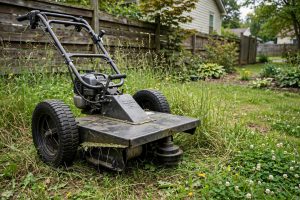
Some ask about a self-propelled walk-behind. For a quarter acre it may do, and self propelled mower deals for usa homeowners are worth a look for tight budgets. But on a full acre, the rider pays for itself in time.
What to Look for Before You Buy: Best Riding Lawn Mower for One Acre Lots
Four parts matter most: the engine, the cutting deck, the transmission, and the seat.
Engine Power
Engine power is measured in horsepower. For one acre, 18 to 24 horsepower is the right range. Less than 18, and the mower will labor in thick or wet grass. More than 24 is seldom needed for an acre, though it does no harm. Briggs and Stratton, Kohler, and Kawasaki have served American lawns for decades. What matters most is that parts and service are easy to find in your town.
Cutting Deck Width
The deck is the wide housing under the mower that holds the blades. Decks run from 30 inches to 54 inches on home models. For one acre, a 42-inch deck is the sweet spot. It is wide enough to finish quickly and narrow enough to pass through a standard 48-inch garden gate and to turn around trees. A 46 or 48-inch deck suits open, flat acres, but wider decks need more room to turn and cost more to re-blade.
Transmission
Older mowers used gears. You stopped, shifted, and started again. Most mowers sold today use a hydrostatic transmission. It works like the pedal in a car. Push forward to go forward. Press back to go back. There is no shifting and no clutch. For a homeowner, hydrostatic drive is worth the extra money. It is easy for the whole family to drive and gives smooth control on slopes.
Comfort and Build
You will sit on this machine an hour a week for years, so sit on it before you buy. The seat should be padded, the steering easy, the deck lever smooth. Look underneath at the frame. Stamped steel decks are common and fine for an acre. Fabricated decks, welded from heavy plate, last longer and cost more.
Gas, Electric, or Something Else
For most buyers, the riding mower still means gasoline. A gas mower runs as long as the tank holds fuel and has the power for thick grass and slopes. Its weakness is upkeep: oil changes, air filters, spark plugs, and fuel that goes stale over winter.
Battery electric riders have joined the market in recent years. They are quiet, need almost no upkeep, and start with the turn of a key. Their weakness is run time: on one full acre of heavy grass, a battery rider may die before the job is done, and a recharge takes hours. For a flat acre that is mowed often, electric can work. For a rough acre, gasoline remains the safer choice.
A third choice is the robot mower. A robot lawn mower for half acre yards now sells at a fair price, and a larger unit can tend an acre with no driver at all. It needs boundary wire and patience at setup, and mows a little each day. It is not for everyone, but the homeowner who dislikes mowing should know it exists.
What It Will Cost
A basic rider with a 42-inch deck and a sound engine sells for 1,800 to 2,500 dollars. A mid-range machine with a stronger frame and better seat sells for 2,500 to 3,500 dollars. Top home models reach 4,000 dollars and beyond.
Do not judge by price alone. A 2,200-dollar mower with a dealer in your county beats a 1,900-dollar mower sold only by mail. The dealer assembles it right and answers the phone when the belt breaks in July.
A five-year-old rider with low hours can be a fine buy at half the new price. Check the deck for rust, start it cold, drive it up a slope, and ask for the service record.
Care and Upkeep Through the Years
Treat it like a car: care for it and it runs for years; neglect it and it fails early.
Change the oil once a year, or every 50 hours of use. Clean or replace the air filter each spring. Sharpen the blades twice a season. Dull blades tear the grass instead of cutting it, and torn grass turns brown at the tips and falls sick. When blades wear thin or bend on a stone, replace them. Many owners search for where to buy lawn mower blades near me each spring; the local dealer, farm store, or hardware store will have them. Keep a spare set on the shelf.
Grease the fittings the manual points out and check the tire pressure; a soft tire cuts uneven. At season’s end, add fuel stabilizer, run the engine five minutes, and park it in a dry shed with the battery disconnected. In spring, charge the battery, check the oil, and look the belts over.
Keep the deck clean. Grass packs underneath and holds water against the steel; a quick scrape and hose-down after each mow adds years to its life.
Safety Rules Every Owner Should Know
A riding mower is a useful servant and a dangerous one. Each year, thousands of Americans are hurt on ride-on mowers, and most of the hurt comes from a few known causes. The rules below are the ones the safety agencies print in every manual.
Never carry passengers. The mower is built for one. Never let a child drive it, and keep children and pets indoors while mowing. The blades turn at great speed and throw stones like bullets.
On slopes, drive up and down, never across. If a slope feels steep, mow it with a walk-behind or trim it by hand. Set the parking brake before you step off, and turn the engine off before you clear a clogged chute. Wear closed shoes, long trousers, and eye protection.
Read the manual that comes with your machine. It was written for your model, and the ten minutes it takes are well spent.
Questions Buyers Ask Most
How long will a riding mower last? With yearly care, 12 to 15 years is common, and a garaged machine far outlasts one left in the weather.
Can one mower handle leaves in the fall? Yes, within reason. Sharp blades chop light leaf cover into fine mulch that feeds the lawn. Heavy, wet mats should be raked first, or the deck will clog.
Is a 42-inch deck truly enough for an acre? For most lots, yes. It balances speed with room to turn around trees and pass through gates.
Should I buy extra attachments? A bagger suits owners who want a spotless lawn. A mulch kit feeds the grass as it cuts. Buy the mower first and add attachments after one season, when you know your needs.
Gas or electric for a hilly acre? Gasoline. Hills ask for steady power, and battery riders still do best on flat, often-mowed ground.
A Final Word
The best riding lawn mower for one acre lots is not the dearest machine on the floor. It is the machine that fits the land, the family, and the budget, bought from a dealer who will stand behind it. Walk the lot before you shop: count the trees, note the slopes, measure the gate. Then choose 18 to 24 horsepower, a 42-inch deck, and hydrostatic drive.
An acre is a promise of room and green. The right mower keeps that promise, one Saturday morning at a time.
References
Briggs & Stratton. (n.d.). Operator’s manuals: Riding mower engines. https://www.briggsandstratton.com
Consumer Reports. (n.d.). Lawn mowers. https://www.consumerreports.org
John Deere. (n.d.). Riding lawn mowers. https://www.deere.com
U.S. Consumer Product Safety Commission. (n.d.). Ride-on mower safety. https://www.cpsc.gov
Was this guide helpful?

About Robert Taylor
The My Garden US editorial team writes practical, in-depth home and garden guides for American homeowners — tested advice, no fluff.