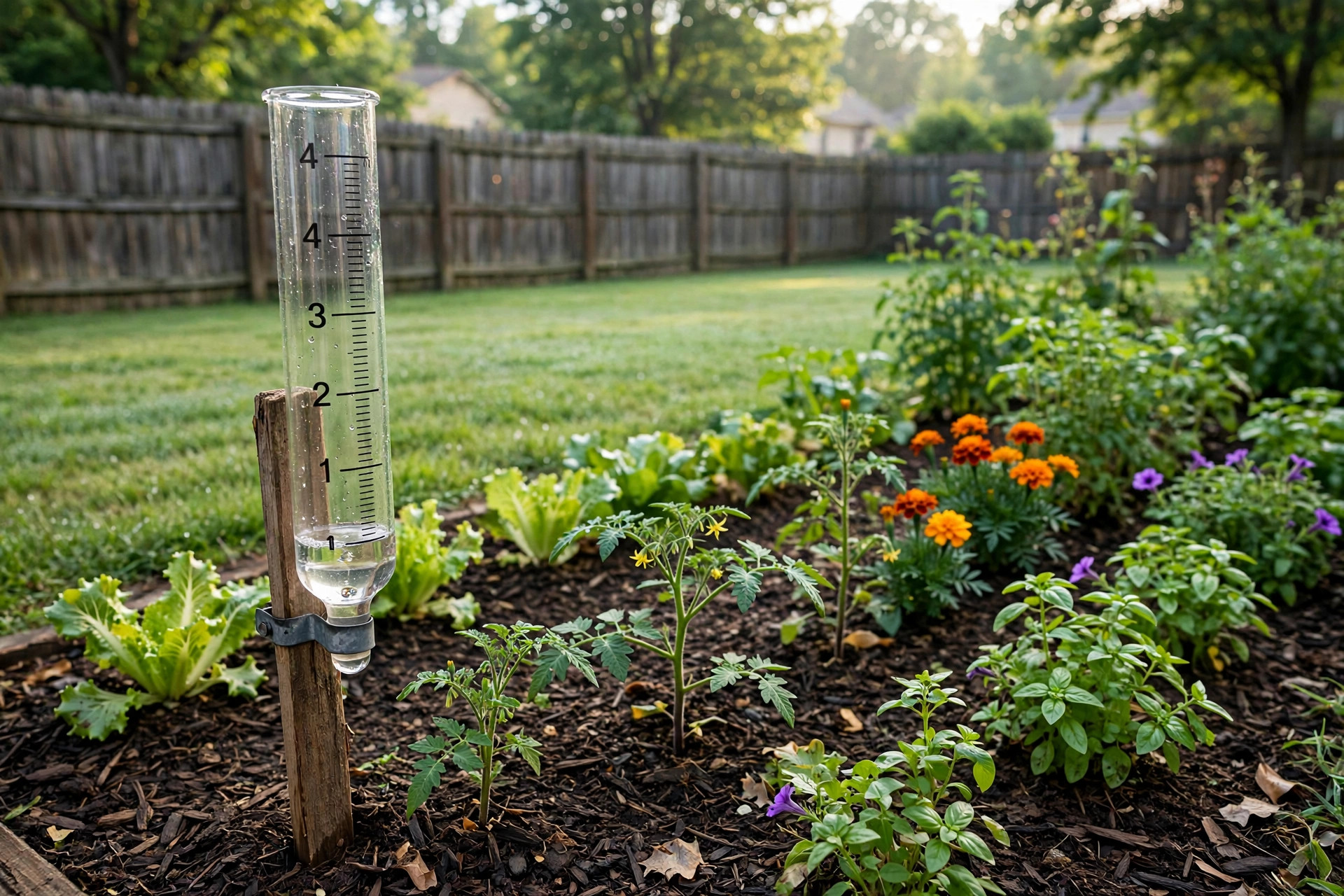

A garden lives or dies by water. Too little and the plants wilt. Too much and the roots rot. Most gardeners guess. A rain gauge takes the guesswork away. This guide to the best rain gauge for garden reviews explains how these simple tools work, what types you can buy, and how to pick one that will serve your garden well for years.
A rain gauge is one of the oldest weather tools in the world. Farmers have used some form of it for centuries. Today it is still the most direct way to know how much rain fell on your soil. You do not need batteries, wires, or a phone app for the basic kind. You only need a clear tube, a flat spot, and eyes that can read numbers.
Why a Rain Gauge Matters for Your Garden
Water is the largest cost of garden care for many home owners. City water bills climb each summer. A rain gauge tells you when nature has done the watering for you. If an inch of rain fell on Tuesday, you can skip the sprinkler on Wednesday. That one habit can cut a water bill by a noticeable amount over a season.
Plants also do better on a steady routine. Lawns in most parts of the country need about one inch of water per week. Vegetables often need more, especially in hot months. Without a gauge, it is easy to overwater. Overwatering wastes money and can harm plants. Roots that sit in soaked soil do not take up food well. Fungus problems grow in wet soil too.
A gauge also helps you plan. If your garden got only a tenth of an inch in a week, you know it is time to run the sprinklers. If it got two inches, you can hold off. Smart watering is one of the simplest ways to keep a garden green and healthy.
What Reviews of the Best Rain Gauge for Garden Tell You: Best Rain Gauge for Garden Reviews
When you read the best rain gauge for garden reviews, a few points come up again and again. Good reviewers test the same things. Accuracy comes first. A gauge should read the true amount of rain. Many reviewers test this by pouring a known amount of water through the gauge and checking the marks. The best models are accurate to within a tenth of an inch or better.
Ease of reading comes next. A gauge with large, dark numbers is easier to read from a distance. Some models have raised numbers on the glass or plastic. Others use a bright red float that rises with the water. This float makes the level easy to see from across the yard.
Build quality is the third common point. Reviewers look at the thickness of the plastic or glass. They check the bracket or stake that holds the gauge. A gauge that falls over in the first strong wind is of no use. Many reviewers leave the gauge out for a whole season and report how it holds up to sun and frost.
The last point reviewers cover is price against value. A rain gauge is a simple tool. Most good ones cost less than thirty dollars. Reviewers often note that the cheapest models can be just as accurate as the costly ones, though they may not last as long.
Types of Rain Gauges for Home Gardens
There are three main types sold for home use. Each has its strengths. Your choice depends on your garden, your budget, and how much detail you want.
Standard Tube Gauges
The standard tube gauge is the classic kind. It is a clear tube with inch marks, open at the top. Rain falls in and you read the level. These cost the least, often between five and twenty dollars. They need no batteries. They are simple and very accurate for the price.
The trade is that you must empty them by hand after each reading. In a heavy storm the tube can fill and overflow. Most standard gauges hold about five inches. If more rain falls than that, you lose the record. For most gardeners this is enough.
Funnel and Collection Gauges
A funnel gauge has a wide cone at the top and a narrow tube at the bottom. The funnel catches rain over a larger area and sends it into the tube. This gives a more exact reading. Small amounts of rain show up better in a narrow tube.
These gauges are a step up in price. They often come with a stake or a post bracket. Many serious gardeners prefer this type because it reads light rains well. Light rains of a few tenths of an inch still matter to a garden.
Digital and Wireless Gauges
Digital gauges send readings to a screen inside your house. Some link to a phone app. Some models record the time of the heaviest rain. Prices run from thirty dollars to over one hundred.
Digital models are handy if you travel. You can check the rainfall from anywhere. The trade is that they need batteries and a clear wireless path. They can also fail in extreme cold. For a simple garden, a tube gauge often does the job just as well.
What to Look for When You Choose
Start with accuracy. Look for models that reviewers have tested against known water amounts. A gauge that reads a full tenth of an inch high or low will mislead your watering all season. Trust reviews that include a test, not just an opinion.
Next, look at readability. The numbers should be large and clear. Dark printing on a clear tube is best. Some gauges have a magnifying strip that makes the water line easier to see. If you are older or read the gauge from a window, this feature matters a lot.
Then check the mount. The gauge must sit level and stay put. A good stake should go deep into the ground. A good bracket should fit a fence post or a deck rail. Make sure the top of the gauge is open to the sky and away from trees and roof lines. Water that drips off a roof is not true rainfall.
Material matters too. Thick plastic lasts longer in the sun. Cheap thin plastic can crack after one winter. Glass reads very clearly and does not fade, but it can break. Some of the best-reviewed models use a heavy cast plastic that resists both sun and frost.
Finally, think about capacity. A gauge that holds five inches will handle most storms. If you live where storms drop more than that, look for a larger model or be ready to read and empty it during a long storm.
Best Rain Gauge for Garden Reviews: Common Picks and What They Offer
Across the many best rain gauge for garden reviews, the same names appear. Heavy glass tube gauges get praise for clear readings and long life. Collectors with a wide funnel earn high marks for accuracy in light rain.
Stake-mounted plastic gauges win on price and ease of use. Reviewers like models with a bright float or a bold scale. These small touches make daily checks faster.
No single model fits every garden. A small herb bed needs only a basic tube. A large vegetable plot may repay a digital gauge with weekly totals. Match the gauge to the size of your garden and the care you give it.
Cost and Price: What You Should Expect to Pay
Prices for rain gauges fall into three bands. The simple tube kind costs five to twenty dollars. This is where most home gardeners start. At this price you can get a good stake, clear marks, and fair build quality.
Funnel and deluxe manual gauges cost twenty to forty dollars. You pay for a larger catch area, thicker material, and a better mount. Many reviewers feel this is the sweet spot. You get near-professional accuracy without digital cost.
Digital and wireless models cost thirty to over one hundred dollars. The price buys convenience and records. Add-on sensors can push the cost higher. For most gardens the manual kind is enough, but a digital gauge is a fine gift for a keen gardener.
Look for sales at garden centers in spring. Stores stock gauges early in the season. Buying early gives you the full choice before the summer rains start.
How to Set Up Your Rain Gauge
Place the gauge in the open. It should be away from buildings, trees, and tall fences. A common rule is to keep it twice as far from an object as the object is tall. A ten-foot tree should be twenty feet away. This keeps splash and drip from spoiling the reading.
Mount it level. A tilted gauge reads wrong. Use a small bubble level if you have one. Set the top of the gauge about two to five feet above the ground. This height keeps out dirt splash while staying easy to read.
Read the gauge at the same time each day. Morning is best. Write the number down or keep a small notebook by the door. Empty the gauge after you read it. An empty gauge is ready for the next rain. In freezing weather, bring a plastic gauge indoors. Ice can crack it.
Care and Upkeep Through the Seasons
A rain gauge needs little care, but a little care keeps it accurate. Rinse the tube every few weeks. Dust and algae can cloud the marks. A soft brush and plain water are enough. Do not use harsh soap, which can leave a film.
Check the mount after storms. Wind can loosen a stake. A gauge that leans will misread. Tighten brackets each spring. Look for cracks before the winter. A cracked tube can leak and give a low reading.
Store plastic gauges indoors in hard frost zones if the maker advises it. Glass gauges should always come in before the first freeze. Water that freezes inside glass will break it. A gauge that lasts ten years is common with this small amount of care.
Safety Notes for the Garden
Rain gauges are safe tools, but a few points are worth noting. Keep glass models out of reach of small children. A broken glass tube is a sharp hazard. Choose plastic if children play near the garden.
Place the gauge where it will not trip anyone. A stake at the edge of a path is easy to miss at dusk. Put it inside a bed or against a fence line instead.
If you use a digital model, keep the battery box dry and sealed. Change batteries as the maker says. Do not mount any gauge on a ladder or a high roof. There is no need to climb for a reading. A gauge at waist height reads just as well.
Pairing Your Gauge with Smart Watering
A rain gauge works best as part of a simple watering plan. One inch per week is the common target for lawns and most beds. Check your gauge after each rain. Add sprinkler water only to make up the shortfall.
Many gardeners now pair a gauge with a smart sprinkler timer. A smart sprinkler controller for usa homes can skip a watering cycle when it knows rain fell. Some models link to local weather data. Even a simple gauge helps you set these timers by hand.
If you want the system to react on its own, look at the best irrigation controller with rain sensor. A rain sensor stops the sprinklers when rain starts. Your gauge then tells you the total after the storm. Together they keep water use low and plants happy.
Good sprinkler heads matter too. See our notes on the best sprinkler heads for low water pressure to make sure the water you do use lands where it should.
Frequently Asked Questions
How accurate are home rain gauges?
A good home gauge is accurate to within a tenth of an inch. Funnel types are often better than that. Placement matters as much as the gauge itself. A gauge under a tree will always read low or high, no matter how good it is.
Where is the best spot for a rain gauge in a garden?
Put it in the open, away from trees, fences, and rooflines. Keep it two to five feet above the ground. Make sure it sits level. A spot in the middle of the lawn or at the edge of a bed often works well.
Do I need a digital rain gauge?
Most gardeners do not. A simple tube gauge tells you all you need for watering choices. A digital gauge helps if you want records, travel often, or like to track weather trends. It is a convenience, not a need.
How often should I empty the gauge?
Empty it after each reading. Daily reading and emptying is the best habit. In a long storm, read it when it nears full so you do not lose rain to overflow. A full gauge cannot catch more rain.
Can a rain gauge stay out in winter?
Glass gauges should come indoors before freezing weather. Many plastic gauges can stay out, but ice can still crack them. Check the maker’s advice. When in doubt, bring it in and store it dry until spring.
What is the best rain gauge for a small garden?
For a small garden, a simple tube or funnel gauge is best. It costs little and reads clearly. Mount it on a short stake at the edge of a bed. Read it each morning. That is all a small garden needs.
A Short Final Word
The best rain gauge for garden reviews all point to the same truth. The best gauge is the one you will read every day. A five-dollar tube that you check each morning beats a costly digital model that you ignore. Pick a gauge that is easy to read, mount it well, and build the habit. Your garden will show the result in greener leaves, deeper roots, and a lower water bill.
References
Toro. (n.d.). Lawn care equipment and irrigation products. https://www.toro.com John Deere. (n.d.). Lawn and garden equipment. https://www.deere.com Consumer Reports. (n.d.). Product ratings and buying guides. https://www.consumerreports.org
Was this guide helpful?

About Robert Taylor
The My Garden US editorial team writes practical, in-depth home and garden guides for American homeowners — tested advice, no fluff.
You May Also Like
Best Lawn Edging for Curved Beds: A Buyer’s Guide
February 17, 2026 0 views
Battery Powered Hedge Trimmer Reviews 2026
July 29, 2026 0 views
Lawn Care Calendar for Southern States: A Month-by-Month Guide
July 7, 2026 0 views