Introduction
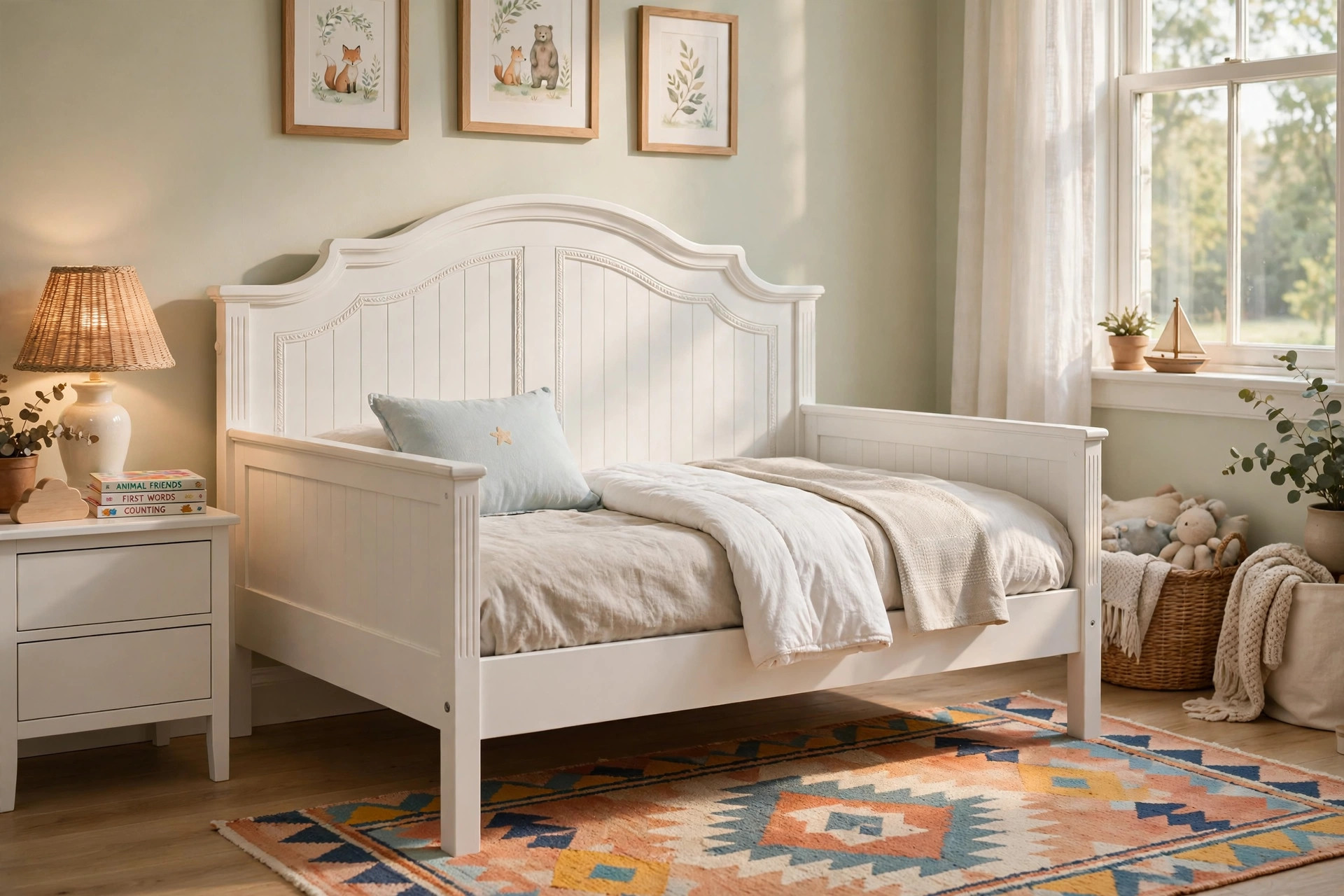
The move from crib to bed is a big moment in any home. A toddler bed frame with headboard for style makes that step feel special. It gives the child a bed that looks like it was made just for them, and it gives the room a finished, thoughtful look.
A headboard does more than look pretty. It keeps pillows from sliding off the back of the bed. It protects the wall from scuffs and marks. And for a small child, it can feel like a safe, cozy backdrop at bedtime. When you choose the right frame, you get both good looks and solid function.
There are many styles to choose from. Some parents want a simple wooden headboard that matches the nursery. Others want something playful, like a headboard shaped like a castle, a house, or a star. In this guide, we will walk through the main options, what to look for when you shop, what to expect to pay, and how to keep the bed in good shape for years.
Why a Headboard Matters on a Toddler Bed: Toddler Bed Frame with Headboard for Style
Style That Grows With the Child
A toddler is young, but the room should still feel welcoming. A bare frame can look plain or unfinished. A headboard gives the bed a center point. It makes the whole room feel pulled together. Many families find that a stylish headboard turns an ordinary bed into a piece of furniture they are proud to show.
Practical Benefits for Sleep and Play
Toddlers use their beds for more than sleep. They sit up and read picture books. They lean back and play with toys. A headboard gives them something firm and safe to rest against. It also stops the pillow from falling into the gap between the mattress and the wall. That means fewer wake-ups at night and a more restful sleep.
A Smooth Move From the Crib
The crib is small and enclosed. A full open bed can feel strange to a two-year-old. A headboard adds a sense of shelter. It marks the “head” of the bed clearly, which helps the child learn where to lie down. Parents often find that a bed with a nice headboard is easier to sell to a hesitant toddler. It feels like an upgrade, not a loss.
Types of Toddler Bed Frames with Headboards
Classic Wooden Headboards
Solid wood is the most common choice. Pine, poplar, and rubberwood are all popular. These frames come in white, gray, natural wood, and espresso finishes. A classic panel or slat headboard fits almost any room style. Wood frames are sturdy and tend to last through more than one child.
Shaped and Themed Headboards
For families who want fun, themed beds are a good option. You can find headboards shaped like race cars, princess castles, barns, and fire trucks. These beds make bedtime exciting. The trade-off is that a child may outgrow the theme in a few years. Themed frames also cost more than plain ones.
Upholstered Headboards
An upholstered headboard is covered in fabric, often with light padding. It feels soft when a child leans against it. Linen, cotton, and performance fabrics are common. These headboards look warm and modern. The main drawback is cleaning. Stains are harder to remove from fabric than from painted wood.
House and Canopy Frames
A house-frame toddler bed has a roof-like structure above it, and the headboard often forms the back wall of the “house.” These beds are very popular with design-minded parents. They photograph well and children love playing in them. They do take up more floor space, so measure the room first.
Convertible Frames
Some toddler beds are made to convert into a larger bed later. The headboard from the toddler frame may become the headboard of a twin bed with an adapter kit. This is a smart buy if you want the furniture to last. Check that the maker sells the conversion kit before you commit.
If you want extra protection at the sides, pair the headboard with a toddler bed with guard rails for first bed for added nighttime safety.
How to Choose the Right Frame
Size and Mattress Fit
Almost all toddler beds use a standard crib mattress, about 52 inches long and 28 inches wide. Before you buy, confirm that the frame is made for that size. A mattress that is too small leaves gaps where a child can get stuck. A mattress that is too large will not sit flat. Always test the fit when the bed arrives.
Materials and Build Quality
Look for solid wood or strong engineered wood with a non-toxic finish. Shake the display model in the store if you can. It should not wobble. Check that all bolts are metal, not plastic. The headboard should be firmly attached to the side rails with no loose joints.
Safety Standards
Toddler beds sold in the United States should meet current safety rules. Look for a label showing compliance with federal standards for children’s beds. Guard rails should be high enough that a sleeping child cannot roll over them. Openings in the headboard must be small enough that a child’s head cannot pass through. The U.S. Consumer Product Safety Commission publishes guidance on children’s furniture safety at cpsc.gov, and it is worth a look before you buy.
Headboard Height
A very tall headboard can overwhelm a small room. A low headboard may not keep pillows in place. For most toddler beds, a headboard between 24 and 36 inches tall works well. It should rise clearly above the mattress but not tower over the rest of the room.
Matching the Room
Think about the style you want. A white slatted headboard suits a bright, modern nursery. A natural wood headboard fits a warm, rustic room. If you plan to repaint the walls in a few years, choose a neutral finish that will work with many colors. Neutral frames also pass down to siblings more easily.
Cost and Price Ranges
Toddler bed frames with headboards come at many price points. Basic models start around $80 to $120. These are usually simple wooden frames in white or gray. They are safe and solid but plain.
Mid-range frames cost $150 to $300. This is where you find most of the stylish options. Upholstered headboards, house frames, and well-made wooden beds with nice details all sit in this range. Quality is usually good, and finishes hold up well.
High-end and designer frames run $300 to $600 or more. These include themed beds, convertible models, and beds from premium children’s furniture brands. You pay for better materials, nicer finishes, and sometimes the conversion kit included.
Remember to budget for the mattress if you do not already have one, plus bedding and guard rails if they are not included. A good waterproof mattress protector is a wise extra buy. Prices and styles change often, so compare options at large retailers like Target and Walmart as well as children’s furniture specialists.
Setting Up the New Bed
Assembly Tips
Most toddler bed frames arrive flat-packed. Assembly takes 30 minutes to an hour with two adults. Lay out all parts first and count the hardware. Follow the steps in order. Tighten all bolts firmly, but do not overtighten and strip the wood. Keep the assembly guide in a safe place in case you need to take the bed apart later.
Placing the Bed in the Room
Put the headboard against a wall with no windows nearby. A child should not be able to climb from the bed to a window. Keep cords from blinds and lamps well out of reach. Leave space on one side so you can sit with your child at bedtime. If you use a night light, place it where it gives soft light without shining in the child’s eyes.
Making the First Night Easier
Let the child help choose the bedding. A favorite color or pattern makes the bed feel like theirs. Keep a familiar blanket or stuffed toy from the crib. Stick to the same bedtime routine you used before. Many parents read helpful advice on the move from crib to bed at What to Expect and BabyList.
Care and Upkeep
Cleaning the Frame
Dust the headboard and rails weekly with a soft cloth. For painted wood, wipe with a damp cloth and mild soap, then dry right away. For upholstered headboards, vacuum with a brush attachment to lift dust. Treat spots quickly with a fabric cleaner made for the material. Avoid harsh chemicals, which can damage finishes and are not safe around small children.
Checking for Wear
Every few months, check all bolts and joints. Tighten anything that has loosened. Look at the headboard for chips, cracks, or splinters. Sand rough spots smooth at once. If a slat breaks, replace it or stop using the bed until it is fixed. A quick check takes five minutes and keeps the bed safe.
Refreshing the Look
One of the joys of a toddler bed frame with headboard for style is how easy it is to update. A fresh coat of child-safe paint can change the whole feel of the room. Swap the bedding for a new color scheme. Add wall decals or a small garland above the headboard. Small changes keep the room feeling new as the child grows.
Safety Reminders
Safety comes first with any children’s bed. Keep the mattress at the lowest setting the frame allows. Do not add extra mattresses or thick toppers that raise the child too high. Teach your child not to jump on the bed or climb the headboard. Place a soft rug beside the bed to cushion any falls. The American Academy of Pediatrics offers sleep safety guidance for young children at HealthyChildren.org, which every parent should read.
Also, check for recalls from time to time. The CPSC posts recall notices for children’s furniture. Register your product with the maker when you buy it so you get direct notice if there is ever a problem.
Decorating Around the Bed
A stylish headboard deserves a thoughtful room around it. Here are a few simple ideas that work well with a toddler bed frame with headboard for style:
– Soft bedding in layers. A fitted sheet, a light quilt, and a small pillow are enough. Keep the bed uncluttered for safety. – Wall art at child height. Hang a few prints where the child can see them from the bed. – A reading corner nearby. A small shelf with books next to the bed makes bedtime reading easy. – Gentle lighting. A dimmable lamp or night light keeps the room calm.
Design ideas and room tours from IKEA, Wayfair, and Pottery Barn Kids can spark ideas for your own space. For broader decorating tips, The Spruce has many articles on children’s rooms.
Parents who like a low, open design may also want to read about the toddler floor bed montessori style low, and those comparing frame types can see the best convertible toddler bed with safety rail.
Frequently Asked Questions
What age is right for a toddler bed with a headboard?
Most children move to a toddler bed between 18 months and 3 years. The usual sign is climbing out of the crib. There is no rush. If your child sleeps well in the crib, you can wait. A headboard makes no difference to the right age; it is purely a style and comfort choice.
Can I use my old crib mattress in the new bed?
Yes, in most cases. Standard toddler bed frames are designed to fit a standard crib mattress. Measure both before you buy to be sure. If the old mattress is worn, sagging, or more than a few years old, consider replacing it for better support.
Are themed headboards worth the extra cost?
It depends on your child and your budget. A themed bed can make the move from the crib exciting and fun. But children outgrow themes fast. A neutral, stylish headboard usually lasts longer and works for siblings too. Many parents find a middle path: a classic frame with themed bedding that is cheap to change.
How do I keep a white headboard looking clean?
Wipe it down weekly with a damp cloth. Clean fingerprints and marks as soon as you see them. Touch-up paint from the maker can fix chips. Keep crayons and markers away from the bed, or use only washable ones. A washable paint finish makes cleaning much easier.
Is an upholstered headboard safe for toddlers?
Yes, as long as it is firmly attached and the fabric is free of loose buttons or trim that a child could pull off. Choose a fabric that is easy to clean. Check the frame for a safety compliance label just as you would with a wooden bed.
Can the bed be used for more than one child?
A well-made toddler bed frame with headboard for style can serve two or three children. Check the joints and finish between children. Replace any worn hardware. Clean the frame well. A neutral style makes hand-me-downs easy.
A Short Final Word
A toddler bed frame with headboard for style is a small buy with a big effect. It makes the first big-kid bed feel special. It keeps pillows in place and gives your child a cozy spot to lean. Choose a safe, sturdy frame in a style you love, keep it clean and tight, and it will serve your family well. The nights may still be restless now and then, but at least the bed will look good doing its job.
References
American Academy of Pediatrics. (n.d.). HealthyChildren.org. https://www.healthychildren.org Babylist. (n.d.). Baby registry and gear guides. https://www.babylist.com IKEA. (n.d.). Home furnishings. https://www.ikea.com Pottery Barn Kids. (n.d.). Kids furniture and decor. https://www.potterybarnkids.com Target. (n.d.). Retail store. https://www.target.com The Spruce. (n.d.). Home and garden advice. https://www.thespruce.com U.S. Consumer Product Safety Commission. (n.d.). Product safety information. https://www.cpsc.gov Walmart. (n.d.). Everyday low prices. https://www.walmart.com Wayfair. (n.d.). Furniture and home goods. https://www.wayfair.com What to Expect. (n.d.). Pregnancy and parenting guidance. https://www.whattoexpect.com
Was this guide helpful?

About Emily Rodriguez
The My Garden US editorial team writes practical, in-depth home and garden guides for American homeowners — tested advice, no fluff.