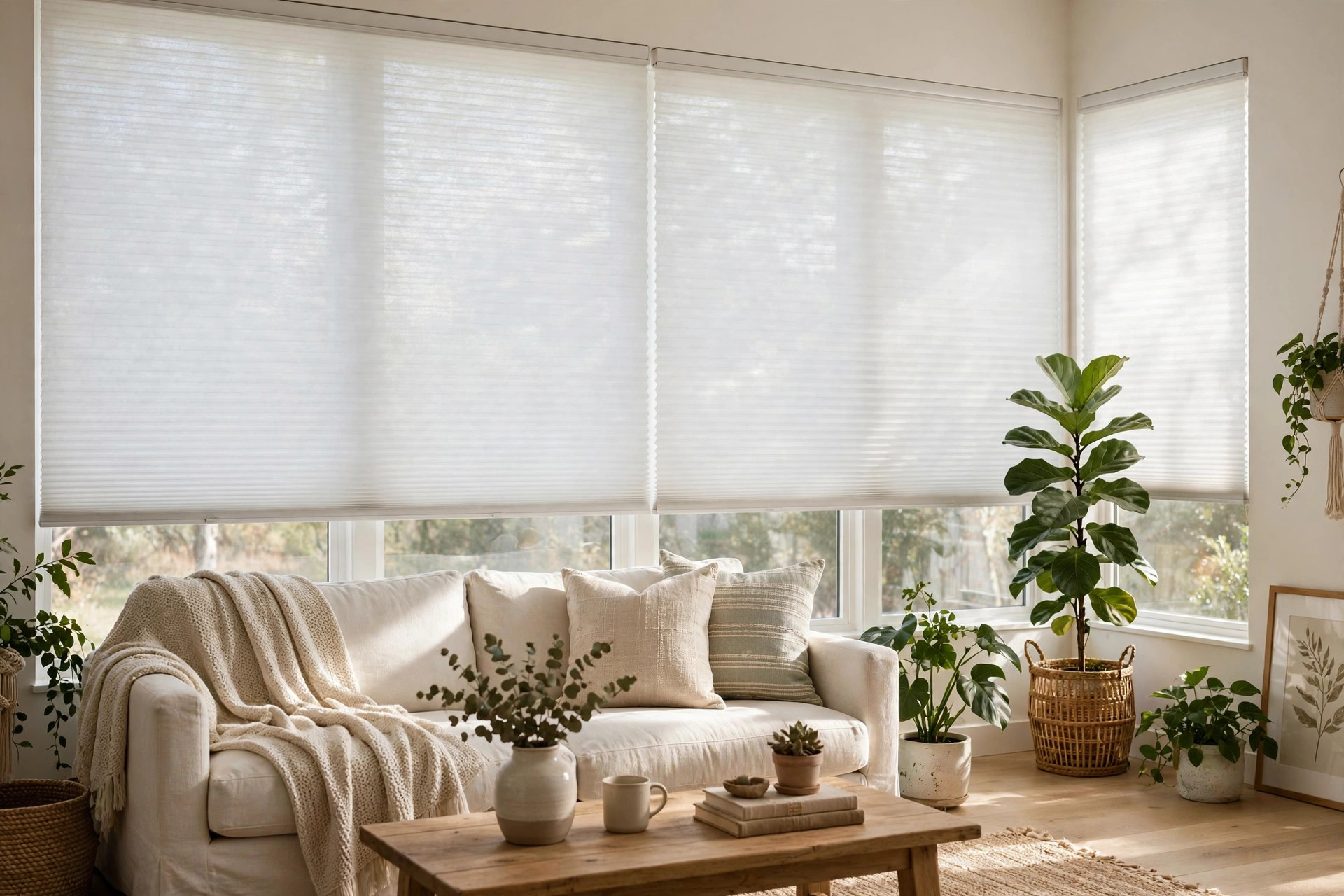

Winter drafts near windows are a common American complaint. Many readers who search for cellular shades for energy efficiency reviews are trying to answer a simple question: can a window shade really cut a heating bill? The short answer is yes, it can help. Windows account for a large share of heat loss in the average home. A cellular shade, also called a honeycomb shade, traps still air in pockets. Still air slows heat flow. That is the whole science behind these shades, and it is the reason energy experts take them seriously.
This guide reviews what buyers need to know. It explains why windows waste energy, how cellular shades fight back, what to look for when shopping, the main types on the market, what they cost, how to care for them, and what to know about safety. It closes with answers to common questions.
Why Windows Waste So Much Energy
A wall can have an R-value of 13 or more. A typical single-pane window has an R-value of about 1. Even a modern double-pane window is only about R-2 to R-3. Heat moves easily through glass. In winter, warm indoor air presses against the cold glass, and heat escapes. In summer, the process runs in reverse. Hot outdoor air pushes heat in, and the air conditioner works harder.
The United States Department of Energy reports that heat gain and loss through windows accounts for 25 to 30 percent of home heating and cooling energy use. That figure comes from the department’s own research on residential energy, and it is worth keeping in mind when reading any cellular shades for energy efficiency reviews. A window covering cannot turn a poor window into a good wall. But it can cut the losses by a useful margin.
Air leaks make the problem worse. Old frames let cold air slip in around the edges. A shade alone does not fix a leaky frame. Many energy guides from ENERGY STAR suggest sealing air leaks first, then adding window coverings as a second step. The two steps work together. If you want to lower your heating bill in winter, shades are one part of a larger plan that also includes sealing, insulation, and sensible thermostat habits.
How Cellular Shades Fight Heat Loss: Cellular Shades for Energy Efficiency Reviews
A cellular shade is made of pleated fabric folded into a honeycomb shape. When the shade is lowered, the cells open and trap pockets of air. Trapped air is a poor conductor of heat. It forms a buffer between the room and the cold glass.
Single-cell shades add about R-1 to R-2 to a window. Double-cell shades add more, often R-2 to R-3. Those numbers sound small, but they are large compared to the window itself. Doubling the insulation at a window is a real gain.
The Department of Energy notes that cellular shades can cut heat loss through windows by as much as 40 percent or more, and can cut unwanted solar heat in summer by up to 60 percent. The exact numbers depend on the shade, the window, and the climate. Independent reviews confirm the direction, if not always the exact figure. No shade works the same in every home, which is why honest cellular shades for energy efficiency reviews give ranges rather than promises.
Fit matters a great deal. A shade that sits inside the frame with small gaps lets warm air flow around it. The warm air rises, cools against the glass, and sinks back into the room. This loop is called convection, and it can undo much of the shade’s work. Shades mounted inside the frame should fit snugly. Side tracks or channels stop the loop and give the best results. If you read a review that tested shades with and without side tracks, pay attention to that detail. It is often the difference between a good result and a weak one.
What to Look for When You Choose
Cell Size and Count
Cells come in several sizes. Common options are three-eighths of an inch, half an inch, and three-quarters of an inch. Larger cells trap more air. In cold climates, larger cells usually insulate better. In warm climates, they still help by blocking solar heat. Double-cell construction adds a second layer of pockets. It costs more, and it insulates more. Triple-cell shades exist but are less common and bulkier when raised.
Opacity: Light Filtering or Blackout
Light-filtering fabric lets soft light through. It keeps a room bright in daytime. Blackout fabric blocks nearly all light. It is best for bedrooms. For energy use, blackout fabrics often have an extra foil or metallic lining inside the cells. The lining reflects heat back into the room in winter and away from the room in summer. Many cellular shades for energy efficiency reviews rate blackout models higher for winter savings, but light-filtering models still do solid work.
Top-Down, Bottom-Up, and Motorized Options
Top-down, bottom-up shades can open from the top or the bottom. They let in daylight while keeping the lower part of the window covered. Since heat loss happens across the whole window, partial coverage gives partial savings. The option is about comfort and privacy more than efficiency.
Motorized shades can be set on a timer. They lower at night and rise in the morning without anyone touching them. Automatic timing turns good habits into daily routine. The motor adds cost, but it removes the need to remember.
Fabric and Color
Darker fabrics absorb more solar heat in winter, which can help on south-facing windows. Lighter fabrics reflect summer sun. The difference is modest. A snug fit and good cell structure matter more than color.
Types and Options on the Market
Corded shades use a pull cord. They are the least expensive option. They are simple and easy to repair. They raise a cord-safety concern in homes with small children and pets, which is covered in the safety section below.
Cordless shades raise and lower with a gentle push or pull on the bottom rail. They cost more than corded models. They are safer for children. They also look cleaner, with no cords hanging down.
Top-down, bottom-up shades were described above. They are popular for street-facing rooms where people want light and privacy at the same time.
Motorized and smart shades connect to a phone app or a voice assistant. Some link to smart thermostats, so the shade lowers when the room gets too warm. The energy benefit comes from consistency. A shade that always closes at sunset saves more than one that is forgotten half the time.
Blackout cellular shades have the light-blocking and heat-reflecting layers. They are the top pick in most cellular shades for energy efficiency reviews for bedrooms in cold climates.
Buyers often compare cellular shades with other low-cost fixes. A window insulation film kit is cheaper and also cuts drafts, but it blocks the window all season and cannot be raised on a sunny day. An attic stairs insulation cover attacks a different leak, the pull-down attic hatch. Shades sit in the middle. They are flexible, they look good, and they work every day of the year.
Cost and Price
Prices vary by size, brand, and features. A standard corded cellular shade for a normal window often costs 50 to 120 dollars. Cordless models often run 80 to 180 dollars. Top-down, bottom-up models often run 120 to 250 dollars. Motorized shades often start around 200 dollars per window and rise from there. Custom sizes and blackout fabrics sit at the high end.
Whole-house cost adds up fast. A home with fifteen windows can spend 1,000 to 3,000 dollars covering every window. That is a real investment. Buyers should start with the worst windows first. South and west windows gain the most summer heat. North windows lose the most winter heat. Covering the worst offenders gives the fastest payback.
How fast is the payback? It depends on the climate, the fuel used for heat, and how the old windows perform. Energy guides from the Department of Energy suggest that window attachments can produce meaningful savings, but they avoid promising a fixed dollar amount. A reasonable way to think about it is this: if shades cut window heat loss by one third, and windows cause one quarter of heating and cooling loss, then the home saves about 8 percent of its heating and cooling energy. On a 2,000-dollar annual bill, that is about 160 dollars a year. At that rate, mid-priced shades pay for themselves in roughly six to ten years. The comfort gain, fewer drafts and cold spots, arrives on day one.
Shoppers should also look for utility rebates. Some power companies offer rebates for energy-saving window attachments. The Department of Energy and ENERGY STAR list programs by state. A rebate can cut the payback period by a year or more.
Care and Upkeep
Cellular shades are easy to maintain. Dust them with a soft cloth or a vacuum with a brush attachment once a month. Dust on the fabric does not change the insulation much, but it keeps the shade looking fresh.
Most fabrics cannot be washed in water. Water can spot or warp the pleats. Check the maker’s instructions before using any liquid cleaner. A damp cloth is enough for most marks.
Keep the shade mechanism working smoothly. For corded shades, make sure the cord lock holds the shade at any height. For cordless shades, keep the bottom rail level when raising and lowering. For motorized shades, replace batteries on schedule, usually once a year, or keep wired models connected.
Sun damage is slow but real. Fabric on south-facing windows fades faster. Many makers add ultraviolet protection to the fabric. Rotating which shades stay lowered on the sunniest days can even out the wear.
Safety
The main safety issue is the cord. The Consumer Product Safety Commission has warned for years that window cords can strangle small children and pets. Cordless and motorized shades remove this risk. Many makers now sell only cordless designs for this reason.
If a home has corded shades, the cords should be kept short, high, and out of reach. Cord cleats hold the extra cord against the wall. Parents should check that cribs and play areas sit far from any window with a corded shade.
Fire safety is a smaller concern. Cellular shades are fabric, and fabric burns. Keep shades away from open flames, candles, and space heaters. Most makers treat the fabric to resist ignition, but no fabric is fireproof.
Heavy blackout shades can be hard for older people to lift. Cordless or motorized models are kinder on hands and shoulders. This is a small point, but it matters in a home where the shade must move every day to save energy.
Frequently Asked Questions
Do cellular shades really lower energy bills? Yes, they help. They cannot fix a bad furnace or a leaky house, but they cut heat flow through windows. Reviews and energy agencies agree that a well-fitted cellular shade trims heating and cooling use by a useful amount. The best results come when the shade fits snugly and is closed at night in winter and during hot afternoons in summer.
Are double-cell shades worth the extra money? In cold climates, usually yes. Double cells trap more air and insulate better. In mild climates, the difference is smaller, and a single-cell shade may be enough. Buyers in northern states get the most value from double or triple cells.
Can I install cellular shades myself? Most homeowners can. Standard shades mount with a few brackets and screws. The job takes about thirty minutes per window. Measure the window twice before ordering. Inside mounts need exact width measurements. Outside mounts are more forgiving. Guides from This Old House and Family Handyman walk through the steps with photos.
Do cellular shades work in summer too? Yes. The same trapped air that keeps heat in during winter keeps heat out during summer. Light-colored and reflective fabrics do best against summer sun. Closing shades on east windows in the morning and west windows in the afternoon cuts the load on the air conditioner.
How do cellular shades compare to new windows? New windows insulate better than any shade. A good double-pane window plus a cellular shade is a strong pair. But new windows cost hundreds of dollars each, while a shade costs a fraction of that. For a home that cannot afford new windows now, shades are the best value per dollar.
Which brands do reviewers rate highest? Reviews vary by year and by tester. Major heating and cooling brands such as Carrier, Trane, Lennox, Goodman, and Rheem focus on HVAC equipment rather than shades, but their buying guides stress the same point: window coverings are part of a whole-home efficiency plan. Shade brands are best judged by cell structure, fit, fabric quality, and warranty rather than by name alone.
Final Word
Cellular shades are not magic. They are simple physics, trapped air doing quiet work at the weakest point in the home. The best cellular shades for energy efficiency reviews share a common message: buy the right size, fit them snugly, close them on schedule, and the savings will follow. Start with the worst windows, keep the cords safe, and enjoy a warmer winter room and a cooler summer one.
References
Carrier. (n.d.). Heating and cooling systems. https://www.carrier.com ENERGY STAR. (n.d.). Energy efficient products. https://www.energystar.gov Family Handyman. (n.d.). DIY home repair and maintenance. https://www.familyhandyman.com Goodman. (n.d.). Heating and cooling equipment. https://www.goodmanmfg.com Lennox. (n.d.). Heating and cooling systems. https://www.lennox.com Rheem. (n.d.). Heating, cooling, and water heating. https://www.rheem.com This Old House. (n.d.). Home renovation guidance. https://www.thisoldhouse.com Trane. (n.d.). Heating and air conditioning. https://www.trane.com U.S. Department of Energy. (n.d.). Energy efficiency and renewable energy. https://www.energy.gov
Was this guide helpful?

About Sarah Mitchell
The My Garden US editorial team writes practical, in-depth home and garden guides for American homeowners — tested advice, no fluff.
You May Also Like
Most Energy Efficient Space Heater 2026 USA: A Practical Buyer’s Guide
September 12, 2026 0 views
Space Heater Safety Tips for USA Homes
January 15, 2026 0 views
Best Garage Heater for Winter Reviews USA: A Practical Guide to Warmth
September 16, 2026 0 views