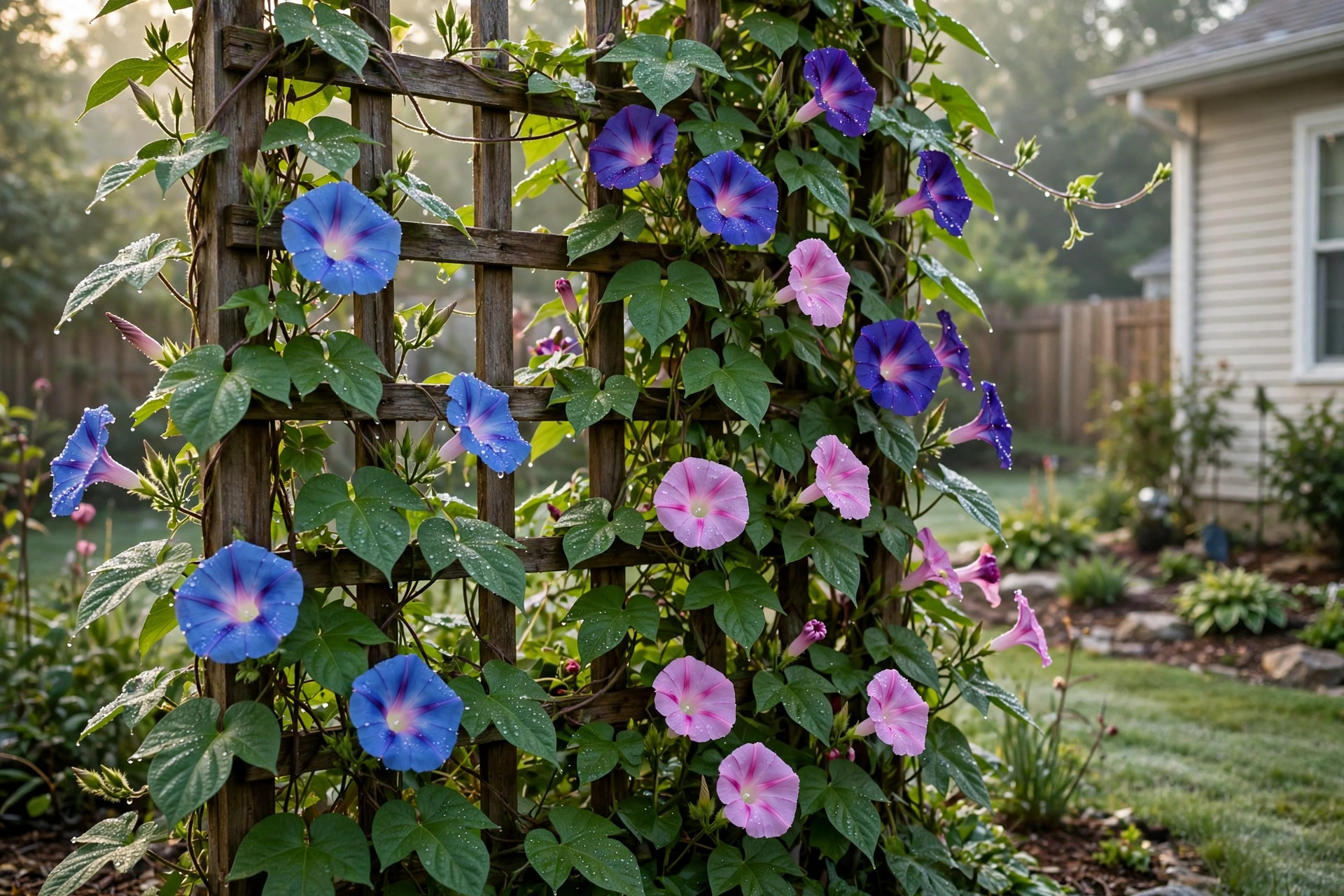

Few summer flowers give so much for so little. Morning glories climb fast. They bloom every morning. And a single packet of seed can cover a whole fence. Still, not every packet is equal. This morning glory seeds reviews buying guide usa looks at what American gardeners say about the seed they buy. It shows which details matter. It also shows which ones do not. Read on before you place your order.
Why Morning Glory Seeds Deserve a Place in Your Garden
Morning glory is a fast vine. It can grow ten to fifteen feet in a single warm season. It needs little more than sun, soil, and something to climb. Gardeners love it for bare fences. They love it for mailboxes and porch posts. They love it for hiding an ugly shed wall.
The flowers open at dawn. They close by midday. Each bloom lasts one day. But new blooms open daily from July until frost. That long season is one reason the vine stays popular decade after decade.
There is another reason. Morning glory seed is cheap. One packet often costs less than a cup of coffee. And once the vine sets seed, it reseeds itself. Many gardeners buy seed once and enjoy free plants for years.
How to Read Morning Glory Seed Reviews: Morning Glory Seeds Reviews Buying Guide Usa
Seed reviews are short. They run only a few lines. But they tell you a lot. Here is how to read them with care.
Germination rate. This is the share of seeds that sprout. Reviews often say “nine out of ten came up.” That is a good sign. Reviews that say “only two sprouted” are a warning. Look for packets with steady praise for germination across many buyers.
Speed of sprouting. Morning glory can take five to twenty-one days to sprout. Reviews that note “came up in a week” show fresh seed and good care. Reviews that note slow or patchy sprouting may show old seed.
True color. Seed packets show a photo of the flower. Reviews tell you if the real bloom matched the photo. Most gardeners say Heavenly Blue blooms run more violet than pure blue. That is normal for the variety. But big mismatches, like pink flowers from a packet sold as blue, are worth noting.
Packet freshness. Good seed sellers print a “packed for” year on the packet. Reviews from buyers who planted within that year tend to be best.
Buyer region. A review from Florida and a review from Minnesota describe different weather. Give extra weight to reviews from gardeners near your zone. What thrives in the hot South may grow slow in a short northern summer.
One more note. A few bad reviews are normal for any seed. Look at the pattern, not the single complaint. Fifty reviews with eighty percent praise beat ten reviews with perfect praise.
What to Look for When You Buy Seeds
Seed Count and Packet Size
Packets vary a lot. Some hold twenty seeds. Some hold two hundred. The price per packet tells you little. Divide price by seed count. That gives the price per seed. That is the fair way to compare.
Most gardeners sow three to five seeds per foot of fence or trellis. A packet of fifty seeds will cover about ten to fifteen feet. Buy a little extra. You will want to replace seeds that fail to sprout.
Variety and Flower Color
Morning glory comes in many named varieties. Each has its own color and size.
– Heavenly Blue. The classic. Large sky blue flowers with a white throat. A top seller year after year. – Grandpa Ott. Deep purple with a red star. Vigorous and fast. – Star of Yelta. Wine red with a pink star. An old favorite. – Scarlet O’Hara. Bright red blooms. Good for a bold display. – Moonflower. White blooms that open at night. A close cousin, often sold with morning glory seed.
Mixed packets give several colors in one row. They cost about the same as single color packets.
Freshness and Germination Rate
Fresh seed sprouts best. Seed packed for the current year is the safest buy. Reputable sellers, such as Burpee, print the pack year on the packet. This is standard practice for large American seed houses.
Seed kept in a cool dry place stays good for two to three years. Seed kept in a hot garage loses vigor fast. If you buy from a small seller, ask how the seed was stored. Reviews sometimes mention this. A seller who stores seed well earns loyal buyers.
Some packets carry an untreated or organic label. Park Seed and Gurneys both list untreated morning glory seed in their catalogs. Organic matters more to some gardeners than others. The flowers look the same either way.
Where to Buy
American gardeners buy seed from garden centers, big box stores, mail order catalogs, and online sellers. Each path has its trade offs.
Garden centers let you read the packet in hand. Big box stores offer low prices. Mail order sellers offer the widest choice of rare varieties.
Whatever path you take, buy from a seller with clear contact information.
Types and Options on the Market
The seed market holds more than plain packets. Here are the main options you will see.
Standard packets. The usual choice. They hold enough seed for one fence or trellis. Most brands fall here.
Bulk seed. Sold by the ounce or pound. This suits large fences, school gardens, and community plots. Bulk seed from a trusted farm supplier often costs less per seed. But reviews matter more here, since bulk lots vary in freshness.
Coated seed. Some sellers coat seed with a thin layer that holds water. The coating helps germination in dry soil. Coated seed costs more. Many gardeners say plain seed works fine if you soak it first.
Seed tapes and mats. Seed set at fixed spacing on paper. They make sowing easy. They are rare for morning glory. The vine is so easy to sow by hand that tapes add little value.
Starter plants. Some nurseries sell young morning glory plants in spring. Plants cost far more than seed. They make sense only if your season is very short.
If you grow other flowers, you may enjoy browsing wildflower seed mixes as well.
Cost and Price
Morning glory seed is one of the cheapest ways to fill a garden. Typical prices in the United States run as follows.
– Standard packet, 20 to 50 seeds: two to four dollars. – Large packet, 100 to 200 seeds: four to seven dollars. – Bulk ounce, about 1,000 seeds: eight to fifteen dollars. – Rare or heirloom varieties: five to nine dollars per packet.
Shipping adds cost to mail orders. Many sellers ship free over a set order total. It often pays to combine your morning glory seed with other orders, like lavender seed packets or vegetable seed, to reach the free shipping mark.
Price alone does not show quality. A two dollar packet of fresh seed beats a six dollar packet of old seed. Check reviews for germination. Check the pack year. Then weigh the price.
One packet usually reseeds itself. That means your real cost can be spread over years. Few garden plants offer a better return.
Care and Upkeep
Soil
Morning glory is not fussy. It grows in average garden soil. It dislikes soil that stays wet. It also dislikes soil that is too rich. Very rich soil grows leaves at the cost of flowers. Plain soil, with a little compost worked in, is ideal.
The Old Farmer’s Almanac planting guides note that morning glory prefers neutral to slightly acidic soil. Most American garden soil falls in this range without help.
Sowing
Sow seed after the last spring frost. The soil should feel warm to the hand. Plant seed one quarter inch deep. Space seeds three to six inches apart along the base of the support.
Morning glory seed has a hard coat. Nicking or soaking helps it sprout. Many gardeners file a small notch in each seed with a nail file. Others soak seed in warm water overnight. Both methods work. Gardening Know How seed starting guides describe the soak method step by step for beginners.
Keep the soil moist until sprouts show. Do not flood it. A gentle daily watering is enough.
Sun and Water
Give morning glory full sun. Six hours or more of direct sun each day. Less sun means fewer flowers.
Water in dry spells. An inch of water per week is plenty. Once vines are running, they tolerate short dry periods. They do not tolerate wet feet. Good drainage matters more than rich feeding.
Support
The vine climbs by twining. It needs a trellis, fence, string, or post. Set the support before you sow. Young vines reach for it within days of sprouting.
A trellis six to eight feet tall suits most varieties. The vine will cover it by midsummer. For a fence, plant at the base and let the vine run along the top rail.
Feeding and Pruning
Feed little or not at all. A light side dressing of compost in midsummer is enough. Heavy fertilizer gives vines and few blooms.
Pinch the tips of young vines once they reach a foot tall. This makes them branch. Branching gives more flowers and a fuller look.
Pests and Problems
Morning glory has few pests. Aphids may gather on new growth. A strong spray of water knocks them off. Japanese beetles may chew leaves in some states. Hand picking works for small plantings.
Powdery mildew can coat leaves in humid weather. Good air flow helps. Do not plant vines packed tight against a wall with no air behind them. The Spruce garden guides list simple organic controls for mildew on ornamental vines.
Deer usually leave morning glory alone. Rabbits may nibble young sprouts. A low fence guard protects new plants until they climb out of reach.
Safety
Read this part with care. It matters.
Seed toxicity. Morning glory seeds hold compounds that are harmful if eaten. They are not a snack. They are not a tea. Keep packets and loose seed away from small children. The seeds are small, dark, and easy to swallow. Store them high and sealed.
Pets. Dogs and cats can be harmed by eating the seeds. Plant vines where pets do not dig. If a pet eats seed, call your vet at once.
Self seeding. In warm states, morning glory reseeds with vigor. It can climb into shrubs and smother small plants. Some counties list it as a weed. Pull stray seedlings in spring where you do not want them. A mulch layer cuts self seeding a great deal.
None of this should scare you away. Millions of Americans grow morning glory safely each year.
Growing in Containers
No fence? Grow morning glory in a pot. Use a pot at least twelve inches wide. Add a small trellis or a tripod of bamboo stakes. Sow three seeds per pot. Keep the pot in full sun.
Container vines bloom well. They need more water than ground vines. Check soil daily in hot weather.
Indoor growers often pair a sunny windowsill vine with easy houseplants. If you like low care green plants, our guide to snake plants covers one of the toughest indoor choices.
Frequently Asked Questions
How long does morning glory seed take to sprout?
Most seed sprouts in five to twenty-one days. Warm soil speeds it up. Soaking seed overnight before sowing often cuts a few days off the wait. If nothing shows after three weeks, the seed may be old. Sow fresh seed.
Do I need to soak morning glory seeds before planting?
It helps, but it is not required. The hard seed coat slows water uptake. An overnight soak in warm water softens the coat. Nicking each seed with a file works too. Many gardeners get good sprouting without either step in warm moist soil.
Will morning glory come back every year?
The vine is an annual in most of the United States. Frost kills it. But it drops seed that sprouts the next spring. In warm zones, from zone nine south, it may act as a short lived perennial. Either way, expect free seedlings each year.
Is morning glory invasive?
It can be aggressive in warm climates. In the Southeast and parts of California, it self seeds freely and climbs over native plants. Check with your local extension office before planting large areas. In cold zones, winter kills the seed bank back and it stays tame.
Which morning glory variety is best for beginners?
Heavenly Blue is the safest first pick. Seed is easy to find. Reviews praise its germination. The flowers are large and the vine is strong. Grandpa Ott is another good choice for fast cover.
Can I save seed from my own plants?
Yes. Let a few flowers fade and form pods. Pick the pods when they turn brown and dry. Store the seed in a paper envelope in a cool dry place. Label the envelope with the variety and the year. Home saved seed sprouts well for two to three years.
A Short Final Word
Morning glory rewards the patient gardener. A few dollars of seed. A sunny fence. A little water. That is the whole formula.
Buy fresh seed from a seller with solid reviews. Check the pack year. Soak the seed if you like. Sow after frost. Then stand back. By August the fence will be green. By September it will be covered in blue, purple, and pink trumpets that open with the sun.
For more ideas on flower seed choices, Proven Winners and Monrovia both publish useful growing guides for flowering vines. White Flower Farm offers variety notes that help you pick colors with confidence. And if you want a trusted old name in seed, the reviews for Burpee morning glory packets run strong year after year.
References
Burpee. (n.d.). Seeds, plants, and gardening supplies. https://www.burpee.com Gardening Know How. (n.d.). Gardening guides and plant care. https://www.gardeningknowhow.com Gurney’s Seed & Nursery Co. (n.d.). Seeds, plants, and garden supplies. https://www.gurneys.com Monrovia. (n.d.). Plants for home gardens. https://www.monrovia.com Park Seed. (n.d.). Seeds, plants, and gardening supplies. https://www.parkseed.com Proven Winners. (n.d.). Plants and gardening inspiration. https://www.provenwinners.com The Old Farmer’s Almanac. (n.d.). Gardening calendars and advice. https://www.almanac.com The Spruce. (n.d.). Home and garden advice. https://www.thespruce.com White Flower Farm. (n.d.). Plants, bulbs, and garden supplies. https://www.whiteflowerfarm.com
Was this guide helpful?

About Jennifer Lee
The My Garden US editorial team writes practical, in-depth home and garden guides for American homeowners — tested advice, no fluff.
You May Also Like
Where to Find Morning Glory Seeds for Sale in the USA
April 14, 2026 0 views
Succulent Variety Packs: A Practical Guide for Florida Homes
June 14, 2026 0 views
Fiddle Leaf Figs for California Homes in the USA
May 26, 2026 0 views