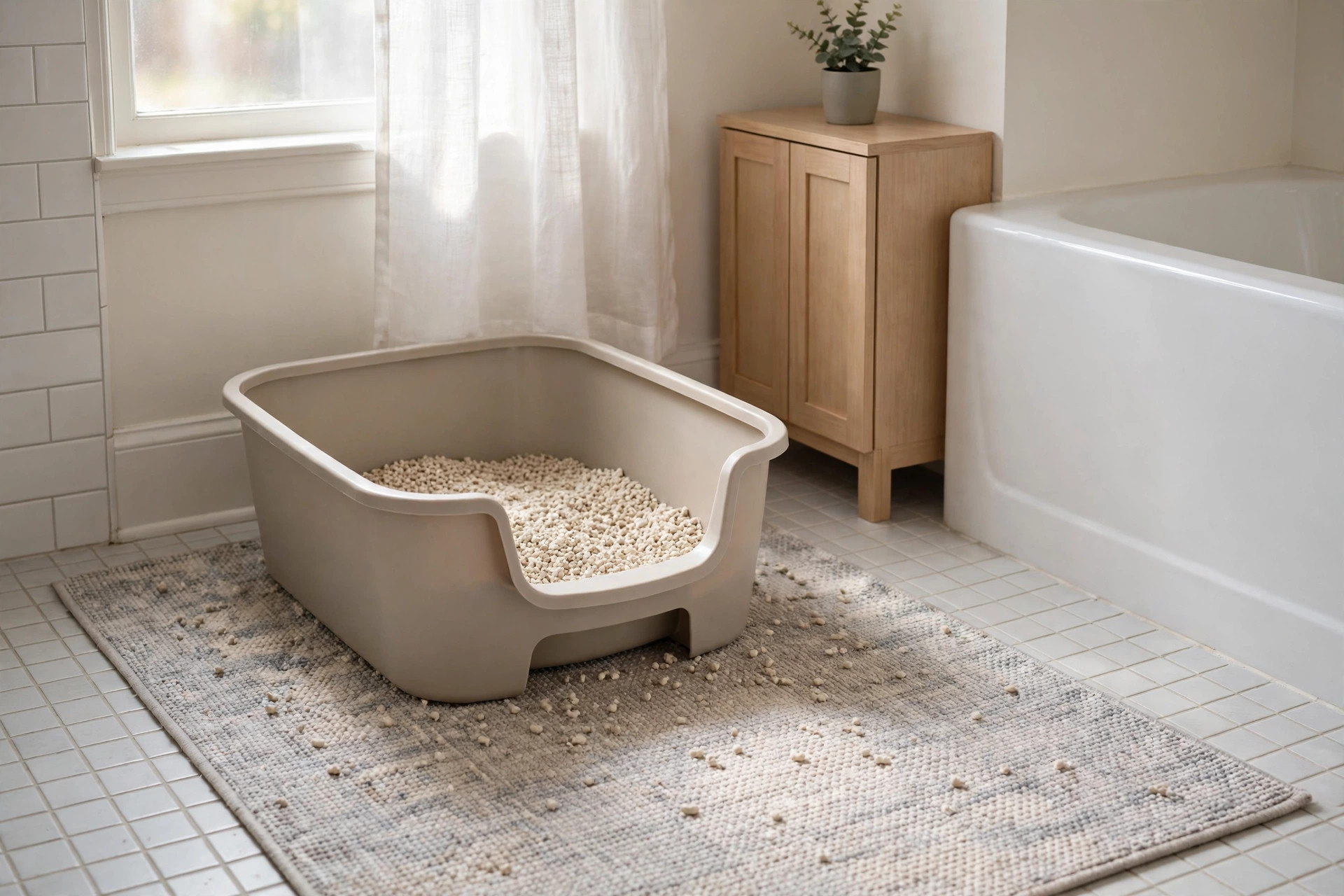

An old cat changes in small ways. It sleeps more. It plays less. It may pause at the edge of its litter box and look at the tall side with doubt. That pause tells you something. Climbing into the box has become hard. The best litter box for senior cats low entry design solves this problem at its root. It lets the cat walk in with one easy step instead of climbing over a wall.
Older cats often suffer from arthritis and stiff joints. Pain makes them avoid the litter box. They may go on the floor right next to it, which confuses many owners. The cat is not being naughty. It is telling you the box hurts to use. A low entry box removes that pain. In this guide you will learn what to look for, which types work best, what they cost, and how to keep the box safe and clean for an aging cat.
Why Older Cats Need a Low Entry Litter Box
Cats hide pain well. This is an old survival habit. A cat with sore joints will not cry out. It will simply move less and avoid the things that hurt. The litter box is often the first place this shows.
Joint pain is very common in cats past the age of ten. Veterinary advice sites such as PetMD describe how arthritis limits a cat’s range of motion and makes everyday movement stiff and slow. The cat may struggle to lift its legs high. A standard litter box with sides eight or nine inches tall becomes a wall the cat must scale several times a day.
Watch for the signs. The cat circles the box but does not go in. It perches on the edge and balances there, trying not to step over the side. It starts going on the floor, the bath mat, or the laundry pile near the box. Owners sometimes scold the cat for this. That is a mistake. The cat is asking for help in the only way it can.
A visit to the vet is always wise when a senior cat changes its habits. The vet can check for arthritis, bladder trouble, or other illness. But even with treatment, the right box matters. A low sided litter box for older cats costs little and often ends the problem within days. It is one of the simplest acts of care you can give an aging pet. Groups like the ASPCA stress that senior cats need small changes in the home to stay comfortable, and the litter box is near the top of the list.
What to Look For When You Choose: Best Litter Box for Senior Cats Low Entry
Not every low entry box is equal. A few details decide whether the box truly helps your cat or only partly helps.
Entry Height
This is the key number. Measure the front wall of the box where the cat steps in. For a senior cat, look for an entry under four inches high. Many good designs cut the entry down to two or three inches. If your cat is very stiff or has back trouble, lower is better.
Test the box against your cat’s movement. Watch how high the cat can lift its front paws without strain. The entry should sit well below that height. A cat that must still lift and strain at the door will keep avoiding the box.
Size and Shape
The box should be about one and a half times the length of your cat, not counting the tail. A longer box lets the cat step in, turn around, and settle without bumping the walls. Older cats move with care, so room to turn matters more than it did when they were young.
Rectangular pans suit most cats. They give a straight, predictable path in and out. Corner boxes save floor space in small rooms, but they can feel tight for a large or stiff cat. If space is tight, you may still manage with covered boxes for small apartments, provided the door or entry cut is genuinely low.
Sides, Walls, and Privacy
Low at the front does not have to mean low all around. Many of the best designs keep the back and side walls at a normal height and cut only the entry low. This gives the cat privacy and keeps litter inside while still offering easy access.
Some senior cats prefer fully open pans. They like to see around them and may feel trapped by walls. Others want the shelter of a hood or high walls. If your cat has always used a covered box, do not switch to an open one at the same time you lower the entry. Change one thing at a time so the cat is not confused.
Types of Low Entry Litter Boxes
Makers sell several styles of easy access litter box for arthritic cats. Each has its strengths.
Open Low Sided Pans
The simplest option is a plain open pan with low walls all around, often about five inches high. Some have one side pressed even lower. These pans are cheap, light, and very easy to clean. There is nothing for a stiff cat to climb.
The trade-off is litter scatter. A low wall will not stop an active digger from kicking litter onto the floor. A large litter mat under the box catches most of it. These pans suit cats that dig little and homes where a small mess is no trouble.
Cut Out Entry Boxes
These look like standard litter boxes, open or covered, with a U-shaped section cut from one side. The cut drops the entry to two or three inches while the rest of the walls stay high. This is the most popular style for senior cats, and for good reason. It keeps litter in, gives privacy, and asks almost nothing of the cat.
Check the cut before you buy. It should be wide enough for the cat’s whole body, not just its head. A narrow slot forces the cat to squeeze, which defeats the purpose.
Ramped Boxes
A few designs add a gentle ramp or sloped entry that the cat walks up. A senior cat litter box with ramp design can work well for cats that can walk on a slope but cannot lift their legs. The slope must be gentle and the surface must grip. A steep or slick ramp is worse than no ramp at all.
Ramps take up extra floor space. Measure your room before you choose one. They also need cleaning, since litter and dust collect on the slope.
Walk In and Step Over Free Designs
Some boxes are made with one whole side left very low, almost at floor level, so the cat simply walks in. These are close to open pans but often longer and shaped to guide the cat. They work well for the oldest cats and for cats recovering from surgery.
Avoid top entry boxes for senior cats. They demand a jump and a climb that an arthritic cat cannot manage. Self-cleaning boxes can also be a poor fit, since many have high entry lips and moving parts that startle an old cat. If you are curious about them for other reasons, read up on self cleaning boxes before you decide, and always keep a simple low entry box beside any automatic one.
Cost and Price
Price is good news here. A basic open low sided pan costs about the same as any simple litter pan, often under twenty dollars. Cut out entry boxes run a little higher, usually between twenty and forty dollars, depending on size and brand. Ramped or specialty walk in designs can reach fifty dollars or more.
Expensive does not always mean better. A twenty dollar cut out pan that fits your cat beats a fifty dollar ramped box that does not. Spend your money on fit, not features. Buy from a shop with a fair return policy, such as Chewy, Petco, or PetSmart, so you can swap the box if your cat rejects it.
Litter choice also shapes cost. A good odor-control cat litter keeps a low walled box fresh between cleanings, which matters because low boxes expose more surface to the air. Clumping litter is the usual pick. It lets you scoop fast and keeps the box shallow, which older cats prefer. Avoid deep fills. Two to three inches of litter is enough. A deep bed of litter makes the entry effectively higher and tires the cat’s legs.
Care and Upkeep
An old cat is less forgiving of a dirty box. Scoop at least once a day, and twice a day if you can. Senior cats sometimes visit the box more often, and a soiled box may push them back to the floor.
Wash the whole box every one to two weeks with warm water and mild soap. Rinse well. Strong scents bother cats, so skip scented cleaners and bleach. Dry the box fully before you refill it. A damp box grows odor fast.
Place the box where the cat spends its time. An old cat may not climb stairs well, so put a box on each floor the cat uses. Keep the box away from loud machines and heavy foot traffic. The path to the box should be clear, well lit, and free of slippery floors. A rug or mat leading to the box helps a stiff cat keep its footing.
Watch the litter level. Low entry boxes lose litter faster because the walls are low. Top up often so the base never shows through. A bare plastic base is cold and slick, and cats dislike it.
Safety Notes for Senior Cats
Safety for an old cat is mostly about small, steady habits. Keep the box stable. A box that slides when the cat leans on it will scare the animal away from it. Set the box on a mat with a grippy base, or against a wall where it cannot shift.
Avoid covered boxes with swinging doors for arthritic cats. The door can press on the cat’s back or head as it pushes through. If your cat insists on a covered box, remove the door flap and make sure the entry cut is low and wide.
Keep cords, cleaning products, and small objects away from the box area. Old cats can be clumsy. A clear space of two or three feet around the box gives the cat room to approach and leave without knocking things over.
Pay attention to weight loss, thirst, and changes in how often the cat uses the box. These can signal kidney trouble or diabetes, both common in old cats. Sites like Catster and PetMD offer plain guides to senior cat health that help you know when a vet visit is due. Food matters too. Brands such as Hill’s Pet Nutrition and Purina publish senior feeding guides that pair well with the comfort changes you make at home. A soft orthopedic bed for an older cat near the litter box area can also help, since stiff cats rest best close to the things they need.
Frequently Asked Questions
How low should the entry be for a senior cat?
Aim for an entry under four inches. Two to three inches is ideal for most arthritic cats. Watch your cat step in. If it still lifts its legs with effort or pauses at the edge, go lower.
Will my cat still use the box if I change its style?
Most cats adjust within a few days. Keep the new box in the same spot as the old one. Put a little used litter in the new box so it smells familiar. Change only the box at first, not the litter and the location at the same time.
Should I get a covered or open low entry box?
It depends on your cat’s habits. Open boxes are easier to enter and let you see at a glance if the box needs scooping. Covered boxes with a low cut entry give privacy and control odor and scatter. Try to match what your cat has always liked.
How many boxes does a senior cat need?
The old rule still holds: one box per cat, plus one extra. For a single senior cat, that means two boxes. Place them on the floor where the cat spends most of its time. If the cat uses two floors, put one box on each floor rather than both in the same room.
My cat goes next to the box but not in it. Will a low entry box fix this?
Often, yes. Going beside the box is the classic sign that entry hurts. A low entry box removes that barrier. If the habit continues after a week or two with the new box, see your vet. There may be a medical cause such as a bladder infection.
Is a self-cleaning box okay for an older cat?
Usually not as the only box. Many have high entry lips, and the noise and motion can frighten a senior cat. If you want to try one, keep a simple low entry box next to it so the cat always has a safe choice.
A Final Word
Caring for a senior cat is mostly a matter of small kindnesses. Lower the entry. Scoop a little more often. Keep the path clear and the box steady. The best litter box for senior cats low entry style is not a luxury. It is a basic comfort for an animal that has given you many good years. Make the change, watch your cat walk in with ease, and you will know you chose well.
References
ASPCA. (n.d.). Pet care and animal welfare resources. https://www.aspca.org Catster. (n.d.). Cat care news and advice. https://www.catster.com Chewy. (n.d.). Pet supplies. https://www.chewy.com Hill’s Pet Nutrition. (n.d.). Pet nutrition guides. https://www.hillspet.com Petco. (n.d.). Pet supplies and services. https://www.petco.com PetMD. (n.d.). Pet health information. https://www.petmd.com PetSmart. (n.d.). Pet supplies and services. https://www.petsmart.com Purina. (n.d.). Pet food and care. https://www.purina.com The Spruce Pets. (n.d.). Pet care guides and product reviews. https://www.thesprucepets.com
Was this guide helpful?

About Sarah Mitchell
The My Garden US editorial team writes practical, in-depth home and garden guides for American homeowners — tested advice, no fluff.
You May Also Like
Best Outdoor Dog Kennel for Large Breeds USA: A Plain Guide to Choosing Well
July 16, 2026 0 views
A Self Cleaning Litter Box for Busy Cat Owners
May 20, 2026 0 views
Best Cat Carrier for Vet Visits: Why Top-Loading Carriers Win
September 29, 2026 0 views