
A best house number plaques buying guide may seem like a small subject. But house numbers do important work every day. They help mail carriers find the right door. They help guests arrive without delay. Most of all, they help fire trucks and ambulances reach your home fast when every minute counts. A good plaque is easy to read from the street, day and night. It also adds charm to the front of your house.
This guide explains how to choose the right house number plaque. You will learn about materials, sizes, colors, lighting, and price. You will also learn how to mount a plaque and keep it looking new for years.
Why Your House Number Plaque Matters
Your house number is part of your home’s first impression. Visitors form an opinion of your home before they ring the bell. A clean, sharp plaque tells them the home is cared for. A faded or broken number tells a different story.
There is also a safety reason. In many towns, the fire code asks for numbers that can be seen from the street. If crews cannot find your house at night, help may arrive late. A bright, well-placed plaque is a small cost with a real benefit. It is one of the cheapest upgrades you can make to your home’s exterior.
House numbers also raise curb appeal. Real estate agents say the front entry shapes a buyer’s view of the whole property. A handsome plaque works with the door, the trim, and the walkway. It ties the look together. For a few dollars, you can make the whole entry look finished.
What to Look for When You Buy: Best House Number Plaques Buying Guide
Size and Readability
The first rule is simple: the numbers must be big enough to read from the road. Many experts suggest digits at least four inches tall for homes set back from the street. If your house sits far from the road, choose five or six inch digits. The plaque itself should be wide enough to hold the full address with space around each digit. A crowded plaque is hard to read.
Think about the distance. Stand at the curb and look at your entry. Can you read small print from there? Most people cannot. Big, plain digits win over fancy, thin ones. The number four and the number nine must not be confused. Plain block digits are the safest choice.
Color and Contrast
Contrast is the second rule. Dark digits on a light plaque, or light digits on a dark plaque, read best. White numbers on a black or bronze plate are classic. Black numbers on a brass plate also work well. Avoid tone on tone, such as gray numbers on a gray plate. It may look stylish up close but fail from the street.
Consider your house color too. A dark plaque can vanish against dark brick or dark siding. In that case, a lighter plate or a lit plaque will stand out. The goal is a number that jumps out at first glance.
Material Choices
Material decides how long the plaque lasts and how it looks. Each material has its own strengths.
Cast aluminum plaques are light, strong, and resist rust. They often carry a powder coat finish that holds up for years. They cost less than bronze and suit most homes.
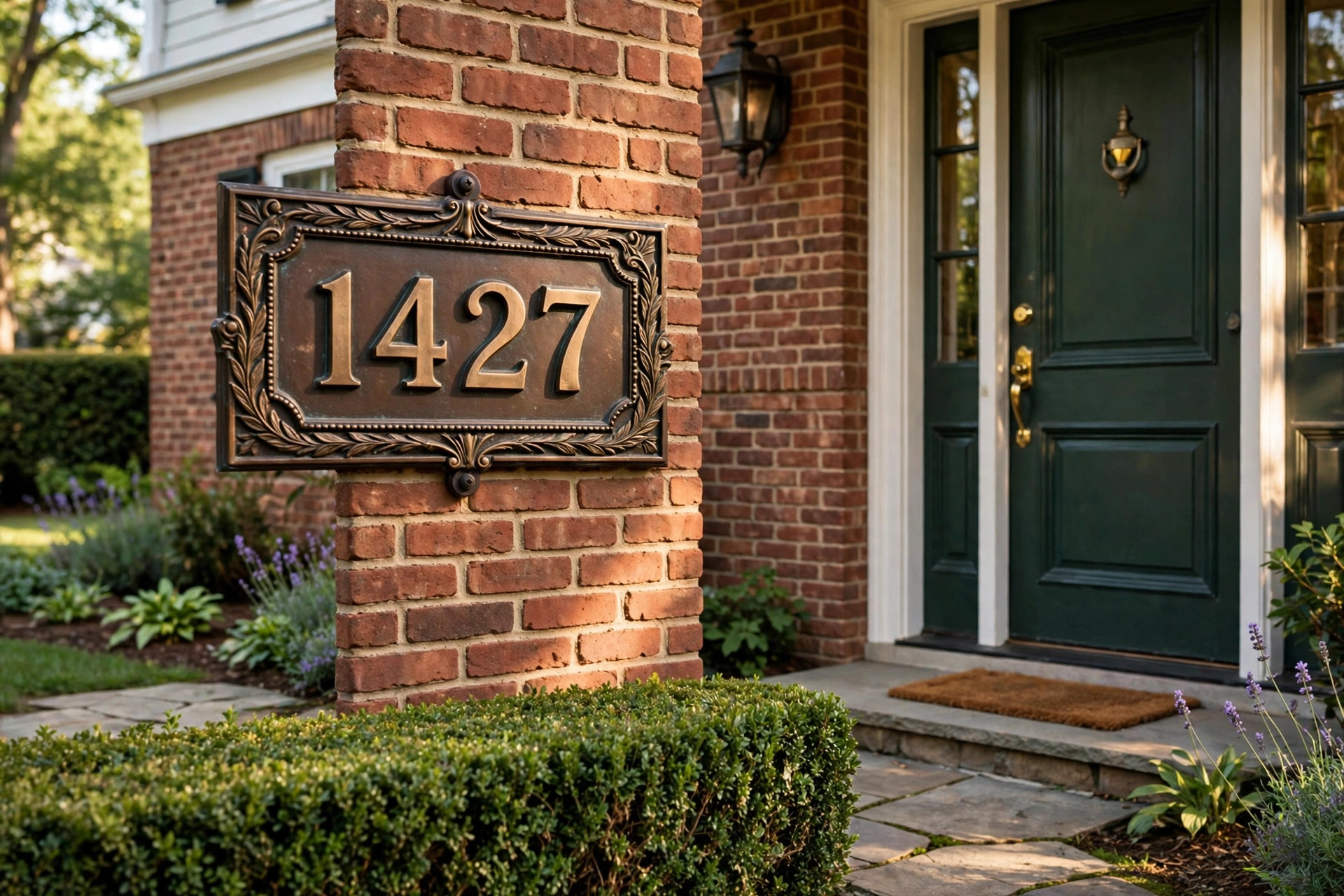
Bronze and brass plaques look rich and formal. They darken with age unless they are lacquered. Many owners like the aged patina. These plaques cost more but can last for decades.
Slate and stone plaques fit older homes and cottages. They are heavy and need solid mounting. The carved numbers last a very long time.
Wood plaques bring warmth but need care. Sun and rain wear wood down. A cedar or teak plaque with a good seal can serve for years, but it will need fresh finish now and then.
Stainless steel plaques give a modern look. They resist rust well. Brushed finishes hide fingerprints better than polished ones.
Mounting Method
Most plaques mount with screws through the front or from hidden brackets on the back. Hidden mounts look cleaner. Screw-through mounts are simpler to install. Some plaques come with stakes for the lawn or posts for the curb. Curbside plaques are great when the house sits far from the street or when trees hide the entry.
Check what comes in the box. A full kit should have the plaque, mounting screws or posts, and clear steps. If you rent your home, look for adhesive or no-drill mounts that do not harm the wall.
Lighted vs. Unlit Plaques
An unlit plaque works well if a porch light or street light hits it. A lighted plaque glows on its own. Solar plaques charge by day and shine at night. Low voltage wired plaques tie into your landscape lighting. LED backlit plaques cast a soft halo on the wall behind them.
Lighted plaques help most on dark streets and in rural areas. They also add a warm touch to the entry at night. Solar models cost nothing to run, but they need some sun each day to charge.
Types and Styles of House Number Plaques
Classic Wall Plaques
The wall plaque is the most common type. It screws to the wall beside the front door or above the garage. Rectangular plates with raised digits are the classic form. They suit colonial, craftsman, and ranch homes.
Curbside and Mailbox Plaques
When the house is hard to see from the road, put numbers where the road can see them. A post at the curb with large reflective digits helps drivers at night. Some owners place numbers on the mailbox or on a stone pillar at the drive entrance.
Modern and Minimalist Styles
Newer homes often carry slim plaques with clean fonts. Frosted acrylic panels with brushed metal digits give a sharp, modern look. Floating number kits let each digit stand off the wall on small spacers. These styles suit mid-century and contemporary homes.
Decorative and Thematic Plaques
Some plaques carry art or themes. You will find garden motifs, nautical designs, and lodge styles. A themed plaque can suit a cottage or a lake house. Keep the digits plain even when the border is decorative. The art should frame the numbers, never hide them.
Smart and Illuminated Options
Newer products add small tech touches. Some plaques sense dusk and light up on their own. Others run on low voltage doorbell wiring. A few high end models pair with home security systems. Tech adds cost, so weigh the benefit for your street and your budget.
Cost and Price Ranges
House number plaques come at many prices. A basic screw-mount plastic or thin metal plaque may cost under fifteen dollars. These work but may fade in two or three years.
Mid-range plaques run from about twenty to eighty dollars. This is the sweet spot for most buyers. You will find solid aluminum, powder-coated steel, and slate plaques in this range. They last many years and look good.
High-end bronze, custom-cut stone, and LED-lit plaques run from about eighty to two hundred dollars or more. Custom sizes and special fonts add cost. A hand-finished bronze plaque is a buy-it-once purchase.
Do not forget the small extras. Mounting hardware, a light, or a post can add ten to thirty dollars. Still, the total stays far below most exterior projects. Compare this to projects like low maintenance outdoor wall lanterns for sale or a budget friendly vinyl replacement windows buying guide — a plaque is one of the lowest-cost upgrades with a clear daily use.
Installation Tips
Most owners can mount a plaque in under an hour. First, hold the plaque where you want it and step back to the street. Check the view from both directions. The best spot is usually beside the front door, between four and six feet off the ground. If the door faces away from the street, use the garage wall or a curb post instead.
Mark the screw holes with a pencil. Drill pilot holes first to avoid cracking brick or stone. Use masonry anchors for brick, stucco, and concrete. Use wood screws for wood siding and trim. Set the plaque level before you drive the screws home.
For night visibility, place a small light above or beside the plaque. Even a low watt bulb makes a big difference. If your porch light sits too far away, a solar spot light aimed at the plaque is an easy fix.
Care and Upkeep
A good plaque needs little care. Wipe it down twice a year with soap and water. A soft cloth is enough for most finishes. Avoid harsh cleaners on lacquered brass or powder coat.
Check the screws once a year. Heat and cold can loosen them. Tighten by hand so you do not strip the holes. For wood plaques, add a fresh coat of outdoor sealant each spring.
Solar plaques need a clear solar cell. Wipe the cell with a damp cloth so dust does not block the sun. If the light grows dim after a few years, the rechargeable battery may need a new one. Most use standard cells you can buy at a hardware store.
After a deep clean of the whole exterior, the plaque will stand out even more. Many owners refresh the plaque when they schedule top rated house power washing services near me so the entry looks its best all at once.
Safety and Visibility at Night
Daytime readability is only half the job. Emergency calls often come at night. Reflective digits bounce back headlight beams and can be read from far away. If you live on a dark road, reflective or lit numbers are worth the extra cost.
Place numbers where headlights will hit them. A plaque tucked under a deep porch roof may stay dark when a car pulls up. A post near the curb catches light much better. Trim bushes that block the view. A ten-dollar trim can do more for visibility than a fifty-dollar plaque.
Check local rules before you buy. Some towns set a minimum digit height. A few ask for numbers on both the house and the curb. A quick call to the fire department or town office can save you from buying the wrong size.
Frequently Asked Questions
How big should house numbers be?
Four-inch digits are a good minimum for most homes. If your house sits more than fifty feet from the street, choose five or six inches. Bigger is almost always better, as long as the plaque still fits the wall space.
Where is the best place to mount a house number plaque?
Beside the front door is the classic spot, about eye level. If the door is hidden from the street, mount numbers on the garage face or on a post at the curb. The rule is simple: put them where a driver can see them without effort.
What is the best material for a house number plaque?
Cast aluminum is the best mix of cost, weight, and weather resistance for most homes. Bronze is the top choice for a formal look that lasts decades. Slate suits older homes. Wood looks warm but needs regular care.
Are solar house number plaques worth it?
Solar plaques are worth it on streets with little light. They cost nothing to run and install in minutes. Just make sure the spot gets a few hours of sun each day. In deep shade, a wired low-voltage light works better.
How do I keep my plaque from fading?
Choose powder-coated or anodized finishes, which resist sun better than plain paint. Clean the plaque twice a year. Keep sprinklers from hitting it daily, since constant water spots wear the finish. A small roof or overhang above the plaque helps a lot.
Can I install a house number plaque myself?
Yes. Most plaques need only a drill, a level, and the screws in the kit. Mounting on brick or stucco takes masonry anchors and a masonry bit. If you are not sure about drilling into your siding, ask a handyman. It is a short job.
Final Word
The best house number plaques buying guide ends with a simple truth. The right plaque is the one people can read. Pick digits big enough for your street. Pick colors with strong contrast. Pick a material that fits your home and your climate. Add light if your street is dark.
Then enjoy the small lift it gives your entry. A clear, handsome number plaque welcomes guests, helps the mail arrive, and guides help to your door. It is a small project with a big return.
For more background, see James Hardie, CertainTeed, and This Old House. For more background, see Bob Vila, Family Handyman, and The Spruce. Buying guides are also published by The Home Depot and Lowe’s.
References
Bob Vila. (n.d.). Home improvement advice. https://www.bobvila.com CertainTeed. (n.d.). Building materials and exterior products. https://www.certainteed.com Family Handyman. (n.d.). DIY home repair and maintenance. https://www.familyhandyman.com James Hardie. (n.d.). Fiber cement siding and exterior products. https://www.jameshardie.com Lowe’s. (n.d.). Home improvement products. https://www.lowes.com The Home Depot. (n.d.). Home improvement products. https://www.homedepot.com The Spruce. (n.d.). Home and garden advice. https://www.thespruce.com This Old House. (n.d.). Home renovation guidance. https://www.thisoldhouse.com
Was this guide helpful?

About Emily Rodriguez
The My Garden US editorial team writes practical, in-depth home and garden guides for American homeowners — tested advice, no fluff.
You May Also Like

Energy Efficient Asphalt Shingle Roofing with Free Shipping: A Full Guide
July 7, 2026 0 views
Professional Grade Asphalt Shingle Roofing Buying Guide for Homeowners
May 29, 2026 0 views
Budget Friendly Fiber Cement Siding Panels Buying Guide
August 22, 2026 0 views