
Most home owners think of drains one at a time. The kitchen sink is slow. The tub does not empty fast. They buy a bottle of cleaner or they reach for the plunger. Sometimes that is enough. Sometimes it is not. A clogged main sewer line signs for homeowners list is worth learning, because a main line clog is not a small drain problem. It is a problem in the one big pipe that carries all waste water out of the house to the city sewer or the septic tank. When that pipe clogs, every drain in the house is in trouble.
A main line clog can push waste water back up into sinks, tubs, and floor drains. The repair bill can run from a few hundred dollars to many thousands if the pipe itself is broken and must be dug up and replaced. The good news is that a main line clog almost always gives warning signs first. A home owner who knows the signs can call a plumber early, while the job is still small.
This article lays out the clogged main sewer line signs for homeowners in plain terms. It covers why the problem matters, what to look for, how a plumber finds the clog, what the fix may cost, how to care for a sewer line, and what to do about safety. It ends with a short set of common questions.
Why a Clogged Main Line Matters
A home has two sets of pipes. The supply pipes bring clean water in. The drain pipes carry used water out. The smaller branch lines from each sink, tub, and toilet join into one large main line, usually four to six inches wide. This main line runs under the basement floor or under the yard to the street.
When a small branch line clogs, one fixture is slow. The rest of the house works fine. When the main line clogs, all fixtures are affected at once. Water has nowhere to go. It backs up into the lowest drain it can find. That is why a main line clog is often found in a basement floor drain or a first floor shower.
Early action saves money. A simple clog cleared with a plumber’s snake may cost a few hundred dollars. A line that has been clogged for weeks may need high pressure jetting. A line broken by tree roots or age may need a full replacement. Costs rise fast. Knowing the clogged main sewer line signs for homeowners can keep a three hundred dollar call from turning into a ten thousand dollar dig.
There is also a health angle. Sewage carries bacteria and gases that do not belong in a living space. A backup brings that waste into contact with floors, rugs, and furniture. Cleanup can then mean removing carpet and drywall. A clogged line should never be treated as a small matter.
The Main Warning Signs: Clogged Main Sewer Line Signs for Homeowners
Each sign below is common on its own. Two or more at the same time point strongly at the main line.
More Than One Drain Is Slow
The strongest of the clogged main sewer line signs for homeowners is slow drainage in several places at once. A kitchen sink, a bathroom sink, and a tub that all drain slowly on the same day are one problem in the pipe they share, not three separate problems.
Gurgling Sounds in Drains
A gurgle is the sound of air being pushed ahead of water in a full pipe. When the main line is partly blocked, water cannot move freely. Air gets trapped and escapes through the nearest drain. The result is a bubbling or gurgling noise from a toilet, a sink, or a tub, often right after another fixture is used.
A toilet that gurgles when the washing machine drains is a classic sign. A bathtub that gurgles when a toilet is flushed tells the same story. These sounds mean the main line is fighting the flow.
Water Backing Up in Strange Places
Backups do not always start where the clog is. They start at the lowest open drain. A toilet flushed upstairs may push water up into a basement shower. These odd patterns are among the most useful clogged main sewer line signs for homeowners, because they show that fixtures are sharing one bad pipe.
Bad Smells From Drains or the Yard
Sewer gas has a rotten, musty smell that is hard to miss. A faint smell from a drain now and then may be a dry trap. A strong, steady smell from several drains at once is different. It means waste is sitting in the line instead of moving out.
Sometimes the smell shows up outside. A patch of yard over the sewer line that smells foul, especially after rain, can mean the line is leaking or fully blocked and seeping. That is one of the outdoor clogged main sewer line signs for homeowners that often gets missed.
The Toilet Level Rises and Falls
A healthy toilet bowl holds a steady water level. When the main line is restricted, flushing a toilet or running a load of laundry can push water up into a nearby toilet bowl. The level may then fall lower than normal as the blockage shifts.
One test is simple. Flush the toilet closest to where the main line leaves the house. If the water in a nearby tub or shower drain moves at the same time, the main line is suspect.
Wet or Sunken Spots in the Yard
The sewer line runs underground from the house to the street. A clog that turns into a break or a leak feeds water into the soil. Look for grass that is much greener and taller in one strip or patch than the rest of the lawn. Look for soil that stays wet when the rest of the yard is dry. A dip or sunken spot in the lawn over the line’s path can mean the soil has washed away around a broken pipe.
These yard signs matter most for older homes with clay or cast iron pipe. Those materials crack with age. Tree roots hunt for the moisture and push into the cracks.
Cleanout Pipe Overflow
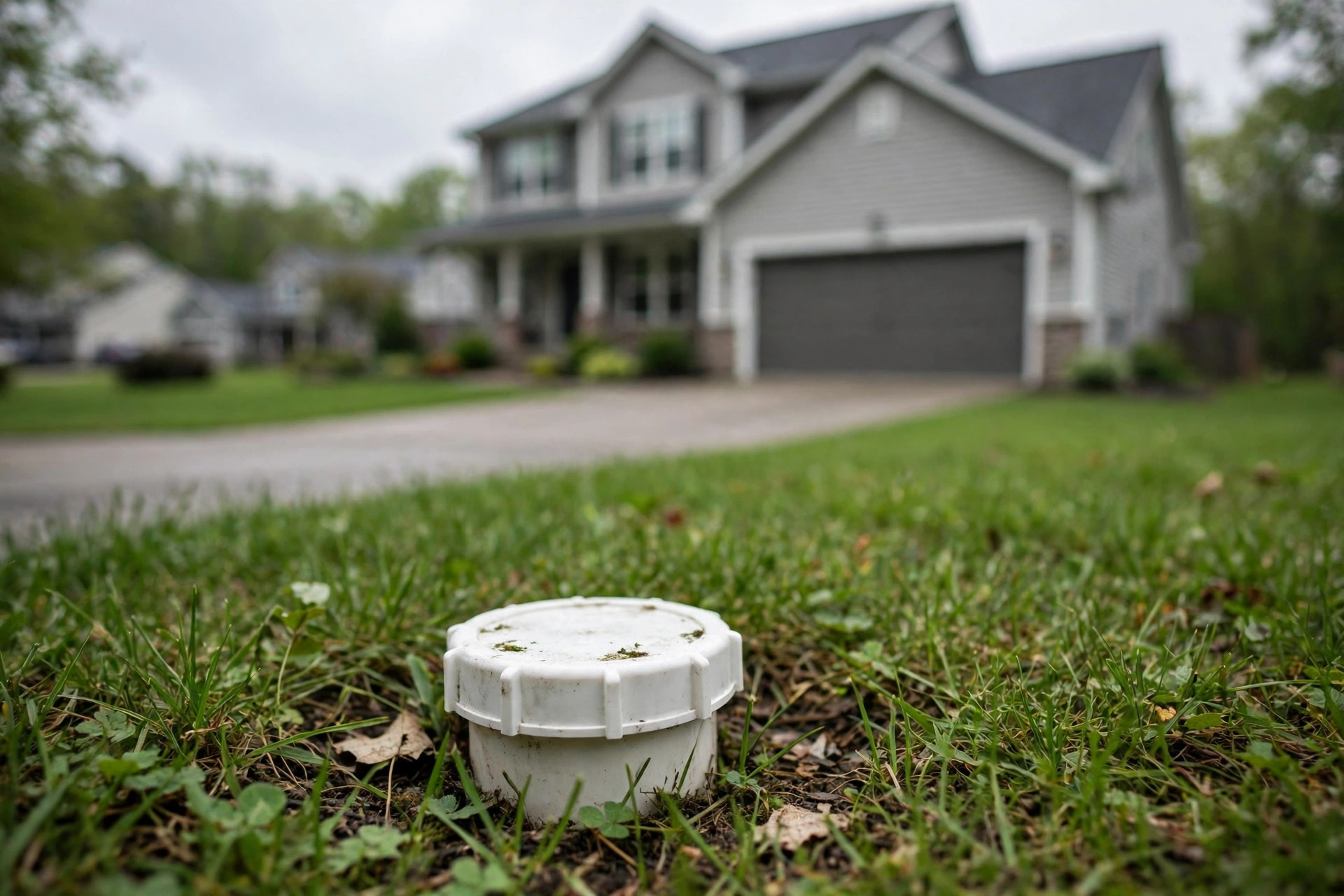
Many homes have a sewer cleanout. It is a capped pipe, usually three to four inches wide, that sticks a few inches out of the ground near the house or near the street. Its job is to give a plumber direct access to the main line.
If the cap is missing or water is standing around the cleanout pipe, that is a direct sign of a main line problem. In a bad clog, sewage may push up and out of the open cleanout. A home owner who sees this should call a plumber at once and keep people and pets away.
What Causes a Main Line to Clog
Knowing the cause helps a home owner judge how urgent the problem is and what the fix will be.
Grease and food waste. Cooking fat poured down a kitchen drain hardens as it cools. Over years it builds up into thick layers inside the pipe. It catches food scraps and narrows the line. This is the most common cause in homes with heavy cooking.
Paper and hygiene products. Only toilet paper should go down a toilet. Wipes labeled as flushable, paper towels, cotton pads, and sanitary products do not break down the way toilet paper does. They cling together and form a clog.
Tree roots. Roots grow toward the water and nutrients in a sewer line. They enter through tiny cracks and joints, then grow thicker. A root mass can trap everything that flows past it. Homes with large trees near the line are at high risk.
Pipe age and damage. Old clay pipe shifts and cracks. Old cast iron pipe rusts from the inside. A section of pipe can collapse or sag and hold standing water and solids. These are structural problems that clearing alone will not fix.
A sagging or misaligned line. Ground settling can push a section of pipe out of line. Solids catch at the lip and build up.
How a Plumber Finds the Clog
A good diagnosis saves money because the fix matches the real problem. The plumber starts with simple fixture tests to confirm that more than one drain is affected. Then the outdoor cleanout cap comes off. Standing water in the cleanout means the clog is downstream, toward the street. A dry cleanout with a backup inside means the clog is under the house.
Next comes a camera on a long cable, fed in through the cleanout or a removed toilet. It shows grease, root masses, cracks, breaks, and sags on a screen. A camera inspection costs extra, but it turns guesswork into fact. The camera head also sends a signal that lets the plumber mark the clog’s depth and spot in the yard, which keeps any digging small.
Learning resources from This Old House and Family Handyman show these steps in plain detail for home owners who want to understand what the plumber is doing.
Types of Fixes and What They Cost
Costs vary by city, depth of the line, and how bad the damage is. The ranges below are rough guides for the United States.
Snaking or rodding. A motor driven cable with a cutting head goes into the line and breaks the clog apart. This suits soft clogs such as paper or light grease. Typical cost is two hundred to five hundred dollars. It is fast and it needs no digging.
Hydro jetting. A high pressure water jet scours the inside of the pipe. It cuts grease and small roots and flushes the debris out. Typical cost is three hundred to eight hundred dollars. It cleans the pipe walls rather than just poking a hole through the clog. Consumer Reports and plumbing guides from The Home Depot note that jetting works best on lines that are sound enough to take the pressure.
Root cutting with a follow up plan. Heavy roots can be cut out with a special saw head, but they grow back. A plumber may suggest a root treatment or a plan for a lined or replaced pipe. Root cutting alone often costs three hundred to six hundred dollars.
Pipe lining. A resin sleeve is pulled into the old pipe and hardened in place, forming a new pipe inside the old one. This suits cracked lines that are still mostly round. Typical cost is four thousand to twelve thousand dollars, depending on length.
Full replacement. The old pipe is dug up and a new pipe goes in. This is the answer for collapsed pipe and lines broken in many places. Typical cost is three thousand to twenty five thousand dollars, driven by depth, length, and what sits above the line, such as a driveway.
Care and Upkeep for a Healthy Main Line
A sewer line asks little and gives a lot. A few habits keep it clear.
Keep grease out of drains. Wipe pans with a paper towel before washing. Pour used cooking oil into a sealed container and throw it away with the trash. Never pour fat down the sink, even with hot water running. Hot water only moves the grease further down, where it cools and sticks.
Flush only the basics. Toilet paper and human waste only. No wipes, even those labeled flushable. No paper towels, no cotton products, no dental floss, no hair. A small trash can next to each toilet makes this habit easy.
Watch what the garbage disposal sends down. A disposal grinds food small, but it does not make it vanish. Starchy foods, coffee grounds, and fibrous peels build up in the main line. Scrape plates into the trash first. For kitchen planning, guides at Kohler and Delta Faucet show how fixture and sink choices affect what a line must carry.
Use enzyme treatments with care. Bacterial enzyme products sold for drains can help keep a healthy line clear of light buildup. They are not a fix for a real clog, and chemical drain cleaners can damage old pipes and harm a septic system. When in doubt, call a professional rather than pouring chemicals down.
Schedule a camera check for old lines. If a home is more than forty years old and the line has never been inspected, one camera check sets a baseline. The plumber can say whether the pipe is clay, cast iron, or plastic, and whether roots or cracks are present. A check every few years after that is cheap insurance. The EPA offers guidance on household wastewater systems that home owners may find useful.
Know where the line runs. Ask a plumber to mark the line’s path during an inspection. Do not plant trees with aggressive roots near it. Keep heavy vehicles off the ground above it. This simple knowledge prevents many problems.
Safety Around a Sewer Problem
Sewage is not just dirty water. It carries bacteria, viruses, and gases such as methane and hydrogen sulfide. A home owner should treat any backup with care.
Do not use fixtures during a backup. Running more water only pushes more waste up. Stop using sinks, tubs, toilets, and appliances until the line is clear.
Keep children and pets away. Standing sewage can carry germs that cause stomach and skin illness. Block off the affected area.
Ventilate. Open windows near the affected area to let gases out. If the smell is very strong, leave the area.
Wear protection for small cleanups. Wear rubber gloves, boots, and eye protection. Wash hands and tools well after. Anything porous that soaked up sewage, such as carpet padding, usually must be thrown away rather than cleaned.
Call a professional for the real fix. Chemical cleaners and rented snakes can make things worse in untrained hands. A licensed plumber has the tools and the training. Retailers such as Lowe’s sell consumer drain tools, but a main line is not the place to learn on the job.
Frequently Asked Questions
How do I know if it is the main line or just one clogged drain? One slow drain points to a branch line. Several slow drains at once, gurgling in a fixture you are not using, and water backing up in a low drain point to the main line.
Can a main sewer line clog clear itself? Almost never. A partial clog may seem to come and go as water levels shift, but the buildup stays. Grease, paper masses, and roots do not wash away on their own.
How long does it take a plumber to clear a main line? A simple snaking job often takes one to two hours. Hydro jetting may take two to four hours. Lining or replacement is a multi day project.
Will my home insurance cover a sewer line repair? Standard home insurance usually does not cover sewer line wear, root damage, or clogs from misuse. Some policies offer a low cost rider for service line coverage. Check the policy before trouble starts.
Are chemical drain cleaners safe for a main line? They are risky. Caustic cleaners can damage old pipes and harm a septic system. For a main line clog, mechanical clearing by a professional is the safer choice.
How often should a main line be inspected? For lines over forty years old, a camera inspection every two to three years is sensible. Newer plastic lines in good shape may need a check only when symptoms appear.
A Short Final Word
The clogged main sewer line signs for homeowners are not hard to learn. Slow drains in several rooms, gurgling sounds, odd backups, bad smells, wet spots in the yard, and a troubled cleanout all tell the same story. Each sign is a chance to act early.
A main line clog will not fix itself and it will not wait. The home owner who spots the signs, stops using the fixtures, and calls a licensed plumber keeps the job small and the home safe.
For related reading on home plumbing choices, see the guides on toilets for low water pressure homes, high pressure shower head reviews for 2026, and undermount versus topmount sink pros and cons.
References
Consumer Reports. (n.d.). Product reviews and ratings. https://www.consumerreports.org Delta Faucet. (n.d.). Kitchen and bathroom faucets. https://www.deltafaucet.com Family Handyman. (n.d.). DIY home repair and maintenance. https://www.familyhandyman.com Kohler. (n.d.). Bathroom and kitchen fixtures. https://www.kohler.com Lowe’s. (n.d.). Home improvement products. https://www.lowes.com The Home Depot. (n.d.). Home improvement products. https://www.homedepot.com This Old House. (n.d.). Home renovation guidance. https://www.thisoldhouse.com U.S. Environmental Protection Agency. (n.d.). Protecting human health and the environment. https://www.epa.gov
Was this guide helpful?

About James Carter
The My Garden US editorial team writes practical, in-depth home and garden guides for American homeowners — tested advice, no fluff.
You May Also Like
The Best Sediment Pre Filter for RO System USA: A Homeowner’s Guide
April 8, 2026 0 views
Backwater Valve Installation Cost for Basement: What Homeowners Pay in 2026
June 17, 2026 0 views
Best Farmhouse Kitchen Sink Reviews USA: A Plain Guide to Buying Right
July 1, 2026 0 views