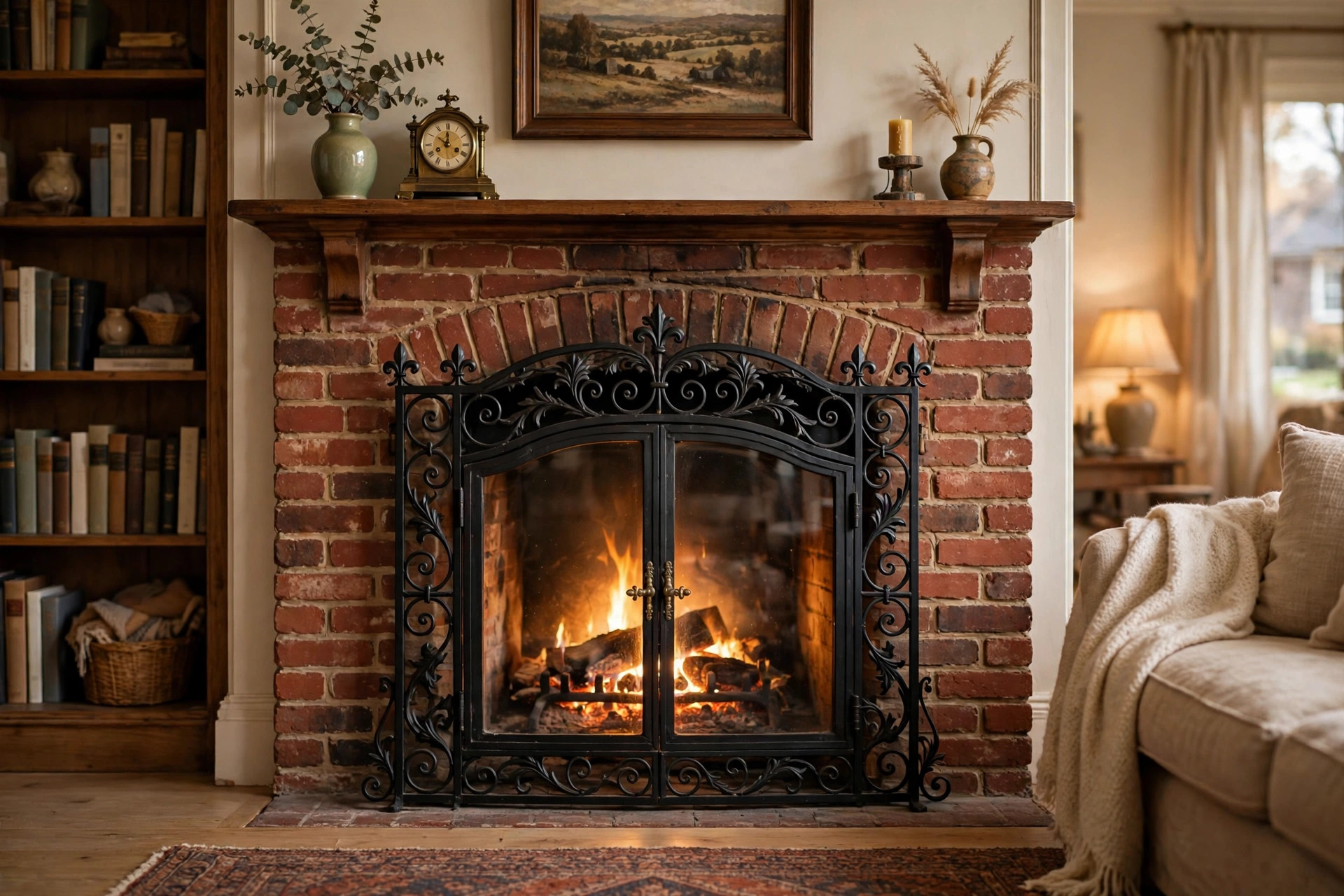

People in the South do not burn fires the way people in the North do. Winters are mild. Fires are short. Many nights need only a small blaze to take the chill off the room. A screen with doors keeps heat where it belongs during those short burns, so the room stays comfortable long after the last log breaks down. The best fireplace screens with doors for southern states fit this kind of use. They close the firebox when the fire dies down. They keep sparks from landing on the rug. They let you leave the room without worry. A screen with doors is more than a pretty frame. It is a tool that makes a part-time fireplace safer and cleaner.
Why It Matters
A southern fireplace works in bursts. One cold evening in December. A holiday morning in January. A cool rain in March. Between those times, the firebox sits open and gathers dust. An open firebox lets cold air drift into the house. It lets warm room air rise up the chimney when the fire is not lit. A screen with doors solves both problems. You shut the doors when the fire burns low. You shut them when the fire goes out. The room stays warmer and the flue stays closed to dust.
Safety is the other reason. A live fire throws sparks. An open screen lets them fly a few feet. A closed door stops them cold. Homes with pets, small children, or busy living rooms gain real peace of mind. Southern pine burns fast and hot, and it pops more than hardwood. Doors catch those pops before they reach the carpet.
What to Look For: Best Fireplace Screens with Doors for Southern States
Measure first. Write down the width and height of the firebox opening. Leave an inch of overlap on each side so the screen covers the opening with room to spare. Freestanding screens must be wider than the opening by three to four inches. Door models that mount flat against the surround need an exact fit.
Look for a heavy frame. Steel and wrought iron last. They do not warp in heat. The mesh must be fine and tight. Hold it up to light before you buy. If you can see wide gaps, sparks can pass through. Doors should swing open and shut without scraping. Check the latch. It should hold the doors closed with a firm click.
Glass doors earn their keep in the South. Glass slows room air from rushing into the firebox. It keeps the fire burning steadier. It also keeps the room warmer after the fire dies. If your firebox came from a major maker, fireplace maker guides list exact opening sizes to help you match a screen. Some doors have tempered glass that handles heat. Others use fine mesh doors with no glass at all. Mesh doors breathe more and suit mild climates where you want a brighter view of the flames.
Types and Options
Three-door screens are the classic style. One wide panel in the center and two narrow panels on the sides. The center panel opens like a pair of doors. This style fits most rectangular fireboxes, and hearth product reviews often rate it highest for value. It is easy to find and easy to replace.
Arch-top screens follow the curve of arched fireboxes. Many older southern homes have brick arches. A flat screen looks wrong on an arch. Measure the arch height at the center and at the sides. Buy a screen shaped to match.
Single-panel door screens sit flat and clean. They work well in modern rooms with simple stone or tile surrounds. The doors open inward or outward on hinges. Some open with a slide. Keep the track clean if you pick a sliding model. Ash clogs tracks fast.
Retrofit door kits are another choice. They bolt onto an existing flat screen frame and add doors where none stood before. These kits suit renters and budget buyers who like their current screen but want the draft control that doors give. Check that the kit width matches your frame before you order. A kit that is too narrow will leave open edges, and a kit that is too wide will not mount flat.
Finish choices matter in humid air. Black matte iron suits most rooms. Bronze and oil-rubbed finishes resist rust better in Gulf Coast humidity. Brass and polished steel look bright but need more care. They show fingerprints and water spots. In coastal homes, choose powder-coated finishes. The coating seals the metal against salt air.
The chimney section of your hardware store often carries seasonal fireplace supplies next to screens and tools. A quick look at what is in stock can help you compare frames side by side.
Cost and Price
Prices run from about forty dollars to over four hundred. The gap comes from metal, size, and craft.
Basic steel screens with mesh doors cost between forty and ninety dollars. They work fine for a few seasons. The finish may chip where the heat is strongest.
Mid-range screens run one hundred to two hundred and fifty dollars. These use thicker iron and better hinges. The doors close flat and stay flat. Many southern buyers land in this range. It buys ten years of steady use.
Premium screens cost two hundred and fifty to four hundred dollars and up. Hand-forged iron, cast details, and tempered glass doors push the price higher. They weigh more and stand steady. They also look better in formal living rooms. Restoration experts note that hand-forged iron holds its shape longer than pressed steel. Most shoppers compare prices at large home improvement retailers before buying online.
Add the small costs. A hearth rug under the screen runs twenty to sixty dollars. Fireplace tools cost another thirty to eighty. A sturdy indoor wood holder keeps logs off the floor and near the firebox, which cuts trips across the house on cold nights.
Care and Upkeep
Wipe the screen with a dry cloth once a month. Ash dust settles on every surface. Use a damp cloth on the frame, then dry it right away. Water left on iron invites rust, and rust spreads fast in humid southern air.
Clean glass doors with a paste of wood ash and water. It sounds strange, but it works. Rub gently with a soft cloth. Rinse and dry. Skip harsh cleaners on tempered glass. They can scratch the surface.
Oil the hinges twice a year. A drop of machine oil on each pin keeps doors swinging free. Fireplace care guides list this as key winter prep. Check the latch at the same time. A loose latch lets a door drift open while the fire burns.
Watch for rust spots. Sand them light, wipe clean, and touch up with high-heat paint. Do this at the first sign. A small spot grows into a large patch if you wait through a wet summer.
At season’s end, close the doors and shut the damper. Put a small bag of dry rice or silica gel inside the firebox. It pulls damp air out of the space and keeps the iron dry through the long warm months.
Safety
Doors are not a license to walk away from a strong fire. Keep them closed when the flames rise high. Open them only to add wood or adjust a log. Use long tongs, not your hands.
Keep rugs, paper, and curtains three feet from the screen. Heat passes through mesh and glass. The floor in front of the firebox gets hot during a long burn.
Never close glass doors tight on a roaring fire unless the maker says you can. Leading fireplace makers warn that glass needs air flow to stay cool. Read the small card that comes in the box. It lists safe use in plain terms.
Check your smoke alarm each fall before the first fire. The fire safety guidance from federal agencies reminds homeowners that clean-burning habits cut indoor smoke. Burn dry, seasoned wood only. Wet wood smokes, coats the glass black, and fills the room with haze.
Store spare wood outside or in a dry rack. Bring in only what you will burn that night. Green wood pops and throws more sparks than seasoned oak or hickory.
Hearth Style and the Rest of the Room
A screen sets the tone of the whole hearth. A dark iron screen suits brick and stone. A bronze screen warms up a white-painted surround. Match the metal to your mantel shelf hardware if you want the hearth to read as one design.
Many southern homes pair the fireplace with outdoor living. If your winter fires move outside by spring, good fire pit tables give the same glow on the patio. Keep one style story across both spaces and the home feels planned.
A neat hearth corner also needs dry wood close at hand. Indoor wood storage keeps logs clean and off the carpet. It saves the back-and-forth to the woodpile on rainy nights.
FAQ
Do I need doors if I already have a flat mesh screen? A flat screen stops large sparks but leaves the firebox open. Doors close the opening fully. They keep drafts down, hold heat in, and stop small embers that mesh alone can miss. For part-time use in the South, doors are worth the step up.
Will glass doors cut the heat into the room? Glass slows some radiant heat, but it slows drafts more. The net result in a mild climate is a steadier, longer warmth. Open the doors once the fire is steady if you want full heat. Close them as the fire dies to hold what is left.
What size screen do I need for a standard firebox? Most southern fireboxes run thirty to forty-two inches wide. Measure your opening and buy a screen two to four inches wider. For height, cover the opening plus two inches. When in doubt, size up. A small screen looks lost and leaves gaps at the edges.
How do I stop rust in a humid climate? Keep the metal dry and painted. Wipe it monthly. Touch up chips with high-heat paint the moment you see bare metal. In coastal zones, store the screen away from open windows and sea air during the off-season. Powder-coated finishes hold up best.
Can I use the screen with gas logs? Yes. Screens with doors work fine over gas logs. Keep doors open while lighting. Close them once the flames settle. Follow the gas log maker’s clearance rules, and keep the remote and shutoff valve within reach.
How often should I replace a screen? A good iron screen lasts eight to twelve years with care. Replace it when doors warp, hinges break, or rust eats through the frame. Glass that is cracked or deeply scratched should be replaced at once. Heat makes weak glass worse.
A Short Final Word
The best fireplace screens with doors for southern states do not need to be fancy. They need to fit tight, close firm, and stand up to humid air. Measure twice. Buy thick iron over thin pressed steel. Keep the hinges oiled and the glass clean. A screen that does its job lets you enjoy the few cold nights of the year without a second thought. Close the doors, pour a warm drink, and let the fire do the rest.
References
Family Handyman. (n.d.). DIY home repair and maintenance. https://www.familyhandyman.com Heatilator. (n.d.). Fireplaces and fireplace products. https://www.heatilator.com Lowe’s. (n.d.). Home improvement products. https://www.lowes.com Napoleon. (n.d.). Fireplaces, grills, and heating products. https://www.napoleon.com The Home Depot. (n.d.). Home improvement products. https://www.homedepot.com The Spruce. (n.d.). Home and garden advice. https://www.thespruce.com This Old House. (n.d.). Home renovation guidance. https://www.thisoldhouse.com U.S. Environmental Protection Agency. (n.d.). Protecting human health and the environment. https://www.epa.gov
Was this guide helpful?

About Robert Taylor
The My Garden US editorial team writes practical, in-depth home and garden guides for American homeowners — tested advice, no fluff.
You May Also Like
Where to Buy Marble Fireplace Surrounds in California: A Complete Guide
August 9, 2026 0 views
Premium Vented Gas Log Sets for Small Apartments
January 4, 2026 0 views
The Best Chimney Caps and Covers Buying Guide
September 28, 2026 0 views