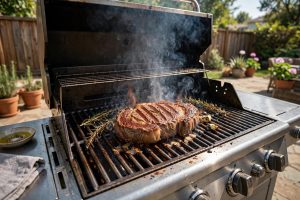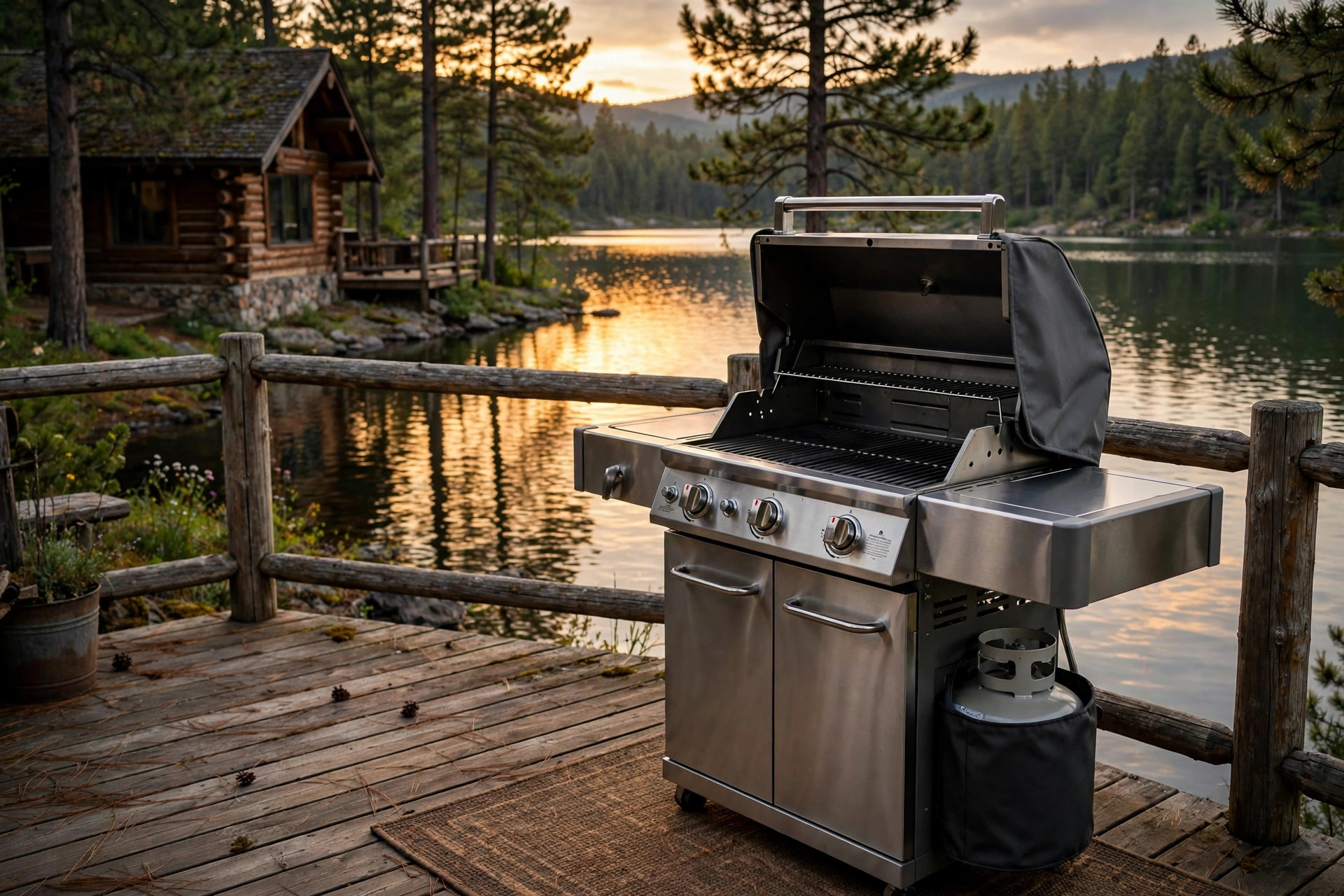

A cabin on the lake is a place to slow down. You arrive on Friday, you put the bags down, and soon the smell of wood smoke is in the air. A good grill is part of that ritual. But a grill that works well at home may fail at a cabin. Cabins sit empty for weeks or months. Rain blows in off the water. Mice chew on what they can reach. Review sites list hundreds of models, and most best grill for lake cabin reviews ignore these facts. This guide does not. It looks at what a grill must do when nobody is around to care for it, and how to pick one that still works when you turn the key in the lock.
Why a Cabin Grill Must Be Different
A home grill gets used two or three times a week and lives under watchful eyes. A cabin grill may sit alone from October to May. That idle time is hard on steel. Moisture creeps into grease traps. Salt air from the lake works into burners. Small animals nest in the cabinet. By spring, the grill that cost you several hundred dollars may be a rusted box.
The second problem is fuel. At home you swap a propane tank at the corner store. At a cabin, the nearest store may be forty minutes away. If the tank runs out on Saturday night, dinner is ruined. Many cabin owners keep a spare tank, but not all do. This simple fact shapes the whole choice.
The third problem is skill level. Guests use cabin grills. Family friends use them. Teenagers use them. The grill must be easy to light, easy to clean, and hard to damage. A complex unit with many knobs and fragile parts will suffer. Reviews written by full-time grill masters often miss this point. They test for heat zones and sear marks. You need to test for survival.
What to Look for When You Choose: Best Grill for Lake Cabin Reviews
Start with the shell. Thick steel or cast aluminum lasts. Thin sheet metal warps and rusts. Look for stainless steel that is labeled 304 grade, or for porcelain-coated cast iron. Both stand up to damp air. Check the welds and the seams. A tight body keeps rain out of the firebox.
Then look at the burners. Stainless or cast iron burners outlast cheap steel tubes. If you can, choose a model where burners are easy to swap. At a cabin, you want repairs you can do in twenty minutes with a wrench, not repairs that need a service call. Some makers sell parts for decades. Others stop after five years. The long-term parts support at Weber is one reason cabin owners favor the brand.
Wheels matter more than people think. A cabin deck is uneven. The ground by the water is soft. Wide, sturdy wheels let you move the grill under the porch when a storm comes. Small plastic wheels crack in the cold. Look for at least two large wheels and two locking casters.
A tight-fitting lid with a good thermometer is worth its weight. You cannot watch food the way you do at home because cabin grills often feed a crowd. A thermometer you can trust saves the burgers. It also saves propane, since you will not lift the lid every two minutes.
Finally, think about the grease system. Removable drip pans and easy-empty catch cups are not small features at a cabin. Bears and raccoons love old grease. A system that lets you clean in seconds keeps animals away from the deck.
Types of Grills That Suit Cabin Life
No single fuel type wins for every cabin. Each has strengths and each has real drawbacks when the property sits empty half the year.
Gas Grills
Gas is the most common choice, and for good reason. It lights fast. It heats fast. Guests can use it without training. For a cabin that hosts groups, gas feeds ten people with little fuss. A full-size propane tank lasts many cookouts, and many owners keep a second tank on the porch so nobody runs dry.
The weak point is idle time. Spiders love to nest in gas tubes. Their webs block the flow and cause uneven flames or dangerous flare-ups. A cabin grill needs a quick spider check each spring. Brush out the venturi tubes before the first use. Keep the cover on tight all winter. If you want one dependable workhorse, many cabin owners start by comparing models through a trusted guide such as the buying advice at Home Depot before narrowing the field.
For help getting started with gas at a rental or guest cabin, the outdoor pizza oven for beginners reviews guide pairs well with this page.
Charcoal Grills
Charcoal gives the best smoke flavor, and many lake families would never give it up. A charcoal kettle is also cheap to replace if a storm takes it. Nothing inside can rust out in the electronic sense, because there are no electronics. It is the simplest machine in this whole guide.
The costs are time and mess. Charcoal takes thirty minutes to light and another twenty to cool. Ash must be carried out. In a dry summer, sparks from a chimney starter are a fire worry, and some cabin associations ban charcoal during burn bans. If your cabin sits in a wooded area, check local rules before you commit. A covered kettle with ash control, like the classic designs reviewed at Char-Broil, keeps the mess low and the lid tight against wind.
Pellet Grills
Pellet grills are the modern favorite for slow cooking. They burn wood pellets, hold a set temperature, and can smoke a brisket while you fish. For long weekend meals, they are hard to beat. The hardwood-fired cooking at Traeger shows why so many buyers are curious.
But pellets and cabin life are a rough match. Pellets absorb damp air and swell into mush inside the hopper. If the grill sits for three months with pellets inside, the auger can jam hard. An owner who empties the hopper every visit can manage this. A cabin with rotating guests cannot. Only choose a pellet grill for a cabin you visit often and maintain well.
Flat-Top Griddles
A flat-top griddle on a gas cart cooks for crowds with ease. Pancakes, bacon, burgers, and fish all work on one surface. Families love them at cabins. The surface needs oiling after each use to stop rust, and that is one more chore at the end of the day. Still, for a cabin that hosts reunions, a griddle is worth a hard look. The reunion cooking guide at best bbq for family reunion cookout covers how to feed big groups.
Cost and Price
Prices run from under one hundred dollars to well over one thousand. Most cabin owners land in the middle. A solid three-burner gas grill in the 300 to 600 dollar range gives good steel, decent burners, and parts you can find later. Below 200 dollars, you are buying thin metal that may last three seasons at a cabin. Above 800 dollars, you pay for finish and features, not necessarily for longer life.
Remember the hidden costs. A quality cover runs 40 to 80 dollars and is not optional. A spare propane tank costs 30 to 50 dollars plus the fill. Replacement grates run 30 to 90 dollars depending on size. Cheap grills often need grates sooner, which eats the savings. Budget for the cover and the spare tank on day one.
Watch for end-of-season sales. Late August and September bring deep discounts as stores clear summer stock. A grill bought in September can cost 30 percent less than the same model in May. If your first cabin trip is in October, that timing is perfect.
Care and Upkeep for Seasonal Use
A cabin grill needs a closing routine and an opening routine. Neither takes long. Both save money.
When you close the cabin for the season, run the burners on high for fifteen minutes to burn off grease. Brush the grates while they are hot. Let the unit cool, then remove the drip pan and wash it. Disconnect the propane tank and store it upright outdoors, never inside the cabin or under the deck. Cover the grill with a breathable cover, not a plastic tarp that traps water. If you own charcoal models, dump all ash. Ash holds water and rusts steel from the inside.
When you open the cabin, check the gas lines before you light anything. Mix a little dish soap with water and brush it on the connections. Bubbles mean a leak. Tighten or replace the hose. This one-minute test prevents fires. The safety standards published by the CPSC list grill checks as a yearly home task, and the same rules fit a cabin.
Mid-season care is simple. Brush grates after every cook. Empty the grease cup before guests arrive. Hose off the outside once a month to remove pollen and lake spray. If you grill at night often, a clip-on light helps, and the best grill light for night grilling guide shows which styles survive outdoor life.
For deep cleaning tips that apply to grates and fireboxes, the cooking site AmazingRibs offers plain, tested methods that work on almost any grill type.
Safety at a Remote Cabin
Cabins are far from fire stations. Take grill safety more seriously there than at home.
Keep the grill at least ten feet from the cabin walls, the railing, and any overhanging roof. Wind off the lake can push flames sideways, so allow extra room on windy days. Never move a hot grill under the porch to hide it from rain. Porch fires start this way every year.
Keep a fire extinguisher rated for grease fires within reach of the cooking area. Check its gauge each spring. Keep the number of the local fire department posted inside the cabin door, not just in your phone. Cell service at lakes can fail.
If children visit the cabin, set a clear rule: nobody touches the grill without an adult. The metal stays hot long after the food is done. A consumer safety overview at Consumer Reports notes that most grill injuries are burns from touching hot surfaces, not from flames.
Charcoal users should cool ash for at least 48 hours before dumping it. Place ash in a metal can with a lid, away from wood piles. Embers hide in ash for days.
FAQ
What size grill does a lake cabin need? For most cabins, a three-burner gas grill with about 450 square inches of cooking space fits four to eight people. If the cabin hosts big weekends, go larger or add a griddle. Small cabins used by couples can manage with a two-burner or a kettle.
Should I leave the grill covered all winter? Yes. A breathable cover is one of the best purchases you can make. It keeps snow and rain off the steel while letting damp air escape. Remove the cover once in the spring to air the unit out, then cover it again between trips.
Is a natural gas hookup worth it at a cabin? Only if the cabin already has natural gas service. Running a new line just for a grill is costly. Propane tanks are the standard for cabins, and a spare tank solves the empty-tank problem.
How long should a cabin grill last? A well-built grill with yearly care lasts eight to twelve years at a cabin. A cheap thin-metal unit may last three to five. Covers, cleaning, and dry storage matter more than the brand name.
Can I store the grill inside the cabin over winter? Do not store propane tanks indoors, ever. The grill itself can go into a shed or garage if you have room, but it must be clean, dry, and tank-free. Many owners simply leave the covered grill on the deck all winter with no harm.
Do I need to winterize a pellet grill at the cabin? Yes, and this is where pellet owners fail. Empty the hopper and the auger tube completely. Run the grill until the firepot burns dry. Store pellets in sealed buckets indoors. Miss one of these steps and damp pellets will jam the auger by spring.
A Short Final Word
The best grill for a lake cabin is not the one with the highest score in a lab. It is the one that lights on the first try in May, feeds a hungry crowd in July, and survives the winter without a cover check. Buy thick steel, simple controls, and parts you can replace. Keep a spare tank. Cover it every time you leave. Follow this plain advice and the grill will be there when the lake is calm and the sun is low, which is exactly when you want it most.
For more ideas on outdoor cooking gear, the recipe and gear team at The Spruce Eats keeps a steady stream of tested grill guides. Shoppers who want to compare brands side by side can browse the lines at Napoleon, Broil King, and Big Green Egg before they visit a store.
References
AmazingRibs.com. (n.d.). Barbecue and grilling science. https://www.amazingribs.com Big Green Egg. (n.d.). Kamado grills and outdoor cooking. https://www.biggreenegg.com Broil King. (n.d.). Gas and charcoal grills. https://www.broilkingbbq.com Char-Broil. (n.d.). Gas and charcoal grills. https://www.charbroil.com Consumer Reports. (n.d.). Product reviews and ratings. https://www.consumerreports.org Napoleon. (n.d.). Fireplaces, grills, and heating products. https://www.napoleon.com The Home Depot. (n.d.). Home improvement products. https://www.homedepot.com The Spruce Eats. (n.d.). Recipes and cooking guides. https://www.thespruceeats.com Traeger. (n.d.). Wood pellet grills. https://www.traeger.com U.S. Consumer Product Safety Commission. (n.d.). Product safety information. https://www.cpsc.gov Weber. (n.d.). Grills and outdoor cooking. https://www.weber.com
Was this guide helpful?

About James Carter
The My Garden US editorial team writes practical, in-depth home and garden guides for American homeowners — tested advice, no fluff.
You May Also Like
Best Grill for RV Camping Reviews: What Works on the Road
January 23, 2026 0 views
How to Smoke Turkey on Gas Grill: A Simple Holiday Guide
March 28, 2026 0 views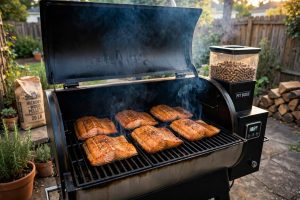
How to Smoke Salmon on Pellet Grill
September 17, 2026 0 views