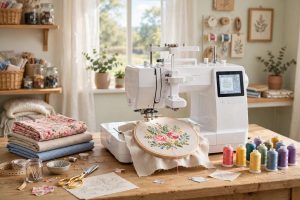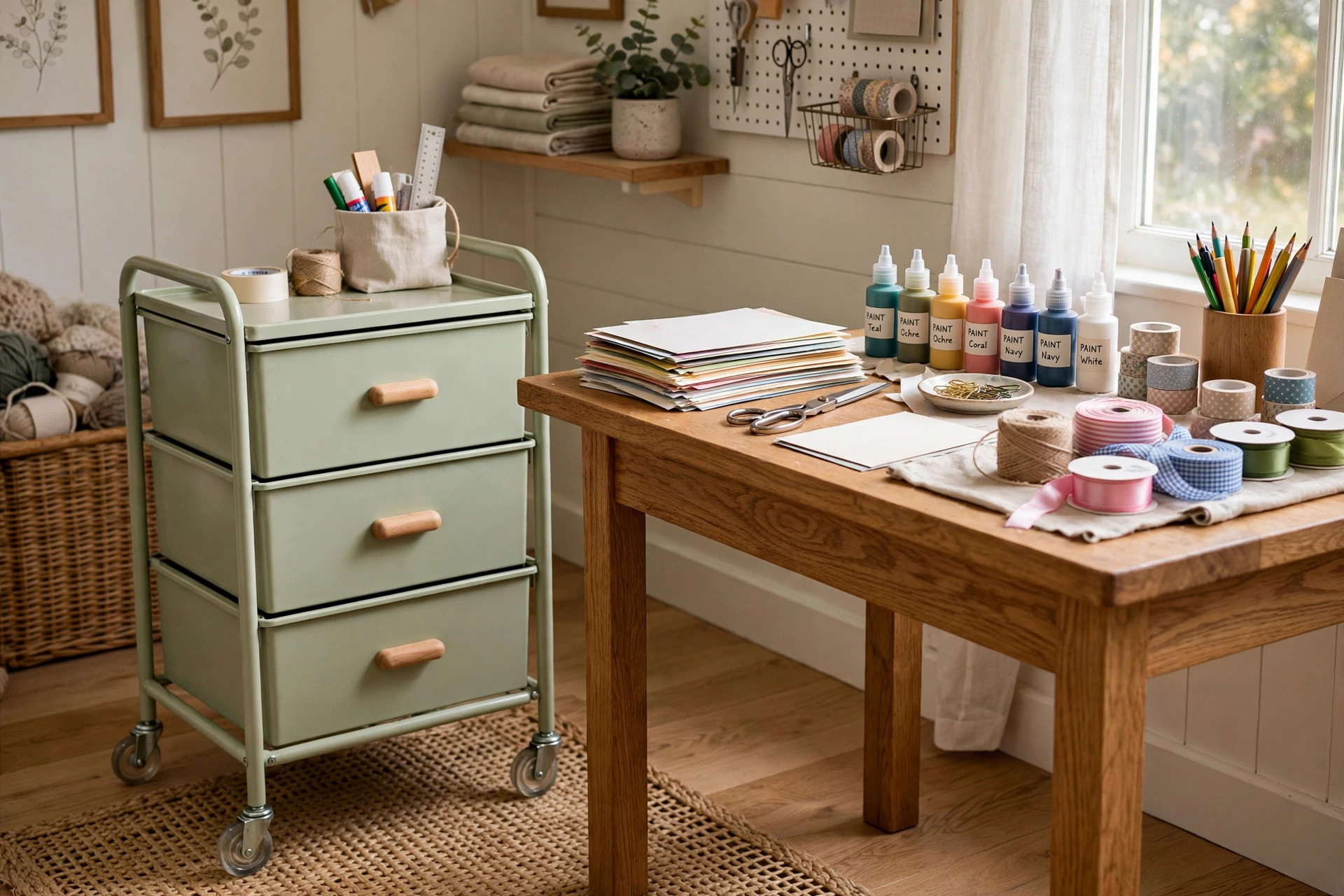

Craft work takes many small tools. Scissors, thread, glue, paper, paint, and beads all need a place. A drawer here and a box there is not enough for most crafters. The best craft storage cart with drawers rolling solves this problem. It holds supplies in neat drawers. It rolls to your desk, your table, or your sewing machine. When the work is done, it rolls back into a corner. This guide explains what makes a good rolling cart. It covers the main types, the key features, and fair prices. It also covers care, safety, and common questions. By the end, you will know which cart fits your craft room and your budget.
Why a Rolling Cart With Drawers Matters
Craft rooms get messy fast. Small items scatter across tables. Bottles tip over. Paper stacks slide. A rolling craft cart with storage ends this daily disorder. Each drawer holds one kind of supply. Paints go in one drawer. Ribbons go in another. Scissors and rulers get their own slot. Everything has a home.
Time is the second reason. Crafters waste hours looking for lost tools. A cart puts each tool one pull away. You roll the cart to your chair. You open the drawer. You take what you need. The project moves faster. The joy of the work stays intact.
Space is the third reason. Many crafters work in a bedroom corner or a spare closet. A cart uses vertical space. Six or eight drawers stack in a footprint smaller than a nightstand. When guests arrive, the whole station rolls into a hallway closet. This is why apartment dwellers praise these carts. Storage guides from major home retailers often list rolling carts as the top pick for small rooms.
Dust protection is a fourth reason. Open shelves collect dust. Fabric fades in sunlight. Closed drawers shield supplies from both. This keeps paper crisp and thread bright for years.
What to Look for When You Choose: Best Craft Storage Cart with Drawers Rolling
Not all carts are equal. The frame matters first. Steel frames last longest. They hold heavy loads without bending. Wood frames look warm and fit classic rooms. Plastic frames cost less but may crack under heavy books or jars.
Drawers matter second. Look at drawer depth. Shallow drawers suit paper, stickers, and pens. Deep drawers suit yarn, fabric, and large bottles. The best carts mix both sizes. Smooth drawer slides matter too. Drawers should open and close with one hand. They should not stick or fall out when pulled too far.
Wheels matter third. A rolling cart for craft supplies needs four sturdy wheels. Two of the wheels should lock. Locking wheels keep the cart still while you work. Smooth wheels roll over carpet without tearing it. Cheap plastic wheels crack within a year. Rubber or polyurethane wheels last far longer. Workshop experts at Family Handyman advise buyers to test wheel quality before any other feature.
Size matters fourth. Measure your space before you shop. Note the height of your desk or table. The cart top should sit near table height so it can serve as an extra work surface. Check door widths too. A cart that cannot pass through your craft room door is useless.
Weight limits matter fifth. Each drawer has a limit, often five to ten pounds. The whole cart has a limit too. Heavy items like fabric bolts and paint sets add up fast. A cart rated for fifty pounds will sag under eighty. Buy more capacity than you think you need.
Drawer stops and dividers matter sixth. Stops keep drawers from falling out. Dividers keep small items from sliding together. Some carts include them. Others sell them as extras. A craft cart organizer with drawers should keep beads separate from buttons without your help.
Types of Rolling Craft Carts
Metal Mesh Carts
The metal mesh cart is the most common type. It has three to five open trays on a steel frame. Mesh sides let you see contents at a glance. Air flows through, which helps wet paint dry. These carts are light and cheap. Their weakness is dust. Open trays do not protect supplies. Many owners add fabric covers to fix this.
Wooden Cabinet Carts
Wooden carts look like small dressers on wheels. They have real drawers with wood fronts. They fit living rooms and bedrooms where looks matter. They cost more than metal carts. They are heavier too. But they protect supplies from dust and light. Quality guides at This Old House often recommend wood carts for permanent craft corners.
Plastic Drawer Towers on Wheels
These towers stack clear plastic drawers on a wheeled base. You can see every item without opening a drawer. They are the cheapest option. They suit light supplies like paper and ribbon. They do not suit heavy loads. The plastic can yellow in strong sunlight.
Specialty Carts
Some carts serve one craft. Sewing carts have thread holders and a flat top for a machine. Fabric retailers such as Jo-Ann stock several models. Scrapbook carts have tall slots for twelve-inch paper. These specialty carts cost more. Art supply sellers such as Dick Blick carry studio versions with wider trays. They save space for serious hobbyists who do one craft every day.
How to Organize the Drawers
A good cart needs a good plan. Start by sorting all supplies into groups. Put paints together. Put papers together. Put tools together. Each group gets one drawer. Label each drawer with a small sticker or tag. Labels save time when you reach for supplies in a hurry.
Place the most-used items in the top drawers. If you sew daily, thread and needles go on top. If you paint, brushes and tubes go on top. Items you use once a month go in the bottom drawers. This simple rule cuts reaching and bending.
Use trays inside deep drawers. A deep drawer can swallow small items. Small boxes or ice cube trays keep beads, buttons, and pins in rows. You can buy ready-made drawer organizers at IKEA or cut cardboard boxes to fit. Either way, the inside of the drawer stays neat.
Keep a “current project” drawer. When you start a project, gather every item it needs into one drawer. The drawer becomes a kit. You can carry the kit to the kitchen table or the porch. When the project is done, the supplies go back to their homes. This habit keeps the rest of the cart clean.
Review the cart twice a year. Throw away dried glue and bent needles. Give away supplies you no longer use. A cart that holds only what you use is a cart that works well. Home organization writers at The Spruce suggest a spring and fall clean-out for every craft space.
Cost and Price
Prices vary by material and size. Small plastic towers cost twenty-five to sixty dollars. They work for beginners and children. Mid-range metal carts cost sixty to one hundred fifty dollars. This range holds the best value for most crafters. You get steel frames, locking wheels, and deep drawers. Wooden cabinet carts cost one hundred fifty to three hundred dollars. Custom and specialty carts can pass three hundred.
Watch for sales. Craft stores run big sales in January and August. Furniture sellers like Wayfair clear stock in late summer. Home improvement guides from Bob Vila suggest comparing at least three sellers before buying. Shipping adds cost for heavy carts. A free local pickup can save forty dollars or more.
Do not judge by price alone. A forty-dollar cart that breaks in a year costs more than a one-hundred-dollar cart that lasts ten. Read reviews about wheel strength and drawer slides. These two parts fail first.
Care and Upkeep
A rolling cart needs little care. Dust the frame and drawers once a month. Use a damp cloth on metal and plastic. Use a dry cloth on wood. Clean the wheels every few months. Hair and thread wrap around wheel axles. Pull them free with tweezers. A drop of oil on each axle keeps wheels turning smooth.
Check screws twice a year. Rolling loosens fasteners over time. Tighten them with a screwdriver before drawers start to wobble. Keep heavy items in the bottom drawers. This lowers the center of gravity and stops tipping. Store the cart away from heaters and sunny windows. Heat warps plastic and dries out wood glue.
If a drawer sticks, rub a candle stub along the slide. The wax gives a smooth glide. This old workshop trick still works. Craft supply shops like Michaels also sell drawer liner rolls that stop items from sliding.
Safety
Safety is simple but worth noting. Always lock at least two wheels when the cart is parked. A rolling cart can slide into a child or a pet. Keep sharp tools in a top drawer with a latch, out of reach of small hands. Product safety resources from the U.S. Consumer Product Safety Commission remind parents to anchor or lock any rolling furniture in rooms where children play.
Do not overload the top drawers. Top-heavy carts tip when a drawer opens. Place books, fabric bolts, and jars low. Keep liquids capped inside drawers to avoid spills on wood floors. If the cart holds a hot glue gun or iron, let the tool cool before storing it in a drawer. Heat melts plastic drawers and marks wood.
Frequently Asked Questions
How much weight can a rolling craft cart hold?
Most carts hold forty to eighty pounds in total. Each drawer usually holds five to ten pounds. Check the product label before you buy. Keep the heaviest supplies in the lowest drawers for balance.
Will the wheels scratch hardwood floors?
Rubber and polyurethane wheels are safe for wood floors. Hard plastic wheels can leave marks. Felt pads under the wheels add extra protection. If you roll the cart across wood daily, choose rubber wheels.
Can I use a craft cart in a small apartment?
Yes. This is one of the best uses. A cart needs about two square feet of floor space. It rolls into a closet when not in use. Many renters keep their whole craft station on one cart. Apartment organization ideas from The Spruce feature rolling carts in nearly every small-space craft room.
What is the best drawer mix for paper crafters?
Paper crafters need shallow drawers for paper and stickers plus one deep drawer for tools. A cart with four shallow and two deep drawers works well. Pair it with a paper trimmer for precise cuts stored on the cart top for a complete station.
How do I stop small items from sliding in drawers?
Use drawer dividers or small trays. Liner rolls with grip texture also help. Sort items by type so each section holds one kind of supply. Heavy items like spray adhesive cans should sit in deep bottom drawers where they cannot tip.
Are expensive carts worth the extra money?
For daily crafters, yes. Stronger wheels and slides last years longer. For occasional use, a mid-range cart is enough. Compare the frame material and wheel type rather than the brand name alone. Storage specialists at The Container Store and IKEA both sell solid mid-range options.
A Short Final Word
The best craft storage cart with drawers rolling is the one that fits your space, your supplies, and your budget. Measure first. Choose steel or wood for daily use. Pick locking wheels and a mix of drawer depths. Keep heavy items low and sharp tools latched. With the right cart, your supplies stay sorted and your projects stay fun. Whether you sew, scrapbook, or paint signs with craft vinyl, a good rolling cart turns clutter into calm.
References
Blick Art Materials. (n.d.). Art and craft supplies. https://www.dickblick.com Bob Vila. (n.d.). Home improvement advice. https://www.bobvila.com Family Handyman. (n.d.). DIY home repair and maintenance. https://www.familyhandyman.com IKEA. (n.d.). Home furnishings. https://www.ikea.com JOANN. (n.d.). Fabric and craft supplies. https://www.joann.com Michaels. (n.d.). Arts and crafts supplies. https://www.michaels.com The Container Store. (n.d.). Storage and organization products. https://www.containerstore.com The Home Depot. (n.d.). Home improvement products. https://www.homedepot.com The Spruce. (n.d.). Home and garden advice. https://www.thespruce.com This Old House. (n.d.). Home renovation guidance. https://www.thisoldhouse.com U.S. Consumer Product Safety Commission. (n.d.). Product safety information. https://www.cpsc.gov Wayfair. (n.d.). Furniture and home goods. https://www.wayfair.com
Was this guide helpful?

About Sarah Mitchell
The My Garden US editorial team writes practical, in-depth home and garden guides for American homeowners — tested advice, no fluff.
You May Also Like
Best Fabric for Quilting Cotton Precuts USA: A Simple Guide
March 27, 2026 0 views
Best Dremel Tool for Wood Carving Crafts
February 28, 2026 0 views
How to Use a DIY Candle Holder Kit for Table Decor Crafts
March 19, 2026 0 views