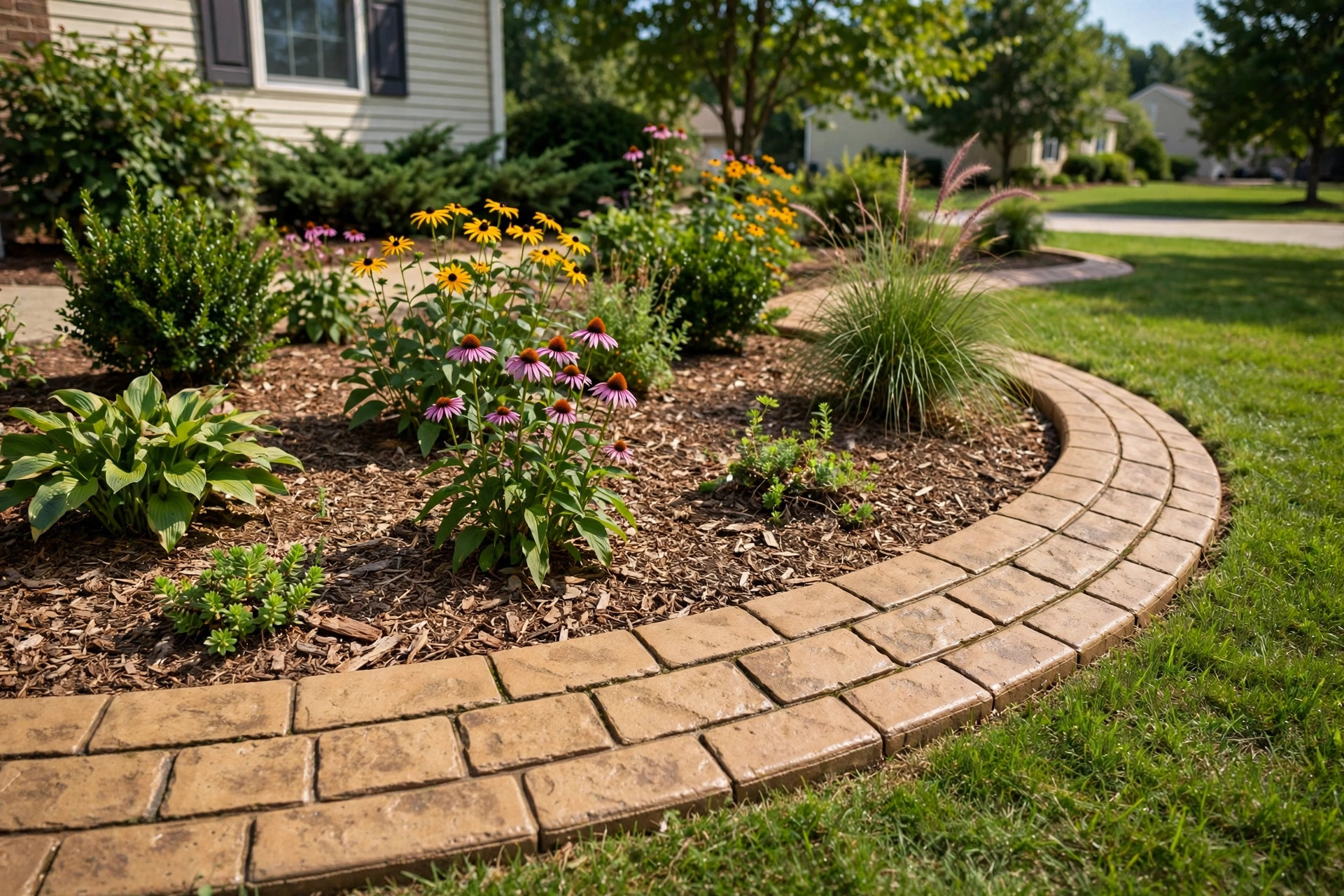

Many American homeowners ask one question before they call a contractor. They want to know the landscape curbing cost per foot in the USA. Curbing is the low border that runs along the edge of a flower bed, a walkway, or a lawn. It looks simple. It also does hard work. A good curb holds mulch in place, stops grass from creeping into the bed, and gives the yard a finished look. A sloppy edge, on the other hand, makes even a fine garden look tired. This guide explains what curbing costs, why prices change, and how to plan a fair budget.
Why Landscape Curbing Matters
A yard without an edge soon looks messy. Rain washes mulch out of the beds. Mower blades chew into the soil. Weeds cross the line in a week. Landscape curbing fixes all of this with one small wall. The curb sits at ground level or a little above it. It holds the bed on one side and the grass on the other.
Curbing also cuts lawn care time. When the edge is hard and straight, a mower wheel can ride along it. A string trimmer is rarely needed. Homeowners with large lawns like this most. The bed line stays sharp all season, even after heavy storms.
There is a money reason too. Mulch is not cheap. A fresh layer may cost several hundred dollars. Without a curb, much of it washes away each year. A curb keeps it where it belongs. It also protects plants. When the mower stays off the bed, young shrubs and flowers live longer.
Finally, curbing adds to the value of the home. Real estate agents call it curb appeal. A neat border tells a buyer that the yard is cared for. Small details like this can lift the first impression of a house.
What to Look For When You Choose a Curb: Landscape Curbing Cost Per Foot Usa
Not every curb suits every yard. Think about four things before you spend money.
First, think about the ground. Soft sandy soil moves more than hard clay. A curb that sits deep works better on soft ground. A shallow curb may heave and crack after a hard winter.
Second, think about the line of the bed. Straight beds take most materials well. Curved beds need curbing that bends or comes in short pieces. Readers who need help here may like a guide to the best lawn edging for curved beds.
Third, think about the mower. If a riding mower will roll along the edge, the curb must be low and strong. Tall thin curbs can break under the wheel. Flat wide curbs are safer for mowing.
Fourth, think about style. A red brick curb suits a brick house. A gray stone curb suits a natural garden. A stamped concrete curb can copy stone or brick for less money. The curb should match the house and the walkways.
Types of Landscape Curbing
Four materials cover almost every job in the country. Each has a price band, a look, and a life span. Pick the one that fits your yard and your budget.
Poured Concrete Curbing
Poured concrete is the most common type in the USA. A machine extrudes wet concrete in a continuous ribbon along the bed. There are no joints to shift. The color can be plain gray or tinted. A stamp pattern can copy brick, stone, or slate. This type is strong and long lasting. It handles mowers and weather well.
Stone and Brick Edging
Real stone and brick give the richest look. Each piece is set by hand in the ground. Edging flower beds with stone is a favorite project for gardeners who want a natural style. Stone costs more than concrete. It also takes more labor. But stone rarely breaks, and a single cracked piece is easy to replace.
Metal Edging
Steel and aluminum strips make a thin, clean line. They sit almost flush with the soil. Metal edging is popular in modern gardens. It is cheaper than stone. The thin edge lets a mower cut close to the bed. The weak point is rust. Plain steel can rust in wet ground. Aluminum and coated steel last longer.
Plastic and Rubber Edging
Plastic is the cheapest option. It comes in rolls or short strips that stake into the ground. Many homeowners install it themselves in an afternoon. The look is plain. Plastic can pop out of the ground in a freeze. Rubber edging, made from recycled tires, is tougher than plastic and still cheap.
Cost and Price
Now the main question. What is the landscape curbing cost per foot in the USA?
For basic poured concrete, most homeowners pay $2 to $10 per foot. A simple gray curb on easy ground sits near the low end. A stamped and colored curb on a curved bed sits near the high end. Many contractors charge a minimum fee for small jobs, often $300 to $500, even if the run is short.
Stone and brick edging usually costs $8 to $20 per foot with labor. Fancy cut stone can go higher. Metal edging costs $3 to $8 per foot installed. Plastic edging costs $1 to $3 per foot installed, or under a dollar per foot if you do it yourself.
Several things push the price up or down. Curved lines take more time than straight lines. Slopes and tree roots slow the work. Removing old edging adds a fee. Stamp patterns and custom colors add $1 to $3 per foot. A very long run often earns a lower price per foot, because the crew sets up once and works all day.
To plan a budget, measure the beds first. Walk the bed with a tape or a measuring wheel. Add ten percent for waste and changes. Then ask three local contractors for written quotes. A written quote should show the price per foot, the material, the color, and the warranty. Be careful of quotes far below the rest. The concrete may be too thin, or the crew may skip the base work.
Prices also shift by region. Labor rates in big cities run higher than in small towns. In the far north, crews pour a deeper base to fight frost, which adds cost. In dry western states, simple gray curbs are common and often cheaper. Home centers also sell do-it-yourself concrete edging kits for about $2 to $4 per foot in materials. These kits give a decent result on short straight runs, but they do not match the strength of a machine-poured curb.
If the goal is street appeal, note that borders along the drive matter most. A short list of driveway edging ideas can help you decide where curbing gives the biggest visual payoff.
Care and Upkeep
Concrete curbing asks little of the owner. A yearly wash with a garden hose keeps it clean. A pressure washer works on tough dirt, but keep the spray at a safe distance so the surface does not pit. Seal the concrete every two or three years in a harsh climate. A good sealer blocks water and salt.
Check the curb each spring. Winter frost can crack a thin section. Small cracks can be filled with a concrete patch. If one section heaves up, a contractor can grind it level or replace the piece. Keep soil and mulch a half inch below the top of the curb. This stops water from spilling over and keeps the line visible.
Stone curbing needs almost no care. Pull weeds from the joints. Reset any stone that tilts. If moss grows on the shaded side, a stiff brush and plain water will take it off. Never use bleach near plants, because runoff will burn the roots. Metal edging should be checked for sharp edges after a mower strike. Plastic edging should be pushed back into place after a hard freeze.
Keep the mower line clean too. A sharp mower blade cuts the grass at the curb edge without tearing it. Quality mowers and small engines from makers like Briggs & Stratton and Toro handle this weekly work well. If you compare machines before you buy, Consumer Reports tests many lawn models each year.
Safety
Curbing is a safe product, but the work site needs care. Wet concrete burns skin. Keep children and pets away from fresh pours until the concrete sets, usually one full day. The color tint can stain clothes and floors.
Tall curbs can trip a runner or a small child. Most garden curbs are only four to six inches high, which is low enough to step over. Still, do not build a curb across a path where people walk at night.
During do-it-yourself work, wear gloves and eye protection. Bagged concrete dust is bad for the lungs. Mix it with care and keep the wind at your back. Call the local utility line number before you dig. Gas and power lines run near the edge of many lawns. Mark all buried lines with flags before a contractor arrives, and keep the work area clear of toys and tools.
Frequently Asked Questions
How much does landscape curbing cost per foot for a basic concrete curb?
Most American homeowners pay $2 to $10 per foot for basic poured concrete curbing. Simple gray curbs on straight, flat ground cost the least. Stamped, colored curbs on curved beds cost the most. Contractors often add a minimum job fee of $300 to $500.
How long does poured concrete curbing last?
A well made concrete curb lasts 15 to 25 years. The keys are a deep enough pour, good base work, and a proper cure. In cold states, a sealer helps the curb survive freeze and thaw. Stone edging can last even longer, often for the life of the house.
Can I install landscape curbing myself?
Yes. Plastic and rubber edging are easy do-it-yourself projects. Stone and brick take more skill but are still possible for a careful worker. Poured concrete curbing needs a special extrusion machine. Most homeowners hire a contractor for that type.
Does curbing add value to a home?
It adds appeal more than dollar value. A neat yard edge makes the whole property look cared for. Buyers notice it in the first seconds of a visit. Few appraisers add a line item for curbing, but it supports a strong asking price.
What is cheaper than concrete landscape curbing?
Plastic edging is the cheapest, at about $1 to $3 per foot installed. Rubber edging costs a little more and lasts longer. Both are good for tight budgets or for beds that may change shape soon.
When is the best time of year to install curbing?
Spring and fall are best. The ground is soft, and the crew can work long days. Summer heat can cure concrete too fast and cause surface cracks. In cold states, installers stop work once night frost arrives, so book early.
A Short Final Word
Landscape curbing is one of the smallest changes with the largest visual payoff in a yard. The landscape curbing cost per foot in the USA stays modest, from a few dollars for plastic to about ten for stamped concrete. Measure your beds, get three written quotes, and pick a material that fits your soil, your mower, and your style. A clean edge will repay the cost every time you look out the window, and it will keep doing so for many years to come.
References
Briggs & Stratton. (n.d.). Lawn mowers and outdoor power equipment. https://www.briggsandstratton.com Consumer Reports. (n.d.). Product reviews and buying guides. https://www.consumerreports.org Toro. (n.d.). Lawn care equipment. https://www.toro.com
Was this guide helpful?

About Robert Taylor
The My Garden US editorial team writes practical, in-depth home and garden guides for American homeowners — tested advice, no fluff.
You May Also Like
How to Overseed a Bermuda Grass Lawn
June 12, 2026 0 views
The Best Lawn Fertilizer for Fall Application: A Complete Guide
July 9, 2026 0 views
The Best Irrigation Controller with Rain Sensor for American Lawns
June 26, 2026 0 views